Documents

Over the years, the JRC has produced many publications. These are found in this section. They have been sub-divided in various categories (see Subcategory buttons below). All more than 600 documents can also be inspected irrespective of the category (see 'All documents' below).

Publications in Journals include more than 490 published papers from the Soil Group in the JRC (EU Soil Observatory). Most of the papers refer to the last 11 years (2013-2024). In many cases the papers document the datasets published in ESDAC.

As example statistics, Since the establishement of the EUSO,  the group published:

  • 52 papers in 2025
  • 47 papers in 2024
  • 46 papers in 2023
  • 40 papers in 2022
  • 27 papers in 2021
  • 23 papers in 2020


Most of them in high impact journals including Nature Communicaitons, Climate Change, Global Change Biology, etc. Almost all the publications are Open Access. As publications, we present articles published in peer-review journals indexed in Scopus or Web of Science.

Filters

Go Back To

All Documents

Displaying 1 - 665 of 665 | Show 25 | 50 | All results per page.
Securing the forest carbon sink for the European Union’s climate ambition
Resource Type: Maps & Documents, Documents, Publications in Journals
Year: 2025

The European Union (EU) climate policies rely on a functioning forest carbon sink. Forests cover about 40% of the EU area and have absorbed about 436 Mt of carbon dioxide equivalent per year between 1990 and 2022, which is about 10% of the EU’s anthropogenic emissions. However, the ability of forests to act as carbon sinks is rapidly declining owing to increasing natural and anthropogenic pressures, threatening the EU’s climate goals and calling for prompt actions. Here we provide actionable research recommendations to improve the monitoring and modelling of forest resources and their carbon sink, and to better inform forest management decisions. We suggest a timeline for the development of these measures to better support the implementation of strategies and policies outlined in the European Green Deal.

Soil Carbon Saturation: What Do We Really Know?
Resource Type: Maps & Documents, Documents, Publications in Journals
Year: 2025

Managing soils to increase organic carbon storage presents a potential opportunity to mitigate and adapt to global change challenges, while providing numerous co-benefits and ecosystem services. However, soils differ widely in their potential for carbon sequestration, and knowledge of biophysical limits to carbon accumulation may aid in informing priority regions. Consequently, there is great interest in assessing whether soils exhibit a maximum capacity for storing organic carbon, particularly within organo–mineral associations given the finite nature of reactive minerals in a soil. While the concept of soil carbon saturation has existed for over 25 years, recent studies have argued for and against its importance. Here, we summarize the conceptual understanding of soil carbon saturation at both micro- and macro-scales, define key terminology, and address common concerns and misconceptions.

Impact of soil erosion on soil organic carbon loss and its implications for carbon neutrality
Resource Type: Maps & Documents, Documents, Publications in Journals
Year: 2025
Soil erosion significantly affects soil organic carbon (SOC) dynamics, impacting carbon neutrality and climate change mitigation. Accelerated erosion depletes SOC, leading to increased greenhouse gas (GHG) emissions, particularly CO2 and CH4, thereby undermining efforts toward achieving carbon neutrality. Despite its importance, the relationship between soil erosion, SOC loss, and carbon neutrality is not yet fully understood.
This study evaluates the effects of soil erosion on SOC loss and its implications for carbon neutrality through a combination of modeling and field observation. Analyses of SOC stocks, carbon saturation, carbon sequestration potential, and erosion rates were conducted to assess how erosion-induced SOC loss influences GHG (CO2, CH4, and N2O) emissions.
Synergistic effects of multiple “good agricultural practices” for promoting organic carbon in soils: A systematic review of long-term experiments
Resource Type: Maps & Documents, Documents, Publications in Journals
Year: 2025

Loss of soil organic carbon (SOC) from farmland is a key threat to the capacity of soils to provide ecosystem services and exacerbates climate change. In alignment with a published protocol, we conducted a review and meta-analysis of time series of SOC measurements in long-term agricultural experiments to study absolute SOC changes under different agricultural management regimes.

A First Quantitative Assessment of Soil Health at European Scale Considering Soil Genesis
Resource Type: Maps & Documents, Documents, Publications in Journals
Year: 2025
Reduced soil health is increasingly recognized as one of the most critical threats to European food security, aquatic and terrestrial biodiversity, and climate change mitigation (Li et al. 2024). Due to soil's broad environmental and societal functions, soil scientists request that soil health should be legally recognized as a common good (Lehmann et al. 2020). In response, the European Union (EU) has identified soil health as one of five Mission themes (Arias-Navarro et al. 2024), representing a new approach to addressing some of Earth's greatest challenges. The EU Soil Strategy for 2030 (European Commission 2021) was launched to combat declining soil health in Europe and beyond. The ambition is for the entirety of Europe to have healthy soils by 2050 (Arias-Navarro et al. 2024; Panagos et al. 2025) with a European Soil Monitoring & Resilience Law (SML 2023) recognizing the ecosystem services provided by healthy soils.
Impact of Healthy Diet Shifts on Soil Greenhouse Gas Emissions Across Europe
Resource Type: Maps & Documents, Documents, Publications in Journals
Year: 2025

Shifting towards healthy, plant-based diets is widely recognized as a strategy to reduce greenhouse gas emissions (GHG) from food systems, primarily through reduced methane emissions from livestock. However, the implications of this transition for soil-based GHG emissions, a major contributor to climate change, remain uncertain. We used the MAGNET economic model and the DayCent biogeochemical model to assess the impacts of dietary shifts aligned with the EAT-Lancet guidelines on soil organic carbon (SOC), nitrous oxide (N2O) emissions, and the soil GHG balance across the European Union and the United Kingdom. Adopting the EAT-Lancet diet reduced livestock production, organic carbon (C) and organic nitrogen (N) inputs from manure, and permanent grassland areas for agricultural use. This results in potential SOC losses of an EU average of 14 Mg CO2e ha−1 and reaching up to 50 Mg CO2e ha−1 in livestock-intensive regions by 2100. However, afforestation of land released from production could offset approximately half of the diet-induced soil C losses by 2100. When above-ground biomass from afforestation is factored in, this could yield an additional 65 Mg C ha−1 in afforested areas, resulting in net CO2 removal at the European scale. N2O emissions exhibited more moderate and heterogeneous changes by 2100, ranging from 10 to −13 Mg CO2e ha−1 across the continent, and dependent on land use change (LUC) and increased synthetic N inputs. The changes in SOC were driven by LUC, lower organic inputs, soil types and, to a lesser degree, climatic zones. This study's findings underscore the importance of dietary changes in tackling climate change. However, practitioners and policymakers should carefully consider potential soil-related trade-offs by supporting and implementing appropriate soil conservation practices, such as no-tilling or afforestation, to realize the full co-benefits of more sustainable diets.

Revisiting the soil carbon saturation concept to inform a risk index in European agricultural soils
Resource Type: Maps & Documents, Documents, Publications in Journals
Year: 2025

The form in which soil organic carbon (SOC) is stored determines its capacity and stability, commonly described by separating bulk SOC into its particulate- (POC) and mineral-associated (MAOC) constituents. MAOC is more persistent, but the association with mineral surfaces imposes a maximum MAOC capacity for a given fine fraction content. Here, we leverage SOC fraction data and spectroscopy to investigate POC/MAOC distribution, together with SOC changes data over 2009–2018 period, across pedo-climatic zones in the European Union and the UK. We find that rather than a universal mineralogy- dependent maximum MAOC capacity, an emergent effective MAOC capacity can be identified across pedo-climatic zones. These findings led us to propose the SOC risk index, combining SOC changes and effective MAOC capacity. We find that between 43 and 83 Mha of agricultural soils are classified as high risk, mostly constrained to cool and humid regions. The index provides a synthetic information to decision makers for preserving and accruing POC and MAOC.

Human influence on Amazon’s aboveground carbon dynamics intensified over the last decade
Resource Type: Maps & Documents, Documents, Publications in Journals
Year: 2025

The Amazon rainforest is crucial for the global carbon cycle, yet annual changes in its aboveground biomass carbon (AGC) stock remain highly uncertain. Natural and local anthropogenic drivers such as deforestation, forest degradation, and regrowth following deforestation interact with large-scale climate variability to determine AGC dynamics. Here, we propose an approach to disaggregate low-frequency passive L-band microwave data over 2010-2020 and reconstruct maps of annual change. We show that the Amazon lost −0.37 ± 0.17 PgC, with gains by undisturbed (0.33 ± 0.13 PgC) and secondary forest growth (0.33 ± 0.05 PgC) outweighed by losses by deforestation (−0.55 ± 0.04 PgC), degradation (−0.42 ± 0.08 PgC), and agricultural areas (−0.06 ± 0.03 PgC). Losses in human-influenced land intensified over time and amounted to 60% of all gross losses in El Niño years. Our study reinforces the need for stronger implementation of policies and effective actions to control forest degradation.

A data-driven impact evaluation of nutrient input reduction on wheat yields across Europe
Resource Type: Maps & Documents, Documents, Publications in Journals
Year: 2025

The European Union (EU) is one of the largest cereal producers in the world, with wheat covering around one-third of its agricultural area. Sustainable soil management has been put as a key point of EU Green Deal policies, with concrete measures to reduce fertilizer application by 2030. However, uncertainty still exists about the expected impact of such a reduction on wheat yield across the EU. In this work, we construct a regression model to evaluate the possible impacts of fertilizer reduction and climate change on wheat yields by 2050. The regression model quantifies the effects of soil properties, soil management, and climate on wheat yields at the EU scale. In addition, we simulate two scenarios, one based on the EU fertilizer targets only and the other focusing on climate change impact (+4 °C). The results show an important effect of soil phosphorus, nitrogen, and potassium content, soil carbon-to-nitrogen ratio, and nitrogen inputs on the variation in wheat yields across the EU, next to climate. The scenario analysis suggests that reducing N and P inputs by 20 % leads to wheat yield losses of up to 5 %, an effect that can rise to 50 % yield reduction by 2050 under climate change. Fertilizer reduction leads to most significant yield decreases in France, Germany and Northern Italy, while climate change reduces yields mostly in Southern Europe. Beyond highlighting relevant regional patterns, our results show how EU fertilizer reduction targets are expected to have a small impact on wheat production compared to climate change.

Healthy soils as a booster to EU competitiveness
Resource Type: Maps & Documents, Documents, Publications in Journals
Year: 2025

The European Union's strategic agenda for 2024–2029 prioritizes a prosperous and competitive Europe, with soil health potentially playing a role in achieving this goal. However, the current state of European soils is of concern, with over 60 % of soils not in healthy condition, as reported by the European Union’s Soil Mission Board and the EU Soil Observatory. This results not only in environmental issues, but also economic ones, as the costs of soil degradation in the EU are estimated to be higher than €50 billion per year, underscoring the need for soil health to be placed more prominently on the political agenda. Soil-related business models, including biotechnology, remediation of contaminated sites, carbon removals and farming, regenerative agriculture, and agritech solutions, can contribute to EU competitiveness. These business models may help address most of the challenges posed by soil degradation, climate change, and biodiversity loss, while promoting sustainable agriculture practices and improving ecosystem functioning. The EU's soil remediation market is valued at €8.5 billion, with an annual growth rate of 5 %. The EU Carbon Removals and Carbon Farming Regulation provides a framework for certifying carbon removals, with potential revenue of €6 billion per year. Regenerative agriculture, which prioritises soil health and ecosystem services, can increase crop yields, reduce dependency on synthetic fertilisers and pesticides, and promote biodiversity. Agritech solutions, such as precision agriculture and artificial intelligence, can optimize farming practices, reduce costs, and improve environmental sustainability. Here we present the potential of soil-related business models to contribute to EU competitiveness, while addressing environmental and societal challenges. However, a number of challenges remain and need to be addressed as the need for acceleration, a clear policy framework, a closer collaboration of different actors in the food supply chain and a digital transformation are still needed.

Opportunities for optimizing phosphorus inputs in EU agricultural soils
Resource Type: Maps & Documents, Documents, Publications in Journals
Year: 2025

Excessive phosphorus (P) fertilization has resulted in elevated soil P concentrations in some regions in the EU. Legacy soil P imposes a risk for soil functioning and may lead to P losses into the aquatic environment. Recent proposed EU policies aim to optimize P inputs and mitigate excessive soil P concentrations. We present a framework to estimate how much and where P inputs in EU agricultural (cropland and grassland) soils can be optimized. The framework, with assumptions on optimal soil P concentrations and modelled soil P balances, allows calculating how much of the EU agricultural area experiences a build-up or maintenance of soil P concentrations despite having high soil P concentrations. Next, we calculated how much P inputs can be reduced to reach maintenance situation (inputs equal outputs) or to reach optimal soil P concentrations. Assuming optimal soil P concentrations (Olsen) being 20 – 40 mg kg−1, we calculated that current P inputs across the EU can be reduced by 21 % without adverse impacts on crop production, in line with EU policy objectives. The most appropriate strategy strongly depended on the farming system properties and varied across the European regions. The results are discussed in view of current or desired policies limiting P application rates. The framework, with suggested future improvements on uncertainties in data and models, can guide policy makers and land managers to set targets on P application rates, thereby reconciling agronomic and environmental objectives.

A Soil Monitoring Law for Europe
Resource Type: Maps & Documents, Documents, Publications in Journals
Year: 2025

Over 60% of European soils are unhealthy according to the Soil Mission board estimates and the indicators presented in the European Union (EU) Soil degradation dashboard. The situation may worsen if no policy interventions are taken. The unsustainable use of natural resources, in particular the degradation of soils, precipitates biodiversity loss, exacerbated by the climate crisis. In particular, in the EU alone, soil degradation costs over €50 billion per year due to the loss of essential services they provide and to the impact on human health. Here a more precise estimation of the soil degradation cost related to a set of soil degradation processes, ranging between €40.9 and 72.7 billion per year is presented. This newly updated estimate compared to the Impact assessment of the Soil Monitoring Law takes into account the costs of soil erosion, contamination, phosphorus losses, soil carbon losses, nitrogen losses, soil compaction, and soil sealing. However, this estimation might double if it is added to the costs of soil biodiversity loss, floods, droughts, off-site effects of soil erosion, and health consequences of soil contamination. Therefore, further research is needed to address this knowledge gap and estimate the missing costs. Soil degradation is a critical issue with transboundary implications that requires urgent attention and action at the EU level. The costs of soil degradation are substantial, both in terms of environmental impacts and economic consequences, highlighting the importance of investing in sustainable soil management practices and a harmonized EU soil monitoring system. By addressing soil degradation through the proposed Soil Monitoring Law, investing significant amounts for research and innovation in the Soil Mission, and promoting international cooperation, the EU can take solid steps toward protecting its soil resources and achieving a sustainable future for all.

How do diet shifts affect the greenhouse gas balance of agricultural soils? Denmark as a case study
Resource Type: Maps & Documents, Documents, Publications in Journals
Year: 2025

Current food systems account for approximately 30 % of anthropogenic greenhouse gas (GHG) emissions; therefore, consumers' dietary preferences can have strong environmental consequences. This is well known for the GHG mitigation achieved by reducing animal protein consumption and associated methane emissions. However, the impact of diet shifts on the soil GHG balance has not been comprehensively evaluated yet.

Empirical estimation of saturated soil-paste electrical conductivity in the EU using pedotransfer functions and Quantile Regression Forests: A mapping approach based on LUCAS topsoil data
Resource Type: Maps & Documents, Documents, Publications in Journals
Year: 2025

Soil Electrical conductivity (EC) is a measure of the ability of soil to conduct an electric current, which is primarily influenced by the concentration of soluble salts in the soil solution that takes place principally through water-filled pores. Ions (Ca2+, Mg 2+, K +, Na +, and NH 4+, SO42-, Cl-, NO3–, and HCO3–) from soluble salts dissolved in soil water carry electrical charges and conduct the electrical current. EC is considered a proxy of soil salinity and other soil characteristics, whose monitoring is much needed in the context of climate change, increasing irrigation in agricultural areas and sea level rise. The pan-European LUCAS soil monitoring scheme, established in 2009, provided EC1:5 in the topsoil (0–20 cm) in the surveys of the years 2015 and 2018 for almost 20,000 samples. In this work, using the LUCAS 2018 dataset, we provide an empirically-derivedpedotransfer function to convert diluted EC1:5 to saturated ECe using the LUCAS soil texture and soil organic carbon, and a framework for ECe mapping with a machine-learning algorithm named Quantile Regression Forest. The final model resulted in an R2 of 0.302 with an RMSE of 0.265 dS m−1 for soil samples not used for model calibration. The results are presented as predicted ECe in the topsoil, and they reveal that in Atlantic and Northern Europe, salts may accumulate in soils through several natural processes, i.e., primary salinization, but in Mediterranean and Southern Europe, they accumulate because of human interventions on the soil water and solute regimes. 

Quantitative analysis of the compliance of EU Sewage Sludge Directive by using the heavy metal concentrations from LUCAS topsoil database
Resource Type: Maps & Documents, Documents, Publications in Journals
Year: 2025

In the European Union (EU), a common understanding of the potential harmful effect of sewage sludge (SS) on the environment is regulated by the Sewage Sludge Directive 86/278/EEC (SSD). Limit values (LVs) for concentrations of heavy metals in soil are listed in Impact Assessment of this directive, and they were transposed by EU member states using different criteria. Member states adopted either single limit values or based on soil factors such as pH and texture to define the maximum limit values for concentrations of heavy metals in soils. Our work presents the first quantitative analysis of the SSD at the European level by using the Land Use and Coverage Area Frame Survey (LUCAS) 2009 topsoil database.

Addressing point source soil pollution in the Western Balkans: challenges and opportunities for European Union integration
Resource Type: Maps & Documents, Documents, Publications in Journals
Year: 2025

Soil pollution poses a significant threat to human health and the environment in the Western Balkans. It contaminates food and water sources with potentially toxic elements and degrades ecosystems by reducing soil functions and biodiversity. Industrialization over the past century has made soil pollution a widespread issue in the region. This study aims to summarize the status of point source soil pollution, identify knowledge gaps, and support the implementation of the Green Agenda for the Western Balkans, with a focus on soil remediation priorities.

Monitoring and Modelling Soil Respiration in Deciduous and Broadleaf Evergreen Oak-Dominated Ecosystems in Greece
Resource Type: Maps & Documents, Documents, Publications in Journals
Year: 2025

Climate change alters rainfall patterns and increases temperatures, which disrupt soil processes, enhance CO2 emissions, and reduce the capacity of soils to store carbon. Soil respiration, the CO2 released into the atmosphere from the soil, is a vital process in the terrestrial carbon cycle. We performed a two-year study investigating the seasonal variation of soil CO2 efflux in two typical oak-dominated Mediterranean ecosystems, a deciduous and a broadleaf evergreen one, as we lack sufficient information on this topic. To understand the drivers of soil respiration, we also monitored soil water content and temperature, as well as organic matter input by sampling litterfall and fine roots and by applying in parallel a litter and root exclusion approach. We found a 30%–54% higher soil CO2 efflux in broadleaf evergreens vs. deciduous oaks, depending on the season. We also identified significant effects of all tested drivers on soil respiration.

Conservation outcomes of dietary transitions across different values of nature
Resource Type: Maps & Documents, Documents, Publications in Journals
Year: 2025

Conservation benefits from dietary change are commonly assessed without accounting for different conservation objectives. By representing fine-scale habitat and landscape change within a dynamic land-system model, we assess how a partial or full transition to healthier diets would affect indicators across the ‘Nature for Nature’ and ‘Nature for Society’ conservation value perspectives. We find that most diet-related conservation benefits are already achieved by a partial shift to healthier diets. This is because, particularly in many countries in tropical Africa and Asia, adopting healthier diets would mainly involve substituting staple foods with more varied plant-based foods rather than replacing resource-intensive livestock products. Conservation action in line with the Global Biodiversity Framework, by contrast, most consistently improves outcomes across both value perspectives, even under current demand trends, showing that spatial planning is central for decoupling conservation outcomes from food demand. However, any progress towards healthier diets not only lowers greenhouse gas emissions but also reduces barriers to effective conservation, such as higher food prices and imports.

Unsustainably losing ground
Resource Type: Maps & Documents, Documents, Publications in Journals
Year: 2025

Mediterranean olive groves, which have long been symbols of tradition and culinary heritage, now reveal warning signs of rapidly declining soil health across Europe’s agricultural landscapes. Driven by intensive farming, climate pressures and policy gaps, accelerating soil loss threatens both ecosystem health and rural livelihoods, signalling a critical need for sustainable soil management and adaptive strategies.

Geochemical-integrated machine learning approach predicts the distribution of cadmium speciation in European and Chinese topsoils
Resource Type: Maps & Documents, Documents, Publications in Journals
Year: 2025

Evaluating heavy metals bioavailable is crucial for comprehensive soil contamination assessment but challenging at large scales due to complex and resource-intensive analytical procedures, and the amount of dissolved metal in soils represents the relative solubility and potential mobility of cadmium, which is a key factor determining bioavailability. Here, we developed a geochemical-integrated machine learning framework using multi-source data to predict cadmium speciation distribution in European and Chinese non-industrial topsoils.

A hybrid in situ and on-screen survey to monitor gully erosion across the European Union
Resource Type: Maps & Documents, Documents, Publications in Journals
Year: 2025

After the successful mapping of gully erosion channels in the 2018 Eurostat Land Use/Cover Area Frame (topsoil) statistical survey (LUCAS, n = 24,759 locations), the methodology was further expanded across the full LUCAS 2022 survey (n = 399,591 locations). This expert-based assessment identifies the presence or absence of gully erosion forms at each LUCAS location. Its goal is to improve understanding of gully erosion geography in the EU and develop forecasting methods to support soil health indicators proposed by the new Directive on Soil Monitoring and Resilience (COM(2023)416) and Common Agricultural Policy monitoring. Here, we present the findings of our analysis which led to the development and validation of the LUCAS Gully Erosion Model (GE-LUCAS v1.1), a pan-European inventory of gully erosion channels comprising 3,116 locations (~0.8% of all monitored locations) affected by gully erosion throughout the European Union. We further present gully erosion patterns and provide insights on how GE-LUCAS v1.1 inventory can be used to estimate the probability of gully occurrence in areas beyond the monitored locations.

Patterns and thresholds for soil pH across Europe in relation to soil health and degradation
Resource Type: Maps & Documents, Documents, Publications in Journals
Year: 2025

Soil pH indicates the level of acidity or alkalinity in the soil environment, influencing various biogeochemical and physical processes. Additionally, soil pH levels are crucial in determining the bioavailability of elements such as iron, aluminium, and heavy metals which can be harmful. As such, pH is an important soil health and degradation indicator. Although there is a well-established understanding of soil pH at localized levels, the spatial and temporal variations, as well as significant thresholds at national and continental scales, are not sufficiently documented. Here we analyse the European topsoil pH data (LUCAS) in combination with other soil properties from the LUCAS survey, to identify thresholds and spatial patterns of soil pH across Europe in relation to soil health and degradation.

Land use-induced soil carbon loss in the dry tropics nearly offsets gains in northern lands
Resource Type: Maps & Documents, Documents, Publications in Journals
Year: 2025

Soil carbon changes are difficult to measure globally, and global models are poorly constrained. Here, we propose a framework to map annual changes in soil carbon and litter (SOCL) as the difference between the net land CO2 flux from atmospheric inversions and satellite-based maps of biomass changes. We show that SOCL accumulated globally at a rate of about 0.34 ± 0.30 ( ± 1 sigma) billion tonnes of carbon per year (PgC yr−1) during 2011-2020. The largest SOCL sink is found in boreal regions (0.93 ± 0.45 PgC yr−1 in total) particularly in undisturbed peatlands and managed forests. The largest losses occur in the dry tropics (−0.50 ± 0.47 PgC yr−1) and correspond with agricultural expansion from land use change, cropland management and grazing. By contrast, forests in the wet tropics act as a net soil carbon sink (0.32 ± 0.35 PgC yr−1). Our findings highlight the large mitigation opportunities in the dry tropics to restore agricultural soil carbon.

Rethinking Global Soil Degradation: Drivers, Impacts, and Solutions
Resource Type: Maps & Documents, Documents, Publications in Journals
Year: 2025

The increasing threat of soil degradation presents significant challenges to soil health, especially within agroecosystems that are vital for food security, climate regulation, and economic stability. This growing concern arises from intricate interactions between land use practices and climatic conditions, which, if not addressed, could jeopardize sustainable development and environmental resilience. This review offers a comprehensive examination of soil degradation, including its definitions, global prevalence, underlying mechanisms, and methods of measurement. It underscores the connections between soil degradation and land use, with a focus on socio-economic consequences. Current assessment methods frequently depend on insufficient data, concentrate on singular factors, and utilize arbitrary thresholds, potentially resulting in misclassification and misguided decisions. We analyze these shortcomings and investigate emerging methodologies that provide scalable and objective evaluations, offering a more accurate representation of soil vulnerability. Additionally, the review assesses both physical and biological indicators, as well as the potential of technologies such as remote sensing, artificial intelligence, and big data analytics for enhanced monitoring and forecasting. Key factors driving soil degradation, including unsustainable agricultural practices, deforestation, industrial activities, and extreme climate events, are thoroughly examined. The review emphasizes the importance of healthy soils in achieving the United Nations Sustainable Development Goals, particularly concerning food and water security, ecosystem health, poverty alleviation, and climate action. It suggests future research directions that prioritize standardized metrics, interdisciplinary collaboration, and predictive modeling to facilitate more integrated and effective management of soil degradation in the context of global environmental changes.

Intensified rainfall overrides vegetation greening in driving erosion and carbon loss on the Tibetan Plateau
Resource Type: Maps & Documents, Documents, Publications in Journals
Year: 2025

Soil, a fundamental component of Earth’s ecosystems, plays a vital role in nutrient cycling, supports land productivity and food security, influences the water cycle [1], and sequesters carbon, with critical implications for climate regulation. Soil erosion affects the abovementioned ecosystem functions and has been widely acknowledged as one of the most severe global environmental threats [2]. For instance, the latest report of the Food and Agriculture Organization of the United Nations indicates that soil erosion is projected to result in a 10% decline in global crop yields by 2050 [3]. Moreover, soil erosion transports large amounts of organic carbon into rivers and drives vertical greenhouse gas emissions during the mobilization of sediment [4,5]. Recent studies by Borrelli et al. [6] have elucidated the relationships between anthropogenic land use change and accelerated soil erosion through modeling approaches, revealing that global soil displacement approximates 35.9 Pg annually, with agricultural expansion as the principal driver, particularly across Sub-Saharan Africa, South America, and Southeast Asia.

Predicting Soil Properties Using Spectral Subsets of LUCAS Visible Near-Infrared Spectroscopy Data
Resource Type: Maps & Documents, Documents, Publications in Journals
Year: 2025

Soil health is critical for sustaining ecosystem functions and addressing environmental challenges. Effective soil health management requires reliable methods for assessing soil properties. Soil spectroscopy may allow resource-effective assessment of soil properties, but more knowledge is needed to transfer knowledge from laboratory-grade spectrometers to in-field data acquisition. This study explores the predictive potential of selected spectral subsets from the full visible and near-infrared (VIS–NIR) range, using various machine learning algorithms (MLAs), as a theoretical exercise to support the design of practical soil sensing tools. Specifically, we evaluated whether narrower spectral ranges can provide predictions comparable to those achieved with the full VIS–NIR spectrum. The ranges are chosen to emulate the spectral coverage and resolution of commercially available sensors which are candidates for widespread and resource-effective data collection. We used the VIS–NIR spectral data (400–2500 nm) alongside laboratory analyses of several soil properties to be predicted from the pan-European LUCAS dataset. We employed four different MLAs for estimating soil properties: support vector regression (SVR), cubist, random forest (RF), and multi-layer perceptron (MLP), which were benchmarked against ordinary least squares regression. Our results showed that spectral subset ranges of 1000–2500 nm and 1350–2500 nm (emulating Trinamix and NeoSpectra sensors, respectively) yielded prediction accuracies similar to the full spectrum. Spectral subsets limited to the visible and early NIR range (350–1000 nm) were less effective. The most informative spectral features were found in wavelengths above approximately 1750 nm. Among MLAs, MLP consistently delivered the best performance, particularly when estimating organic carbon, nitrogen, pH and clay, which were predicted with greater accuracy compared to potassium (K), phosphorus (P) and coarse fragments (CF) which cannot yet be robustly predicted from spectral data alone. This study provides preliminary insight into the spectral regions most relevant for soil property prediction. These findings may inform future development and optimisation of real-world soil sensors. Validation with actual sensor data, both on dried and in situ samples, remains an important next step.

The Fraction of Carbon in Soil Organic Matter as a National-Scale Soil Process Indicator
Resource Type: Maps & Documents, Documents, Publications in Journals
Year: 2025
Soil organic matter (SOM) is an important component of ecosystem carbon stocks. Generally, SOM found in mineral and organo-mineral soils can be categorised into two fractions: particulate organic matter (POM) and mineral-associated-organic matter (MAOM), both of which contain soil organic carbon (SOC). Understanding the relationship between SOC and SOM fractions provides insight into SOM decomposition and SOC storage potential. Here we show an intriguingly tight relationship between the fraction of SOC in SOM (denoted as fOC), habitat and soil physical properties, as well as SOC stored in POM and MAOM. This opens up new ways to predict spatial variations in the distribution of POC and MAOC using more widely available fOC data as a covariate. By compiling 14 datasets and 9503 measurements from across Europe and globally we analysed fOC across mineral and organic soils, which fell between 0.38 and 0.58, consistent with variation in carbon of major plant components. fOC followed a habitat gradient with lowest median values in Seagrass sediments (0.36 ± 0.09) and Permafrost habitats, followed by croplands (0.47 ± 0.08) and a maximum in semi-natural habitats (e.g., neutral, acid and calcareous grasslands) (0.56 ± 0.07), with differences between broadleaved (0.50 ± 0.087) and coniferous woodlands (0.53 ± 0.07) which were driven by overall organic matter content. The data show a tight link between vegetation carbon and the contents of SOC and SOM across various habitats, which could be used to inform agricultural soil management, improved land-use planning (e.g., woodlands), and tracking climate-related SOC targets.
Dynamic assessment of rainfall erosivity in Europe: evaluation of EURADCLIM ground-radar data
Resource Type: Maps & Documents, Documents, Publications in Journals
Year: 2025

Heavy rainfall is the main driver of water-induced soil erosion, necessitating accurate spatial and temporal predictions of rainfall erosivity to predict the soil erosion response. This study evaluates the ground radar-based EUropean RADar CLIMatology (EURADCLIM) precipitation grids to quantify rainfall erosivity across European countries. Compared to Global Rainfall Erosivity Database (GloREDa) gauge-based interpolations, EURADCLIM overpredicts rainfall erosivity, principally due to residual artefacts in some regions which inflate the instantaneous rainfall rates. Overprediction is most pronounced in European regions with lower radar antenna coverage and complex topography, whereas flatter regions with lower erosivity and better radar coverage are better predicted spatially but with a tendency towards underprediction. Disagreement attributes to the input radar quality in EURADCLIM (derived from OPERA) and to a lesser extent the uncertainty in GloREDa due to its limited gauge records in some regions. Event (EI30) time series analysis showed reasonably good performance (Kling-Gupta Efficiency (KGE) > 0.4) in 50 % of the evaluated gauge locations, although significant overprediction by EURADCLIM was evident in the upper quantiles in some countries. To account for the propagation of these remaining single-hour rainfall artefacts, which have a large impact on the temporally-aggregated R-factor, applying a 80 mm h−1 threshold to limit the maximum I30 value (i.e., less than 0.1 % of GloREDa events exceed this threshold) during the calculation of rainfall erosivity significantly improves the performance of the EURADCLIM dataset at annual, monthly and event time scale. Following adjustment, EURADCLIM best agrees with GloREDa across Europe in July and August, while bigger differences were observed in June and winter in general. Annually, the spatially aggregated rainfall erosivity per country had a percent bias below 10 %. While applying simple I30 thresholds is promising, radar artefacts remain significant in areas with lower quality rainfall retrievals. In the absence of spatiotemporally continuous, high-quality ground-radar retrievals across Europe, we show the value of ensemble R-factor layers of EURADCLIM with three other rainfall erosivity grids (e.g., satellite retrievals) and discuss the possibility of ground radar to offer unique spatial detail in such ensembles.

Terracing can reduce cropland water erosion in China by over 50% at present and under future climate change
Resource Type: Maps & Documents, Documents, Publications in Journals
Year: 2025

Soil erosion by water is severely threatening agricultural sustainability, especially in sloped cropland areas, and is expected to intensify under future climate change. Terracing is a key adaptive strategy to control water erosion and build climate resilience in fragile mountainous regions. However, how terracing affects cropland erosion at large scales in the present and future remains unclear. Based on the first China terrace map, we evaluated erosion reduction by terraces at the national scale. We find that the existing terraces reduce cropland water erosion in China by half and will achieve a larger total erosion reduction amount under future climate change. Appropriate terrace quality maintenance and distribution planning strategies can greatly boost terrace benefits. Our findings strengthen the understanding of terrace effects, improve cropland erosion estimates, and provide spatial guidance on terrace management to support erosion control and agricultural sustainability.

Spatial and temporal assessment of soil degradation risk in Europe
Resource Type: Maps & Documents, Documents, Publications in Journals
Year: 2025

Soil degradation threatens agricultural productivity and ecosystem resilience across Europe, yet spatially consistent assessments of its intensity and drivers remain limited. In this study, we used Soil Degradation Proxy (SDP), that integrates four key indicators of soil degradation, including erosion rate, soil pH, electrical conductivity, and organic carbon content, to quantify soil degradation risk. Using over 38,000 LUCAS topsoil observations and a machine learning model trained on climate, land cover, topographic, soil parent material properties, and spectral variables, we map annual SDP values between years 2000 to 2022 across Europe. Results show soil degradation risk is highest in southern Europe, especially in intensively managed and sparsely vegetated landscapes. Over the past two decades, approximately 7.1% of land area across the EU and the UK has experienced increasing degradation risk (most notably across Eastern Europe), with rainfed croplands emerging as the most affected land cover type. Land cover is the most influential driver, modulating effects of climatic variables such as precipitation and temperature on SDP. This data-driven framework provides a consistent and scalable approach for monitoring soil degradation risk and offers actionable insights to support targeted conservation and EU-wide policy implementation.

Short-term warming supports mineral-associated carbon accrual in abandoned croplands
Resource Type: Maps & Documents, Documents, Publications in Journals
Year: 2025

Effective soil organic carbon (SOC) management can mitigate the impact of climate warming. However, the response of different SOC fractions to warming in abandoned croplands remains unclear. Here, categorizing SOC into particulate and mineral-associated organic carbon (POC and MAOC) with physical fractionation, we investigate the responses of POC and MAOC content and temperature sensitivity (Q10) to warming through a 3-year in situ warming experiment (+1.6 °C) in abandoned croplands across 12 sites in China (latitude: 22.33–46.58°N). Our results indicate that POC content remains unchanged while MAOC content significantly increases under warming. POC and MAOC content changes are mainly influenced by root biomass and microbial necromass carbon changes, respectively.

Land Use Interacts With Climate to Influence Microbial Diversity-To-Biomass Ratios Across Europe via Soil Organic Carbon and Nitrogen
Resource Type: Maps & Documents, Documents, Publications in Journals
Year: 2025

Ecosystem functioning is potentially dependent on the relationships between soil microbial diversity and biomass. Yet, it remains unclear how land use and climate influence these relationships. Here, we (i) analysed relationships and ratios between richness and biomass of bacteria and fungi in ~500 soils across Europe, including three land-use types (woodlands, grasslands and croplands) and climates (cold, temperate and arid) and (ii) identified the driving factors of changes in richness:biomass (R:B) ratios.

Warming could cause significant soil organic carbon loss around the southern Baltic Sea
Resource Type: Maps & Documents, Documents, Publications in Journals
Year: 2025

Soil organic carbon (SOC) is linked to greenhouse gas emissions and climate change. Loss of SOC is one of the main threats to European and global soils. The impact of climate change, especially warming, on SOC varies by regions but remains poorly understood. To address this, we used Random Forest (RF) to model SOC in topsoil of Europe based on LUCAS data and applied SHapley Additive exPlanations (SHAP) values to interpret spatial patterns. Key findings show temperature is the predominant factor influencing SOC in northern Europe (north of 55°N). Under the RCP4.5 scenario, projected warming over the next 50 years could lead to significant SOC loss around the southern Baltic Sea (55°N-60°N), while regions north of 65°N could experience SOC gain. Regions between 60°N-65°N would have mixed SOC changes or remain stable. The southern Baltic Sea region, with annual mean temperature of 2.5–7.5 °C, is identified as highly sensitive to SOC loss due to warming. These findings have improved our understanding of the spatially varying SOC-temperature relationships and highlighted the need to consider regional SOC dynamics in future soil management and climate-related policies. In addition, agro-environmental actions at the regional scale should be adopted to enhance SOC conservation.

Testing a low-complexity spatially distributed model to simulate the intra-annual dynamics of soil erosion and sediment delivery
Resource Type: Maps & Documents, Documents, Publications in Journals
Year: 2025

Erosion models simulating the intra-annual effects of hydrometeorological drivers and disturbances (e.g. vegetation clearcutting, tillage events, wildfires) need to represent temporal variability at time scales below the long-term annual average (e.g. the native timescale of the (Revised) Universal Soil Loss Equation). Here, we test a low-complexity, spatially distributed model (WaTEM/SEDEM: W/S), to simulate 15-day erosion and sediment dynamics. A standardised modelling routine was applied to four monitored and well-studied catchments in North-West Europe with open-access discharge (Q) and suspended sediment load (SSL) data, creating a model workflow implementable with predominantly pan-European Union data.

Soil Erosion as a Driver of Eutrophication: An Analysis of European Lakes Using Sentinel-2 Satellite Data
Resource Type: Maps & Documents, Documents, Publications in Journals
Year: 2025

Soil erosion by water is a critical factor contributing to eutrophication in water bodies, acting as a significant source of nitrogen and phosphorus from land. Many models predict soil erosion and sediment transport into lakes and rivers, and the connection between soil erosion triggering eutrophication is considered textbook knowledge. However, limited data-based scientific evidence exists on the consequences of soil erosion and sediment fluxes on eutrophication. This study examines the impact of soil erosion on eutrophication, considering other covariates such as slope, elevation, phosphorus, nitrogen, flow accumulation and temperature, by analyzing zones of varying sizes around lakes in six different countries of Europe covering an area of 1596 km2: Austria (81 lakes), France (310), Germany (266), Hungary (73), Poland (465), and the United Kingdom (316). We utilized multispectral Sentinel-2 satellite remote sensing data at 20-m spatial resolution for 2021 and 2022 to estimate the Floating Algae Index (FAI) of lakes. FAI allowed us to quantify bloom occurrence (BO)—the frequency of detected algal blooms—and maximum bloom extent (MBE)—the total area affected by blooms during the study period. The MBEs were then correlated with the aforementioned covariates within zones of 100 m, 200 m, 500 m, and 1 km distance from the lakes using machine learning algorithms to identify the most significant and thus driving factors within these areas. Our results prove quantitatively that soil erosion is indeed a key driver of eutrophication for all the selected European regions except Austria. Water temperature, nutrient input, and slope are additional important drivers of lake eutrophication.

A Transdisciplinary Framework to Bridge Science–Policy–Development Gaps in Global Land Management Initiatives
Resource Type: Maps & Documents, Documents, Publications in Journals
Year: 2025

Effective implementation of Sustainable Land Management (SLM) remains a major challenge worldwide because of its weak integration within the domains of science, policy, and development practice. Based on global analyses of soil erosion risk and the degree of implementation of SLM research, policies, and practices at the country level, we propose a transdisciplinary framework to address soil erosion through SLM. In the analysis, we used indices of the policy–development, science–policy, and science–development interfaces to evaluate the overall science–policy–development interface (SPDI) in 236 countries.

Continental Scale Soil Monitoring: A Proposed Multi-Scale Framing of Soil Quality
Resource Type: Maps & Documents, Documents, Publications in Journals
Year: 2025

Globally, soils are subjected to various management practices and stressors which can lead to degradation. This makes their protection essential for sustaining many functions and services as well as maintaining the overall life support system of Earth. National monitoring programmes are increasingly implemented to evaluate the state and trend of soils, a move which has been advocated by the Mission Soil in Europe. In soil science, frameworks have been established to interpret and communicate soil monitoring results, concentrating on the concept of quality, a term which can be interpreted in many ways. This paper explores the multifaceted meaning of soil quality, addressing its implications for future soil health assessments. It achieves this by focusing on the context of the Mission Soil. Soil health is a holistic concept embracing emergence, complexity and highlighting long-term vitality and resilience. In contrast, soil quality is often viewed through the lens of its capacity to meet specific human needs and functions, typically in a shorter timeframe. The concept of quality is assessed through indicators where the choice of framework significantly influences selection and interpretation. However, selecting appropriate soil indicators across Europe is challenging due to diverse climate, topography, geology and soil types, resulting in varied soil processes. Therefore, establishing clear principles and criteria for soil indicator selection is essential. Our paper identifies four distinct frameworks for soil quality assessment: ‘Fitness for Purpose’, ‘Free from Degradation’, ‘External Benchmarking’ and ‘Value Assessment’, with each possessing a unique role and application. Notably, the ‘Free from Degradation’ framework is emphasised for its alignment with soil protection efforts and its relevance to soil threats. This makes it particularly suitable for pan-European assessments conducted by the European Union Soil Observatory (EUSO).

Towards the development of bias-corrected rainfall erosivity time series for Europe
Resource Type: Maps & Documents, Documents, Publications in Journals
Year: 2025

Rainfall erosivity maps for (near) real-time soil erosion predictions require the integration of (combinations of) reanalysis products and satellite-retrievals of rainfall, and the overcoming of potential bias related to their simplified spatial and temporal scale. Across Europe, we evaluate: 1) the European Meteorological Observations (EMO) dataset to simulate the localised characteristics of rainfall erosivity at the event scale (EI30), and 2) different implementations of quantile delta mapping (QDM) bias correction to improve the prediction skill. Between 1990 and 2014, evaluations were made at several spatial (location-specific, climatic zone and pan-European) and temporal (event, annual and long-term annual average) scales. The uncorrected EMO predictions demonstrated: 1) a slight overprediction of the number of EI30 events, 2) a reduced coefficient of variation in the EI30 (CV EMO = 1.57, CV REDES = 2.5), and 3) a relatively low (R2 = 0.22, n = 139,306) location-specific predictive skill, with higher discrepancies in all cases in Southern Europe. Following QDM, the EI30 predictions significantly better represented the large-sample variability of EI30 per climate region and improved the monthly correspondence. 

Global richness of arbuscular mycorrhizal fungi
Resource Type: Maps & Documents, Documents, Publications in Journals
Year: 2025

Arbuscular mycorrhizal (AM) fungi form mutualistic associations with most land plants and are of pivotal importance for plant growth and nutrition. AM fungi include both the well-known phylum Glomeromycota (G-AMF) and the recently established clade of Endogonomycete fine root endophytes within the phylum Mucoromycota, often viewed as putative AMF (E-AMF). Yet, the global richness of these fungal groups, in particular of E-AMF, is poorly understood. To provide comprehensive global species of G-AMF and E-AMF, we analysed long-read sequencing data of the full-length ITS marker from 4,733 sampling sites across all continents and biomes. Our study provides the first combined estimate of global G-AMF and putative E-AMF richness, far exceeding the numbers and taxa reported so far. 

The Impacts of Erosion on the Carbon Cycle
Resource Type: Maps & Documents, Documents, Publications in Journals
Year: 2025

Physical and chemical erosion associated with water both affect land–atmosphere carbon exchanges. However, previous studies have often addressed these processes separately or used oversimplified mechanisms, leading to ongoing debates and uncertainties about erosion-induced carbon fluxes. We provide an overview of the on-site carbon uptake fluxes induced by physical erosion (0.05–0.29 Pg C yr−1, globally) and chemical erosion (0.26–0.48 Pg C yr−1). Then, we discuss off-site carbon dynamics (during transport, deposition, and burial). Soil organic carbon mineralization during transport is nearly 0.37–1.20 Pg C yr−1 on the globe. We also summarize the overall carbon fluxes into estuaries (0.71–1.06 Pg C yr−1) and identify the sources of different types of carbon within them, most of which are associated with land erosion.

Novel deep learning algorithm in soil erodibility factor predicting at a continental scale
Resource Type: Maps & Documents, Documents, Publications in Journals
Year: 2025

Soil erosion poses significant environmental and economic challenges, adversely affecting soil fertility and global agricultural productivity. We developed a novel model based on the Multi-Head Squeeze-and-Excitation Residual One-Dimensional Convolutional Neural Network (MH-SE-Res1DNet) to predict the soil erodibility factor (K) across Europe, representing the first application of this model for such a purpose worldwide. We conducted a comparative analysis using five benchmark machine learning algorithms, i.e., Random Forest (RF), Artificial Neural Network–Multilayer Perceptron (ANN-MLP), Support Vector Regression (SVR), Alternating Model Tree (AMT), and Pace Regression (PR), to assess the efficacy of our model. The results showed that the MH-SE-Res1DNet deep learning model had an outstanding ability for the K prediction.map

doc

pou


Global patterns of gully occurrence and their sensitivity to environmental changes
Resource Type: Maps & Documents, Documents, Publications in Journals
Year: 2025

Gully formation is a significant driver of soil erosion and land degradation worldwide and often leads to important downstream impacts. Nonetheless, our understanding of the global patterns and the factors controlling this process remains limited. Here, we present the first global assessment of gully density's spatial patterns. Using mapped observations from over 17,000 representative study sites worldwide, we trained random forest models that simulate both the susceptibility to gullying at a 1 km2 resolution and the corresponding gully head density (GHD).map

Bacterial richness enhances the thermostability of soil organic matter via a long-term trade-off between molecular diversity and thermodynamic stability
Resource Type: Maps & Documents, Documents, Publications in Journals
Year: 2025

The persistence of soil organic matter (SOM) is shaped by its molecular features and stability, but the temporal dynamics of these features remain unclear. Here we investigate the molecular diversity (the number of molecules) and molecular thermodynamic stability (the theoretical Gibbs free energy for the half reaction of carbon oxidation) of SOM in soils from long-term (>30 years) paddy and upland experimental fields.

Development of a spatial risk indicator for monitoring residential pesticide exposure in agricultural areas
Resource Type: Maps & Documents, Documents, Publications in Journals
Year: 2025

The global increase in pesticide use has raised concerns about its impact on biodiversity, ecosystems, and human health, in particular of people living near agricultural areas. This study explores the assessment of pesticide exposure and risks to residents at a high spatial granularity using plant protection product data. Our objective was to develop an indicator to monitor pesticide risk levels faced by residents in France by integrating spatial datasets and exposure assessment methodologies. Using spatialized pesticide sales data based on crop authorizations, we mapped potential pesticide loads at the parcel level.

Monitoring Systems of Agricultural Soils Across Europe Regarding the Upcoming European Soil Monitoring Law
Resource Type: Maps & Documents, Documents, Publications in Journals
Year: 2025

In Europe, 60%–70% of soils are considered degraded, underscoring the urgent need for consistent monitoring to prevent further degradation and support evidence-based policies for sustainable soil management. Many countries in Europe have implemented one or more soil monitoring systems (SMSs), often established long before the EU-wide “Land Use/Cover Area frame statistical Survey Soil”, LUCAS Soil program. As a result, their sampling strategies and analytical methodologies vary significantly. The proposed EU Directive on Soil Monitoring and Resilience (Soil Monitoring Law, SML) aims to address these differences by establishing a unified framework for systematic soil health monitoring across the EU. This paper assesses the compatibility of the 25 identified SMSs from countries participating in the EJP SOIL Program with the anticipated requirements of the SML.

Comparison of LUCAS and Italian Sampling Procedures for Harmonising Physicochemical and Biological Soil Health Indicators
Resource Type: Maps & Documents, Documents, Publications in Journals
Year: 2025

Comparability of soil data derived from different sources is crucial to obtain consistent results when evaluating the soil health status. Discrepancies may arise due to various factors, including uncertainties resulting from different sampling methods. In this study, we compared various soil Physicochemical properties (ST)—pH, organic carbon, texture, cation exchange capacity, nutrients, heavy metals—and microbial diversity (BIO) of samples collected following both the LUCAS Soil (performed by the European Commission Joint Research Centre, JRC) and the Italian (performed by two regional agencies) procedures. The aim was to evaluate the effect of applying different soil sampling protocols on ST and BIO data. Soil samples from 58 LUCAS Soil 2022 sampling sites located in northern Italy were collected following both sampling protocols. 

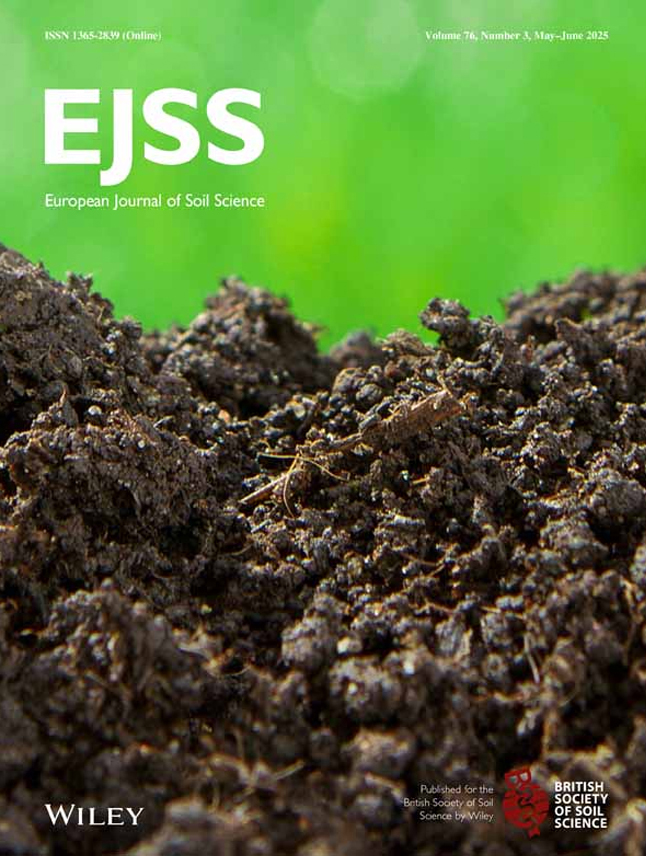
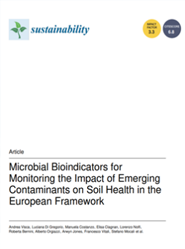
Microbial Bioindicators for Monitoring the Impact of Emerging Contaminants on Soil Health in the European Framework
Resource Type: Maps & Documents, Documents, Publications in Journals
Year: 2025

Antibiotic resistance (AR) is recognized by the World Health Organization as a major threat to human health, and recent studies highlight the role of microplastics (MPs) in its spread. MPs in the environment may act as vectors for antibiotic-resistant bacteria (ARB) and antibiotic resistance genes (ARGs). Bacterial communities on the plastisphere, the surface of MPs, are influenced by plastic properties, allowing ARB to colonize and form biofilms. These biofilms facilitate the transfer of ARGs within microbial communities. This study analyzed data from the LUCAS soil dataset (885 soil samples across EU countries) using the Emu tool to characterize microbial communities at the genus/species level.

From data to fork” data-driven science inspired by policy initiatives for the promotion of smart agricultural technologies
Resource Type: Maps & Documents, Documents, Publications in Journals
Year: 2025

The special issue “From data to Fork” gathered 15 papers from all over the world in cross-cutting areas of Smart Agriculture Research, including new algorithm development for the agricultural sector, food security, and ecosystem well-being and several study cases. We promoted the concept of reviews and original research papers reporting applications of smart farming from field to fork. The editorial proposed some main groups of papers in the following sections: i) Advances in Precision Agriculture and Crop Monitoring; ii) Technological Innovation for Farm Management and Infrastructure; iii) Digital Outreach and Decision Support Systems.

Quantifying the Accuracy, Uncertainty, and Sensitivity of Soil Geochemical Multisurface Models
Resource Type: Maps & Documents, Documents, Publications in Journals
Year: 2025

Geochemical multisurface models and their generic parameters for the solid-solution partitioning and speciation of metals have been used for decades. For soils the collective uncertainty and sensitivity of model parameters and soil-specific reactive surface properties has been insufficiently evaluated. We used statistical tools and data of diverse soils to quantify for Cd, Cu and Zn the uncertainty of model parameters and input values of the nonideal competitive adsorption (NICA)-Donnan model for organic matter (OM) coupled with the generalized two-layer model for metal-oxides. Subsequently, we quantified the uncertainty of speciation predictions and the sensitivity to model parameters and input values. Importantly, we established new generic NICA-Donnan parameters that substantially improved model accuracy, especially for Zn. Uncertainties generally followed Cu < Cd < Zn. With OM being the major binding surface across most soils, the affinity parameters (log Ki) were most influential.

A bottom-up perspective on how fire changes ecosystem biogeochemistry via plant-soil interactions
Resource Type: Maps & Documents, Documents, Publications in Journals
Year: 2025

The effect of fire on plants and soils cannot be viewed in isolation. Plant-soil interactions, and their role in determining the response of ecosystem to fire, has been a widely debated topic. Most studies describe patterns rather than the mechanisms that may lead to variable effects on soils across ecosystems.

Spatially varying parameters improve carbon cycle modeling in the Amazon rainforest with ORCHIDEE r8849map
Resource Type: Maps & Documents, Documents, Publications in Journals
Year: 2025

 Here we assess the importance of spatially varying parameters to resolve ecosystem spatial heterogeneity in the ORCHIDEE (ORganizing Carbon and Hydrology in Dynamic EcosystEms) DGVM. Using satellite observations of tree aboveground biomass (AGB), gross primary productivity (GPP), and biomass mortality rates, we optimized two key parameters: the alpha self-thinning (α), which controls tree mortality induced by light competition, and the nitrogen use efficiency of photosynthesis (η), which regulates GPP. 

Soil heating during wildfires and prescribed burns: a global evaluation
Resource Type: Maps & Documents, Documents, Publications in Journals
Year: 2025

Fires can alter soil properties via downward heat transfer. Numerous studies have examined effects of wildfires and prescribed burns on soils, yet knowledge of the soil temperatures and durations reached is limited. This can lead to erroneous assumptions regarding fire impacts, especially when laboratory heating results are extrapolated to field conditions.

World Soil Day 2025
World Soil Day 2025
Resource Type: Maps & Documents, Documents, Poster Publications
Year: 2025
World soil day posters created to celebrate the annual milestone. Two posters were created, the first one uses the visual metaphor of a human silhouette symbolising the link between soil health, human well-being and strategic autonomy.
The second option with the hands, conveys a tactile human connection to soil, with a change in the subhead which aims to set an action-oriented tone. 
 
The posters are answering the following questions:
Why it matters?
How we act?
Impact?
 
To this we have also added quantitative anchors with the figures  (e.g., €10 billion annual cost, 60–70% soil degradation) adding to the urgency around the current state of soils.
Digging up soil facts
Resource Type: Maps & Documents, Documents, Poster Publications
Year: 2025

Poster with six key facts reveal Europe's soil crisis—erosion, contamination, sealing, biodiversity loss, carbon decline, poor health and the overall cost —highlighting the urgent need for sustainable soil management and protection.

State of Soil Posters
Resource Type: Maps & Documents, Documents, Poster Publications
Year: 2025

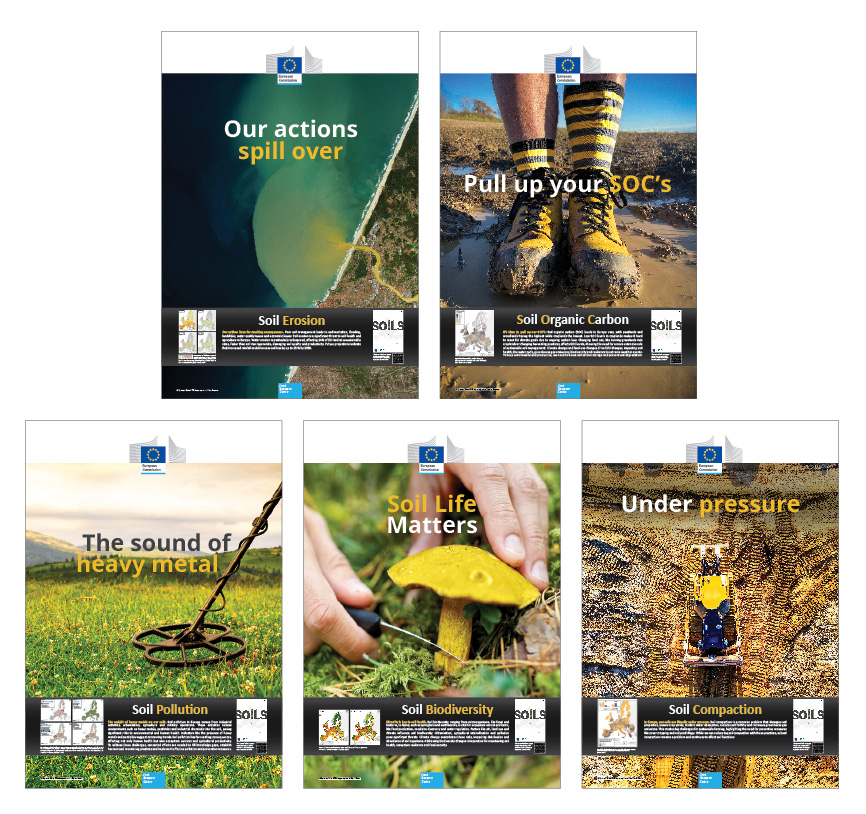
Off the back of the State of Soil in Europe Report, which is a major milestone in soil assessment, providing an in-depth examination of the state of soils across Europe. A series of thematic posters have been developed based on the report’s key findings. 


Harmonizing soil pollution data and knowledge in Europe: a collaborative effort towards achieving healthy soils by 2050
Resource Type: Maps & Documents, Documents, Scientific-Technical Reports
Year: 2025

This report addresses soil pollution in the EU, supporting the implementation of the EU's Soil Monitoring Law (SML) and Zero Pollution Action Plan. This document presents the outcomes of workshop with several EU Mission projects on soil pollution, including the SoilWise, ISLANDR, EDAPHOS, ARAGORN, and BENCHMARKS projects. The report provides a comprehensive approach to harmonization and standardization of soil pollution data, essential for effective policy-making and decision-support. The report also provides information on the development of new policy measures, such as the EU's Soil Strategy and proposed Directive on Soil Monitoring and Resilience. This report hopes to serve ongoing and future Soil Mission projects with data harmonization for a higher dissemination and policy impact. The harmonization of the data will help EU and national/regional policymakers to have a clear view on the state of the soil pollution and therefore reinforce their regulation on soils (e.g., Soil Monitoring Law).

Download the report

Status of Environment and Climate in Ukraine
Resource Type: Documents, Scientific-Technical Reports, Maps & Documents
Year: 2025

The present report provides an overall picture of the status of environment and climate - air quality, emissions of air pollutants and greenhouse gases - (GHG), forests, soil and marine environment in Ukraine. The analysis is based on available studies by JRC and other sources. However, the report does not cover all environmental areas as completeness and quality of data varies across the different topics. The ongoing conflict between Russia and Ukraine has exacerbated pre-existing challenges related to environmental monitoring and the enforcement of environmental regulations, further complicating this assessment.

The information summarised in this study provides for the first time the basis for assessing the impact of war in Ukraine with reference to specific environment and climate aspects, including relevant elements for the reconstruction of the country. Moreover, the report provides additional information for benchmarking the EU accession process of Ukraine, with particular reference to Chapter 27 of the EU Acquis on Environment, as well as for monitoring the progress in the green transition, with an emphasis on zero-pollution, low-carbon and nature-preserving dimensions.

In the last decade, Ukraine made efforts to align its environmental strategy with EU standards including the definition of key strategic goals and a roadmap for its participation in the Green Deal. The concentration of pollutants regulated by Ukrainian legislation meet the EU criteria, with the exception of NO2 and CH2O. National standards for atmospheric particulate matter with diameter <2.5 μm and <10 μm (PM2.5 and PM10, respectively) are not in place yet. Emission of pollutants have decreased over the past decade due to the impact of COVID-19 pandemic and the war.


Over the past decade, climate change and the war have significantly increased the risk of large forest fires, with the worst situation in the last five years. Wildfires account for 45-65% of the total forest cover losses every year. Although soils in Ukraine contain high levels of organic matter and nutrients, they are also vulnerable to degradation, such as nutrient mismanagement, acidification, erosion, compaction, salinisation, contamination. Erosion is the most widespread threat since it affects 40% of the Ukrainian soil.

Download the report

EUSO annual report 2024
Resource Type: Documents, Scientific-Technical Reports, Maps & Documents
Year: 2025

Healthy soils are essential for providing healthy food and achieving climate neutrality. The publication of the EU Soil Strategy for 2030, the proposed Soil Monitoring and Resilience Directive and the Mission Soil marked major milestones for soil protection and restoration in the EU. Given this context, the EU Soil Observatory (EUSO) aims to be the principal provider of knowledge and data on soils at the EU-level and to underpin EU policies related to soils. This report highlights the main activities and outcomes of the EUSO in 2024. During this period, the EUSO provided policy support to a wide range of soil related areas, including the proposed Soil Monitoring and Resilience Directive, the Carbon Removal Certification Framework and the Mission Soil. A highlight was the launch of the science for policy report ‘The state of soils in Europe’, in collaboration with the European Environment Agency, providing an in-depth examination of the pressures affecting soils across Europe. Furthermore, the EUSO updated its Soil Degradation Dashboard and launched a novel EU Soil Strategy Actions Tracker. The latter shows that almost 70% of the policy actions listed in the EU Soil Strategy for 2030 are completed. Next, the European Soil Data Centre, the leading web platform for sharing data and knowledge about EU soils, has grown significantly with 15 new datasets and a 20% increase in requests for datasets. Additionally, the EUSO contributed directly to advanced scientific knowledge on soils with the publication of 47 scientific papers, 10 technical reports, and 3 science-for-policy reports. Finally, the EUSO organised and contributed to activities to support stakeholder interactions and citizen engagement regarding soils. Highlights include the fourth EUSO Stakeholders Forum, the second Young Soil Researchers Forum, the European Mission Soil Week and the activities of the EUSO Working Groups. During 2025, the EUSO will continue to be the principal provider of soil-related data and knowledge while supporting the implementation of EU policy objectives in relation to soils.

Download the Report: https://esdac.jrc.ec.europa.eu/public_path//shared_folder/doc_pub/JRC141262.pdf

Delivering the EU Green Deal - Progress towards targets
Resource Type: Maps & Documents, Documents, Scientific-Technical Reports
Year: 2025

The study shows that significant achievement has been delivered so far but progress needs to accelerate in many areas. As of mid-2024, 32 of the 154 targets are currently “on track” and 64 are identified as “acceleration needed” meaning that more progress is needed to meet the targets on time. Furthermore, 15 of the targets are found to be “not progressing” or “regressing”, and for 43 of the targets no data is currently available. The timing of the binding policies, most of which have been recently agreed and are expected to deliver results in the coming years, is a significant factor influencing these assessments.This report integrates all EGD actions and related policies, offering an assessment of the EU’s green transition based on robust data and science. It identifies priority areas for intensified efforts to meet short-term implementation goals and contribute to the long-term ambition of a sustainable, fair, just, and climate-neutral Europe by 2050. This collective work serves as a benchmarking tool, providing scientifically grounded guidance for future EU policies and programmes.

Link to the report: https://publications.jrc.ec.europa.eu/repository/handle/JRC140372

SOLACE - Understanding the links between SOiL pollution and CancEr
Resource Type: Documents, Scientific-Technical Reports, Maps & Documents
Year: 2025

Soil pollution is a significant environmental and health concern in Europe, with potential links to cancer incidence. The Exploratory Research project “Understanding the links between SOil pollution and CancEr” (SOLACE)” aimed to investigate the complex relationships between soil properties, pollution, land use and human health, providing a foundation for further research and policy development, as part of the Joint Research Centre's (JRC) strategic scientific development.. The scoping review of the existing studies linking soil pollution and cancer identified the knowledge gaps in the fields. We also performed an ecological study across 26 EU countries, which releaved associations between the regional rates of lung cancer mortality and soil pollution with arsenic and cadmium. The SOLACE project underscores the importance of comprehensive soil monitoring to safeguard environmental and human health and emphasizes the need for continued investment in research, monitoring, and policy development to address the complex issues surrounding soil pollution and its impact on human health The SOLACE project achievements contribute to the goals of the JRC by supporting soil-related directives like the Soil Monitoring Law and the Zero Pollution Action Plan.

Download the report

EU Soil Strategy Actions Tracker
Resource Type: Maps & Documents, Documents, Scientific-Technical Reports
Year: 2025

The EU Soil Strategy for 2030 sets out a framework to ensure that soils are used sustainably by setting concrete measures to protect and restore soils. It sets a vision and objectives to achieve healthy soil by 2050, with concrete actions due by 2030. The newly developed ‘EU Soil Strategy Actions Tracker’ is a tool to track the progress of these concrete actions since the adoption of the EU Soil Strategy in 2021. The EU Soil Strategy Actions Tracker provides an overview on the status of the actions, information on the due date, recent updates, links to related EU policies, links to relevant sources, and the main actors responsible for implementation. Currently, 62 out of 90 actions (69%) are marked as completed, 24 actions (27%) as in progress, and 4 actions (4%) as withdrawn. The EU Soil Strategy Actions Tracker provides a clear overview of the progress made by the European Commission under the EU Soil Strategy. With almost 70% of complete actions, the tracker shows that the Commission is well on track to complete most of the actions included in the EU Soil Strategy. Together with the EU Soil Observatory (EUSO) Soil Degradation Dashboard, it provides an informative overview on EU soil health status and ongoing actions to preserve and restore the state of soils in the EU. The EU Soil Strategy Actions Tracker is the first step towards an EUSO Soil Policy Actions Tracker to monitor EU policy actions relevant to soils, other policies (e.g. EU Climate Law) are foreseen to be included in 2025.

A proposal for soil health indicators at EU level
Resource Type: Datasets, Maps & Documents, Documents, Scientific-Technical Reports
Year: 2024

Healthy soils are essential for our environment and society, as soils deliver crucial ecosystem services. The publication of the EU Soil Strategy for 2030 and the Soil Monitoring Law marked
major milestones for soil protection and restoration in the EU. In parallel, the Mission Soil aims to advance knowledge on healthy soils and establish 100 Living Labs and Lighthouses to co-create innovations for soil health. Contributing to a better EU soil health monitoring and a complete set of indicators at the EU-level are crucial components of the Mission Soil’s objectives. This report proposes a list of indicators for soil health in the EU, together with targets and thresholds for these indicators. Nineteen indicators are presented, representing the main soil degradation processes and monitoring the state of soil health at EU scale. The EUSO Soil Degradation Dashboard is proposed as the main platform for presenting these indicators, together with key results and statistics. The dashboards shows that, based on the proposed indicators, more than 60% of EU soils are currently unhealthy. Planned updates on the proposed indicator framework include: (i) refining, updating and adding new datasets for indicators, (ii) refining thresholds for the indicators, and (iii) developing a composite Soil Health Index. For these planned activities, close collaboration with the Mission Soil projects will be crucial.

Download the Report

Towards sustainable food systems: developing a monitoring framework for the EU
Resource Type: Maps & Documents, Documents, Publications in Journals
Year: 2024

Adequate monitoring of the EU transition toward sustainable food systems can promote policy coherence and provide better evidence for informed policy making. This paper presents an initial concept and methodology for an EU food system monitoring framework, integrating a systems’ perspective and key sustainability elements relevant to the EU context. Grounded in scientific evidence and extensive dialogues among scientific experts with interdisciplinary backgrounds, we define an EU food system sustainability model that provides a conceptual framework for monitoring. This model encompasses 12 thematic areas and 37 indicator domains, synthetized through a rigorous review of existing frameworks and the assessment of nearly 250 relevant indicators via a transparent workflow and an integrated collaborative digital tool. We identify data gaps that signal challenges ahead in effective monitoring, but also opportunities for research and cooperation. To advance with an EU food system monitoring framework, it is essential to engage in participatory processes with stakeholders, ensuring an inclusive and transparent approach.

A unifying modelling of multiple land degradation pathways in Europe
Resource Type: Maps & Documents, Documents, Publications in Journals
Year: 2024

Land degradation is a complex socio-environmental threat, which generally occurs as multiple concurrent pathways that remain largely unexplored in Europe. Here we present an unprecedented analysis of land multi-degradation in 40 continental countries, using twelve dataset-based processes that were modelled as land degradation convergence and combination pathways in Europe’s agricultural (and arable) environments. Using a Land Multi-degradation Index, we find that up to 27%, 35% and 22% of continental agricultural (~2 million km2) and arable (~1.1 million km2) lands are currently threatened by one, two, and three drivers of degradation, while 10–11% of pan-European agricultural/arable landscapes are cumulatively affected by four and at least five concurrent processes. We also explore the complex pattern of spatially interacting processes, emphasizing the major combinations of land degradation pathways across continental and national boundaries. Our results will enable policymakers to develop knowledge-based strategies for land degradation mitigation and other critical European sustainable development goals..

A unifying modelling of multiple land degradation pathways in Europe | Nature Communications


How the EU Soil Observatory is providing solid science for healthy soils
Resource Type: Maps & Documents, Documents, Publications in Journals
Year: 2024

Healthy soils are essential for sustainable food production, achieving climate neutrality and halting the loss of biodiversity. The European Commission turned the spotlights on these vital aspects of soils with the launch of the EU Soil Observatory (EUSO) in 2021 to support the European Green Deal. Also, the EU Soil Strategy for 2030 and the proposed Soil Monitoring Law marked a major milestone for soil protection. This article provides an overview of the functioning of the EUSO within this policy context. Through its activities, the EUSO supports an EU-wide soil monitoring system and provides policy support to a wide range of policy areas. Moreover, the EUSO monitors the state of soil health in the EU through the EUSO Soil Health Dashboard. This comprehensive and easy understandable tool shows, for the first time, where current scientific evidence converges to indicate areas in the EU likely to be affected by soil degradation. Furthermore, the EUSO supports soil research and innovation, enhances the capacity and functionality of the European Soil Data Centre and supports citizen engagements regarding soil matters. Overall, since 2021, the EUSO has successfully taken up its role to be the principal knowledge hub for soil information and data to underpin EU policy development and implementation. Also in the next years, EUSO will continue to provide data and knowledge to monitor, safeguard and restore soils in the EU.

How the EU Soil Observatory is providing solid science for healthy soils - Panagos - 2024 - European Journal of Soil Science - Wiley Online Library

Soil health is associated with higher primary productivity across Europe
Resource Type: Maps & Documents, Documents, Publications in Journals
Year: 2024

Soil health is expected to be of key importance for plant growth and ecosystem functioning. However, whether soil health is linked to primary productivity across environmental gradients and land-use types remains poorly understood. To address this gap, we conducted a pan-European field study including 588 sites from 27 countries to investigate the link between soil health and primary productivity across three major land-use types: woodlands, grasslands and croplands. We found that mean soil health (a composite index based on soil properties, biodiversity and plant disease control) in woodlands was 31.4% higher than in grasslands and 76.1% higher than in croplands. Soil health was positively linked to cropland and grassland productivity at the continental scale, whereas climate best explained woodland productivity. Among microbial diversity indicators, we observed a positive association between the richness of Acidobacteria, Firmicutes and Proteobacteria and primary productivity. Among microbial functional groups, we found that primary productivity in croplands and grasslands was positively related to nitrogen-fixing bacteria and mycorrhizal fungi and negatively related to plant pathogens. Together, our results point to the importance of soil biodiversity and soil health for maintaining primary productivity across contrasting land-use types.

Soil health is associated with higher primary productivity across Europe | Nature Ecology & Evolution

Cadmium in topsoils of the European Union–an analysis based on LUCAS topsoil database
Resource Type: Maps & Documents, Documents, Publications in Journals
Year: 2024
Cadmium (Cd) is a naturally occurring element that can accumulate in the soil through the application of fertilisers containing cadmium and as a waste of industrial processes. Cadmium inputs in the soil have increased significantly (+50 %) during the 20th century as a result of the application of fertilisers and sewage sludge, and also due to local contamination (e.g. waste dumping, mining) and industrial emissions (e.g. zinc smelters).
Using the 21,682 soil samples from the LUCAS soil survey, we aim to estimate the spatial distribution of the concentration of Cd in the European Union (EU) and UK topsoil. Out of the total, 72.6 % of the samples have Cd values <0.07 mg kg−1, 21.6 % in the range 0.07–1 mg kg−1 and the remaining 5.5 % higher than the threshold of 1 mg kg−1, which is generally considered the limit for risk assessment. The mean Cd value in the EU topsoils is 0.20 mg kg−1, slightly higher in grasslands (0.24 mg kg−1) compared to croplands (0.17 mg kg−1).
Applying an ensemble of machine learning models supported by a variety of environmental descriptors, we created maps of Cd distribution at a resolution of 100 m. The ensemble approach included five models and increased the prediction accuracy to R2 of 0.45 (an increase of 0.1 compared to best single model performance). The approach used resulted in a high predictive power for the general Cd distribution, while also identifying hotspots of Cd contamination. Natural factors influencing Cd levels include soil properties (pH, clay), topography, soil erosion, and leaching. As anthropogenic factors, we identified phosphorus inputs to agricultural lands as the most important for Cd levels. The application of the EU Fertiliser Directive should further limit Cd inputs and potentially the Cd content in soils.
 
Fire effects on geomorphic processes
Resource Type: Maps & Documents, Documents, Publications in Journals
Year: 2024

Fire-induced geomorphic changes, such as enhanced erosion and debris-flow activity, are expected to increase with climate change owing to increases in fire activity and rainfall intensification. In this Review, we summarize how landscape attributes, rainfall and burn severity influence post-fire geomorphic responses over a range of temporal and spatial scales. Sub-hourly rainfall intensity and burn severity control the magnitude of many post-fire geomorphic process rates through their influence on ground cover and rainfall-runoff partitioning. Post-fire debris flows (PFDFs) make a substantial contribution to the post-fire sediment cascade, transporting sediment from hillslopes to channels, adjacent floodplains and alluvial fans. By the late twenty-first century, PFDF activity is estimated to increase in 68% of areas in which PFDFs have occurred in the past and decrease in only 2% of locations. Once altered by fire, geomorphic state variables — such as infiltration capacity, canopy cover, ground cover and sediment availability — can recover to their pre-fire value or be shifted to a new value. Improved understanding of the factors that influence these post-fire trajectories could support targeted management and intervention strategies. Additionally, monitoring that extends beyond the first 1–3 years after fire and deeper integration of ecohydrological processes into geomorphic models are needed to improve forecasts of post-fire geomorphic responses.

Fire effects on geomorphic processes | Nature Reviews Earth & Environment

Interaction effects of pH and land cover on soil microbial diversity are climate‐dependent
Resource Type: Maps & Documents, Documents, Publications in Journals
Year: 2024

Factors regulating the diversity and composition of soil microbial communities include soil properties, land cover and climate. How these factors interact at large scale remains poorly investigated. Here, we used an extensive dataset including 715 locations from 24 European countries to investigate the interactive effects of climatic region, land cover and pH on soil bacteria and fungi. We found that differences in microbial diversity and community composition between land cover types depended on the climatic region. In Atlantic, Boreal and Continental regions, microbial richness was higher in croplands and grasslands than woodlands while richness in Mediterranean areas did not vary significantly among land cover types. These differences were further related to soil pH, as a driver of bacterial and fungal richness in most climatic regions, but the interaction of pH with land cover depended on the region. Microbial community composition differed the most between croplands and woodlands in all regions, mainly due to differences in pH. In the Mediterranean region, bacterial communities in woodlands and grasslands were the most similar, whereas in other regions, grassland and cropland-associated bacteria showed more similarity. Overall, we showed that key factors interact in shaping soil microbial communities in a climate-dependent way at large scale.

Environmental Microbiology: Vol 26, No 2

GloRESatE: A dataset for global rainfall erosivity derived from multi-source data
Resource Type: Maps & Documents, Documents, Publications in Journals
Year: 2024

Numerous hydrological applications, such as soil erosion estimation, water resource management, and rain driven damage assessment, demand accurate and reliable rainfall erosivity data. However, the scarcity of gauge rainfall records and the inherent uncertainty in satellite and reanalysis-based rainfall datasets limit rainfall erosivity assessment globally. Here, we present a new global rainfall erosivity dataset (0.1° × 0.1° spatial resolution) integrating satellite (CMORPH and IMERG) and reanalysis (ERA5-Land) derived rainfall erosivity estimates with gauge rainfall erosivity observations collected from approximately 6,200 locations across the globe. We used a machine learning-based Gaussian Process Regression (GPR) model to assimilate multi-source rainfall erosivity estimates alongside geoclimatic covariates to prepare a unified high-resolution mean annual rainfall erosivity product. It has been shown that the proposed rainfall erosivity product performs well during cross-validation with gauge records and inter-comparison with the existing global rainfall erosivity datasets. Furthermore, this dataset offers a new global rainfall erosivity perspective, addressing the limitations of existing datasets and facilitating large-scale hydrological modelling and soil erosion assessments.

GloRESatE: A dataset for global rainfall erosivity derived from multi-source data | Scientific Data

An assessment of global land susceptibility to wind erosion based on deep-active learning modelling and interpretation techniques
Resource Type: Maps & Documents, Documents, Publications in Journals
Year: 2024

Spatial accurate mapping of land susceptibility to wind erosion is necessary to mitigate its destructive consequences. In this research, for the first time, we developed a novel methodology based on deep learning (DL) and active learning (AL) models, their combination (e.g., recurrent neural network (RNN), RNN-AL, gated recurrent units (GRU), and GRU-AL) and three interpretation techniques (e.g., synergy matrix, SHapley Additive exPlanations (SHAP) decision plot, and accumulated local effects (ALE) plot) to map global land susceptibility to wind erosion. In this respect, 13 variables were explored as controlling factors to wind erosion, and eight of them (e.g., wind speed, topsoil carbon content, topsoil clay content, elevation, topsoil gravel fragment, precipitation, topsoil sand content and soil moisture) were selected as important factors via the Harris Hawk Optimization (HHO) feature selection algorithm. The four models were applied to map land susceptibility to wind erosion, and their performance was assessed by three measures consisting of area under of receiver operating characteristic (AUROC) curve, cumulative gain and Kolmogorov Smirnov (KS) statistic plots. The results revealed that GRU-AL model was considered as the most accurate, revealing that 38.5%, 12.6%, 10.3%, 12.5% and 26.1% of the global lands are grouped at very low, low, moderate, high and very high susceptibility classes to wind erosion hazard, respectively. Interpretation techniques were applied to interpret the contribution and impact of the eight input variables on the model’s output. Synergy plot revealed that the soil carbon content exhibited high synergy with DEM and soil moisture on the model’s predictions. ALE plot showed that soil carbon content and precipitation had negative feedback on the prediction of land susceptibility to wind erosion. Based on SHAP decision plot, soil moisture and DEM presented the highest contribution on the model’s output. Results highlighted new regions at high latitudes (southern Greenland coast, hotspots in Alaska and Siberia), which exhibited high and very high land susceptibility to wind erosion.

An assessment of global land susceptibility to wind erosion based on deep-active learning modelling and interpretation techniques | Scientific Reports

An integrated modeling approach for estimating monthly global rainfall erosivity
Resource Type: Maps & Documents, Documents, Publications in Journals
Year: 2024

Modeling monthly rainfall erosivity is vital to the optimization of measures to control soil erosion. Rain gauge data combined with satellite observations can aid in enhancing rainfall erosivity estimations. Here, we presented a framework which utilized Geographically Weighted Regression approach to model global monthly rainfall erosivity. The framework integrates long-term (2001–2020) mean annual rainfall erosivity estimates from IMERG (Global Precipitation Measurement (GPM) mission’s Integrated Multi-satellitE Retrievals for GPM) with station data from GloREDa (Global Rainfall Erosivity Database, n = 3,286 stations). The merged mean annual rainfall erosivity was disaggregated into mean monthly values based on monthly rainfall erosivity fractions derived from the original IMERG data. Global mean monthly rainfall erosivity was distinctly seasonal; erosivity peaked at ~ 200 MJ mm ha−1 h−1 month−1 in June–August over the Northern Hemisphere and ~ 700 MJ mm ha−1 h−1 month−1 in December–February over the Southern Hemisphere, contributing to over 60% of the annual rainfall erosivity over large areas in each hemisphere. Rainfall erosivity was ~ 4 times higher during the most erosive months than the least erosive months (December–February and June–August in the Northern and Southern Hemisphere, respectively). The latitudinal distributions of monthly and seasonal rainfall erosivity were highly heterogeneous, with the tropics showing the greatest erosivity. The intra-annual variability of monthly rainfall erosivity was particularly high within 10–30° latitude in both hemispheres. The monthly rainfall erosivity maps can be used for improving spatiotemporal modeling of soil erosion and planning of soil conservation measures.

An integrated modeling approach for estimating monthly global rainfall erosivity | Scientific Reports

Geospatial evaluation of the agricultural suitability and land use compatibility in Europe's temperate continental climate region
Resource Type: Maps & Documents, Documents, Publications in Journals
Year: 2024

Land suitability assessment is used in conjunction with geographic information systems to spatially model diverse aspects of soil functions, having the potential to facilitate a sustainable increase in agricultural production, reduce land degradation, or aid humans in adapting to climate change. Compared to the existing datasets, this study provides a new higher resolution geospatial assessment of the agricultural land suitability for several crops and land uses in the temperate continental climate across Europe. To model the land suitability we used geospatial data depicting seventeen eco-pedological indicators (e.g. soil texture, pH, porosity, temperature, precipitation, slope). To evaluate how the land is utilized, the suitability maps have been spatially cross-tabulated with a crop map. Over the entire study area, wheat and barley showed significant suitable land in the southern part, potatoes, and sugar beet exhibited the highest extent of suitable land in the northern parts, while corn and sunflower exhibited a much lower extent of suitable land. Water table depth, precipitation, temperature, terrain slope, soil porosity, SOC, and topsoil texture emerged as the limiting factors for agricultural suitability in the study area. Our results show that the suitable arable land does not have space left for the expansion of crops, however, we have identified regions with extensive cultivation of wheat and corn on unsuitable land with the potential for cultivation of more suitable crops such as barley, sunflower, sugar beet, and potato. It seems that one action that can enhance agricultural practices in the study area is to better allocate each cultivated crop across more suitable lands.

Geospatial evaluation of the agricultural suitability and land use compatibility in Europe's temperate continental climate region - ScienceDirect

Benchmarking soil organic carbon (SOC) concentration provides more robust soil health assessment than the SOC/clay ratio at European scale
Resource Type: Maps & Documents, Documents, Publications in Journals
Year: 2024

Increasing soil organic carbon (SOC) confers benefits to soil health, biodiversity, underpins carbon sequestration and ameliorates land degradation. One recommendation is to increase SOC such that the SOC to clay ratio (SOC/clay) exceeds 1/13, yet normalising SOC levels based on clay alone gives misleading indications of soil structure and the potential to store additional carbon. Building on work by Poeplau & Don (2023) to benchmark observed against predicted SOC, we advance an alternative indicator: the ratio between observed and “typical” SOC (O/T SOC) for pan-European application. Here, “typical” SOC is the average concentration in different pedo-climate zones, PCZs (which, unlike existing SOC indicators, incorporate land cover and climate, alongside soil texture) across Europe, determined from mineral (<20 % organic matter) topsoils (0–20 cm) sampled during 2009–2018 in LUCAS, Europe's largest soil monitoring scheme (n = 19,855). Regression tree modelling derived 12 PCZs, with typical SOC values ranging 5.99–39.65 g kg−1. New index classes for comparison with SOC/clay grades were established from the quartiles of each PCZ's O/T SOC distribution; these were termed: “Low” (below the 25th percentile), “Intermediate” (between the 25th and 50th percentiles), “High” (between the 50th and 75th percentiles), and “Very high” (above the 75th percentile). Compared with SOC/clay, O/T SOC was less sensitive to clay content, land cover, and climate, less geographically skewed, and better reflected differences in soil porosity and SOC stock, supporting 2 EU Soil Health Mission objectives (consolidating SOC stocks; improving soil structure for crops and biota). These patterns held for 2 independent datasets, and O/T SOC grades were sensitive enough to reflect land management differences across several long-term field experiments. O/T SOC used in conjunction with several other physical, chemical and biological soil health indicators can help support the EU Soil Monitoring Law and achieve several United Nations Sustainable Development Goals.

Benchmarking soil organic carbon (SOC) concentration provides more robust soil health assessment than the SOC/clay ratio at European scale - ScienceDirect

Soil pollution in the European Union – An outlook
Resource Type: Maps & Documents, Documents, Publications in Journals
Year: 2024

Soil pollution in the European Union (EU) is poorly quantified, because of several years of reduced attention and limited funding on soil research and monitoring. Moreover, issues such as different monitoring methodologies within Member States (MS), and quantification methods focused on pseudototal rather than the available fraction of pollutants, has been limiting our understanding of risk under soil pollution. Despite that, thanks to efforts from the scientific community, it was possible to achieve some progress, which is by far insufficient for the problem at hand. In the anticipation of future policy demands and towards a common strategy for tackling soil pollution in the EU, it seemed relevant to describe the limited knowledge and main uncertainties. Such analysis should provide evidence for the development of efficient policies, as well as updating current ones to better tackle the interdisciplinary of soil. This perspective provides our view on current knowledge on soil pollution at EU scale, by compiling the most updated assessments made at EU scale, identifying soil pollution drivers, impacts on health and the environment, and evaluating current state of knowledge. Allowing us to infer about current level of uncertainties and knowledge gaps and identify solutions through future research and policies. Our suggestions are in line with an increasing investment on research and innovation, but also more frequent updates of current legislation already tackling pollution and welcoming the new proposal for a Soil Monitoring Law as an important driver for soil knowledge development and implementation of a European monitoring system.

Soil pollution in the European Union – An outlook - ScienceDirect

Ecological risk assessment of heavy metals from application of sewage sludge on agricultural soils in Europe
Resource Type: Maps & Documents, Documents, Publications in Journals
Year: 2024

The present European Union (EU) Sewage Sludge Directive (86/278/EEC) is undergoing modifications aimed at enhancing its applicability in the agricultural sector. The Directive's existing limit values for heavy metal concentrations in soils are in the process of being revised. However, to comprehensively understand their effects on EU agricultural lands, additional evaluations are necessary. This is particularly important given that ecological risk assessments are often performed on a site-specific basis, potentially overlooking broader regional implications. The main objective of the current work is to introduce a methodological approach to quantify the impact of sewage sludge (SS) application on agricultural soils in the EU and the United Kingdom. Concentrations of heavy metals (HMs) (Cd, Cu, Hg, Ni, Pb and Zn) in agricultural land from Land Use/Land Cover Area Frame Survey (LUCAS) 2009 topsoil database were used as a baseline. Maximum quantities of SS that can be safely applied to agricultural lands were obtained by a modeling procedure was used to determine the maximum safe quantities of SS that can be applied to agricultural lands for each country within the European Member States and the United Kingdom. Accumulation of HMs in soils was modelled by using a representative SS composition, distributed over 10 successive years at 5 Mg ha−1 year−1 rate. Ecological risk impact was assessed by using both the single ecological risk index (Er) and the integrated potential ecological risk index (RI). Maximum quantities of SS applied on agricultural soils in EU + UK were estimated to be 45 Mg ha−1 at the country level. We found that 19% of agricultural land (around 28,471,900 ha) in the EU + UK shows a higher RI than moderate risk after long time application of the representative SS. We show that the combination of the HM concentrations from the LUCAS topsoil survey and assumptions on the SS composition and soil HM partitioning can be used to define the actual and potential soil pollution rate in EU + UK. We demonstrate that the proposed methodology can be used by policymakers, farmers, regional authorities and other stakeholders, with possible adaptions based on local in-depth soil and SS knowledge.

Ecological risk assessment of heavy metals from application of sewage sludge on agricultural soils in Europe - Yunta - 2024 - European Journal of Soil Science - Wiley Online Library

A trait-based ecological perspective on the soil microbial antibiotic-related genetic machinery
Resource Type: Maps & Documents, Documents, Publications in Journals
Year: 2024

Antibiotic resistance crisis dictates the need for resistance monitoring and the search for new antibiotics. The development of monitoring protocols is hindered by the great diversity of resistance factors, while the “streetlight effect” denies the possibility of discovering novel drugs based on existing databases. In this study, we address these challenges using high-throughput environmental screening viewed from a trait-based ecological perspective. Through an in-depth analysis of the metagenomes of 658 topsoil samples spanning Europe, we explored the distribution of 241 prokaryotic and fungal genes responsible for producing metabolites with antibiotic properties and 485 antibiotic resistance genes. We analyzed the diversity of these gene collections at different levels and modeled the distribution of each gene across environmental gradients. Our analyses revealed several nonparallel distribution patterns of the genes encoding sequential steps of enzymatic pathways synthesizing large antibiotic groups, pointing to gaps in existing databases and suggesting potential for discovering new analogues of known antibiotics. We show that agricultural activity caused a continental-scale homogenization of microbial antibiotic-related machinery, emphasizing the importance of maintaining indigenous ecosystems within the landscape mosaic. Based on the relationships between the proportion of the genes in the metagenomes with the main predictors (soil pH, land cover type, climate temperature and humidity), we illustrate how the properties of chemical structures dictate the distribution of the genes responsible for their synthesis across environments. With this understanding, we propose general principles to facilitate the discovery of antibiotics, including principally new ones, establish abundance baselines for antibiotic resistance genes, and predict their dissemination.

A trait-based ecological perspective on the soil microbial antibiotic-related genetic machinery - ScienceDirect

Land use intensification homogenizes soil protist communities and alters their diversity across Europe
Resource Type: Maps & Documents, Documents, Publications in Journals
Year: 2024

Soil protists have vital roles as major microbiome predators in soil functioning and plant performance. Protists are also suggested to be the most responsive microbial group to external changes, such as anthropogenic land use types. While protists were long used as models for biogeography such as to investigate if ‘everything is everywhere’ among microbes, their biogeography at the taxonomic level has never been explored in depth at the continental scale and linked to anthropogenic drivers. Here we evaluated how land-use types affect the diversity and structure of soil protist communities across 885 locations in Europe based on the European Commission's Land Use and Coverage Area frame Survey (LUCAS). We observed higher α-diversity of soil protists but lower community structure dissimilarity (β-diversity) in croplands compared with woodlands, with grasslands in an intermediate position. The diversity of protist groups with a broader spatial niche was higher in croplands, whereas taxa with a narrower niche increased in woodlands. The importance of climate factors on α-diversity variations reduced as land use intensity increased, but the opposite trend was observed for the effect of soil properties. Our study suggests that there is an interaction between land use type, environmental effects, and spatial niche attributes of soil protist groups, highlighting the importance of land-use type on the dynamics of protist communities.

https://www.sciencedirect.com/science/article/pii/S0038071724001482

Into the unknown: The role of post‐fire soil erosion in the carbon cycle
Resource Type: Maps & Documents, Documents, Publications in Journals
Year: 2024

Wildfires directly emit 2.1 Pg carbon (C) to the atmosphere annually. The net effect of wildfires on the C cycle, however, involves many interacting source and sink processes beyond these emissions from combustion. Among those, the role of post-fire enhanced soil organic carbon (SOC) erosion as a C sink mechanism remains essentially unquantified. Wildfires can greatly enhance soil erosion due to the loss of protective vegetation cover and changes to soil structure and wettability. Post-fire SOC erosion acts as a C sink when off-site burial and stabilization of C eroded after a fire, together with the on-site recovery of SOC content, exceed the C losses during its post-fire transport. Here we synthesize published data on post-fire SOC erosion and evaluate its overall potential to act as longer-term C sink. To explore its quantitative importance, we also model its magnitude at continental scale using the 2017 wildfire season in Europe. Our estimations show that the C sink ability of SOC water erosion during the first post-fire year could account for around 13% of the C emissions produced by wildland fires. This indicates that post-fire SOC erosion is a quantitatively important process in the overall C balance of fires and highlights the need for more field data to further validate this initial assessment.

Global Change Biology | Environmental Change Journal | Wiley Online Library

Connections between soil microbes, land use and European climate: Insights for management practices
Resource Type: Maps & Documents, Documents, Publications in Journals
Year: 2024

Soil microbial biomass and activity strongly depend on land use, vegetation cover, climate, and soil physicochemical properties. In most cases, this dependence was assessed by one-to-one correlations while by employing network analysis, information about network robustness and the balance between stochasticity and determinism controlling connectivity, was revealed. In this study, we further elaborated on the hypothesis of Smith et al. (2021) that cropland soils depended more on climate variables and therefore are more vulnerable to climate change. We used the same dataset with that of Smith et al. (2021) that contains seasonal microbial, climate and soil variables collected from 881 soil points representing the main land uses in Europe: forests, grassland, cropland. We examined complete (both direct and indirect relationships) and incomplete networks (only direct relationships) and recorded higher robustness in the former. Partial Least Square results showed that on average more than 45% of microbial attributes' variability was predicted by climate and habitat drivers denoting medium to strong effect of habitat filtering. Network architecture slightly affected by season or land use type; it followed the core/periphery structure with positive and negative interactions and no hub nodes. Microbial attributes (biomass, activity and their ratio) mostly belong to core block together with Soil Organic Carbon (SOC), while climate and soil variables to periphery block with the exception of cropland networks, denoting the higher dependence between microbial and climate variables in these latter. All complete networks appeared robust except for cropland and forest in summer, a finding that disagrees with our initial hypothesis about cropland. Networks' connectivity was controlled stronger by stochasticity in forest than in croplands. The lack of human interventions in forest soils increase habitat homogeneity enhancing the influence of stochastic agents such as microbial unlimited dispersal and/or stochastic extinction. The increased stochasticity implies the necessity for proactive management actions.


Connections between soil microbes, land use and European climate: Insights for management practices - ScienceDirect

How the EU Soil Observatory contributes to a stronger soil erosion community
Resource Type: Maps & Documents, Documents, Publications in Journals
Year: 2024

New policy developments have emerged in relation to soil conservation after 2020. The Common Agricultural Policy (CAP) 2023–2027, the proposal for a Soil Monitoring Law and the mission ‘A Soil Deal for Europe’ have shaped a new policy framework at EU level, which requires updated assessments on soil erosion and land degradation. The EU Soil Observatory (EUSO) successfully organised a scientific workshop on ‘Soil erosion for the EU’ in June 2022. The event has seen the participation of more than 330 people from 63 countries, addressing important topics such as (i) management practices, (ii) large scale modelling, (iii) the importance of sediments in nutrient cycle, (vi) the role of landslides and (v) laying the foundations for early career scientists. As a follow up, among the 120 abstracts submitted in the workshop, we received fifteen manuscripts, out of which nine were selected for publication in the present special issue. In this editorial, we summarize the major challenges that the soil erosion research community faces in relation to supporting the increasing role of soils in the EU Green Deal.

How the EU Soil Observatory contributes to a stronger soil erosion community - ScienceDirect

Remaining loyal to our soil: a prospective integrated assessment of soil erosion on global food security
Resource Type: Maps & Documents, Documents, Publications in Journals
Year: 2024

Soil loss by water erosion represents a key threat to land degradation worldwide. This study employs an integrated quantitative modelling approach to estimate the long-term global sustainability impacts of soil erosion. The global biophysical model estimates a mean increase of soil erosion rates of between 30-66% over the period 2015-2070 under alternative climate-economic scenarios, assuming different greenhouse gas concentration trajectories. In a subsequent step, projected soil erosion rates are converted into land productivity losses and inputted into an economic global simulation model to identify those regional hotspots where the greatest market tensions are expected to occur.The headline result is that soil erosion presents a major challenge to food security in vulnerable regions (Africa and some tropical regions). Indeed, for certain crops (particularly oilseeds) the threat of shortages is potentially significant. Secondly, exploring different long-term socioeconomic-environmental pathways quantitatively confirms the merits of sustainable management practises in coping with anticipated market and environmental stresses arising from soil erosion. Finally, free (and fair) trade is essential to allow less affected regions to expand (marginally) their production, thereby cushioning the market tensions that are expected to occur in more acutely affected areas of the world.

Remaining Loyal to Our Soil: A Prospective Integrated Assessment of Soil Erosion on Global Food Security by Martina Sartori, Emanuele Ferrari, Robert M'Barek, G. Philippidis, Kirsten Boysen-Urban, Pasquale Borrelli, Luca Montanarella, Panos Panagos :: SSRN

Soil bulk density assessment in Europe
Resource Type: Maps & Documents, Documents, Publications in Journals
Year: 2024

The topsoil Land Use and Cover Area frame Statistical survey (LUCAS) aims at collecting harmonised data about the state of soil health over the extent of European Union (EU). In the LUCAS 2018 survey, bulk density has been analysed for three depths, i.e., 0–10 cm = 6140 sites; 10–20 cm = 5684 sites and 20–30 cm =139 sites. The laboratory analysis and the assessment of the results conclude that the bulk density at 10–20 cm is 5–10% higher compared to 0–10 cm for all land uses except woodlands (20%). In the 0–20 cm depth, croplands have 1.5 times higher bulk density (mean: 1.26 g cm−3) compared to woodlands (mean: 0.83 g cm−3). The main driver for bulk density variation is the land use which implies that many existing pedotransfer rules have to be developed based on land use. This study applied a methodological framework using an advanced Cubist rule-based regression model to optimize the spatial prediction of bulk density in Europe. We spatialised the circa 6000 LUCAS samples and developed the high-resolution map (100 m) of bulk density for the 0–20 cm depth and the maps at 0–10 and 10–20 cm depth. The modelling results showed a very good prediction (R2: 0.66) of bulk density for the 0–20 cm depth which outperforms previous assessments. The bulk density maps can be used to estimate packing density which is a proxy to estimate soil compaction. Therefore, this work contributes to monitoring soil health and refine estimates on carbon and nutrients stocks in the EU topsoil.

Soil bulk density assessment in Europe - ScienceDirect

Including land management in a European carbon model with lateral transfer to the oceans
Resource Type: Maps & Documents, Documents, Publications in Journals
Year: 2024

The use of cover crops (CCs) is a promising cropland management practice with multiple benefits, notably in reducing soil erosion and increasing soil organic carbon (SOC) storage. However, the current ability to represent these factors in land surface models remains limited to small scales or simplified and lumped approaches due to the lack of a sediment-carbon erosion displacement scheme. This precludes a thorough understanding of the consequences of introducing a CC into agricultural systems. In this work, this problem was addressed in two steps with the spatially distributed CE-DYNAM model.First, the historical effect of soil erosion, transport, and deposition on the soil carbon budget at a continental scale in Europe was characterized since the early industrial era, using reconstructed climate and land use forcings. Then, the impact of two distinct policy-oriented scenarios for the introduction of CCs were evaluated, covering the European cropping systems where surface erosion rates or nitrate susceptibility are critical. The evaluation focused on the increase in SOC storage and the export of particulate organic carbon (POC) to the oceans, compiling a continental-scale carbon budget. The results indicated that Europe exported 1.95 TgC/year of POC to the oceans in the last decade, and that CCs can contribute to reducing this amount while increasing SOC storage. Compared to the simulation without CCs, the additional rate of SOC storage induced by CCs peaked after 10 years of their adoption, followed by a decrease, and the cumulative POC export reduction stabilized after around 13 years. The findings indicate that the impacts of CCs on SOC and reduced POC export are persistent regardless of their spatial allocation adopted in the scenarios. Together, the results highlight the importance of taking the temporal aspect of CC adoption into account and indicate that CCs alone are not sufficient to meet the targets of the 4‰ initiative. Despite some known model limitations, which include the lack of feedback of erosion on the net primary productivity and the representation of carbon fluxes with an emulator, the current work constitutes the first approach to successfully couple a distributed routing scheme of eroded carbon to a land carbon model emulator at a reasonably high resolution and continental scale. SHORT ABSTRACT: A spatially distributed model coupling erosion, transport, and deposition to the carbon cycle was developed. Then, it was used to simulate the impact of cover crops on both erosion and carbon, to show that cover crops can simultaneously increase organic carbon storage and reduce particulate organic carbon export to the oceans. The results seemed persistent regardless of the spatial distribution of cover crops.

Including land management in a European carbon model with lateral transfer to the oceans - PubMed

Modeling arsenic in European topsoils with a coupled semiparametric (GAMLSS-RF) model for censored data
Resource Type: Maps & Documents, Documents, Publications in Journals
Year: 2024

Arsenic (As) is a versatile heavy metalloid trace element extensively used in industrial applications. As is carcinogen, poses health risks through both inhalation and ingestion, and is associated with an increased risk of liver, kidney, lung, and bladder tumors. In the agricultural context, the repeated application of arsenical products leads to elevated soil concentrations, which are also affected by environmental and management variables. Since exposure to As poses risks, effective assessment tools to support environmental and health policies are needed. However, the most comprehensive soil As data available, the Land Use/Cover Area frame statistical Survey (LUCAS) database, contains severe limitations due to high detection limits. Although within International Organization for Standardization standards, the detection limits preclude the adoption of standard methodologies for data analysis. The present work focused on developing a new method to model As contamination in European soils using LUCAS soil samples. We introduce the GAMLSS-RF model, a novel approach that couples Random Forests with Generalized Additive Models for Location, Scale, and Shape. The semiparametric model can capture non-linear interactions among input variables while accommodating censored and non-censored observations and can be calibrated to include information from other campaign databases. After fitting and validating a spatial model, we produced European-scale As concentration maps at a 250 m spatial resolution and evaluated the patterns against reference values (i.e., two action levels and a background concentration). We found a significant variability of As concentration across the continent, with lower concentrations in Northern countries and higher concentrations in Portugal, Spain, Austria, France and Belgium. By overcoming limitations in existing databases and methodologies, the present approach provides an alternative way to handle highly censored data. The model also consists of a valuable probabilistic tool for assessing As contamination risks in soils, contributing to informed policy-making for environmental and health protection.

Modeling arsenic in European topsoils with a coupled semiparametric (GAMLSS-RF) model for censored data - PubMed

The LANDSUPPORT geospatial decision support system (S‐DSS) vision: Operational tools to implement sustainability policies in land planning and management
Resource Type: Maps & Documents, Documents, Publications in Journals
Year: 2024

Nowadays, there is contrasting evidence between the ongoing continuing and widespread environmental degradation and the many means to implement environmental sustainability actions starting from good policies (e.g. EU New Green Deal, CAP), powerful technologies (e.g. new satellites, drones, IoT sensors), large databases and large stakeholder engagement (e.g. EIP-AGRI, living labs). Here, we argue that to tackle the above contrasting issues dealing with land degradation, it is very much required to develop and use friendly and freely available web-based operational tools to support both the implementation of environmental and agriculture policies and enable to take positive environmental sustainability actions by all stakeholders. Our solution is the S-DSS LANDSUPPORT platform, consisting of a free web-based smart Geospatial CyberInfrastructure containing 15 macro-tools (and more than 100 elementary tools), co-designed with different types of stakeholders and their different needs, dealing with sustainability in agriculture, forestry and spatial planning. LANDSUPPORT condenses many features into one system, the main ones of which were (i) Web-GIS facilities, connection with (ii) satellite data, (iii) Earth Critical Zone data and (iv) climate datasets including climate change and weather forecast data, (v) data cube technology enabling us to read/write when dealing with very large datasets (e.g. daily climatic data obtained in real time for any region in Europe), (vi) a large set of static and dynamic modelling engines (e.g. crop growth, water balance, rural integrity, etc.) allowing uncertainty analysis and what if modelling and (vii) HPC (both CPU and GPU) to run simulation modelling ‘on-the-fly’ in real time. Two case studies (a third case is reported in the Supplementary materials), with their results and stats, covering different regions and spatial extents and using three distinct operational tools all connected to lower land degradation processes (Crop growth, Machine Learning Forest Simulator and GeOC), are featured in this paper to highlight the platform's functioning. Landsupport is used by a large community of stakeholders and will remain operational, open and free long after the project ends. This position is rooted in the evidence showing that we need to leave these tools as open as possible and engage as much as possible with a large community of users to protect soils and land.

Land Degradation & Development | Environmental & Soil Science Journal | Wiley Online Journal

An advanced global soil erodibility (K) assessment including the effects of saturated hydraulic conductivity
Resource Type: Maps & Documents, Documents, Publications in Journals
Year: 2024

USLE-type models are widely used to estimate average annual soil loss at large scales, with the erodibility factor (K) being the sole component that accounts for soil's susceptibility to erosion. The factor includes the information on permeability in the equation, however, most definitions of the K factor consider the soil hydrological influence only very crudely and indirectly. Thus, the direct impact of surface runoff infiltration and drainage on soil erosion is largely neglected. The objective of this study is to incorporate soil hydraulic properties in the K factor map by merging available global-scale measured saturated hydraulic conductivity (Ksat) data with soil texture and organic carbon information into a modified K factor. To achieve this, the Wischmeier and Smith (1978) soil texture- and permeability-based equation (KWischmeier factor) was modified to include Ksat, called Kksat factor. Using the Random Forest machine learning algorithm, the KWischmeier factor and the Kksat factor were each correlated with soil and remote sensing covariates for spatial extrapolation of two independent K factor maps at 1 km spatial resolution. We noted a clear decrease in the mean value of the Kksat factor (0.023 t ha h ha−1 MJ−1 mm−1) compared to the mean value of the KWischmeier factor (0.027 t ha h ha−1 MJ−1 mm−1). The reduction in Kksat factor values was most pronounced in tropical regions reflecting the difference in soil properties (e.g., clay and iron), whereas other climate regions showed relatively minor changes in comparison to the KWischmeier factor as well as to the recent global modeling of Borrelli et al. (2017) (KGloSEM factor maps). As many studies discussed an overall overestimation of (R)USLE based erosion rates compared to measurements, this reduction in the K factor might improve modeled erosion rates in the right direction. The Kksat marks an important initial step in integrating hydraulic properties into the K factor of USLE-type models and can prove their significance in future studies.

An advanced global soil erodibility (K) assessment including the effects of saturated hydraulic conductivity - ScienceDirect


Quantitative analysis of the compliance of EU Sewage Sludge Directive by using the heavy metal concentrations from LUCAS topsoil database
Resource Type: Maps & Documents, Maps, European Soil Database Maps, Documents, Publications in Journals
Year: 2024

In the European Union (EU), a common understanding of the potential harmful effect of sewage sludge (SS) on the environment is regulated by the Sewage Sludge Directive 86/278/EEC (SSD). Limit values (LVs) for concentrations of heavy metals in soil are listed in Impact Assessment of this directive, and they were transposed by EU member states using different criteria. Member states adopted either single limit values or based on soil factors such as pH and texture to define the maximum limit values for concentrations of heavy metals in soils. Our work presents the first quantitative analysis of the SSD at the European level by using the Land Use and Coverage Area Frame Survey (LUCAS) 2009 topsoil database. The reference values at the European level were arranged taking into account the upper value (EU_UL) and the lower value (EU_LL) for each heavy metal (arsenic, cadmium, copper, chromium, mercury, nickel, lead, and zinc) as well as taking into account the pH of the soil (cadmium, copper, mercury, nickel, lead, and zinc) as introduced in the SSD Annex IA. Single and integrated contamination rate indices were developed to identify those agricultural soils that exceeded the reference values for each heavy metal. In total, 10%, 36%, and 19% of the LUCAS 2009 topsoil samples exceeded the limit values. Additionally, 12% and 16% of agricultural soils exceeded the concentration of at least one single heavy metal when European LVs were fixed following the soil pH in Strategy II compared to those national ones in Strategy I. Generally, all member states apply similar or stricter limit values than those laid down in the SSD. Our work indicates that choosing LVs quantitatively affects further actions such as monitoring and remediation of contaminated soils. The actual soil parameters, such as heavy metal concentrations and soil pH values from the LUCAS 2009 topsoil database, could be used by SSD-involved policy stakeholders not only to lay down the LVs for concentrations of heavy metal in soils but also for monitoring the SSD compliance grade by using the LUCAS surveys over time (past and upcoming LUCAS datasets).

https://link.springer.com/article/10.1007/s11356-024-31835-y

1 billion euro mission: A Soil Deal for Europe
Resource Type: Maps & Documents, Documents, Publications in Journals
Year: 2024

Soils have achieved prominence in the political agenda of the European Commission with the proposal for a Soil Monitoring Law and the ambitious Soil Mission research framework. The EU Soil Observatory (EUSO) used the latest state-of-the-art pan-European datasets to propose a preliminary assessment of soil health in the EU based on 18 soil degradation proxy indicators. The body of knowledge will soon be enriched thanks to the investment of 1 billion euros towards the Mission ‘A Soil Deal for Europe’, which has the ambition to promote the development of new harmonized bottom-up and top-down soil health indicators. New data and knowledge are also anticipated through the national soil monitoring schemes to support the implementation of the Soil Monitoring Law. We present the Soil Mission roadmap towards assessing and achieving soil health in the EU by 2030 to meet Green Deal objectives. We introduce the EUSO Soil Health Dashboard, a soil degradation indicator tool using soil health indicators developed by the European Soil Data Centre (ESDAC) (2012–2023) that will contribute to Soil Monitoring Law assessments.

A 1 billion euro mission: A Soil Deal for Europe - Panagos - 2024 - European Journal of Soil Science - Wiley Online Library

Pervasive soil phosphorus losses in terrestrial ecosystems in China
Resource Type: Maps & Documents, Documents, Publications in Journals
Year: 2024

Future phosphorus (P) shortages could seriously affect terrestrial productivity and food security. We investigated the changes in topsoil available P (AP) and total P (TP) in China's forests, grasslands, paddy fields, and upland croplands during the 1980s–2010s based on substantial repeated soil P measurements (63,220 samples in the 1980s, 2000s, and 2010s) and machine learning techniques. Between the 1980s and 2010s, total soil AP stock increased with a small but significant rate of 0.13 kg P ha−1 year−1, but total soil TP stock declined substantially (4.5 kg P ha−1 year−1) in the four ecosystems. We quantified the P budgets of soil–plant systems by harmonizing P fluxes from various sources for this period. Matching trends of soil contents over the decades with P budgets and fluxes, we found that the P-surplus in cultivated soils (especially in upland croplands) might be overestimated due to the great soil TP pool compared to fertilization and the substantial soil P losses through plant uptake and water erosion that offset the P additions. Our findings of P-deficit in China raise the alarm on the sustainability of future biomass production (especially in forests), highlight the urgency of P recycling in croplands, and emphasize the critical role of country-level basic data in guiding sound policies to tackle the global P crises.

Global Change Biology | Environmental Change Journal | Wiley Online Library

Understanding the cost of soil erosion: An assessment of the sediment removal costs from the reservoirs of the European Union
Resource Type: Maps & Documents, Documents, Publications in Journals
Year: 2024
Soil erosion is both a major driver and consequence of land degradation with significant on-site and off-site costs which are critical to understand and quantify. One major cost of soil erosion originates from the sediments delivered to aquatic systems (e.g., rivers, lakes, and seas), which may generate a broad array of environmental and economic impacts. As part of the EU Soil Observatory (EUSO) working group on soil erosion, we provide a comprehensive assessment of the existing costs of sediment removal from European Union (EU) catchments due to water erosion. These quantifications combine continental average and regionally explicit sediment accumulation rates with published remediation costs, integrating numerous figures reported in the grey literature. The cost of removing an estimated 135 million m3 of accumulated sediments due to water erosion only is likely exceeding 2.3 billion euro (€) annually in the EU and UK, with large regional differences between countries.
Considering the sediment delivered through all soil loss processes (gullies, landslides, quarrying, among others) through extrapolating measured reservoir capacity losses, the sediment accumulation in the circa 5000 EU large reservoirs exceeds 1 billion m3 with a potential cost of removal ranging between 5 and 8 billion € annually. These estimates, although not accounting for already implemented catchment mitigation measures, provide insights into one of the off-site costs of soil erosion at both the continental scale as well as the regional differences in economic burden. The provided estimates contribute to support policies such as the Soil Monitoring Law, the Zero Pollution Action Plan, the Farm to Fork strategy and the Water Framework Directive.
 
Soil organic carbon stocks in European croplands and grasslands: How much have we lost in the past decade?
Resource Type: Maps & Documents, Documents, Publications in Journals
Year: 2024

The EU Soil Strategy 2030 aims to increase soil organic carbon (SOC) in agricultural land to enhance soil health and support biodiversity as well as to offset greenhouse gas emissions through soil carbon sequestration. Therefore, the quantification of current SOC stocks and the spatial identification of the main drivers of SOC changes is paramount in the preparation of agricultural policies aimed at enhancing the resilience of agricultural systems in the EU. In this context, changes of SOC stocks (Δ SOCs) for the EU + UK between 2009 and 2018 were estimated by fitting a quantile generalized additive model (qGAM) on data obtained from the revisited points of the Land Use/Land Cover Area Frame Survey (LUCAS) performed in 2009, 2015 and 2018. The analysis of the partial effects derived from the fitted qGAM model shows that land use and land use change observed in the 2009, 2015 and 2018 LUCAS campaigns (i.e. continuous grassland [GGG] or cropland [CCC], conversion grassland to cropland (GGC or GCC) and vice versa [CGG or CCG]) was one of the main drivers of SOC changes. The CCC was the factor that contributed to the lowest negative change on Δ SOC with an estimated partial effect of −0.04 ± 0.01 g C kg−1 year−1, while the GGG the highest positive change with an estimated partial effect of 0.49 ± 0.02 g C kg−1 year−1. This confirms the C sequestration potential of converting cropland to grassland. However, it is important to consider that local soil and environmental conditions may either diminish or enhance the grassland's positive effect on soil C storage. In the EU + UK, the estimated current (2018) topsoil (0–20 cm) SOC stock in agricultural land below 1000 m a.s.l was 9.3 Gt, with a Δ SOC of −0.75% in the period 2009–2018. The highest estimated SOC losses were concentrated in central-northern countries, while marginal losses were observed in the southeast.

Global Change Biology | Environmental Change Journal | Wiley Online Library

Towards multi-model soil erosion modelling: An evaluation of the erosion potential method (EPM) for global soil erosion assessments
Resource Type: Maps & Documents, Documents, Publications in Journals
Year: 2024

Soil erosion is expected to increase in the future due to climate change. Soil erosion models are useful tools that can be used by decision makers and other stakeholders to deal with soil erosion problems or the implementation of soil protection measures. Most of the modelling applications are using Universal Soil Loss Equation (USLE)-type models. In this study, we evaluate the applicability of the Erosion Potential Model (EPM) and its modified version (mEPM) for the estimation of the gross and net erosion rates at a global scale. The sensitivity analysis shows that the model results have the highest variability due to the soil protection (land cover) coefficient followed by the soil erodibility parameter. The models’ evaluations indicate that that the EPM cannot be applied to cold regions while the mEPM overcomes this issue. The erosion rates based on the EPM were 1.5–2.5 times larger than the ones obtained from the mEPM. Increasing the number of catchment properties as inputs to the model may help in improving the performance of the tested EPM and mEPM. Moreover, a comparison of net soil losses by mEPM with long-term suspended sediment yield data for 116 catchments located around the globe indicates a median bias of less than 10%, although the bias for around 1/3 of catchments was above 100%. Furthermore, a direct comparison with other soil erosion models such as USLE-type models is not possible since the EPM and mEPM do take into consideration other processes such as soil slumps and gully erosion and not just sheet and rill erosion. Therefore, as expected, the gross erosion rates by the EPM and mEPM are higher compared to the USLE-type models. Hence, the mEPM, despite its limitations, could be regarded as an interesting approach for the describing erosion processes around the globe and should be further tested using small- and medium-sized catchments from various climate zones.

Towards multi-model soil erosion modelling: An evaluation of the erosion potential method (EPM) for global soil erosion assessments

Assessing the phosphorus cycle in European agricultural soils: Looking beyond current national phosphorus budgets
Resource Type: Maps & Documents, Documents, Publications in Journals
Year: 2024

Phosphorus (P) is an essential nutrient for all crops, yet its excess negatively affects public health, the environment, and the economy. At the same time, rock P is a critical raw material due to its importance for food production, the finite geological deposits, and its unequal regional distribution. As a consequence, nutrient management is addressed by numerous environmental policies. Process-based biogeochemical models are valuable instruments to monitor the P cycle and predict the effect of agricultural management policies. In this study, we upscale the calibrated DayCent model at European level using data-derived soil properties, advanced input data sets, and representative management practices. Our results depicted a P budget with an average P surplus (0.11 kg P ha−1 year−1), a total soil P (2240.0 kg P ha−1), and available P content (77.4 kg P ha−1) consistent with literature and national statistics. Through agricultural management scenarios, we revealed a range of potential changes in the P budget by 2030 and 2050, influenced by the interlink of P with biogeochemical carbon and nitrogen cycles. Thus, we developed a powerful assessment tool capable of i) identifying areas with P surplus or deficit at high spatial resolution of 1 km2, (ii) pinpointing areas where a change in agricultural management would be most urgent to reach policy goals in terms of environmental pollution, food security and resource efficiency of a critical raw material, and iii) assessing the response of the P cycle to modifications in agricultural management.

https://www.sciencedirect.com/science/article/pii/S0048969723057704

Towards a modular, multi-ecosystem Monitoring, Reporting and Verification (MRV) framework for soil organic Carbon stock change assessment
Resource Type: Maps & Documents, Documents, Publications in Journals
Year: 2024

Soils are the largest terrestrial reservoir of organic carbon, yet they are easily degraded. Consistent and accurate monitoring of changes in soil organic carbon stocks and net greenhouse gas emissions, reporting, and their verification is key to facilitate investment in sustainable land use practices that maintain or increase soil organic carbon stocks, as well as to incorporate soil organic carbon sequestration in national greenhouse gas emission reduction targets. Building up on an initial review of monitoring, reporting and verification (MRV) schemes with a focus on croplands, grasslands, and forestlands we develop a framework for a modular, scalable MRV system. We then provide an inventory and classification of selected MRV methodologies and subsequently “score” them against a list of key characteristics. It appears that the main challenge in developing a unified MRV system concerns the monitoring component. Finally, we present a conceptual workflow that shows how a prototype for an operational, modular multi-ecosystem MRV tool could be systematically built.

https://www.tandfonline.com/doi/full/10.1080/17583004.2024.2410812#abstract

Management of excavated soil and dredging spoil waste from construction and demolition within the EU: Practices, impacts and perspectives
Resource Type: Maps & Documents, Documents, Publications in Journals
Year: 2024

Excavated soil and rock (ESR) and dredging spoils (DDS) account for 23 % of the total EU waste generation in 2020. This study performs a life cycle assessment and life cycle costing to quantify the potential environmental and cost savings resulting from increasing the level of ESR and DDS prepared for reuse and recycled in comparison to the business-as-usual practice. Scenarios for the waste management pathways based on the status quo, technical feasibility or normative impositions are assessed, including the potential contribution to achieving the European Green Deal goals. Results show that promoting preparing for reuse and recycling could lead to non-negligible GHG reductions (up to 3.6 Mt. CO2 eq.) and economic savings (EUR 12.3 billion) annually. Depending upon the scenario, 0.2 % to 1 % of the net annual GHG emissions reductions sought by the European Green Deal could be facilitated by scaling up improved circular management of ESR and DDS at the EU level. Finally, the study highlights the main barriers to scaling up to more circular (i.e., preparing for reuse and recycling) and better performing management options in Europe. The results provide new insights for the European Green Deal and circular economy policymaking for CDW.


Management of excavated soil and dredging spoil waste from construction and demolition within the EU: Practices, impacts and perspectives - ScienceDirect

A Systematic Review and Characterization of the Major and Most Studied Urban Soil Threats in the European Union
Resource Type: Maps & Documents, Documents, Publications in Journals
Year: 2024

There is an urgent need by the European Union to establish baseline levels for many widespread pollutants and to set out specific levels for these under the Zero pollution action plan. To date, few systematic reviews, superseded by bibliometric analyses, have explored this issue. Even less research has been carried out to compare the efficacy of these two data extraction approaches. This study aims to address these two issues by i) constructing an inventory of the available information on urban soils, highlighting evidence gaps and measuring compliance with the Zero pollution action plan, and by ii) comparing the methods and results of these two data extraction approaches. Through Scopus and Web of Science databases, peer-reviewed articles using the terms urban soil in combination with specific urban soil threats and/or challenges were included. Notably, both approaches retrieved a similar number of initial articles overall, while the bibliometric analysis removed fewer duplicates and excluded fewer articles overall, leaving the total number of articles included in each approach as: 603 articles in the systematic review and 2372 articles in the bibliometric analysis. Nevertheless, both approaches identified the two main urban soil threats and/or challenges to be linked to soil organic carbon and/or heavy metals. This study gives timely input into the Zero pollution action plan and makes recommendations to stakeholders within the urban context.

A Systematic Review and Characterization of the Major and Most Studied Urban Soil Threats in the European Union | Water, Air, & Soil Pollution

Disentangling Jenny’s equation by machine learning
Resource Type: Maps & Documents, Documents, Publications in Journals
Year: 2024

The so-called soil-landscape model is the central paradigm which relates soil types to their forming factors through the visionary Jenny’s equation. This is a formal mathematical expression that would permit to infer which soil should be found in a specific geographical location if the involved relationship was sufficiently known. Unfortunately, Jenny’s is only a conceptual expression, where the intervening variables are of qualitative nature, not being then possible to work it out with standard mathematical tools. In this work, we take a first step to unlock this expression, showing how Machine Learning can be used to predictably relate soil types and environmental factors. Our method outperforms other conventional statistical analyses that can be carried out on the same forming factors defined by measurable environmental variables.

Disentangling Jenny’s equation by machine learning | Scientific Reports

Predicting post-fire hydrological and erosive catchment response during rainfall events. A comparison of OpenLISEM and MOHID Land models
Resource Type: Maps & Documents, Documents, Publications in Journals
Year: 2024
Wildfires are a source of instability for the natural water cycle in forested watersheds, endangering the water quantity and quality reaching downstream water bodies. The faster hydrological response of a burned area leads to increased runoff and transport of sediment and ash particles during and after rainfall events. Therefore, the use of an adequate spatiotemporal resolution in hydrological models is necessary to properly estimate post-fire impacts. Especially when addressing hydrological events such as flash floods and debris flows, which are highly unpredictable and are characterized by short duration and high impact outside the burned area.
This study aims to compare the ability of two hydrological models to simulate the hydrological response and sediment transport during the first year after a fire to ultimately understand which one would best serve as a post-fire hydrological predicting tool at event scale. To achieve this goal, OpenLISEM, an event-based hydrological model, and MOHID Land, a continuous model with variable timestep, were compared. Driven by several limitations identified in previous modeling exercises at this scale during the calibration phase, this work performed a parametrization through the variation in boundary conditions characterizing each event.
OpenLISEM and MOHID Land models exhibited similar capabilities in simulating runoff during the first post-fire year. However, the larger erosion input parameters required by MOHID Land increase the complexity of erosion prediction and increase equifinality. In addition, MOHID Land limited capacity to perform sensitivity and uncertainty analyses emerged as a major disadvantage, hindering the assessment of the reliability of the model's predictions. Despite its limitations for not integrating subsurface flow and base flow, OpenLISEM is the most suitable model for assessing post-fire impacts on runoff and sediment production at the event scale, because of its ease of implementation and its reduced computational requirements.
 
Exploring the inclusion of soil management practices in erosion models towards the improvement of post-fire predictions
Resource Type: Maps & Documents, Documents, Publications in Journals
Year: 2024
Wildfires are recognized for having a strong impact on forest soils, a situation aggravated by inadequate pre-fire land management practices. Land management operations, such as plowing, are routinely carried out for cultural reasons and can impact soils for decades after their implementation. Therefore, it is crucial to take into account the pre-fire land management history when predicting post-fire sediment losses in burnt areas. This consideration is critical for a realistic assessment of soil erosion risk and, consequently, for effectively implementing emergency stabilization and/or rehabilitation measures.
The aim of the study was to integrate pre-fire land management practices into erosion models, to enhance post-fire sediment losses predictions at slope scale. To accomplish this goal, both Multiple Linear Regression (MLR) and the revised-Morgan-Morgan-Finney model (revised-MMF) were applied in the Colmeal burnt area (Central Portugal). These models were adapted to account the impacts of different management options, specifically no plowing, downslope-plowing and contour-plowing, on the erosive response following a wildfire.
The results revealed fluctuations in the performance of both models across different soil management, and over time since the wildfire. Despite the observed variability, it is important to highlight the positive outcomes achieved with the revised-MMF model over the three monitoring years where contour-plowing was applied. These results demonstrate that the best model performances are achieved when soil management is individualized and analyzed independently. Similarly, the MLR model exhibited improved performance when incorporating management practices into its predictions. This study confirms that disturbances on topsoil, whether caused by wildfires or soil management operations, play key roles in driving change in soil erosion. Hence, integrating these factors into models is essential for providing relevant information for the development of mitigation and/or restoration strategies in areas at high risk of erosion.
 
Editorial: Fire and Soils in a Changing World
Resource Type: Maps & Documents, Documents, Publications in Journals
Year: 2024
Fire and Soils in a Changing World
 
Fire is a natural ecological process that shapes many ecosystems (Pausas and Keeley, 2009); however, the distortion of the natural fire regimes can lead to significant additional impacts in soils (Úbeda et al., 2023) but also to alternative geomorphic states (McGuire et al., 2024). Land use changes in the last decades driven by human activity, and changes in climate due to global warming have led to projections of increased fire recurrence and corresponding socioeconomic and environmental impacts (Rogers et al., 2020). During the last decades, an impressive bulk of research has been produced addressing fire impacts on soils (Almendros and González-Vila, 2012; Santín and Doerr, 2016), but the most recent shifts indicate more severe wildfires, as well as novel occurrences in non-fire-prone areas, which are less adapted and more vulnerable to this perturbation (Mataix-Solera et al., 2021), highlights the need of translating the current knowledge to other conditions. This Special Issue aims to contribute with a new series of five articles related to this topic.
 
García-Carmona et al. make an interesting summary of the main results of the role of biocrust and soil microbial communities in the recovery of Mediterranean soils after different post-fire management, guiding post-fire interventions such as burnt trees management, soil protection, and practices aimed at ecosystem restoration. The authors focus this mini-review in the colonization of biocrust-forming mosses in early successional stages after fire, and how different post-fire management treatments can affect their efficiency and soil microbial communities, evidencing the importance of these organisms and how we have to pay more attention in the short- and mid-term after fires.
 
Moreno-Rosso et al. assess the effects of prescribed burns of different burnt severity but covering the gap in understanding their effects at the micro-scale level. Prescribed fires are expected to cause low soil burn severity (SBS), but their effects vary due to numerous factors. The study was carried out in managed pine forest in western Mexico. The authors found that generally the top centimetres of soil structure are impacted by low SBS, while high SBS is restricted to the top 2 cm, evidencing disturbed soil structure and reddish aggregates. Immediate post-burn actions are needed to prevent soil erosion before rain even for prescribed fires.
 
Olivares-Martínez et al. explore the effects of surface and ground fires on the infiltration capacity of volcanic forest soil in pine-oak forests in central Mexico. Five sites with fires in the past 20 years were analysed. Tension-infiltration tests measured hydraulic conductivity and active macropores, revealing moderately high conductivity, with burned plots showing lower infiltration capacity than control plots. A non-linear relationship was found between fire recurrence and soil properties, such as water repellency and pore concentration. While changes in soil water repellency and conductivity were observed, they do not necessarily indicate exceeded infiltration capacity. The authors conclude that more research is needed to assess if increasing fire frequency, driven by agricultural activities, could reduce soil resilience and lead to land degradation.
 
García-Braga et al. question what researchers understand by the long-term effects of fire on the soil. A review of the literature that exposes the impact of fire and residence time in the soil concludes that there are external variables, such as climate or substrate, and internal variables, such as soil type and its properties, that extends such effects through time. One variable that depends on the fire itself is its intensity, which is expressed in the severity of burning of the elements such as vegetation, fauna and soil. Forest management, suitable for each location, can prevent high intensity fires and thus improve the recovery time, understood as a natural system, is shorter and the soil is less negatively affected.
 
García-Redondo et al. analyse the wildfire-landscape dynamics in Baixa Limia Serra do Xurés Natural Park in Galicia from 2000 until 2020. Due to a change in land use resulting in a change in forest species and because of climate change, there has been a change in the fire regime. This translates into an increase in severity and a de-seasonalisation, that is, a potential extension or change of the fire season. Using available statistical and remote sensing data, authors have verified how there has been soil degradation and potential desertification in areas affected by recurrent and severe fires. The study provides valuable insights into the impacts of wildfires, changes in land cover, and post-fire soil-vegetation dynamics, which can inform management and conservation efforts in fire-prone mountainous regions.
 
In conclusion, this Special Issue contributes with knowledge about fire and soil and identifying issues that are important to address in future research. Climate change has already modified the fire regime, which translates into an increase in the intensity of fires, which are more severe, which implies a more serious impact on soil properties among others. It has also been proven that the abandonment of agroforestry activities has also induced this change in the fire regime. Given this scenario, it is important to advance in the knowledge of the type of management both pre- and post-fire to achieve less severe fires that in turn produce less drastic changes in soil properties.

Frontiers Publishing Partnerships | Editorial: Fire and Soils in a Changing World

Editorial of the Special Issue Digital Soil Mapping, Decision Support Tools and Soil Monitoring Systems in the Mediterranean
Resource Type: Maps & Documents, Documents, Publications in Journals
Year: 2024
In the digital era, the role of soil surveyors has evolved significantly. With legacy soil data now being recognized as valuable assets, thanks to the increased computational capacity of geographic information systems, the potential of soil spatial assessment has been greatly enhanced [1]. International calls have led to increased collaboration between scientists, and national research projects have been instrumental in advancing innovation in the soil-mapping domain [2].
Soil mapping in the Mediterranean region involves contributions from various authors and institutions [3]. Several prominent research institutions, governmental agencies, and academic organizations are known for their contributions to soil mapping and related research in the Mediterranean region [4,5]. These includes universities with agricultural or environmental, geology and natural science departments, geological surveys, research centers specializing in soil science, and regional or international organizations focused on environmental conservation and land management.
In terms of individual authors, there are numerous experts and scholars who have made significant contributions to the field of soil mapping in the Mediterranean [6,7,8,9]. Several other scholars and researchers have authored key publications, research papers, or reports that have advanced our understanding of soils in the region [10,11,12,13,14,15].
To identify the main contributing author or institution for a specific project or study related to soil mapping in the Mediterranean, it is recommended to analyze the peer-review research literature, being as comprehensive as possible (e.g., by including SCOPUS and Web of Science databases) [16]. This can provide insights into the key contributors and institutions that have played a significant role in advancing soil mapping efforts in the Mediterranean region [17,18,19,20].
The abundance of soil information available today presents an opportunity to integrate and leverage both legacy and new soil data to gain insights into soil properties and their temporal changes, thereby enhancing our understanding of earth processes and informing better soil resource management [21]. The operational use of digital soil mapping (DSM) for precision farming has emerged as a critical activity in modern agriculture, benefiting from technological advancements such as remote sensing [22], decision support systems [23,24,25], web-based soil modeling and mapping, and cloud computing [1,26]. This aligns with the new European soil mission [27] aimed at addressing climate change [28] and environmental challenges, emphasizing the importance of soil maps in supporting sustainable development and climate mitigation efforts [29,30].
The dissemination of soil knowledge and data is crucial to meeting the needs of the broader soil user community and safeguarding soils. In line with these developments, this Special Issue (SI), “Digital Soil Mapping, Decision Support Tools and Soil Monitoring Systems in the Mediterranean”, has received seven contributions focused on various aspects of soil mapping and data management, including smart soil data management, legacy data reuse, and the extraction of spatial knowledge from soil survey data and remote sensing. The articles in this SI report on the results of field experiments and literature reviews, mostly within central European territories (Italy and Croatia), covering several assessments of and methodologies for soil properties.
The aims of the SI were to foster discussions and showcase advancements in leveraging digital technologies to enhance our understanding of soil properties spatial distribution and support sustainable soil management practices, and these objectives were partially achieved.
In recent years, the application of machine learning models in the field of soil science has revolutionized the way we understand and map soil properties. This editorial aims to provide an overview of seven abstracts from recent studies that highlight the innovative use of machine learning in digital soil mapping and the assessment of soil properties. Among the DSM studies, Agaba et al. (2023) [31] present a comprehensive analysis of the spatial distribution of soil organic carbon stock in an alpine valley in northern Italy using machine learning models. The authors employed different machine learning algorithms, including multivariate adaptive regression splines, random forest, support vector regression, and elastic net, to predict the soil organic carbon stock at different depths. The results demonstrated the effectiveness of the random forest model in mapping the spatial distribution of soil organic carbon stock with high accuracy. Similarly, Adeniyi et al. [32] utilized linear and nonlinear machine learning models to map soil properties in an agricultural lowland area of Lombardy, Italy. The study focused on predicting and mapping soil properties such as sand, silt, clay contents, soil organic carbon content, pH, and topsoil depth. The findings provided valuable insights for sustainable land use and management in the region. In another study, Vittori Antisari et al. [33] assessed pedodiversity and soil organic matter stock in soils developed on sandstone formations in the Northern Apennines of Italy. This research highlighted the influence of vegetation, topographic factors, and lithology on pedodiversity and soil organic matter content, emphasizing the importance of preserving soil resources in mountain regions. Conforti and Buttafuoco [34] investigated the effects of the study area size and soil sampling density on the prediction of soil organic carbon using visible and near-infrared diffuse reflectance spectroscopy in south Italian forest areas. This study emphasized the need for further research to fully realize the potential of spectroscopy in predicting soil organic carbon. Kaya et al. [35] focused on the predictive mapping of the soil Electrical Conductivity and assessments of the potential soil salinity in a Western Türkiye alluvial plain using machine learning models. This study underscored the importance of monitoring soil salinity to ensure sustainable soil management in irrigated areas. Trevisani and Bogunovic [36] conducted a diachronic mapping of soil organic matter in eastern Croatian croplands, comparing soil organic matter content from the 1970s to that from the 2010s. The study revealed a trend of soil organic matter depleting over time, highlighting the need for soil conservation and restoration actions. With the latest accepted review paper, Adeniyi et al. [37], conducted a systematic review of digital soil mapping application in lowland areas, emphasizing the growing recognition of the pivotal role of digital soil mapping in understanding soil properties in agricultural lowlands. These studies collectively demonstrate the capacity of machine learning models to advance our ability to assess spatial distribution of soil properties (e.g., electrical conductivity soil organic carbon content and stocks), thereby providing valuable insights for sustainable land management, agricultural productivity, and environmental conservation strategies. The integration of machine learning models in soil science has opened up new frontiers in digital soil mapping, enabling researchers to unravel the complex relationships between soil properties, environmental factors, and land use management. As we continue to dig deeper into soil research, these innovative approaches hold immense promise for improving soil management and fostering environmental sustainability.

Editorial of the Special Issue Digital Soil Mapping, Decision Support Tools and Soil Monitoring Systems in the Mediterranean

Compost as an Alternative to Inorganic Fertilizers in Cowpea [Vigna unguiculata (L.) Walp.] Production
Resource Type: Maps & Documents, Documents, Publications in Journals
Year: 2024

Soil fertility management is essential to sustain agricultural production in smallholder farming systems. An experiment was carried out to assess the viability of the combined use of compost and inorganic fertilizers as an alternative to conventional inorganic fertilization under greenhouse conditions. The 10 treatments, arranged in a randomized complete block design (RCBD) with six replications, consisted of a control, conventional mineral fertilization (150 kg NPK ha−1), composts added to the soil alone (2.5, 5, 7.5, and 10 t ha−1), and their combination with 50% of recommended rate of inorganic fertilizers (75 kg NPK ha−1). Application of 7.5 t ha−1 of compost and 50% of the recommended dose of inorganic fertilizer (75 kg NPK ha−1) gave the significantly highest seed yield, corresponding to a 30% increase over NPK-fertilized plants. The combined application of 2.5 or 10 t ha−1 compost with 75 kg NPK ha−1 increased plant height by 38% compared with the NPK treatment. Additionally, stem diameter increased by 53% when 5 t ha−1 of compost and 75 kg NPK ha−1 were mixed. As expected, control plants produced the most nodules (108), 85% more than inorganic fertilization. Plants fertilized with 7.5 or 10 t ha−1 of compost and 75 kg NPK ha−1 produced 17% more pods, seeds per pod, and seeds per plant than NPK treatments. However, fertilization treatments had no significant effects on cowpea fresh and dry biomass or SPAD values. The results reveal that combining compost with inorganic fertilizer reduced synthetic fertilization by 50%, while producing growth and yields comparable to, or even higher than, recommended inorganic fertilization. This experiment demonstrated that integrated soil fertility management can be used as an alternative to the use of inorganic fertilizers in cowpea cultivation.

Compost as an Alternative to Inorganic Fertilizers in Cowpea [Vigna unguiculata (L.) Walp.] Production - Diatta - 2024 - Legume Science - Wiley Online Library

Fertilization and soil management machine learning based sustainable agronomic prescriptions for durum wheat in Italy
Resource Type: Maps & Documents, Documents, Publications in Journals
Year: 2024
Purpose
This research aims to develop a meta-machine learning model to optimize soil and nitrogen management for durum wheat in Italy. It addresses the challenges of increased food production on limited land amidst rising input costs, geopolitical changes, and climate change. The goal is to aid decision-makers in achieving maximum crop yield and income margins through effective agronomic strategies.
 
Methods
The study developed a meta-machine learning model, integrating classification and regression models, and tested it at four sites in Marche and Basilicata, Italy, over several years. The model incorporated data from remote sensing, crop phenology, soil chemical properties, weather data, soil management, and nitrogen levels. A Random Forest model was used to classify crop phenology, while a Neural Network model predicted yield. Eleven nitrogen levels were compared across these sites.
 
Results
The Random Forest model achieved an accuracy of 0.98, kappa of 0.96, and recall of 0.98 for predicting crop phenology. The Neural Network model for yield prediction had an R squared of 0.90 and a Root Mean Square Error of 0.59 t ha-1. Key factors identified for model accuracy were temperature, precipitation, NDVI, and nitrogen input. Simulations of 30 soil management and fertilization combinations revealed that no-tillage management increased grain yield. The Marginal Fertilizer Yield Index determined optimal nitrogen application.
 
Conclusions
The meta-machine learning model accurately predicted durum wheat yield and identified effective agronomic strategies, demonstrating the potential for broader application in field conditions. The model offers a promising approach to sustainable agriculture and climate change mitigation by utilising publicly available spatial datasets.

Fertilization and soil management machine learning based sustainable agronomic prescriptions for durum wheat in Italy | Precision Agriculture

Fallen apple detection as an auxiliary task: Boosting robotic apple detection performance through multi-task learning
Resource Type: Maps & Documents, Documents, Publications in Journals
Year: 2024

In modern agricultural practices, advanced machine learning techniques play a pivotal role in optimizing yields and management. A significant challenge in orchard management is detecting apples on trees, which is essential for effective harvest planning and yield estimation. The YOLO series, especially the YOLOv8 model, stands out as a state-of-the-art solution for object detection, but its potential in orchards remains untapped. Addressing this, our study evaluates YOLOv8’s capability in orchard apple detection, aiming to set a benchmark. By employing image augmentation techniques like exposure, rotation, mosaic, and cutout, we lifted the model's performance to a state-of-the-art level. We further integrated multi-task learning, enhancing tree apple detection by also identifying apples on the ground. This approach resulted in a model with robust accuracy across evaluation metrics. Our results underscore that the YOLOv8 model achieves a leading standard in orchard apple detection. When trained for both tree and fallen apple detection, it outperformed the one when trained exclusively for the former. Recognizing fallen apples not only reduces waste but could also indicate pest activity, influencing strategic orchard decisions and potentially boosting economic returns. Merging cutting-edge tech with agricultural needs, our research showcases the promise of multi-task learning in fruit detection with deep learning.

Fallen apple detection as an auxiliary task: Boosting robotic apple detection performance through multi-task learning - ScienceDirect

Urban Agriculture & Regional Food Systems Special Section: Improving Livability in Urban Areas: Examining Urban and Peri-Urban Soil and Plant Management
Resource Type: Maps & Documents, Documents, Publications in Journals
Year: 2024

As urban agriculture increasingly becomes part of our regional food systems, its role in sustainable urban development grows. Urban agriculture can sustain food demand and contribute to food security, environmental sustainability, and community health. However, soil-related factors in urban agricultural systems pose unique challenges not found in more rural environments, and issues such as soil fertility, soil biodiversity, soil contamination, and existing policy demand further investigation to deepen and enhance the potential contribution of urban agriculture to livability in urban areas. This special issue collects studies to support the need for sustainable soil management, crop diversification, and management strategies for optimal soil health and good crop yield and quality. In addition, the issue examines recent advances in remote sensing technologies and deep learning techniques that offer potential tools for soil health monitoring and plant disease detection related to existing plant-based contamination, providing a way forward to make informed decisions for policy stakeholders and land planners. Combining these initiatives into urban planning and public health policies could have a considerable impact on urban well-being and resilience.

Urban Agriculture & Regional Food Systems Special Section: Improving Livability in Urban Areas: Examining Urban and Peri‐Urban Soil and Plant Management - Bulgari - 2024 - Urban Agriculture & Regional Food Systems - Wiley Online Library

A framework for co-designing decision-support systems for policy implementation: The LANDSUPPORT experience
Resource Type: Maps & Documents, Documents, Publications in Journals
Year: 2024

This work proposes a framework for co-designing decision-support tools for sustainable land management and soil protection at multiple scales. Geospatial dashboards, due to their key capabilities in the use of spatial or geospatial information, are quickly gaining traction for planning and policymaking. Developing the decision-support system (DSS) as a transversal system capable of capturing trends in land and soil properties at the local, regional, national, and EU levels has been co-designed with policy stakeholders. This work seeks to link (i) the main goal of the Soil Mission and the UN Sustainable Development Goals (SDGs), to raise awareness and knowledge on soil conditions (ii) and the LANDSUPPORT (LS) project cross-evaluation on how the spatial decision-support system (SDSS) can support policy-related stakeholders and help them to take evidence-based decisions. To achieve this objective, we present the user engagement process to ensure broad testing and evaluation of the LS SDSS's ability to support selected EU policies and soil-related SDGs by testing the LS platform's European scale tools, including an analysis and conformity check of the data delivered by the LS tools and a critical review of results. The indicators were assessed via direct contact with end users, such as semi-structured interviews (SSI) and 184 questionnaires. Results of the test series have been analyzed by the spatial scale per respective tool and performance indicators. We present a unique, integrated, science-based approach to co-create data-driven decision-making with the stakeholders to promote sustainable land management practices. This methodology strives to involve many stakeholders in scientific research, empowering them to participate in the decisions on topics that directly affect them. Public bodies responsible for land policy implementation, environmental stakeholders, spatial planners, and other users have engaged in the process to ensure broad testing of the LS platform from 2020 to 2022. A strengths, weaknesses, opportunities, and threats (SWOT) analysis provided a synthesis of the performance of the LS tools. The testing phase proved the utmost importance of usability, underlining that the mixed method of testing allowing quantitative and qualitative analyses based on the same key indicators proved essential for co-designing SDSS tools to be used by a wide range of stakeholders.

Land Degradation & Development | Environmental & Soil Science Journal | Wiley Online Journal

European topsoil bulk density and organic carbon stock database (0-20 cm) using machine-learning-based pedotransfer functions 2024
Resource Type: Maps & Documents, Documents, Publications in Journals
Year: 2024

Soil bulk density (BD) serves as a fundamental indicator of soil health and quality, exerting a significant influence on critical factors such as plant growth, nutrient availability, and water retention. Due to its limited availability in soil databases, the application of pedotransfer functions (PTFs) has emerged as a potent tool for predicting BD using other easily measurable soil properties, while the impact of these PTFs' performance on soil organic carbon (SOC) stock calculation has been rarely explored. In this study, we proposed an innovative local modeling approach for predicting BD of fine earth (BDfine) across Europe using the recently released BDfine data from the LUCAS Soil (Land Use and Coverage Area Frame Survey Soil) 2018 (0–20 cm) and relevant predictors. Our approach involved a combination of neighbor sample search, forward recursive feature selection (FRFS), and random forest (RF) models (local-RFFRFS). The results showed that local-RFFRFS had a good performance in predicting BDfine (R2 of 0.58, root mean square error (RMSE) of 0.19 g cm−3, relative error (RE) of 16.27 %), surpassing the earlier-published PTFs (R2 of 0.40–0.45, RMSE of 0.22 g cm−3, RE of 19.11 %–21.18 %) and global PTFs using RF models with and without FRFS (R2 of 0.56–0.57, RMSE of 0.19 g cm−3, RE of 16.47 %–16.74 %). Interestingly, we found that the best earlier-published PTF (R2 = 0.84, RMSE = 1.39 kg m−2, RE of 17.57 %) performed close to the local-RFFRFS (R2 = 0.85, RMSE = 1.32 kg m−2, RE of 15.01 %) in SOC stock calculation using BDfine predictions. However, the local-RFFRFS still performed better (ΔR2 > 0.2) for soil samples with low SOC stocks (< 3 kg m−2). Therefore, we suggest that the local-RFFRFS is a promising method for BDfine prediction, while earlier-published PTFs would be more efficient when BDfine is subsequently utilized for calculating SOC stock. Finally, we produced two topsoil BDfine and SOC stock datasets (18 945 and 15 389 soil samples) at 0–20 cm for LUCAS Soil 2018 using the best earlier-published PTF and local-RFFRFS, respectively. This dataset is archived on the Zenodo platform at https://doi.org/10.5281/zenodo.10211884 (S. Chen et al., 2023). The outcomes of this study present a meaningful advancement in enhancing the predictive accuracy of BDfine, and the resultant BDfine and SOC stock datasets for topsoil across the Europe enable more precise soil hydrological and biological modeling.

ESSD - European topsoil bulk density and organic carbon stock database (0–20 cm) using machine-learning-based pedotransfer functions

A review of existing tools for citizen science research on soil health
Resource Type: Documents, Scientific-Technical Reports, Maps & Documents
Year: 2024

Soil-related citizen science projects have gained significant interest driven by the prominence of soil within public policy agendas. Amongst others, this includes the EU Soil Strategy for 2030, which contributes to the objectives of the EU Green Deal and proposes specific actions to increase citizen engagement on soils. Increasing citizen engagement is also one of the building blocks in the EU Mission: A Soil Deal for Europe.

In this work, we reviewed over 60 citizen science projects, across the globe, that considered soil health. We collected citizen science projects based on literature search, expert interviews, suggestions from project partners and through the mailing lists of the European Network for Soil Awareness (ENSA) and the European Soil Data Centre (ESDAC). We then screened all projects for the following characteristics: geographic coverage, duration, scientific factors (e.g. soil properties considered, fieldwork), technological factors (e.g. applications used) and their citizen engagement (e.g. target groups).

Two-thirds of the reviewed studies were based in Europe and mostly conducted at regional- or national scales. We recommend to align the citizen science methodology with the desired level of participation. We also identified a need for the development of standardised, user-friendly and costeffective methodologies to generate soil data. Engagement of citizen can be facilitated through, i.) providing feedback protocols on their scientific contribution and, ii.) assigning qualified mediators or activity leaders to support participants throughout the project. All collected information has been made available as an open-access repository and can inform future citizen-science projects on soil health

Download the Report

Evaluation of the ecological risk of pesticide residues from the European LUCAS Soil monitoring 2018 survey
Resource Type: Maps & Documents, Documents, Publications in Journals
Year: 2024

The 2018 LUCAS (Land Use and Coverage Area frame Survey) Soil Pesticides survey provides a European Union (EU)‐scale assessment of 118 pesticide residues in more than 3473 soil sites. This study responds to the policy need to develop risk‐based indicators for pesticides in the environment. Two mixture risk indicators are presented for soil based, respectively, on the lowest and the median of available No Observed Effect Concentration (NOECsoil,min and NOECsoil,50) from publicly available toxicity datasets. Two further indicators were developed based on the corresponding equilibrium concentration in the aqueous phase and aquatic toxicity data, which are available as species sensitivity distributions. Pesticides were quantified in 74.5% of the sites. The mixture risk indicator based on the NOECsoil,min exceeds 1 in 14% of the sites and 0.1 in 23%. The insecticides imidacloprid and chlorpyrifos and the fungicide epoxiconazole are the largest contributors to the overall risk. At each site, one or a few substances drive mixture risk. Modes of actions most likely associated with mixture effects include modulation of acetylcholine metabolism (neonicotinoids and organophosphate substances) and sterol biosynthesis inhibition (triazole fungicides). Several pesticides driving the risk have been phased out since 2018. Following LUCAS surveys will determine the effectiveness of substance‐specific risk management and the overall progress toward risk reduction targets established by EU and UN policies. Newly generated data and knowledge will stimulate needed future research on pesticides, soil health, and biodiversity protection. Integr Environ Assess Manag 2024;20:1639–1653. © 2024 The Authors. Integrated Environmental Assessment and Management published by Wiley Periodicals LLC on behalf of Society of Environmental Toxicology & Chemistry (SETAC).

Evaluation of the ecological risk of pesticide residues from the European LUCAS Soil monitoring 2018 survey | Integrated Environmental Assessment and Management | Oxford Academic

Soil pollution in the Western Balkans
Resource Type: Maps & Documents, Documents, Scientific-Technical Reports
Year: 2024

Soil contamination in the Western Balkans is a significant challenge, hampered by inadequate legal frameworks, lack of comprehensive field data, and insufficient site investigations. This report aims to support the JRC’s efforts to fill information gaps on soil pollution across the Western Balkans based on an extensive review of the current evidence base of the state of Western Balkans soils. The purpose is to identify the extent of pollution at country and regional level, but also highlighting policy areas of concern. Establishing robust monitoring networks with standardized data collection is crucial for understanding soil health and developing effective remediation strategies. Harmonized soil monitoring and testing programs, aligned with the Green Deal and pan-EU soil initiatives, are essential for cross-border collaboration and policy implementation. This work is part of the JRC project “Environment and Climate in Enlargement” and contributes to the Western Balkans Agenda on Innovation, Research, Education, Culture, Youth, and Sports, particularly in developing a soil pollution database and supporting capacity building for the Green Agenda.
This work underscores the urgent need for integrated soil protection policies to ensure healthy soils and sustainable land use in the Western Balkans

Download the Report:

The State of Soils in Europe
Resource Type: Maps & Documents, Documents, Scientific-Technical Reports
Year: 2024

This report delves into the intricate interplay between drivers, pressures and impacts on soil in the 32 Member States of the European Environment Agency (EEA), along with six cooperating countries from the West Balkans, Ukraine and UK, shedding light on the multifaceted challenges facing soil conservation efforts. Our analysis shows the complex interactions among various factors, both anthropogenic and natural, shaping soil degradation processes and their subsequent consequences. We highlight key findings, including the significant impacts of soil degradation on agriculture, ecosystem resilience, water quality, biodiversity, and human health, underscoring the urgent need for comprehensive soil management strategies. Moreover, our examination of citizen science initiatives underlines the importance of engaging the public in soil monitoring and conservation efforts. This work emphasises the policy relevance of promoting sustainable soil governance frameworks, supported by research, innovation, and robust soil monitoring schemes, to safeguard soil health and ensure the long-term resilience of ecosystems.

Direct link: /public_path//JRC137600_State_of_Soils_in_Europe_Report_2024_online.pdf

Soil fertility in the EU taxonomy for the construction of new buildings
Resource Type: Maps & Documents, Documents, Scientific-Technical Reports
Year: 2024

When soils are used for construction, all their ecosystem services are irreversibly lost. The European Commission has implemented various policies to reduce the loss of soils due to sealing, and this objective is integrated into the EU taxonomy for sustainable activities. In the delegated acts, specific criteria are defined to screen whether the building of new constructions can be considered environmentally sustainable. One of these criteria is that new constructions are not built on arable and crop land with a moderate to high level of soil fertility, and reference is made to the EU LUCAS survey with a hyperlink to the LUCAS project on the ESDAC website (https://esdac.jrc.ec.europa.eu/projects/lucas). Nevertheless, the data available in LUCAS soil do currently not provide a classification of soil fertility for the EU taxonomy regulation. This report presents an overview of national legislations that classify agricultural land for spatial planning purposes, as well as EU and global methods and products (i.e. maps) to classify agricultural land. The advantages and disadvantages of these approaches as potential candidates for the EU taxonomy regulation criterion on soil fertility and new constructions are discussed. Considering recent developments in EU soil policies, the report proposes a new criterion for building new constructions on arable land that is better aligned with the European Commission’s ambition of reaching no net land take by 2050.

Download the PDF document: Soil fertility in the EU taxonomy for the construction of new buildings

Clay mineral inventory in soils of Europe based on LUCAS 2015 survey soil samples
Resource Type: Maps & Documents, Documents, Scientific-Technical Reports
Year: 2024

Clay minerals are a key factor in mineral soils as they are controlling physic, chemical and biological soil properties. The X-ray diffraction (XRD) analysis has been widely used to identify and quantify minerals in earth science The aim of this research is to describe the clay minerals in soils of Europe and United Kingdom by using soil samples from the Land Use/Cover Area Frame Survey (LUCAS) topsoil database sampled in 2015. A subset of 388 soil samples were selected from LUCAS 2015 topsoil survey. The clay fraction (<2 µm) was separated by sedimentation in distilled water. X-ray powder diffraction (XRPD) measurements have been carried out with a Siemens D5000 diffractometer with a graphite monochromator, using CuKα radiation at 40 kV and 40 mA. Clay mineralogy has been studied by measurement of basal spacing parameters on the clay fraction oriented in glass slides: 3 to 13 °2θ range 0.02 °2θ step size. The study involved the measurement of the 1. air-dried sample, 2. ethylene glycol solvated sample, 3. heat treatment at 110, 350 and 550 °C. Identification of clay minerals were based on the d-spacing value of their 00l (mainly 001) reflections after different diagnostic treatment. The semiquantitative composition of <2 µm fractions was estimated by using integrated areas of 00l reflections. Brief description of the clay mineralogy of all samples and semi quantitative mineral composition was performed at country level. The X-ray diffractograms after the different treatment (black = untreated, blue = ethylene glycol solvated, green = 110 °C, dark red = 350 °C, red = 550 °C) for each soil sample were analyzed. Majority clay minerals were compared to soils properties such as CEC, soil pH, soil organic carbon (SOC), and clay and sand content. Current descriptive analysis can be used to identify the most relevant clay minerals in soils of Europe. Monitoring over time can be used as soil health indicator to establish potential correlations between clay minerals and relevant threats as soil degradation, soil erosion, and soil pollution.

Download PDF: Clay mineral inventory in soils of Europe based on LUCAS 2015 survey soil samples

EUSO annual bulletin 2023
Resource Type: Documents, Scientific-Technical Reports, Maps & Documents
Year: 2024

Healthy soils are essential for achieving climate neutrality and providing healthy food. The publication of the EU Soil Strategy for 2030 and the proposed Soil Monitoring Law marked a major milestone for soil protection in the EU. It also highlighted the importance of the EU Soil Observatory (EUSO) as the principal provider of soil-related data and knowledge at EU-level. The present report highlights the main activities of the EUSO in 2023. Through its activities in 2023, the EUSO provided policy support to a wide range of policy areas, including the proposed Soil Monitoring Law. The EUSO also launched the EU Soil Health Dashboard, a comprehensive and easy understandable monitor of the state of soil health in the EU. Furthermore, in 2023, the EUSO contributed to sharing data and knowledge about EU soils, supported soil research and innovation, and supported citizen engagements regarding soil matters. The activities of the Working Groups in 2023, a key element of the EUSO, included providing policy support, advancing scientific knowledge, and stimulating the integration of data. The present report also summarizes the EUSO’s activities planned in 2024. The EUSO will continue to provide policy support, e.g. on soil health assessment and soil monitoring. The EUSO Soil Health Dashboard will be updated with new available data and functionalities. In addition, the EUSO will continue to collaborate with Mission Soil research and innovation projects and continue to raise soil awareness among citizens.


IACS data sharing project - Final Report
Resource Type: Maps & Documents, Documents, Scientific-Technical Reports
Year: 2023

The objectives of the ‘IACS65 data sharing project’ performed by the JRC were to make: IACS data more visible and accessible through the INSPIRE geoportal by the production and publication of discovery metadata for datasets and services, improve interoperability with other relevant data sets for the interest of public administration (LULUCF, crop classification, landscape features), ensure effective re-use through use cases, with a specific focus on soil, explore IACS data when it is integrated with third data bases, collaboration with the Member States (Paying agencies). Substantial progress has been made in the 30 months for the project thanks to AGRI/JRC efforts to facilitate IACS data sharing with Member States, even though data are not yet available for all Member States. Good results have been obtained and the positive trend along time was possible thanks to different EC actions, notably: publication of technical guidelines for the data discovery metadata and datasets metadata, adaptation of INSPIRE geoportal for better visibility of LPIS and GSA(A) (In line with the implementation action on High Value data sets) and trainings for the paying agencies, leading to exchange during workshops and conferences. Nevertheless, the efforts should continue.

Download the Report

Indicators to support the soil perspectives in CAP
Resource Type: Maps & Documents, Documents, Scientific-Technical Reports
Year: 2023
Attachments: PDF icon JRC132234.pdf

In this report, we evaluate the Common Agricultural Policy (CAP) from the soil perspective and provide baseline data for the two impact indicators (soil erosion, soil organic carbon) related to monitoring soil in the context of the Common Agricultural Policy (CAP). The Soil Organic Carbon (SOC) stocks across the EU28 for the 2018 were estimated by modelling the changes over a 9-year period from the 2009 baseline (data available in ESDAC) with a statistical model trained with LUCAS soil survey observations. In relation to spatial estimates of SOC stocks, it was observed a marked influence of environmental and site-specific edaphic conditions such as soil clay content. The combined effect of such natural property affecting soil organic carbon directly limits or enhances the potential of carbon sequestration by soil management practices. The mean SOC stock in the EU agricultural areas is about 57.5 t ha-1 (croplands mean stock: 46.6 t ha-1; grasslands mean stock: 84.6 t ha-1). A first-ever assessment at European scale combines the risks of water, wind, tillage and harvesting to reveal the cumulative impact on arable land. It is a basis for developing a comprehensive monitoring system for soil health. This first assessment could be the basis for a composite soil erosion indicator including all erosional processes. Summing up the total soil displacement of all erosional process, we estimate a 575 million tonnes of soil loss. According to our multi-model approach, water erosion is the most dominant erosional process contributing to 51% of the total soil loss in EU and UK. Compared to pre-2000, the soil erosion by water has been reduced by 20% in EU arable lands (reference year: 2016). The soil conservation efforts in the EU focused in a) increasing vegetation cover in arable lands through the year and b) reducing the tillage intensity.

Link: https://esdac.jrc.ec.europa.eu/public_path//shared_folder/doc_pub/JRC132234.pdf

EUSO Annual Bulletin - 2022
Resource Type: Maps & Documents, Documents, Scientific-Technical Reports
Year: 2023
Publisher: Publications Office of European Union
Attachments: PDF icon JRC133346.pdf

This report presents the activities of the EU Soil Observatory (EUSO) that took place during 2021. Through its five main objectives, the EUSO contributes to improving the monitoring of soils, to creating and sharing knowledge and data about EU soils, in particular producing tailored outputs in support of policy development and to the wider public. These activities feed into the overarching knowledge management objective under which the EUSO provided extensive policy support to a range of policy areas, notably the upcoming Soil Health Law and the Horizon Europe’s Soil Mission.


A key element of the EU Soil Observatory are the six EUSO Working Groups (WG) that aim to discuss policy or technical advances on a particular topic. Their activities in 2022 were diverse and ranged from providing policy support (Soil Monitoring, Soil Pollution WGs), technical progress on integration of soil data (Soil Data WG) or advancing scientific knowledge about soils (Soil Erosion WG).


This report also highlights the developments to be expected in 2023. In particular, the EUSO will produce reports on soil pollution, soil organic carbon trends, pesticides in soils, land degradation and a soil fertility index and work on the state of soil health in the EU. A key development will be the publication of the EUSO soil health dashboard. The EUSO will support dedicated Soil Mission research projects and will continue to provide support for the upcoming Soil Health Law proposal. The EUSO is also planning a 2023 EU Soil Week.

Link: https://esdac.jrc.ec.europa.eu/public_path//shared_folder/doc_pub/JRC133346.pdf

Pesticides residues in European agricultural soils
Resource Type: Maps & Documents, Documents, Scientific-Technical Reports
Year: 2023
In the past 20 years, the use of pesticides in agricultural lands have been target of several European Union (EU) regulations. More recently, and in line with several EU sustainability goals, the use of pesticides has been targeted by relevant policy ambitions aiming to reduce their use and risk following health and environmental concerns. Nonetheless, the current knowledge on soil contamination by pesticides residues is limited, due to a lack of systematic soil monitoring studies addressing soil pollution, especially at EU scale.
 
To fulfil this knowledge gap, the EU Soil Observatory led a study targeting residues of active ingredients of pesticides used as crop protection products in soil samples collected from the 2018 LUCAS survey. This is the largest study providing a comprehensive characterisation on the extent of residues of active ingredients from pesticides in the soils of the EU. This work establishes an initial EU baseline, and project a future assessment of the effectiveness of EU policies and regulations targeting pesticides use and soil pollution. Moreover, this study provides the first steps on the development of risk indicators for soil, allowing to present the first temporal assessment of pesticides in EU soils following a pilot study with samples from 2015 LUCAS survey.
 
This study highlights that pesticide residues in soils are widespread in the European agricultural land (74.5% sites), whereas most of the sites (57.1%) present mixtures of substances (two or more). Additionally, an indicator of the ecotoxicological impact for soil organisms was developed. This indicator compared the concentration of these substances with the no effect concentration (NOEC)
for soil organisms, identifying areas at higher risk (1.7% sites). But also, allowed to estimate an increase in ecotoxicological risk when compared with a previous assessment (2015-2018). Finally, among the substances found was also possible to identify banned and non-approved substances in soils (12%), according to the 2018 regulations (Regulation 1107/2009),The current study brought by the EU Soil Observatory and LUCAS 2018 soil module provides a significant contribution to the status of current knowledge on soil pollution in the EU. The insights provided in this report may help identifying target policies in creating a toxic-free environment.
 
Go to the report.
Patterns in soil microbial diversity across Europe
Resource Type: Documents, Publications in Journals, Maps & Documents
Year: 2023

Factors driving microbial community composition and diversity are well established but the relationship with microbial functioning is poorly understood, especially at large scales. We analysed microbial biodiversity metrics and distribution of potential functional groups along a gradient of increasing land-use perturbation, detecting over 79,000 bacterial and 25,000 fungal OTUs in 715 sites across 24 European countries. We found the lowest bacterial and fungal diversity in less-disturbed environments (woodlands) compared to grasslands and highly-disturbed environments (croplands). Highly-disturbed environments contain significantly more bacterial chemoheterotrophs, harbour a higher proportion of fungal plant pathogens and saprotrophs, and have less beneficial fungal plant symbionts compared to woodlands and extensively-managed grasslands. Spatial patterns of microbial communities and predicted functions are best explained when interactions among the major determinants (vegetation cover, climate, soil properties) are considered. We propose guidelines for environmental policy actions and argue that taxonomical and functional diversity should be considered simultaneously for monitoring purposes.

Link: https://www.nature.com/articles/s41467-023-37937-4

Climate change and cropland management compromise soil integrity and multifunctionality
Resource Type: Maps & Documents, Documents, Publications in Journals
Year: 2023

Soils provide essential ecosystem functions that are threatened by climate change and intensified land use. We explore how climate and land use impact multiple soil function simultaneously, employing two datasets: (1) observational – 456 samples from the European Land Use/Land Cover Area Frame Survey; and (2) experimental – 80 samples from Germany’s Global Change Experimental Facility. We aim to investigate whether manipulative field experiment results align with observable climate, land use, and soil multifunctionality trends across Europe, measuring seven ecosystem functions to calculate soil multifunctionality. The observational data showed Europe-wide declines in soil multifunctionality under rising temperatures and dry conditions, worsened by cropland management. Our experimental data confirmed these relationships, suggesting that changes in climate will reduce soil multifunctionality across croplands and grasslands. Land use changes from grasslands to croplands threaten the integrity of soil systems, and enhancing soil multifunctionality in arable systems is key to maintain multifunctionality in a changing climate.

https://www.nature.com/articles/s43247-023-01047-2

Combining nitrification inhibitors with a reduced N rate maintains yield and reduces N₂O emissions in sweet corn
Resource Type: Maps & Documents, Documents, Publications in Journals
Year: 2023

Intensive vegetable production is characterised by high nitrogen (N) application rates and frequent irrigations, promoting elevated nitrous oxide (N2O) emissions, a powerful greenhouse gas indicative for the low N use efficiency (NUE) in these systems. The use of nitrification inhibitors (NI) has been promoted as an effective strategy to increase NUE and decrease N2O emissions in N-intensive agricultural systems. This study investigated the effect of two NIs, 3,4-dimethylpyrazole phosphate (DMPP) and 3-methylpyrazole 1,2,4-triazole (Piadin), on N2O emissions and 15N fertiliser recovery in a field experiment in sweet corn. The trial compared the conventional fertiliser N rate to a 20% reduced rate combined with either DMPP or Piadin. The use of NI-coated urea at a 20% reduced application rate decreased cumulative N2O emissions by 51% without yield penalty. More than 25% of applied N was lost from the conventional treatment, while a reduced N rate in combination with the use of a NI significantly decreased N fertiliser losses (by up to 98%). Across treatments, between 30 and 50% of applied N fertiliser remained in the soil, highlighting the need to account for residual N to optimise fertilisation in the following crop. The reduction of overall N losses without yield penalties suggests that the extra cost of using NIs can be compensated by reduced fertiliser application rates, making the use of NIs an economically viable management strategy for growers while minimising environmentally harmful N losses from vegetable growing systems.

https://doi.org/10.1007/s10705-021-10185-y

Nonlinear response of N₂O and N₂ emissions to increasing soil nitrate availability in a tropical sugarcane soil
Resource Type: Maps & Documents, Documents, Publications in Journals
Year: 2023

The reduction of the greenhouse gas nitrous oxide (N2O) to dinitrogen (N2) via denitrification and N2O source partitioning between nitrification and denitrification remain major uncertainties in sugarcane systems. We therefore investigated magnitude and product stoichiometry of denitrification and production pathways of N2O from a tropical sugarcane soil in response to increasing soil nitrate (NO3) availability.

https://doi.org/10.1007/s11368-023-03482-2

Evaluation of the United Nations Sustainable Development Goal 15.3.1 indicator of land degradation in the European Union
Resource Type: Documents, Publications in Journals, Maps & Documents
Year: 2023

Land degradation is the persistent reduction in the capacity of the land to support human and other life on Earth (IPBES, 2018). This process jeopardizes the provision of ecosystem services. The Sustainable Development Goal (SDG) 15, ‘Life on Land’, includes efforts to sustainably manage and recover natural ecosystems and restore degraded land and soil. Under the umbrella of SDG 15, the United Nations Convention to Combat Desertification (UNCCD) has defined an indicator framework to monitor progress toward ‘land degradation neutrality’. We evaluated the performance of SDG 15.3.1, focusing on “…proportion of land that is degraded over the total land area” for the European Union (EU) using the TRENDS.EARTH software. We assessed the impact of alternative datasets at different spatial resolutions and policy-relevant data sources for land cover (CORINE) and soil organic carbon (SOC) stock (LUCAS). Our hypothesis was that higher spatial resolution sub-indicators would better identify the total share of degraded land and provide a clearer picture of the extent of degraded land for the target period. Land productivity trajectories were adjusted using the Water Use Efficiency index that revealed the high share of improving land reported by the NDVI trends. Therefore, it is advisable to use always a climate correction to assess land productivity trends. Replacing default datasets with alternative sub-indicators allowed the detection of 25–40% more degraded areas. Additionally, the integration with a combined proxy of land degradation (soil erosion >10 Mg ha−1 yr−1, and SOC concentration <1%) identified an additional 50% land degradation and revealed that a large extent of the EU needs restoration measures.

Fine earth soil bulk density at 0.2 m depth from Land Use and Coverage Area Frame Survey (LUCAS) soil 2018
Resource Type: Maps & Documents, Documents, Publications in Journals
Year: 2023

Soil Bulk Density (BD) is an extremely important variable because it is an important site characterization parameter, and it is highly relevant for policy development because it is mandatory for calculating soil nutrient stocks. BD can influence soil chemical properties, land-use planning and agronomic management. The 2018 Land Use and Coverage Area Frame Survey (LUCAS) saw the unprecedented collection of BD core analysis in a subset of the locations in Europe and the United Kingdom where soil physical and chemical properties were analysed in the 2009 and the 2015 sampling campaigns. Here, we integrated the LUCAS 2018 BD sampling campaign with the mass fraction of coarse fragments previously determined in LUCAS 2009–2015 in order to provide a dataset of the volume fraction of coarse fragments and the BD of the fine earth and improve soil organic carbon (SOC) stock estimation accuracy for topsoil. BD data sampled at 0–10 and 10–20 cm were averaged to harmonize the BD with the mass fraction of coarse fragments measured in 2009, 2012 and 2015. Samples were from cropland, grassland and woodland soils, which accounted for 41%, 21% and 30%, respectively, of the total number of selected sites (n = 6059); ‘bareland’, and ‘shrubland’ accounted for 3% of the sites each, whereas ‘artificial land’ accounted for <1%. Only six samples were classified as ‘wetland’. The dataset was produced assuming the mass density of the coarse fraction to be constant across all LUCAS soil samples. We also estimated the SOC stocks associated with LUCAS 2018 BD and SOC content measurements and showed that correcting the BD by the coarse mass fraction instead of the coarse volume fraction generates SOC stock underestimation. We found the highest deviations in woodlands and shrublands. We showed that, when SOC stock is computed with coarse mass fraction, the error compared with the computation by volume may vary depending on the SOC and coarse mass fraction. This may imply a SOC stock underestimation for European soils. This dataset fits into the big framework of LUCAS soil properties monitoring and contributes both to soil awareness and soil research and assessments, which are two important objectives of the Soil Strategy and the European Soil Observatory (EUSO).

https://doi.org/10.1111/ejss.13391

Island volcanism predicts pheomelanin-based plumage colouration in a cosmopolitan raptor
Resource Type: Maps & Documents, Documents, Publications in Journals
Year: 2023

Pheomelanin is a pigment responsible for yellowish-to-reddish colours of vertebrate teguments. Its biosynthesis is favoured under high concentration of intracellular thiols, which, in turn, can depend on the environmental exposure to sulphur. Thus, pheomelanin production should be more intense and frequent in environments characterized by high level of sulphur, such as volcanic regions. In this study, we aimed at addressing this hypothesis by investigating variation in plumage colour of insular populations of the cosmopolitan barn owl (Tyto alba species complex) according to the presence of soils of volcanic origin (i.e. andosols) and recent volcanic activity.

https://doi.org/10.1111/jbi.14596

Brief communication: A first hydrological investigation of extreme August 2023 floods in Slovenia, Europe
Resource Type: Maps & Documents, Documents, Publications in Journals
Year: 2023

Extreme floods occurred from 4 to 6 August 2023 in Slovenia causing three casualties and causing total direct and indirect damage, including post-disaster needs according to the Post-Disaster Needs Assessment (PDNA), close to EUR 10 billion. The atypical summer weather conditions combined with the high air and sea temperatures in the Mediterranean and the high soil moisture led to the most extreme flood event in Slovenia in recent decades. The return periods of both daily and sub-daily precipitation extremes and peak discharges reached 250–500 years, and the runoff coefficient of a typical torrential and mostly forested mesoscale catchment was around 0.5. In addition, flooding, soil erosion, mass movements and river sediment transport processes caused major damage to buildings (more than 12 000 houses) and diverse infrastructure.

https://doi.org/10.5194/nhess-23-3885-2023

Denitrification Losses in Response to N Fertilizer Rates—Integrating High Temporal Resolution N₂O, In Situ ¹⁵N₂O and ¹⁵N₂ Measurements and Fertilizer ¹⁵N Recoveries in Intensive Sugarcane Systems
Resource Type: Maps & Documents, Documents, Publications in Journals
Year: 2023
Denitrification is a key process in the global nitrogen (N) cycle, causing both nitrous oxide (N2O) and dinitrogen (N2) emissions. However, estimates of seasonal denitrification losses (N2O + N2) are scarce, reflecting methodological difficulties in measuring soil-borne N2 emissions against the high atmospheric N2 background and challenges regarding their spatio-temporal upscaling. This study investigated N2O + N2 losses in response to N fertilizer rates (0, 100, 150, 200, and 250 kg N ha−1) on two intensively managed tropical sugarcane farms in Australia, by combining automated N2O monitoring, in situ N2 and N2O measurements using the 15N gas flux method and fertilizer 15N recoveries at harvest. Dynamic changes in the N2O/(N2O + N2) ratio (<0.01 to 0.768) were explained by fitting generalized additive mixed models (GAMMs) with soil factors to upscale high temporal-resolution N2O data to daily N2 emissions over the season. Cumulative N2O + N2 losses ranged from 12 to 87 kg N ha−1, increasing non-linearly with increasing N fertilizer rates. Emissions of N2O + N2 accounted for 31%–78% of fertilizer 15N losses and were dominated by environmentally benign N2 emissions. The contribution of denitrification to N fertilizer loss decreased with increasing N rates, suggesting increasing significance of other N loss pathways including leaching and runoff at higher N rates. This study delivers a blueprint approach to extrapolate denitrification measurements at both temporal and spatial scales, which can be applied in fertilized agroecosystems. Robust estimates of denitrification losses determined using this method will help to improve cropping system modeling approaches, advancing our understanding of the N cycle across scales.

https://doi.org/10.1029/2023JG007391

Let's give a voice to young soil researchers
Resource Type: Maps & Documents, Documents, Publications in Journals
Year: 2023

Young soil researchers represent a generation that will respond to future soil challenges and implement connected policy developments. They will deal with emerging challenges and opportunities for soil protection, such as climate change, land use change, scenario analysis, big data, modelling integration, one health aspects, and soil living laboratories. In this context, the EU Soil Observatory (EUSO) provides an inclusive forum for participatory research in the EU and beyond. In 2021, at the first gathering of the EUSO Stakeholders Forum, young researchers were actively engaged through the establishment of the EU Young Soil Researchers Forum. This resulted in interesting presentations, discussions, and research outputs, which have been brought together in this virtual thematicissue. Similar support for young soil researchers is expected at the 2024 EUSO Stakeholders Forum.

https://bsssjournals.onlinelibrary.wiley.com/doi/10.1111/ejss.13441

Soil organic carbon under conservation agriculture in Mediterranean and humid subtropical climates: Global meta‐analysis
Resource Type: Maps & Documents, Documents, Publications in Journals
Year: 2023

Conservation agriculture (CA) is an agronomic system based on minimum soil disturbance (no-tillage, NT), permanent soil cover, and species diversification. The effects of NT on soil organic carbon (SOC) changes have been widely studied, showing somewhat inconsistent conclusions, especially in relation to the Mediterranean and humid subtropical climates. These areas are highly vulnerable and predicted climate change is expected to accentuate desertification and, for these reasons, there is a need for clear agricultural guidelines to preserve or increment SOC. We quantitively summarized the results of 47 studies all around the world in these climates investigating the sources of variation in SOC responses to CA, such as soil characteristics, agricultural management, climate, and geography. Within the climatic area considered, the overall effect of CA on SOC accumulation in the plough layer (0–0.3 m) was 12% greater in comparison to conventional agriculture. On average, this result corresponds to a carbon increase of 0.48 Mg C ha−1 year−1. However, the effect was variable depending on the SOC content under conventional agriculture: it was 20% in soils which had ≤ 40 Mg C ha−1, while it was only 7% in soils that had > 40 Mg C ha−1. We proved that 10 years of CA impact the most on soil with SOC ≤ 40 Mg C ha−1. For soils with less than 40 Mg C ha−1, increasing the proportion of crops with bigger residue biomasses in a CA rotation was a solution to increase SOC. The effect of CA on SOC depended on clay content only in soils with more than 40 Mg C ha−1 and become null with a SOC/clay index of 3.2. Annual rainfall (that ranged between 331–1850 mm y−1) and geography had specific effects on SOC depending on its content under conventional agriculture. In conclusion, SOC increments due to CA application can be achieved especially in agricultural soils with less than 40 Mg C ha−1 and located in the middle latitudes or in the dry conditions of Mediterranean and humid subtropical climates.

https://doi.org/10.1111/ejss.13338

Lung cancer mortality and soil content of arsenic and cadmium: an ecological study in 26 EU countries
Resource Type: Documents, Publications in Journals, Maps & Documents
Year: 2023

Environmental risk factors, such as exposure to air pollution, are linked with lung cancer. However, potential health impacts of exposure to carcinogenic pollutants in soil are less defined. In this ecological study, we evaluated at a regional scale potential associations between lung cancer mortality and the soil content of two carcinogens: arsenic and cadmium

https://doi.org/10.1093/eurpub/ckad160.1252

Disentangling Jenny’s equation by machine learning
Resource Type: Documents, Publications in Journals, Maps & Documents
Year: 2023

The so-called soil-landscape model is the central paradigm which relates soil types to their forming factors through the visionary Jenny’s equation. This is a formal mathematical expression that would permit to infer which soil should be found in a specific geographical location if the involved relationship was sufficiently known. Unfortunately, Jenny’s is only a conceptual expression, where the intervening variables are of qualitative nature, not being then possible to work it out with standard mathematical tools. In this work, we take a first step to unlock this expression, showing how Machine Learning can be used to predictably relate soil types and environmental factors. Our method outperforms other conventional statistical analyses that can be carried out on the same forming factors defined by measurable environmental variables.

https://doi.org/10.1038/s41598-023-44171-x

Soil zinc fertilisation does not increase maize yields in 17 out of 19 sites in Sub-Saharan Africa but improves nutritional maize quality in most sites
Resource Type: Documents, Publications in Journals, Maps & Documents
Year: 2023

Fertilisating crops with zinc (Zn) is considered important to enhance agricultural productivity and combat human Zn deficiencies in sub-Saharan Africa. However, it is unclear on which soils Zn fertilisation can lead to higher yields and increased grain Zn concentrations. This study aimed to find soil properties that predict where soil Zn is limiting maize yields and grain Zn concentrations, and where these respond positively to Zn fertilisation.

https://doi.org/10.1007/s11104-023-06050-2

How much does it cost to mitigate soil erosion after wildfires?
Resource Type: Documents, Publications in Journals, Maps & Documents
Year: 2023
Wildfires usually increase the hydrological and erosive response of forest areas, carrying high environmental, human, cultural, and financial on- and off-site effects. Post-fire soil erosion control measures have been proven effective at mitigating such responses, especially at the slope scale, but there is a knowledge gap as to how cost-effective these treatments are.
 
In this work, we review the effectiveness of post-fire soil erosion mitigation treatments at reducing erosion rates over the first post-fire year and provide their application costs. This allowed assessing the treatments’ cost-effectiveness (CE), expressed as the cost of preventing 1 Mg of soil loss. This assessment involved a total of 63 field study cases, extracted from 26 publications from the USA, Spain, Portugal, and Canada, and focused on the role of treatment types and materials, and countries.
 
Treatments providing a protective ground cover showed the best median CE (895 $ Mg−1), especially agricultural straw mulch (309 $ Mg−1), followed by wood-residue mulch (940 $ Mg−1) and hydromulch (2332 $ Mg−1). Barriers showed a relatively low CE (1386 $ Mg−1), due to their reduced effectiveness and elevated implementation costs. Seeding showed a good CE (260 $ Mg−1), but this reflected its low costs rather than its effectiveness to reduce soil erosion.
 
The present results confirmed that post-fire soil erosion mitigation treatments are cost-effective as long as they are applied in areas where the post-fire erosion rates exceed the tolerable erosion rate thresholds (>1 Mg−1 ha−1 y−1) and are less costly than the loss of on- and off-site values that they are targeted to protect. For this reason, the proper assessment of post-fire soil erosion risk is vital to ensure that the available financial, human and material resources are applied appropriately.

https://doi.org/10.1016/j.jenvman.2023.117478

Response on the “Characterising wildfire impacts on ecosystem services: A triangulation of scientific findings, governmental reports, and expert perceptions in Portugal”
Resource Type: Documents, Publications in Journals, Maps & Documents
Year: 2023
When reading the research paper “Characterising wildfire impacts on ecosystem services: A triangulation of scientific findings, governmental reports, and expert perceptions in Portugal” we came across some misleading formulations we felt the need to refute. Particularly, in what concerns the selection of scientific publications, the 3-year delay between data collection and article publication, and the corresponding data interpretations.
 
The first issue is the choice of keywords used for the systematic search. Although the authors of the study allowed some flexibility for terms such as “fire” and “wildfire”, other terms related to “impact assessment” were not considered, which limited the number of potentially eligible studies. In an attempt to reproduce the search used by the authors, the string “TITLE-ABS-KEY (*fire AND Portugal AND impact* assess*) was used in Scopus (21/03/2023) returning 352 publications. However, the simple addition of the keyword ”monitor” or “monitoring”, which is highly connected to impact assessment (*fire AND Portugal AND monitor* OR impact* assess*), results in 14,953 publications. As an example, the authors’ search resulted in 8 publications from Vieira DCS, and in the suggested search, this number increased to 21. Moreover, we acknowledge that “ecosystem services” might be a relatively new term to be included in the search, although included in the title, but no keywords related to the target ecosystem components were used, namely soil, air, water, and/or vegetation. Thus, the search performed by the authors might not entirely suit the research targets.

https://doi.org/10.1016/j.envsci.2023.06.016

Impacts of barley (Hordeum vulgare L.) straw mulch on post-fire soil erosion and ground vegetation recovery in a strawberry tree (Arbutus unedo L.) stand
Resource Type: Documents, Publications in Journals, Maps & Documents
Year: 2023

Rural fires are now a major societal concern across the world, especially where fire regimes have (apparently) intensified in terms of burnt area, intensity and recurrency. Among the indirect fire effects, fire-enhanced runoff and erosion have been an important focus of post-fire land and water management, in particular through emergency stabilization of hillslopes using a range of erosion mitigation measures. The most widely applied and – scientifically tested – measure is that of mulching with agricultural straw, in spite of concerns of introducing exogenous organic material and especially seeds of non-native higher plant species, including the straw species it- or themselves. So far, field studies in the present study region of north-central Portugal have preferred using endogenous forest residues but these studies concerned forest types for which such residues are easily available. The latter, however, is not the case for strawberry tree stands, so that straw mulch was selected in this study as a cheaper alternative to eucalypt or pine residues. This - apparently, first – post-fire erosion mitigation study in a strawberry tree (Arbutus unedo L.) stand aimed to compare post-fire sediment and organic matter losses as well as ground vegetation recovery without and with applying barley (Hordeum vulgare L.) straw mulch at a low rate of 2 Mg ha−1. The experimental set-up involved a randomized block design with a total of six geotextile-bounded erosion plots of 2 m by 5 m that were organized in three blocks, were installed and mulched roughly one month after the 17-October-2017 M-fire in inland Central Portugal, and monitored at 12 irregular intervals during the first two post-fire years. The principal findings were that: (i) especially the specific sediment losses without mulching over the first post-fire year were notably higher than those reported by the prior field studies in the region, in eucalypt and maritime pine plantations; and that the - low - mulching rate: (ii) was extremely effective in reducing these first-post-fire-year losses; but (iii) did not result in changes in the cover or floristic composition of the ground vegetation cover that were noteworthy and longer-lived than the first post-fire year.

https://doi.org/10.1016/j.ecoleng.2023.107074

What is the extension of bench terrace construction for forest plantations? The case of North Central Portugal
Resource Type: Documents, Publications in Journals, Maps & Documents
Year: 2023

Over the last decades, the establishment of new fast-growing forest plantations has been prospering. Although the European continent has the lowest share worldwide of forest plantations out of its total forest area, the Portuguese reality contrasts this. Since the last century, eucalypt plantations have increased widely in Portugal, and nowadays, it represents 36% of the total country's forests. Consequently, the soils of these plantations are commonly targeted with intensive soil mobilization by heavy machinery before planting, which in the case of sloped areas, frequently results in bench terracing. This study aims to quantify the widespread bench terracing implementation over the last 20 years in the Caramulo Mountains in north central Portugal. To do so, an analysis of satellite imagery was performed with Google Earth Pro, which allowed determining the coverage of forest areas where new terraces have been implemented, and their respective temporal dynamics. These results were then compared with additional spatiotemporal databases on land cover, topography, and bedrock, in order to understand the drivers of terrace implementation. Till date, 15% of the forest area in the mountains of Caramulo is under terraces, and over the last 20 years, the construction rate of new terraced land decreased in time, from 4% between 2000 and 2004 to 2% between 2015 and 2019. Among the two bedrock types existent in the area, terracing was found nearly exclusive over schist bedrock type (97%), while few areas were implemented over granites (3%). Their distribution was found limited above 30° of slope angle while 39% were found implemented below 15° of slope angle, conflicting with literature recommendations. Terracing was also found to be a driver of land cover change in 12% of the newly constructed terraces, whereas 8% were constructed over previous pine plantations and 4% on shrublands. This study allowed identifying several knowledge gaps associated with terracing implementation. Therefore, the authors of this work suggest a multidisciplinary approach when planning new terraces for a better assessment of the benefits and impacts of such land management practices. 

https://doi.org/10.1002/ldr.4837

Digital soil mapping of Italy to map derived soil profiles with neural networks
Resource Type: Documents, Publications in Journals, Maps & Documents
Year: 2023

In recent years there has been an increased demand for digital soil mapping (DSM) products. DSM has become the ultimate soil spatial representation framework due to its quantitative results, replicability, and uncertainty analysis. The present study aimed to map the probability distribution of the derived soil profiles (DSPs) of soil typological units (STUs). DSPs are statistical representation of the properties of the soil profiles belonging to STUs. STUs aggregate individual profiles into a group. The criteria used for grouping were homogeneity for World Reference Base (WRB) reference soil group (WRB-RSG), qualifiers (WRB-qu), and Soil Taxonomy particle size for the family classification (USDA-PS), and the belonging to a specific Soil Region. The European Soil Regions have been suggested as the primary grouping criteria for soil mapping at the European continental scale since they define continental-scale soilscapes, distinguished mainly by their climate and geology. To map DSPs, we firstly mapped STUs. The grouping criteria of STUs were mapped at 500 m spatial resolution, using a Neural Network trained on 18,707 georeferenced and analyzed soil profiles selected from the Italian national soil database. A 10% of the soil profiles were randomly sampled using a stratified sampling approach for validation. In particular, the procedure consisted of: i) mapping the grouping criteria WRB-RSG, WRB-qu, and USDA-PS, on a 500 m national grid, through Neural Network; ii) grouping soil profiles on the base of the combinations of grouping criteria (WRB-RSG, WRB-qu, USDA-PS, and Soil Regions) as mapped with the first step at each grid node, to produce a map of Soil Typological Units (STUs); iii) calculating statistics for the soil parameters of the groups of soil profiles created, to produce a map of Derived Soil Profiles (DSPs). DSPs statistics (average, standard deviation, and sample numerosity) were elaborated for the following parameters: soil rooting depth, pH (in water), soil organic carbon, clay, silt, sand, coarse fragments, and cation exchange capacity. The maps obtained were validated against the test set. The same test set was used for the comparison with the National benchmark map (Soils Map of Italy 1:1,000,000) and with the global scale SoilGrids at 250 m spatial resolution. The overall accuracy was 45.98% for the WRB-RSG map compared with the 30.74% of WRB-RSG as mapped with the Soil Map of Italy, and 28.79% as mapped with SoilGrids; 33.07% for WRB-qu compared with the 15.69% of WRB-qu as mapped with the Soil Map of Italy, and 12.45% as mapped with SoilGrids, and 45.48% for USDA-PS, not comparable with the National and Global benchmarks. Tau statistics showed a higher accuracy Kappa of our approach than in others, due to the unbalanced classes numerosity. The predictive ability in the validation of DSPs parameters resulted in a R2 of 0.35 for clay (0.16 with SoilGrids), 0.28 for sand (0.08 with SoilGrids), 0.18 for pH in water (0.21 with SoilGrids). The proposed approach produced harmonized soil type maps with higher accuracy than the previous generation of conventional field-based soil maps for the national benchmark and the calculation of the uncertainty. The STUs express variability of soil properties between groups so their knowledge might improve our understanding of the soil distribution, the planning of their management, monitoring, and the decisions for further surveys. A future challenge will be including more dynamic parameters in the criteria used to create STU, to help monitoring soil management effects.

https://doi.org/10.1016/j.geodrs.2023.e00619

Short-Term Crop Residue Management in No-Tillage Cultivation Effects on Soil Quality Indicators in Virginia
Resource Type: Maps & Documents, Documents, Publications in Journals
Year: 2023

The use of crop residues for biofuel production has the potential to provide environmental and economic benefits to modern societies. Because of the profound impacts that crop residues have on agricultural productivity and soil health, a sustainable utilization of these residues is required. Thus, we determined crop yield and quality response for a range of biomass retention rates in grain cropping systems. Combinations of corn (Zea mays L.) stover (0, 3.33, 6.66 and 10 Mgha−1) and wheat (Triticum aestivum L.) straw (0, 1.0, 2.0, and 3.0 Mgha−1) were soil applied in a corn-wheat/soybean (Glycine max L. Merr.) rotation in Virginia’s Coastal Plain. Corn stover (0, 3.33, 6.66, 10 and 20 Mg ha−1) was applied in a continuous corn cropping system in the Ridge/Valley province. For each system, residues were applied following grain harvest over two production cycles. Each experiment was conducted as a randomized complete block design with four replications. Two cycles of crop residue management, with retention rates of up to 20 Mg ha−1 of corn stover retention in Blacksburg, and up to 13 Mg ha−1 of corn stover and wheat straw in New Kent, had no effect on total nitrogen (TN) and carbon (TC) concentrations, CN ratios, bulk density (BD), soil pH, field capacity, permanent wilting point, plant available water and water aggregate stability across soil depths and aggregate sizes in Virginia. In one situation when residue management slightly affected BD (0–2.5 cm depth, NK1), differences across the sixteen total retained residues treatments were less than 5%, thus rendering them not biologically or environmentally meaningful. Overall, results of this study did not show any clear short-term impact, resulting from various rates of crop residue retention in Virginia cropping systems. These incipient negative impacts resulting from very low rates of residue return warrant further studies to corroborate whether these results are to be found following long-term scenarios of crop residue management.

https://doi.org/10.3390/agronomy13030838


Genetic variability of Chamaerops humilis (Arecaceae) throughout its native range highlights two species movement pathways from its area of origin
Resource Type: Documents, Publications in Journals, Maps & Documents
Year: 2023

The European fan palm (Chamaerops humilis, Arecaceae) is the only native palm in continental Europe, providing ecosystem services that are hard to obtain from other species. However, its populations are declining in some areas due to anthropogenic effects including climate change. Knowledge of genetic variability among natural populations is needed to establish conservation plans, to prevent genetic contamination of native stands by cultivated germplasm and to exploit it as an ornamental species. However, information on the genetic similarities among C. humilis populations is scarce. The aims of this work were to study genetic structure in C. humilis using a set of specifically designed genetic markers and to highlight genetic similarities and their relationships with geographical proximity. We sampled 301 specimens from 42 natural populations throughout the distribution area and analysed these with ten di-, tri- and tetra-nucleotide simple sequence repeats. Relationships between genetic similarities and geographical distances were analysed and populations grouped according to a genetic, geographical or national clustering. We found lower variability in populations from the eastern half of the distribution, and this lower variability was accompanied by a stronger relationship between genetic differences and spatial proximity. In addition, we found that C. humilis probably showed two patterns of spread and further differentiation: one from Morocco to southern continental Spain and then to Portugal and the Balearic Islands, and one from Morocco to Algeria, Tunisia, Sicily and continental Italy. Populations from Sardinia and France showed similarities to those from Spain and Tunisia, respectively, and may have arisen from multiple colonization events. Our results support the hypothesis that isolation on large islands may have increased diversification of the species even if all populations shared the same founder. These results have important implications for both the ecological management and the conservation of the species.

https://doi.org/10.1093/botlinnean/boac053

Automatic blight disease detection in potato (Solanum tuberosum L.) and tomato (Solanum lycopersicum, L. 1753) plants using deep learning
Resource Type: Documents, Publications in Journals, Maps & Documents
Year: 2023

Early and late blight are two diseases which pose a huge risk to both potato (Solanum tuberosum L.) and tomato (Solanum lycopersicum, L. 1753) crops and make farmers run at a loss. The early and automatic detection of these diseases would save time as well as enable farmers to act quickly on crops which have been affected. Machine learning and deep learning technology provide many solutions for the detection of the blight diseases in affected crops, and are common in the literature. However, explanation methods for such solutions are not common, but are necessary, considering some machine learning models are seen as black boxes. This study proposes a ResNet-9 model which detects the blight disease state of potato and tomato leaf images, which farmers can leverage. With the data obtained from the popular “Plant Village Dataset”, there were 3,990 initial training data samples. After augmenting the training set and a rigorous hyperparameter optimization procedure, the model was trained with these hyperparameter values, and examined on the test set, which contained 1,331 images. A test accuracy of 99.25%, 99.67% overall precision, 99.33% overall recall and 99.33% overall F1-score values were achieved. To fully understand the model, explanations for the proposed model were provided through saliency maps, which showed the reasoning behind the predictions of the model. It was observed that the ResNet-9 model considered the shape of the leaf, diseased areas present and general green areas of the leaf for its predictions and this makes us understand the model predictions better and see that the model behaves as expected. Our results could contribute to the testing and deployment of Convolutional Neural Network (CNN) models for classification of proximal sensing images of potato (Solanum tuberosum L.) and tomato (Solanum lycopersicum, L. 1753) plant leaves. Further studies would benefit from this modeling framework and would have the chance to test several other variables to determine the leaf infections in an earlier stage for crop protection.

https://doi.org/10.1016/j.atech.2023.100178

Climate and environmental data contribute to the prediction of grain commodity prices using deep learning
Resource Type: Maps & Documents, Documents, Publications in Journals
Year: 2023
Background: Grain commodities are important to people's daily lives and their fluctuations can cause instability for households. Accurate prediction of grain prices can improve food and social security.
 
Methods & Materials: This study proposes a hybrid Long Short-Term Memory (LSTM)-Convolutional Neural Network (CNN) model to forecast weekly oat, corn, soybean and wheat prices in the United States market. The LSTM-CNN is a multivariate model that uses weather data, macroeconomic data, commodities grain prices and snow factors, including Snow Water Equivalent (SWE), snowfall and snow depth, to make multistep ahead forecasts.

https://doi.org/10.1002/sae2.12041

Assessing marginality of Camelina (C. sativa L. Crantz) in rotation with barley production in Southern Europe: A modelling approach
Resource Type: Documents, Publications in Journals, Maps & Documents
Year: 2023

Camelina (C. sativa L. Crantz) is a promising biofuel crop with high potential for cultivation on marginal soils. In this work, seed yields have been modelled to assess suitable areas based on experimental field trials, meteorological data from the Monitoring Agricultural ResourceS (MARS) gridded agro-meteorological in Europe, soil properties from LUCAS, topography and land cover. Potential yields for Camelina-Barley rotation (CAMBAR) were modelled for the past 20 years using the mechanistic crop growth model ARMOSA that can estimate quantitatively several soil and water parameters and future forcing scenarios (RCP4.5 and RCP8.5) using the generation model HadGEM2-ES. The term marginal land is found in the literature to indicate unused agriculture land such as abandoned, underused, degraded and fallow. In this work, marginality is considered the economic feasibility of cultivation, which aims to identifying land where cost effective agricultural production is not possible under a given set of conditions. Marginal lands were identified when the average Camelina seed yield from the crop growth modelling was lower than average in European countries based on a comprehensive literature assessment. The analysis was targeted at regions with a predominantly Mediterranean climate. Simulation by the mechanistic crop model was carried out on a 25 km grid for soil texture, soil carbon average stock, slope and aspect found in the MARS agricultural area mask. Spatial data and subsequent editing and processing of each simulation were allocated to a 500 m spatial resolution via a Geographic Information Systems (GIS). The study area covers around 500,000 km2. The CAMBAR scenario obtained an average yield of 2468 kg ha-1 yr-1, with standard deviation (+- 641) due to fluctuations for extreme weather patterns. Regarding soil organic carbon (SOC), CAMBAR showed an increase of + 43 kg ha-1 yr-1, which aligns with other studies carried out in Mediterranean or continental climates under crop rotation with minimum tillage and straw retention. The results of the present scenarios showed a slight increase in SOC stock (0.1–0.15 % yr-1). In regions with sufficient precipitation throughout the crop cycle, the increase of SOC is lower than the entire study area average, and in few cases, the SOC stock was drastically decreased. However, the model shows that SOC stock can increase when Camelina is introduced in rotation with cereals in areas with high desertification risk. In Spain, in the regions of Castilla La Mancha, Castilla y León and Comunidad de Madrid accounting for 40% of the total area of investigation in Spain, equivalent to an area of 88,233 km2, the SOC increase was + 188, + 255 and + 236 kg ha-1 yr-1, respectively. The results of this work constitute a key contribution to policy development at the sub-national, national and EU level, through the investigation of low LUC/ILUC biofuel from marginal areas before these are lost due to land degradation processes and other anthropogenic impacts. Mapping the marginal areas is fundamental to showing potential for producing advanced biofuel crops.

https://doi.org/10.1016/j.agee.2023.108677

Micro-and nanoplastics in soils: Tracing research progression from comprehensive analysis to ecotoxicological effects
Resource Type: Documents, Publications in Journals, Maps & Documents
Year: 2023

Micro- and nanoplastics (MNPs) emissions and pollution are a growing concern due to their potential impact on ecosystems and human health, particularly in soil. This study conducts a comprehensive bibliometric analysis of 2,451 publications spanning from 2006 to 2023. The aim is to assess the research landscape, trends, contributors, and collaborative efforts related to MNPs in soil. Moreover, it examines the extensive research on the effects of MNPs on soil organisms, including earthworms, nematodes, and other fauna as well as the physical–chemical impacts, nanoscale interactions, and ecotoxicological effects on soil microorganisms. Utilizing network analysis, this study explores the global distribution of research across countries, institutions, authors, and keywords, shedding light on the interconnected scientific exploration. The findings reveal a consistent rise in research output over the past decade, reflecting worldwide interest in soil MNPs pollution. It also identifies influential authors and interdisciplinary clusters, highlighting their significant collaborations. Moreover, it pinpoints key institutions and leading journals in this area. Keyword co-occurrence and time-series analysis uncover seven significant research clusters. All provide insights into crucial MNPs aspects and their environmental and health implications. Our findings guide future research and inform strategies to combat MNPs pollution in soils, underscore the need for interdisciplinary approaches to address this complex challenge. In essence, our comprehensive bibliometric analysis serves as a valuable resource, it benefits researchers, policy stakeholders by promoting further research and guiding strategies to mitigate MNPs pollution in soils, in support of ecosystem preservation and human health protection.

https://doi.org/10.1016/j.ecolind.2023.111109

The Relevance of Geopedology for Policy Making and Soil Security
Resource Type: Maps & Documents, Documents, Publications in Journals
Year: 2023

Policy making and soil security require to address the sustainable management of soil resources at the landscape level. Therefore, geopedology can become highly relevant for effective policy making for achieving long term soil protection. The necessary pre-condition is the availability of a solid scientific basis and detailed data on the actual status and trends of soils within relevant landscapes. The recent emergence of high-resolution digital soil mapping techniques offers new possibilities for achieving such a knowledge base. Several examples from the European Union demonstrate that geopedology can be a valuable tool for understanding soil processes at the landscape level and design effective soil protection policies.

https://doi.org/10.1007/978-3-031-20667-2_25

 Land-use-and climate-mediated variations in soil bacterial and fungal biomass across Europe and their driving factors
Land-use-and climate-mediated variations in soil bacterial and fungal biomass across Europe and their driving factors
Resource Type: Documents, Publications in Journals, Maps & Documents
Year: 2023

Elucidating contents and drivers of soil bacterial and fungal biomass in contrasting land uses and climates at European scale is useful to define appropriate policies for the conservation of the ecosystem services that soil microorganisms provide. Here, we aimed to (i) quantify and compare bacterial and fungal biomass in 513 European soils collected from three different land uses (forests, grasslands, and croplands) and climates (arid, temperate, and cold) through analysis of fatty acid methyl esters; (ii) model the factors controlling soil bacterial and fungal biomass; and (iii) investigating levels of bacterial and fungal biomass in cropland soils cultivated with three important crop types in Europe: cereals, oil-producing crops, and orchards. Bacterial biomass decreased with land use in the following order: grasslands > croplands > forests and was found to be the highest in temperate environments. Similar patterns were found for biomass of Gram-positive and Gram-negative bacteria and Actinobacteria. Soil fungal biomass was greater in forests than in croplands and grasslands and was favoured by colder environments. The fungi to bacteria ratio (F/B) decreased as follows: forests > croplands > grasslands, with soils in colder climates showing greater F/B ratios in croplands and forests. Soil texture, soil organic carbon, and nitrogen were shown to directly drive bacterial and fungal biomass. The biomass of the different microbial groups was not influenced by the crop type when only croplands were considered. Fungi appear to be more susceptible to agricultural soil use than bacteria. Moreover, agricultural use of soil seems to buffer the effect of harsh climatic conditions on soil bacterial biomass. The present study improves our understanding of the combined effects of land use and climate on soil bacterial and fungal biomass across Europe.

https://doi.org/10.1016/j.geoderma.2023.116474

Wildfires in Europe: Burned soils require attention
Resource Type: European Soil Database & soil properties, Documents, Publications in Journals, Datasets, Maps & Documents
Year: 2023

Annually, millions of hectares of land are affected by wildfires worldwide, disrupting ecosystems functioning by affecting on-site vegetation, soil, and above- and belowground biodiversity, but also triggering erosive off-site impacts such as water-bodies contamination or mudflows. Here, we present a soil erosion assessment following the 2017's wildfires at the European scale, including an analysis of vegetation recovery and soil erosion mitigation potential. Results indicate a sharp increase in soil losses with 19.4 million Mg additional erosion in the first post-fire year when compared to unburned conditions. Over five years, 44 million Mg additional soil losses were estimated, and 46% of the burned area presented no signs of full recovery. Post-fire mitigation could attenuate these impacts by 63–77%, reducing soil erosion to background levels by the 4th post-fire year. Our insights may help identifying target policies to reduce land degradation, as identified in the European Union Soil, Forest, and Biodiversity strategies.

https://doi.org/10.1016/j.envres.2022.114936

Progress and challenges in sustainable land management initiatives: A global review
Resource Type: Maps & Documents, Documents, Publications in Journals
Year: 2023

Sustainable land management (SLM) is widely recognized as the key to reducing rates of land degradation, and preventing desertification. Many efforts have been made worldwide by various stakeholders to adopt and/or develop various SLM practices. Nevertheless, a comprehensive review on the spatial distribution, prospects, and challenges of SLM practices and research is lacking. To address this gap, we gathered information from a global SLM database provided by the World Overview of Conservation Approaches and Technologies (WOCAT) and two bibliographic databases of academic research. Over 1900 SLM practices and 1181 academic research papers from 129 and 90 countries were compiled and analyzed. Relatively better SLM dissemination was observed in dry subhumid countries and countries with medium scores on the Human Development Index (HDI), whereas dissemination and research were both lower in humid countries with low HDI values. Cropland was the main land use type targeted in both dissemination and research; degradation caused by water erosion and mitigation aimed at water erosion were also the main focus areas. Other dominant land use types (e.g., grazing) and SLM purposes (e.g., economic benefits) have received relatively less research attention compared to their dissemination. Overall, over 75 % of the 60 countries experiencing high soil erosion rates (>10 t ha−1 yr−1) also have low HDI scores, as well as poor SLM dissemination and research implying the limited evidence-based SLM dissemination in these countries. The limitation of research evidence can be addressed in the short term through integrating existing scientific research and SLM databases by adopting the proposed Research Evidence for SLM framework. There is, however, a great need for additional detailed studies of country-specific SLM challenges and prospects to create appropriate evidence-based SLM dissemination strategies to achieve multiple SLM benefits.

https://doi.org/10.1016/j.scitotenv.2022.160027

A field parcel-oriented approach to evaluate the crop cover-management factor and time-distributed erosion risk in Europe
Resource Type: Maps & Documents, Documents, Publications in Journals
Year: 2023

The crop cover-management (C-) factor in arable landscapes describes the soil erosion susceptibility associated with seasonally cultivated crops. Previous informatic and computational limitations have led many modelling studies to prescribe C-factor values and assume spatial and temporal stationarity. However, the multiple influencing factors ranging from parcel-scale crop cultivation and management to regional-scale rainfall regimes motivates new methods to capture this variation when identifying at-risk areas. Here, we define a multi-component method to derive the C-factor by associating time series of canopy and residue surface cover from Sentinel-2 and climate-specific rainfall erosivity with Integrated Administration and Control System (IACS) field parcel data from European Union member states. A scalable and standardised method is emphasised to increase the future interoperability and inter-comparability of soil erosion modelling studies deploying the C-factor. Additionally, field parcel simulation units with associated crop declarations provide a new reference scale to link predictions of soil erosion risk with specific management decisions and declarations by farmers. After implementing the method on a homogenised subsample of 8600 field parcels covering available IACS regions, several key findings are outlined: 1) time series information provides new opportunities to predict the time-criticality of erosion in specific crop cultivations, 2) the varying (a-)synchronicity between seasonal crop canopy cover and heavy rainstorms means that spatial variability is inherent within the C-factor across Europe, and 3) the addition of agricultural management practices (e.g. tillage practice descriptions) to open-access IACS repositories can facilitate more comprehensive evaluations of the C-factor and soil erosion risk.

https://doi.org/10.1016/j.iswcr.2022.09.005

Modelling phosphorus dynamics in four European long-term experiments
Resource Type: Documents, Publications in Journals, Maps & Documents
Year: 2023

Phosphorus (P) is a non-renewable geological macronutrient that plays an essential role in food security. The excessive use of P as a fertilizer and its subsequent diffuse loss leads to the deterioration of water quality, eutrophication, and loss of biodiversity. Ecosystem process-based models are a powerful tool to depict the P cycle, investigate the effects of management practices and climate change, and ultimately assess policy interventions that affect biogeochemical cycles. Of the limited number of P models in agricultural production systems, none have been tested in temperate conditions for periods of decades using long-term field experiments.

https://doi.org/10.1016/j.agsy.2022.103595

From regional to parcel scale: A high-resolution map of cover crops across Europe combining satellite data with statistical surveys
Resource Type: Maps & Documents, Documents, Publications in Journals
Year: 2023

The reformed Common Agricultural Policy of 2023–2027 aims to promote a more sustainable and fair agricultural system in the European Union. Among the proposed measures, the incentivized adoption of cover crops to cover the soil during winter provides numerous benefits such as improved soil structure and reduced nutrient leaching and erosion. Despite this recognized importance, the availability of spatial data on cover crops is scarce. The increasing availability of field parcel declarations in the European Union has not yet filled this data gap due to its insufficient information content, limited public availability and a lack of standardization at continental scale. At present, the best information available is regionally aggregated survey data, which although indicative, hinders the development of spatially accurate studies. In this work, we propose a statistical model relating Sentinel-1 data to the existence of cover crops at the 100-m spatial resolution over the entirety of the European Union and United Kingdom and estimate its parameters using the spatially aggregated survey data. To validate the method in a spatially-explicit way, predictions were compared against farmers' registered declarations in France, where the adoption of cover crops is widespread. The results indicate a good agreement between predictions and parcel-level data. When interpreted as a binary classifier, the model yielded an Area Under the Curve (AUC) of 0.74 for the whole country. When the country was divided into five regions for the evaluation of regional biases, the AUC values were 0.77, 0.75, 0.74, 0.70, and 0.65 for the North, Center, West, East, and South regions respectively. Despite limitations such as the lack of data for validation outside France, and the non-standardized nomenclature for cover crops among Member States, this work constitutes the first effort to obtain a relevant cover crop map at a European scale for researchers and practitioners.

https://doi.org/10.1016/j.scitotenv.2023.162300

Call for joint international actions to improve scientific understanding and address soil erosion and riverine sediment issues in mountainous regions
Resource Type: Maps & Documents, Documents, Publications in Journals
Year: 2023

During the International Workshop on Soil Erosion and Riverine Sediment in Mountainous Regions held in November 2022, scientists from many countries shared their state-of-the-art knowledge and brainstormed to improve scientific understanding for coping with climate change and anthropogenic impacts. Information summarized in this discussion includes proposed key scientific questions and suggested joint actions to reduce soil erosion and riverine sediment problems in mountainous regions.

https://doi.org/10.1016/j.iswcr.2023.04.006

Spatial assessment of topsoil zinc concentrations in Europe
Resource Type: Maps & Documents, Documents, Publications in Journals
Year: 2023
Zinc (Zn) is essential to sustain crop production and human health, while it can be toxic when present in excess. In this manuscript, we applied a machine learning model on 21,682 soil samples from the Land Use and Coverage Area frame Survey (LUCAS) topsoil database of 2009/2012 to assess the spatial distribution in Europe of topsoil Zn concentrations measured by aqua regia extraction, and to identify the influence of natural drivers and anthropogenic sources on topsoil Zn concentrations. As a result, a map was produced showing topsoil Zn concentrations in Europe at a resolution of 250 m. The mean predicted Zn concentration in Europe was 41 mg kg−1, with a root mean squared error of around 40 mg kg−1 calculated for independent soil samples. We identified clay content as the most important factor explaining the overall distribution of soil Zn in Europe, with lower Zn concentrations in coarser soils. Next to texture, low Zn concentrations were found in soils with low pH (e.g. Podzols), as well as in soils with pH above 8 (i.e., Calcisols). The presence of deposits and mining activities mainly explained the occurrence of relatively high Zn concentrations above 167 mg kg−1 (the one percentile highest concentrations) within 10 km from these sites. In addition, the relatively higher Zn levels found in grasslands in regions with high livestock density may point to manure as a significant source of Zn in these soils.
 
The map developed in this study can be used as a reference to assess the eco-toxicological risks associated with soil Zn concentrations in Europe and areas with Zn deficiency. In addition, it can provide a baseline for future policies in the context of pollution, soil health, human health, and crop nutrition.


Improving satellite-based global rainfall erosivity estimates through merging with gauge data
Resource Type: Documents, Publications in Journals, Maps & Documents
Year: 2023

Rainfall erosivity is a key factor that influences soil erosion by water. Rain-gauge measurements are commonly used to estimate rainfall erosivity. However, long-term gauge records with sub-hourly resolutions are lacking in large parts of the world. Satellite observations provide spatially continuous estimates of rainfall, but they are subject to biases that affect estimates of rainfall erosivity. We employed a novel approach to map global rainfall erosivity based on a high-temporal-resolution (30-min), long-term (2001–2020) satellite-based precipitation product—the Integrated Multi-satellitE Retrievals for Global Precipitation Measurement (GPM-IMERG)—and mean annual rainfall erosivity from the Global Rainfall Erosivity Database (GloREDa) stations (n = 3286). We used a residual-based merging scheme to integrate GPM-IMERG-based rainfall erosivity with GloREDa using Geographically Weighted Regression (GWR). The accuracy of the GWR-based merging scheme was evaluated with a 10-fold cross-validation against GloREDa stations. Based on GPM-IMERG-only, the global mean annual rainfall erosivity was estimated to be 1173 MJ mm ha−1 h−1 yr−1 with a standard deviation of 1736 MJ mm ha−1 h−1 yr−1. The mean value estimated via GPM-IMERG merged with GloREDa was 2020 MJ mm ha−1 h−1 yr−1 with a standard deviation of 3415 MJ mm ha−1 h−1 yr−1. Overall, GPM-IMERG-only estimates underestimated rainfall erosivity. The underestimations were greatest in areas of high rainfall erosivity. The accuracy of rainfall erosivity estimates from GPM-IMERG merged with GloREDa substantially improved (Nash-Sutcliffe efficiency = 0.83, percent bias = −2.4%, and root mean square error = 1122 MJ mm ha−1 h−1 yr−1) compared to estimates by GPM-IMERG-only (Nash-Sutcliffe efficiency = 0.51, percent bias = 27.8%, and root mean square error = 1730 MJ mm ha−1 h−1 yr−1). Improving satellite-based global rainfall erosivity estimates through integrating with gauge data is relevant as it can contribute to enhancing soil erosion modeling and, in turn, support land degradation neutrality programs.

https://doi.org/10.1016/j.jhydrol.2023.129555

Retaining natural vegetation to safeguard biodiversity and humanity
Resource Type: Documents, Publications in Journals, Maps & Documents
Year: 2023

Global efforts to deliver internationally agreed goals to reduce carbon emissions, halt biodiversity loss, and retain essential ecosystem services have been poorly integrated. These goals rely in part on preserving natural (e.g., native, largely unmodified) and seminatural (e.g., low intensity or sustainable human use) forests, woodlands, and grasslands. To show how to unify these goals, we empirically derived spatially explicit, quantitative, area-based targets for the retention of natural and seminatural (e.g., native) terrestrial vegetation worldwide. We used a 250-m-resolution map of natural and seminatural vegetation cover and, from this, selected areas identified under different international agreements as being important for achieving global biodiversity, carbon, soil, and water targets. At least 67 million km2 of Earth's terrestrial vegetation (∼79% of the area of vegetation remaining) required retention to contribute to biodiversity, climate, soil, and freshwater conservation objectives under 4 United Nations’ resolutions. This equates to retaining natural and seminatural vegetation across at least 50% of the total terrestrial (excluding Antarctica) surface of Earth. Retention efforts could contribute to multiple goals simultaneously, especially where natural and seminatural vegetation can be managed to achieve cobenefits for biodiversity, carbon storage, and ecosystem service provision. Such management can and should co-occur and be driven by people who live in and rely on places where natural and sustainably managed vegetation remains in situ and must be complemented by restoration and appropriate management of more human-modified environments if global goals are to be realized.

https://doi.org/10.1111/cobi.14040

Forty years of soil research funded by the European Commission: Trends and future
Resource Type: Documents, Publications in Journals, Maps & Documents
Year: 2023

The European Green Deal with its high ambition has set the European Union (EU) on a promising path towards greater soil protection. The EU Soil Strategy 2030, the Biodiversity Strategy 2030, the Farm to Fork Strategy, the Zero Pollution, the Nature Restoration Law and the European Climate Law, among others, include actions to protect our soils. Research and Innovation (R&I) will play a key role in developing new knowledge and tools enabling the transition to healthy soils. The main aim of this paper is to analyse past and near-future trends in EU's funding for R&I on soil-related issues. For this purpose, a review of EU-funded soil projects was conducted based on the data available in the Community Research and Development Information Service and the official portal for European data. Our analysis shows that over the past 40 years, the EU has invested significantly in developing integrated knowledge about the relationships between soil functions and ecosystem services and how human-induced pressures affect soil health. Following the adoption of the EU Soil Thematic Strategy in 2006, there was an increase in research funding for soil-related research. Furthermore, our analysis also illustrates an interesting interplay of permanent and changing soil themes. The Horizon Europe Mission ‘A Soil Deal for Europe’, which aims to establish a network of 100 living labs and lighthouses to lead the transition towards healthy soils and safeguard human and planetary health by 2030, provides a further incentive for soil research. Together with the EU Soil Strategy 2030 and the new proposal for a Directive on Soil Monitoring and Resilience (Soil Monitoring Law), and the EU Soil Observatory (EUSO), the three instruments set up the political framework, concrete measures, and a monitoring system needed for the protection, restoration and sustainable use of soils.

https://bsssjournals.onlinelibrary.wiley.com/doi/10.1111/ejss.13423

 Ecosystem type drives soil eukaryotic diversity and composition in Europe
Ecosystem type drives soil eukaryotic diversity and composition in Europe
Resource Type: Documents, Publications in Journals, Maps & Documents
Year: 2023

Soil eukaryotes play a crucial role in maintaining ecosystem functions and services, yet the factors driving their diversity and distribution remain poorly understood. While many studies focus on some eukaryotic groups (mostly fungi), they are limited in their spatial scale. Here, we analyzed an unprecedented amount of observational data of soil eukaryomes at continental scale (787 sites across Europe) to gain further insights into the impact of a wide range of environmental conditions (climatic and edaphic) on their community composition and structure. We found that the diversity of fungi, protists, rotifers, tardigrades, nematodes, arthropods, and annelids was predominantly shaped by ecosystem type (annual and permanent croplands, managed and unmanaged grasslands, coniferous and broadleaved woodlands), and higher diversity of fungi, protists, nematodes, arthropods, and annelids was observed in croplands than in less intensively managed systems, such as coniferous and broadleaved woodlands. Also in croplands, we found more specialized eukaryotes, while the composition between croplands was more homogeneous compared to the composition of other ecosystems. The observed high proportion of overlapping taxa between ecosystems also indicates that DNA has accumulated from previous land uses, hence mimicking the land transformations occurring in Europe in the last decades. This strong ecosystem-type influence was linked to soil properties, and particularly, soil pH was driving the richness of fungi, rotifers, and annelids, while plant-available phosphorus drove the richness of protists, tardigrades, and nematodes. Furthermore, the soil organic carbon to total nitrogen ratio crucially explained the richness of fungi, protists, nematodes, and arthropods, possibly linked to decades of agricultural inputs. Our results highlighted the importance of long-term environmental variables rather than variables measured at the time of the sampling in shaping soil eukaryotic communities, which reinforces the need to include those variables in addition to ecosystem type in future monitoring programs and conservation efforts.

https://onlinelibrary.wiley.com/doi/10.1111/gcb.16871

Global rainfall erosivity database (GloREDa) and monthly R-factor data at 1 km spatial resolution
Resource Type: Maps & Documents, Documents, Publications in Journals
Year: 2023
Here, we present and release the Global Rainfall Erosivity Database (GloREDa), a multi-source platform containing rainfall erosivity values for almost 4000 stations globally. The database was compiled through a global collaboration between a network of researchers, meteorological services and environmental organisations from 65 countries. GloREDa is the first open access database of rainfall erosivity (R-factor) based on hourly and sub-hourly rainfall records at a global scale. This database is now stored and accessible for download in the long-term European Soil Data Centre (ESDAC) repository of the European Commission's Joint Research Centre. This will ensure the further development of the database with insertions of new records, maintenance of the data and provision of a helpdesk.
 
In addition to the annual erosivity data, this release also includes the mean monthly erosivity data for 94% of the GloREDa stations. Based on these mean monthly R-factor values, we predict the global monthly erosivity datasets at 1 km resolution using the ensemble machine learning approach (ML) as implemented in the mlr package for R. The produced monthly raster data (GeoTIFF format) may be useful for soil erosion prediction modelling, sediment distribution analysis, climate change predictions, flood, and natural disaster assessments and can be valuable inputs for Land and Earth Systems modelling.
 
EUSEDcollab: a network of data from European catchments to monitor net soil erosion by water
Resource Type: Documents, Publications in Journals, Maps & Documents
Year: 2023

As a network of researchers we release an open-access database (EUSEDcollab) of water discharge and suspended sediment yield time series records collected in small to medium sized catchments in Europe. EUSEDcollab is compiled to overcome the scarcity of open-access data at relevant spatial scales for studies on runoff, soil loss by water erosion and sediment delivery. Multi-source measurement data from numerous researchers and institutions were harmonised into a common time series and metadata structure. Data reuse is facilitated through accompanying metadata descriptors providing background technical information for each monitoring station setup. Across ten European countries, EUSEDcollab covers over 1600 catchment years of data from 245 catchments at event (11 catchments), daily (22 catchments) and monthly (212 catchments) temporal resolution, and is unique in its focus on small to medium catchment drainage areas (median = 43 km2, min = 0.04 km2, max = 817 km2) with applicability for soil erosion research. We release this database with the aim of uniting people, knowledge and data through the European Union Soil Observatory (EUSO).

https://www.nature.com/articles/s41597-023-02393-8

Towards a better understanding of pathways of multiple co-occurring erosion processes on global cropland
Resource Type: Documents, Publications in Journals, Maps & Documents
Year: 2023

Soil erosion is a complex process involving multiple natural and anthropic agents, causing the deterioration of multiple components comprising soil health. Here, we provide an estimate of the spatial patterns of cropland susceptibility to erosion by sheet and rill, gully, wind, tillage, and root crops harvesting and report the co-occurrence of these processes using a multi-model approach. In addition, to give a global overview of potential future changes, we identify the locations where these multiple concurrent soil erosion processes may be expected to intersect with projected dry/wet climate changes by 2070. Of a modelled 1.48 billion hectares (B ha) of global cropland, our results indicate that 0.56 B ha (∼36% of the total area) are highly susceptible (classes 4 and 5) to a single erosion process, 0.27 B ha (∼18% of the total area) to two processes and 0.02 B ha (1.4% of the total area) to three or more processes. An estimated 0.82 B ha of croplands are susceptible to possible increases in water (0.68 B ha) and wind (0.14 B ha) erosion. We contend that the presented set of estimates represents a basis for enhancing our foundational knowledge on the geography of soil erosion at the global scale. The generated insight on multiple erosion processes can be a useful starting point for decision-makers working with ex-post and ex-ante policy evaluation of the UN Sustainable Development Goal 15 (Life on Land) activities. Scientifically, this work provides the hitherto most comprehensive assessment of soil erosion risks at the global scale, based on state-of-the-art models.

https://www.sciencedirect.com/science/article/pii/S209563392300062X?via%3Dihub

 The overlooked threat of land take from wind energy infrastructures: Quantification, drivers and policy gaps
The overlooked threat of land take from wind energy infrastructures: Quantification, drivers and policy gaps
Resource Type: Documents, Publications in Journals, Maps & Documents
Year: 2023

Wind harnessing is a fast-developing and cost-effective Renewable Energy Source, but the land impacts of wind power stations are often overlooked or underestimated. We digitized land take, i.e., the generation of artificial land, derived from 90 wind power stations in Greece constructed between 2002 and 2020 (1.2 GW). We found substantial land take impacts of 7729 m2/MW (3.5 m2/MWh) of new artificial land, 148 m/MW of new roads and 174 m/MW of widened roads on average. Models showed that the number and size of wind turbines, the absence of other existing infrastructures and the elevational difference across new access roads increased artificial land generation. The elevational difference across new and widened access roads also increased their length. New wind power stations in Greece are planned to be installed at higher elevations and in terrains facing higher risks for soil erosion and soil biodiversity. The general tendency in the European Union is to sit fewer wind power stations in mountainous and forested land. Still, this pattern is inversed in several countries, particularly in Southern Europe. After screening 29 policy and legal documents, we found that land take is indirectly inferred in the global policy but more directly in the European policy through five non-legally binding documents and three Directives. However, the current European energy policies seem to conflict with nature conservation policies, risking land take acceleration. The study provides insights for reducing land take when planning and constructing wind power stations. We underline the need for better quantification of land take and its integration in the complex process of sustainable spatial planning of investments.

https://www.sciencedirect.com/science/article/pii/S030147972302128X?via%3Dihub

Publisher Correction: Patterns in soil microbial diversity across Europe
Resource Type: Publications in Journals, Documents, Maps & Documents
Year: 2023

The original version of this Article contained an error in Fig. 1a, in which part of the ‘LUCAS Vegetation cover’ legend was omitted. This has now been corrected in the PDF and HTML versions of the Article.

https://www.nature.com/articles/s41467-023-39596-x

Projected landscape-scale repercussions of global action for climate and biodiversity protection
Resource Type: Maps & Documents, Documents, Publications in Journals
Year: 2023
Land conservation and increased carbon uptake on land are fundamental to achieving the ambitious targets of the climate and biodiversity conventions. Yet, it remains largely unknown how such ambitions, along with an increasing demand for agricultural products, could drive landscape-scale changes and affect other key regulating nature’s contributions to people (NCP) that sustain land productivity outside conservation priority areas. By using an integrated, globally consistent modelling approach, we show that ambitious carbon-focused land restoration action and the enlargement of protected areas alone may be insufficient to reverse negative trends in landscape heterogeneity, pollination supply, and soil loss. However, we also find that these actions could be combined with dedicated interventions that support critical NCP and biodiversity conservation outside of protected areas. In particular, our models indicate that conserving at least 20% semi-natural habitat within farmed landscapes could primarily be achieved by spatially relocating cropland outside conservation priority areas, without additional carbon losses from land-use change, primary land conversion or reductions in agricultural productivity.


Policy implications of multiple concurrent soil erosion processes in European farmland
Resource Type: Maps & Documents, Documents, Publications in Journals
Year: 2023
Soil erosion is a serious threat to soil functions leading to land productivity decline and multiple off-site effects. Here we show, using a multi-model approach, the spatial risk of soil erosion by water, wind, tillage and harvesting and where the co-occurrence of these different processes is observed. Moreover, we analysed where these locations of multiple erosion co-occurrence are likely to intersect with the projected increase of dry/wet climate conditions. Of the ~110 million hectares (M ha) of arable land in the European Union, our estimates show that 43 M ha are vulnerable to a single driver of erosion, 15.6 M ha to two drivers and 0.81 M ha to three or more drivers. About 3.2 M ha of arable land are vulnerable to the possible interaction of increased flood, drought, water and wind erosion. We contend that this set of predictions serves as a basis for developing an efficient stratified monitoring network and informing targeted mitigation strategies under the Common Agricultural Policy 2023–2027. The road to the sustainable, carbon-neutral and biodiversity-friendly system of agriculture advocated for in the EU Green Deal goes through a thematic strategy for soil protection from multiple concurrent erosion processes.
 
Soil biodiversity needs policy without borders
Resource Type: Maps & Documents, Documents, Publications in Journals
Year: 2023
Soil biodiversity is crucial for healthy soils, on which we all depend for food, human health, aboveground biodiversity, and climate control. It is well known that land use intensification, climate change, environmental pollution, and mining activities degrade soil biodiversity. However, most current and intended policies on soil protection not only lack a holistic view on how biological, physical, and chemical components of soil health are integrated but also overlook how soils across national borders and continents are connected by human activities. The challenge is to use recent advancements in understanding the distribution and functional roles of soil biodiversity in developing policy on restoring and protecting soil health across borders. Thus, policy should focus not only on soils within a nation or union of nations but also on preventing negative footprints on each other’s soils.
 
Numerous factors—such as urbanization, automation, disease outbreaks, natural disasters, and even wars—influence how land is used, which affects the capacity of soils to perform multiple functions, also called soil health (1). Searching for sustainable land use while providing food and feed for a more demanding population and dealing with growing demands on land for multiple other functions requires insights into the many factors that influence land use. Often, land use options are considered trade-offs, and the challenge is to search for win-win options, for example, climate change mitigation by biodiversity restoration. A transdisciplinary approach may help to understand possibilities and trade-offs to achieve a more sustainable society (2). Although an awareness that healthy soils are the basis of a healthy society is growing, anchoring this view into policy is still a challenge.
 
Soil protection requires an integrated legal framework to address the multitude of processes that are involved in land degradation, but most existing soil laws that should protect soils now focus on single issues, such as desertification or soil contamination. Moreover, soil protection laws are mostly national (3), although soil protection does not stop at national frontiers. For instance, current climate change caused by poor land use and industrialization outside sub-Arctic regions causes melting of the permafrost, which in turn exacerbates climate change through the release of carbon dioxide and methane to the atmosphere.
 
Although it is widely acknowledged that plants, birds, butterflies, and many other animal species need to be protected, little explicit attention exists for protecting soil biodiversity (4). The European Union (EU) Soil Strategy for 2030 (5) has been set up to combat declining soil health in Europe and beyond. The ambition is to have healthy soils in the entirety of Europe by 2050. An important aspect of this ambition is that the EU is planning to propose a binding European Soil Health Law in 2023. To the best of our knowledge, this is the first and most inclusive soil health protection law that recognizes the ecosystem services provided by healthy soils and the need to protect those services for future generations. Proposing a soil health law is an important step toward a sustainable society; however, the real challenge is to make it work.
To make the EU’s Soil Health Law operational, soil health needs to be measurable. Different from soil quality, which is largely chemical in focus and mostly used to characterize the status of soil to sustain crop productivity, soil health is a more holistic concept (6). It is based on the recognition of the ecosystem services that soils provide. As defined in the EU soil strategy, soils are healthy when they are in good chemical, biological, and physical condition and are able to continuously provide as many of the ecosystem services as possible. Soil health addresses the sustainability goals set by the United Nations (UN), which have been adopted by many countries. However, finding effective, easy-to-measure indicators for soil health is challenging, because there is no one-size-fits-all indicator for all circumstances, just as in the case of soil quality (7).
 
https://www.science.org/doi/10.1126/science.abn7248https://www.science.org/doi/10.1126/science.abn7248
 
Author Correction: Different climate sensitivity of particulate and mineral-associated soil organic matter
Resource Type: Documents, Publications in Journals, Maps & Documents
Year: 2022

In the version of this article originally published, there was a plotting error in the presentation of Extended Data Fig. 5

Download article

Interaction between soil and fertiliser nitrogen drives plant nitrogen uptake and nitrous oxide (N2O) emissions in tropical sugarcane systems
Resource Type: Maps & Documents, Documents, Publications in Journals
Year: 2022

High nitrogen (N) fertiliser inputs in intensive sugarcane systems drive productivity but also significant emissions of nitrous oxide (N2O), a potent greenhouse gas. Fertiliser and soil N availability for both plant N uptake and N2O emissions across different N rates remain unknown, hindering efficient N management. This study investigated the contribution of fertiliser and soil N and their interaction to plant N uptake and N2O emissions in two intensively managed tropical sugarcane systems

article

The diagnostic continua of the soils of Europe
Resource Type: Documents, Publications in Journals, Maps & Documents
Year: 2022

Diagnostic horizons, properties and materials are commonly applied building units of national and international soil classification systems. The presence, depth or absence of diagnostic information supports the process of objective soil classification, such as the World Reference Base (WRB). While the diagnostic units and associated descriptive qualifiers convey information that reflect pedogenesis, they also indicate important, and often complex properties that are related to soil fertility and other soil functions. The spatial extent or the continuum of diagnostic information is often different from the spatial extent of the mapping units in general soil maps (mostly reflecting soil types). This paper presents the spatial distribution of selected diagnostic units and qualifiers for the European Union and describes their significance for key soil functions. The derivation of selected diagnostics was performed based on the information provided in the European Soil Database and by taking into consideration the definitions, rules and allocation procedure of soils to the appropriate Reference Soil Group (RSG) defined by the WRB key. The definition of the presence/absence of the diagnostic units were performed by extracting information related to the first level of the WRB classification and to the qualifiers provided by the ESDB on the Soil Taxonomic Units (STU) level. The areal percentage of the STUs (thus, the derived diagnostics) within Soil Mapping Units (SMUs) was calculated and was visualized on separate maps. The study demonstrated the importance of the spatial information that the diagnostic elements convey, especially related to soil functions.

10.15201/hungeobull.71.4.1

Challenges of and opportunities for protecting European soil biodiversity.
Resource Type: Documents, Publications in Journals, Maps & Documents
Year: 2022

Soil biodiversity and related ecosystem functions are neglected in most biodiversity assessments and nature conservation actions. We examined how society, and particularly policy makers, have addressed these factors worldwide with a focus on Europe and explored the role of soils in nature conservation in Germany as an example. We reviewed past and current global and European policies, compared soil ecosystem functioning in- and outside protected areas, and examined the role of soils in nature conservation management via text analyses. Protection and conservation of soil biodiversity and soil ecosystem functioning have been insufficient. Soil-related policies are unenforceable and lack soil biodiversity conservation goals, focusing instead on other environmental objectives. We found no evidence of positive effects of current nature conservation measures in multiple soil ecosystem functions in Europe. In German conservation management, soils are considered only from a limited perspective (e.g., as physicochemical part of the environment and as habitat for aboveground organisms). By exploring policy, evidence, and management as it relates to soil ecosystems, we suggest an integrative perspective to move nature conservation toward targeting soil ecosystems directly (e.g., by setting baselines, monitoring soil threats, and establishing a soil indicator system).

10.1111/cobi.13930

Aridity and geochemical drivers of soil micronutrient and contaminant availability in European drylands
Resource Type: Documents, Publications in Journals, Maps & Documents
Year: 2022

Dryland soils provide different societal and environmental services, such as food supply and biodiversity support. In Europe, most of the dryland areas are devoted to agriculture. In the next decades, both European and worldwide drylands are expected to suffer with increased intensity due to the expected climate change-derived rise in aridity. Many studies have focussed on aridity-induced changes in major nutrients in drylands, but little is known of the impact of environmental and biogeochemical factors on micronutrients with critical roles in life, and as inorganic contaminants with ecotoxicological implications. We analysed and explored drivers of total and available concentrations of micronutrients (Co, Cu, Fe, Mo, Mn, Ni and Zn) and contaminants (As, Cd and Pb) in 148 soil samples collected from European drylands covering a wide range of aridity and of other geochemical parameters. The availability of micronutrients increased with their total content, decreased with pH and was enhanced by organic C content. Aridity decreased the availability of Fe, a key element in human diet. Our findings also highlight the scarcity of this micronutrient in European drylands, as well as of some other important micronutrients like Zn and Mo in agricultural soils. Total content was the main driver of the availability of Cd and Pb, and organic matter exerted synergistic effects on contaminant release. Our data show the need for precise management practices to be incentivised by agricultural and environmental policies in order to ensure micronutrient supply and avoid contamination, thus maintaining adequate levels of agricultural productivity and simultaneously preserving dryland ecosystems.

10.1111/ejss.13163

Amplitude and frequency of wetting and drying cycles drive N2 and N2O emissions from a subtropical pasture
Resource Type: Maps & Documents, Documents, Publications in Journals
Year: 2022

This study investigated the effects of irrigation frequency on N2 and N2O emissions from an intensively managed pasture in the subtropics. Irrigation volumes were estimated to replace evapotranspiration and were applied either once (low frequency) or split into four applications (high frequency). To test for legacy effects, a large rainfall event was simulated at the end of the experiment. Over 15 days, 7.9 ± 2.7 kg N2 + N2O-N ha−1 was emitted on average regardless of irrigation frequency, with N2O accounting for 25% of overall N2 + N2O. Repeated, small amounts of irrigation produced an equal amount of N2 + N2O losses as a single, large irrigation event. The increase in N2O emissions after the large rainfall event was smaller in the high-frequency treatment, shifting the N2O/(N2O + N2) ratio towards N2, indicating a treatment legacy effect. Cumulative losses of N2O and N2 did not differ between treatments, but higher CO2 emissions were observed in the high-frequency treatment. Our results suggest that the increase in microbial activity and related O2 consumption in response to small and repeated wetting events can offset the effects of increased soil gas diffusivity on denitrification, explaining the lack of treatment effect on cumulative N2O and N2 emissions and the abundance of N cycling marker genes. The observed legacy effect may be linked to increased mineralisation and subsequent increased dissolved organic carbon availability, suggesting that increased irrigation frequency can reduce the environmental impact (N2O), but not overall magnitude of N2O and N2 emissions from intensively managed pastures.

Article

Soil-Improving Cropping Systems for Sustainable and Profitable Farming in Europe
Resource Type: Documents, Publications in Journals, Maps & Documents
Year: 2022

Soils form the basis for agricultural production and other ecosystem services, and soil management should aim at improving their quality and resilience. Within the SoilCare project, the concept of soil-improving cropping systems (SICS) was developed as a holistic approach to facilitate the adoption of soil management that is sustainable and profitable. SICS selected with stakeholders were monitored and evaluated for environmental, sociocultural, and economic effects to determine profitability and sustainability. Monitoring results were upscaled to European level using modelling and Europe-wide data, and a mapping tool was developed to assist in selection of appropriate SICS across Europe. Furthermore, biophysical, sociocultural, economic, and policy reasons for (non)adoption were studied. Results at the plot/farm scale showed a small positive impact of SICS on environment and soil, no effect on sustainability, and small negative impacts on economic and sociocultural dimensions. Modelling showed that different SICS had different impacts across Europe—indicating the importance of understanding local dynamics in Europe-wide assessments. Work on adoption of SICS confirmed the role economic considerations play in the uptake of SICS, but also highlighted social factors such as trust. The project’s results underlined the need for policies that support and enable a transition to more sustainable agricultural practices in a coherent way

10.3390/land11060780

A modelling approach to evaluate land management options for recently burnt catchments
Resource Type: Documents, Publications in Journals, Maps & Documents
Year: 2022

Scars left by wildfires are easily visible in the Mediterranean landscape and, like any wound, even those left by fires must be treated to regenerate properly. If not managed, spontaneous vegetation regeneration will eventually cover the affected area, restoring the hydrological cycle. The reforestation of burned stands, involving ploughing the land and building terraces on steep slopes, together with fertilisation of the area, is also common. The Soil and Water Assessment Tool (SWAT) was used to simulate three post-fire land management options for a small catchment in central Portugal. The choice of this basin relates to the implementation of terraces to create a eucalyptus forest production area 7 months after a fire completely burned the catchment. Two alternative post-fire scenarios were designed, one simulating the spontaneous recovery of the ecosystem and the second reproducing a catchment-scale implementation of a highly effective erosion mitigation measure (mulching). Then, the mulch scenario and the actual eucalyptus cycle were compared with the spontaneous recovery scenario to appraise the best management choice. The post-fire and post-terracing periods showed a satisfactory agreement between simulated and observed daily parameters. Concerning the management alternatives evaluated, mulching and terracing reduced soil loss and sediment transported in streams compared to spontaneous recovery. However, higher flow volumes and phosphorus exports were predicted under terraced conditions, likely due to increased infiltration capacity and accelerated leaching processes, raising concerns about stream water quality. These findings can be applied to other Mediterranean catchments affected by wildfires and in which post-fire management actions are planned, making stakeholders aware of the impacts and uncertainties of post-fire scenarios, thus improving the management of burnt areas.

10.1111/ejss.13275

Event-based quickflow simulation with OpenLISEM in a burned Mediterranean forest catchment
Resource Type: Documents, Publications in Journals, Maps & Documents
Year: 2022

Recently burnt areas typically reveal strong to extreme hydrological responses, as a consequence of loss of protective soil cover and heating-induced changes in topsoil properties. Soil water repellency (SWR) has frequently been referred to as one of the explanatory variables for fire-enhanced surface runoff generation but this has been poorly demonstrated, especially at the catchment scale. This study employs a process-based modelling approach to better understand the relevance of SWR in the hydrological response of a small, entirely burnt catchment in central Portugal, in particular by comparing hydrological events under contrasting initial conditions of dry vs wet soils. The OpenLISEM model was applied to a selection of 16 major rainfall runoff events that occurred during the first 2 post-fire years. The automatic calibration procedure resulted in good model performance, but it worsened for validation events. Furthermore, uncertainty analysis revealed an elevated sensitivity of OpenLISEM to event-specific conditions, especially for predicting the events’ total and peak flows. Also, predicted spatial patterns in runoff poorly agreed with the runoff observed in microplots. Model performance improved when events were separated by dry and wet initial moisture conditions, particularly for wet conditions, suggesting the role of variables other than initial soil moisture.

10.1071/WF21005

Deep Learning Based Burnt Area Mapping Using Sentinel 1 for the Santa Cruz Mountains Lightning Complex (CZU) and Creek Fires 2020
Resource Type: Documents, Publications in Journals, Maps & Documents
Year: 2022

The study presented here builds on previous synthetic aperture radar (SAR) burnt area estimation models and presents the first U-Net (a convolutional network architecture for fast and precise segmentation of images) combined with ResNet50 (Residual Networks used as a backbone for many computer vision tasks) encoder architecture used with SAR, Digital Elevation Model, and land cover data for burnt area mapping in near-real time. The Santa Cruz Mountains Lightning Complex (CZU) was one of the most destructive fires in state history. The results showed a maximum burnt area segmentation F1-Score of 0.671 in the CZU, which outperforms current models estimating burnt area with SAR data for the specific event studied models in the literature, with an F1-Score of 0.667. The framework presented here has the potential to be applied on a near real-time basis, which could allow land monitoring as the frequency of data capture improves.

10.3390/fire5050163

Sustainable futures over the next decade are rooted in soil science
Resource Type: Documents, Publications in Journals, Maps & Documents
Year: 2022

The importance of soils to society has gained increasing recognition over the past decade, with the potential to contribute to most of the United Nations’ Sustainable Development Goals (SDGs). With unprecedented and growing demands for food, water and energy, there is an urgent need for a global effort to address the challenges of climate change and land degradation, whilst protecting soil as a natural resource. In this paper, we identify the contribution of soil science over the past decade to addressing gaps in our knowledge regarding major environmental challenges: climate change, food security, water security, urban development, and ecosystem functioning and biodiversity. Continuing to address knowledge gaps in soil science is essential for the achievement of the SDGs. However, with limited time and budget, it is also pertinent to identify effective methods of working that ensure the research carried out leads to real-world impact. Here, we suggest three strategies for the next decade of soil science, comprising a greater implementation of research into policy, interdisciplinary partnerships to evaluate function trade-offs and synergies between soils and other environmental domains, and integrating monitoring and modelling methods to ensure soil-based policies can withstand the uncertainties of the future.

10.1111/ejss.13145

Prediction, validation, and uncertainties of a nation-wide post-fire soil erosion risk assessment in Portugal
Resource Type: Documents, Publications in Journals, Maps & Documents
Year: 2022

Wildfires are a recurrent and increasing threat in mainland Portugal, where over 4.5 million hectares of forests and scrublands have burned over the last 38 years. These fire-affected landscapes have suffered an intensification of soil erosion processes, which can negatively affect soil carbon storage, reduce fertility and forest productivity, and can become a source of pollutants. The main objective of the present study is to produce a post-fire soil erosion risk map for the forest and shrubland areas in mainland Portugal and assess its reliability. To this end, the semi-empirical Morgan–Morgan–Finney erosion model was used to assess the potential post-fire soil erosion according to distinct burn severity and climate scenarios, and the accuracy of the predictions was verified by an uncertainty analysis and validated against independent field datasets. The proposed approach successfully allowed mapping post-fire soil erosion in Portugal and identified the areas with higher post-fire erosion risk for past and future climate extremes. The outcomes of this study comprise a set of tools to help forest managers in their decision-making for post-fire emergency stabilization, ensuring the adequate selection of areas for mitigation to minimize the economic and environmental losses caused by fire-enhanced soil erosion.

10.1038/s41598-022-07066-x

Machine learning modelling framework for Triticum turgidum subsp. durum Desf yield forecasting in Italy.
Resource Type: Maps & Documents, Documents, Publications in Journals
Year: 2022

The forecasting of crop yield is one of the most critical research areas in crop science, which allows for the development of decision support systems, optimization of nitrogen fertilization, and food safety. Many tested modeling approaches can be differentiated according to the models and data used. The models used are traditional crop models that require data that are often difficult to measure. New modeling approaches based on artificial intelligence algorithms have proven to be of high performance, flexible, and can be tested based on available data. In this study, four independent field experiments conducted on Triticum turgidum subsp. durum Desf. in central–southern Italy were used to train a set of machine learning (ML) algorithms to predict the yield using 16 variables: fertilization, nitrogen management, pedoclimatic, and remote sensing data. Four ML algorithms were calibrated and validated over two independent sites, and a linear regression model was used as a control. The calibrated models can predict the grain yield in the two regions by using ancillary data, topsoil physical and chemical properties, multispectral drone imagery, climatic data, and nitrogen fertilizer applied at the site. Among the four ML algorithms, stochastic gradient boosting (root-mean-square error  = 0.58 t ha−1) outperformed others during calibration and transferability. Nitrogen application rate, seasonal precipitation, and temperature are the most important features for predicting wheat yield.

10.1002/agj2.21279

Agricultural Adaptation to Climate Change
Resource Type: Maps & Documents, Documents, Publications in Journals
Year: 2022

Climate change is associated with elevated temperatures, more intense rainfalls and longer and hotter droughts. These changes add stress to soil and water resources, which form the foundation for a productive resilient agriculture. Crop management practices often stress soil and water resources leading to loss of soil organic carbon, increased soil erosion and degraded water quality. However, selected management systems can improve soil and water quality or limit their degradation, even in light of anticipated climate change stressors. This chapter identifies approaches to increase the adoption of recognized favorable practices in different countries or regions. Three primary approaches seem to exist: (1) incentive-based with no or minor regulatory component; (2) regulatory-dominated with government exercising authority over producer practice options; and (3) long-term planning addressing spatial and temporal land management elements and adoption of those plans with a combination of government support and regulatory authority.

Download the publication or get the authors copy

Outreach and Post-Publication Impact of Soil Erosion Modelling Literature
Resource Type: Documents, Publications in Journals, Maps & Documents
Year: 2022

Back in the 1930s, the aphorism “publish or perish” first appeared in an academic context. Today, this phrase is becoming a harsh reality in several academic environments, and scientists are giving increasing attention to publishing and disseminating their scientific work. Soil erosion modelers make no exception. With the introduction of the bibliometric field, the evaluation of the impact of a piece of scientific work becomes more articulated. The post-publication impact of the research became an important aspect too. In this study, we analyse the outreach and the impact of the literature on soil erosion modelling using the altmetric database, i.e., Altmetric. In our analysis, we use only a small fraction (around 15%) of Global Applications of Soil Erosion Modelling Tracker (GASEMT) papers because only 257 papers out of 1697 had an Altmetric Score (AS) larger than 0. We observed that media and policy documents mentioned more frequently literature dealing with global-scale assessments and future projection studies than local-scale ones. Papers that are frequently cited by researchers do not necessarily also yield high media and policy outreach. The GASEMT papers that had an AS larger than 0 were, on average, mentioned by one policy document and five Twitter users and had 100 Mendeley readers. Only around 5% and 9% of papers with AS > 0 appeared in news articles and blogs, respectively. However, this percentage was around 45% for Twitter and policy mentions. The top GASEMT paper’s upper bound was around 1 million Twitter followers, while this number was around 10,000 for the 10th ranked GASEMT paper. The exponentially increasing trend for erosion modelling papers having an AS has been confirmed, as during the last 3 years (2014–2017), we estimated that the number of entries had doubled compared to 2011–2014 and quadrupled if we compare it with 2008–2011.

DOI: 10.3390/su14031342

Predictive Mapping of Electrical Conductivity and Assessment of Soil Salinity in a Western Türkiye Alluvial Plain
Resource Type: Documents, Publications in Journals, Maps & Documents
Year: 2022

The increase in soil salinity due to human-induced processes poses a severe threat to agriculture on a regional and global scale. Soil salinization caused by natural and anthropogenic factors is a vital environmental hazard, specifically in semi-arid and arid regions of the world. The detection and monitoring of salinity are critical to the sustainability of soil management. The current study compared the performance of machine learning models to produce spatial maps of electrical conductivity (EC) (as a proxy for salinity) in an alluvial irrigation plain. The current study area is located in the Isparta province (100 km2), land cover is mainly irrigated, and the dominant soils are Inceptisols, Mollisols, and Vertisols. Digital soil mapping (DSM) methodology was used, referring to the increase in the digital representation of soil formation factors with today’s technological advances. Plant and soil-based indices produced from the Sentinel 2A satellite image, topographic indices derived from the digital elevation model (DEM), and CORINE land cover classes were used as predictors. The support vector regression (SVR) algorithm revealed the best relationships in the study area. Considering the estimates of different algorithms, according to the FAO salinity classification, a minimum of 12.36% and a maximum of 20.19% of the study area can be classified as slightly saline. The low spatial dependence between model residuals limited the success of hybrid methods. The land irrigated cover played a significant role in predicting the current level of EC.

DOI: 10.3390/land11122148

Soil organic carbon under conservation agriculture in Mediterranean and humid subtropical climates: Global meta-analysis
Resource Type: Documents, Publications in Journals, Maps & Documents
Year: 2022

Conservation agriculture (CA) is an agronomic system based on minimum soil disturbance (no-tillage, NT), permanent soil cover, and species diversification. The effects of NT on soil organic carbon (SOC) changes have been widely studied, showing somewhat inconsistent conclusions, especially in relation to the Mediterranean and humid subtropical climates. These areas are highly vulnerable and predicted climate change is expected to accentuate desertification and, for these reasons, there is a need for clear agricultural guidelines to preserve or increment SOC. We quantitively summarized the results of 47 studies all around the world in these climates investigating the sources of variation in SOC responses to CA, such as soil characteristics, agricultural management, climate, and geography. Within the climatic area considered, the overall effect of CA on SOC accumulation in the plough layer (0–0.3 m) was 12% greater in comparison to conventional agriculture. On average, this result corresponds to a carbon increase of 0.48 Mg C ha−1 year−1. However, the effect was variable depending on the SOC content under conventional agriculture: it was 20% in soils which had ≤ 40 Mg C ha−1, while it was only 7% in soils that had > 40 Mg C ha−1. We proved that 10 years of CA impact the most on soil with SOC ≤ 40 Mg C ha−1. For soils with less than 40 Mg C ha−1, increasing the proportion of crops with bigger residue biomasses in a CA rotation was a solution to increase SOC. The effect of CA on SOC depended on clay content only in soils with more than 40 Mg C ha−1 and become null with a SOC/clay index of 3.2. Annual rainfall (that ranged between 331–1850 mm y−1) and geography had specific effects on SOC depending on its content under conventional agriculture. In conclusion, SOC increments due to CA application can be achieved especially in agricultural soils with less than 40 Mg C ha−1 and located in the middle latitudes or in the dry conditions of Mediterranean and humid subtropical climates.

DOI: 10.1111/ejss.13338

Probabilistic Land Use Allocation in the Global Soil Erosion Modelling
Resource Type: Documents, Publications in Journals, Maps & Documents
Year: 2022

We present the version 1.2 of the recently published [Nature communications 8, 2013 (2017)] RUSLE-based Global Soil Erosion Modelling platform (GloSEM). Unlike version 1.1, effects of permanent crops, managed pasture and temporary disturbed forest loss are spatially defined based on a probabilistic land by using allocation approach and their implications for soil erosion are assessed in the advanced version 1.2. For 2012, we estimated an annual total soil erosion of 38.9 Pg/a. This constitutes an increase of ca. 8% compared to the previous version (35.9 Pg/a) which is due to an increase of soil erosion mainly related to the new areas classified as managed pasture and to a lesser extent to permanent crop and forest disturbances.

DOI: 10.1007/978-981-16-7916-2_1

Soil Erosion in Europe: From Policy Developments to Models, Indicators and New Research Challenges
Resource Type: Documents, Publications in Journals, Maps & Documents
Year: 2022

We present the developments on soil erosion modelling at European scale to respond to the policy needs. The Joint Research Centre (JRC) of the European Commission has developed the European Soil Erosion Modelling Platform (EUSEMP) to support the agro-environmental policies in the European Union (EU). The major component of EUSEMP is an hybrid soil erosion model named RUSLE2015 (RUSLE-based) to estimate soil loss by water erosion. The model runs with updated input layers (years: 2000, 2010 and 2016) and provides baselines for evaluating the current status of agricultural soils in the EU, evaluating the impact of agri-environmental policies on land management and making projections of soil loss by water erosion in 2050. In addition, EUSEMP includes also the Revised Wind Erosion Equation (RWEQ) to access wind erosion in EU arable lands and another component to access soil loss due to harvesting crops. Another component of EUSEMP is the sediment delivery model WaTEM/SEDEM to estimate net soil loss. Finally, the erosion models are coupled with the biogeochemical CENTURY model to estimate soil organic carbon losses by water erosion. EUSEMP targets to integrate the sediments transfer datasets with soil pollution data (e.g. mercury, copper) and nutrient losses (e.g. phoshorus).

DOI: 10.1007/978-981-16-7916-2_21

Monitoring gully erosion in the European Union: A novel approach based on the Land Use/Cover Area frame survey (LUCAS)
Resource Type: Documents, Publications in Journals, Maps & Documents
Year: 2022

The European Commission's Thematic Strategy for Soil Protection (COM(2012)46) identified soil erosion as an important threat to European Union's (EU) soil resources. Gully erosion is an important but hitherto poorly understood component of this threat. Here we present the results of an unprecedented attempt to monitor the occurrence of gully erosion across the EU and UK. We integrate a soil erosion module into the 2018 LUCAS Topsoil Survey, which was conducted to monitor the soil health status across the EU and to support actions to prevent soil degradation. We discuss and explore opportunities to further improve this method. The 2018 LUCAS Topsoil Survey consisted of soil sampling (0–20 cm depth) and erosion observations conducted in ca. 10% (n = 24,759) of the 238,077 Land Use/Cover Area frame Survey (LUCAS) 2018 in-field survey sites. Gully erosion channels were detected for ca. 1% (211 sites) of the visited LUCAS Topsoil sites. Commission (false positives, 2.5%) and omission errors (false negatives, 5.6%) were found to be low and at a level that could not compromise the representativeness of the gully erosion survey. Overall, the findings indicate that the tested 2018 LUCAS Topsoil in-field gully erosion monitoring system is effective for detecting the incidence of gully erosion. The morphogenesis of the mapped gullies suggests that the approach is an effective tool to map permanent gullies, whereas it appears less effective to detect short-lived forms like ephemeral gullies. Spatial patterns emerging from the LUCAS Topsoil field observations provide new insights on typical gully formation sites across the EU and UK. This can help to design further targeted research activities. An extension of this approach to all LUCAS sites of 2022 would significantly enhance our understanding of the geographical distribution of gully erosion processes across the EU. Repeated every three years, LUCAS soil erosion surveys would contribute to assess the state of gully erosion in the EU over time. It will also enable monitoring and eventually predicting the dynamics of gully erosion. Data collected were part of the publicly available Gully Erosion LUCAS visual assessment (GE-LUCAS v1.0) inventory.

10.1016/j.iswcr.2021.09.002

Estimation of rainfall erosivity factor in Italy and Switzerland using Bayesian optimization based machine learning models
Resource Type: Documents, Publications in Journals, Maps & Documents
Year: 2022
This study aimed to evaluate the estimation accuracy of rainfall erosivity (R-factor) in Italy and Switzerland through five Machine learning (ML) models (Decision Tree (DT), K-Nearest Neighbors (KNN), Random Forest (RF), Gradient Boosting (GB), and eXtreme Gradient Boost (XGB)) tuned with optimal hyperparameters. To build the ML model, high temporal resolution (HTR) rainfall data were collected from 297 rain-gauge stations located in the study area. To estimate the RUSLE-based R-factor through the models, the rainfall amount for each rainfall event, the rainfall duration, and the maximum 60-min intensity were used as input data. The datasets for training/validation and testing consisted of rainfall data from 287 and 10 stations, respectively. In a second phase, each ML model was trained through 10-fold cross validation based on training and validation data. For hyperparameter adjustment, the models were optimized using the Bayesian optimization algorithm (BOA). The R-factor estimation performance of each ML model through cross validation improved from 6.1% to 62.8% as hyperparameters were optimized through BOA. In particular, ensemble models such as RF, GB, and XGB were superior to other models with an accuracy performance of 0.9 or even more. And the RF showed an excellent estimation performance (R 2 = 0.965, NSE = 0.958, RMSE = 44.993 MJ mm ha−1h−1, and MAE = 13.901 MJ mm ha−1h−1) for test stations, followed by GB and XGB with similar performance. However, the R-factor for the extremely intense rainfall event estimated by the ML models showed a significant difference from the RUSLE-based R-factor. This result implies that although the ML model built in this study can reasonably estimate the R-factor in the general rainfall event, additional training and validation through securing various rainfall event data is required to improve estimation accuracy on an extreme rainfall event.
 

10.1016/j.catena.2021.105957

Occurrence and erosion susceptibility of German Pelosols and international equivalents
Resource Type: Documents, Publications in Journals, Maps & Documents
Year: 2022
Pelosols are the Soil of the Year 2022 in Germany, Austria and Switzerland. They represent soils with a high clay content (≥45%) in the diagnostic P horizon. Pelosols are nutrient-rich, have a strong capacity for swelling and shrinking, have a challenging water balance with a high portion of nonplant available water and are affected by high traction. Such special characteristics make them challenging soils under agricultural management. The occurrence, land use management and soil erosion risk of Pelosols in Germany were investigated and compared to their clay-rich soil counterparts on a global scale. A high percentage (63%) of Pelosols in Germany are under agricultural use, from which two-thirds are arable farming. Simultaneously, Pelosols have a high risk for soil erosion by water and are the fourth most endangered soil type compared to all soil types in Germany. The average soil erosion loss of Pelosols used for agricultural practices assessed by the Revised Universal Soil Loss Equation (RUSLE) is 2.24 t ha−1 year−1 compared to an average erosion loss of all agriculturally used soils in Germany of 1.65 t ha−1 year−1. From an international perspective, Pelosols in Germany are mostly mapped as haplic Cambisols or haplic Luvisols, as they do not necessarily meet the diagnostic properties of the clay-rich Vertisol soil type. Most Vertisols are classified as Pelosols, but Pelosols do not necessarily fulfil the diagnostic criteria of Vertisols. Vertisols on a global scale have an even higher soil erosion risk than Pelosols in Germany (3.5 t ha−1 year−1).
 
Exploring the possible role of satellite-based rainfall data in estimating inter-and intra-annual global rainfall erosivity
Resource Type: Documents, Publications in Journals, Maps & Documents
Year: 2022

Despite recent developments in modeling global soil erosion by water, to date, no substantial progress has been made towards more dynamic inter- and intra-annual assessments. In this regard, the main challenge is still represented by the limited availability of high temporal resolution rainfall data needed to estimate rainfall erosivity. As the availability of high temporal resolution rainfall data will most likely not increase in future decades since the monitoring networks have been declining since the 1980s, the suitability of alternative approaches to estimate global rainfall erosivity using satellite-based rainfall data was explored in this study. For this purpose, we used the high spatial and temporal resolution global precipitation estimates obtained with the National Oceanic and Atmospheric Administration (NOAA) Climate Data Record (CDR) Climate Prediction Center MORPHing (CMORPH) technique. Such high spatial and temporal (30 min) resolution data have not yet been used for the estimation of rainfall erosivity on a global scale. Alternatively, the erosivity density (ED) concept was also used to estimate global rainfall erosivity. The obtained global estimates of rainfall erosivity were validated against the pluviograph data included in the Global Rainfall Erosivity Database (GloREDa). Overall, results indicated that the CMORPH estimates have a marked tendency to underestimate rainfall erosivity when compared to the GloREDa estimates. The most substantial underestimations were observed in areas with the highest rainfall erosivity values. At the continental level, the best agreement between annual CMORPH and interpolated GloREDa rainfall erosivity maps was observed in Europe, while the worst agreement was detected in Africa and South America. Further analyses conducted at the monthly scale for Europe revealed seasonal misalignments, with the occurrence of underestimation of the CMORPH estimates in the summer period and overestimation in the winter period compared to GloREDa. The best agreement between the two approaches to estimate rainfall erosivity was found for fall, especially in central and eastern Europe. Conducted analysis suggested that satellite-based approaches for estimation of rainfall erosivity appear to be more suitable for low-erosivity regions, while in high-erosivity regions (> 1000–2000 MJ mm ha−1 h−1 yr−1) and seasons (> 150–250 MJ mm ha−1 h−1 month−1), the agreement with estimates obtained from pluviographs (GloREDa) is lower. Concerning the ED estimates, this second approach to estimate rainfall erosivity yielded better agreement with GloREDa estimates compared to CMORPH, which could be regarded as an expected result since this approach indirectly uses the GloREDa data. The application of a simple-linear function correction of the CMORPH data was applied to provide a better fit to GloREDa and correct systematic underestimation. This correction improved the performance of CMORPH, but in areas with the highest rainfall erosivity rates, the underestimation was still observed. A preliminary trend analysis of the CMORPH rainfall erosivity estimates was also performed for the 1998–2019 period to investigate possible changes in the rainfall erosivity at a global scale, which has not yet been conducted using high-frequency data such as CMORPH. According to this trend analysis, an increasing and statistically significant trend was more frequently observed than a decreasing trend.

10.5194/hess-26-1907-2022

Matrix representation of lateral soil movements: scaling and calibrating CE-DYNAM (v2) at a continental level
Resource Type: Documents, Publications in Journals, Maps & Documents
Year: 2022

Promoting sustainable soil management is a possible option for achieving net-zero greenhouse gas emissions in the future. Several efforts in this area exist, and the application of spatially explicit models to anticipate the effect of possible actions on soils at a regional scale is widespread. Currently, models can simulate the impacts of changes on land cover, land management, and the climate on the soil carbon stocks. However, existing modeling tools do not incorporate the lateral transport and deposition of soil material, carbon, and nutrients caused by soil erosion. The absence of these fluxes may lead to an oversimplified representation of the processes, which hinders, for example, a further understanding of how erosion has been affecting the soil carbon pools and nutrients through time. The sediment transport during deposition and the sediment loss to rivers create dependence among the simulation units, forming a cumulative effect through the territory. If, on the one hand, such a characteristic implies that calculations must be made for large geographic areas corresponding to hydrological units, on the other hand, it also can make models computationally expensive, given that erosion and redeposition processes must be modeled at high resolution and over long timescales. In this sense, the present work has a three-fold objective. First, we provide the development details to represent in matrix form a spatially explicit process-based model coupling sediment, carbon, and erosion, transport, and deposition (ETD) processes of soil material in hillslopes and valley bottoms (i.e., the CE-DYNAM model). Second, we illustrate how the model can be calibrated and validated for Europe, where high-resolution datasets of the factors affecting erosion are available. Third, we presented the results for a depositional site, which is highly affected by incoming lateral fluxes from upstream lands. Our results showed that the benefits brought by the matrix approach to CE-DYNAM enabled the before-precluded possibility of applying it on a continental scale. The calibration and validation procedures indicated (i) a close match between the erosion rates calculated and previous works in the literature at local and national scales, (ii) the physical consistency of the parameters obtained from the data, and (iii) the capacity of the model in predicting sediment discharge to rivers in locations observed and unobserved during its calibration (model efficiency (ME) =0.603, R2=0.666; and ME =0.152, R2=0.438, respectively). The prediction of the carbon dynamics on a depositional site illustrated the model's ability to simulate the nonlinear impact of ETD fluxes on the carbon cycle. We expect that our work advances ETD models' description and facilitates their reproduction and incorporation in land surface models such as ORCHIDEE. We also hope that the patterns obtained in this work can guide future ETD models at a European scale.

10.5194/gmd-15-7835-2022

GloSEM: High-resolution global estimates of present and future soil displacement in croplands by water erosion
Resource Type: Documents, Publications in Journals, Maps & Documents
Year: 2022

Healthy soil is the foundation underpinning global agriculture and food security. Soil erosion is currently the most serious threat to soil health, leading to yield decline, ecosystem degradation and economic impacts. Here, we provide high-resolution (ca. 100 × 100 m) global estimates of soil displacement by water erosion obtained using the Revised-Universal-Soil-Loss-Equation-based Global Soil Erosion Modelling (GloSEM) platform under present (2019) and future (2070) climate scenarios (i.e. Shared Socioeconomic Pathway [SSP]1–Representative Concentration Pathway [RCP]2.6, SSP2–RCP4.5 and SSP5–RCP8.5). GloSEM is the first global modelling platform to take into account regional farming systems, the mitigation effects of conservation agriculture (CA), and climate change projections. We provide a set of data, maps and descriptive statistics to support researchers and decision-makers in exploring the extent and geography of soil erosion, identifying probable hotspots, and exploring (with stakeholders) appropriate actions for mitigating impacts. In this regard, we have also provided an Excel spreadsheet that can provide useful insights into the potential mitigating effects of present and future alternative CA scenarios at the country level.

10.1038/s41597-022-01489-x

Simulating event-scale rainfall erosivity across European climatic regions
Resource Type: Documents, Publications in Journals, Maps & Documents
Year: 2022

Soil erosion is time compressed into a number of episodic erosive rainfall events with an associated potential to detach and transport soil particles (rainfall erosivity), each possessing unique spatial and temporal characteristics. Rainfall erosivity events in Europe follow extreme value distributions in which a limited number of rainstorms dominate the long-term budget of available erosive energy. To combat soil erosion in Europe in a targeted manor, timely erosion mitigation measures should derive from dynamic model simulations that incorporate spatially and temporally distributed estimations of rainfall erosivity. Rain gauge measurements from singular points are typically used to quantify rainfall erosivity, however the spatial uniqueness of rainfall presents a key limitation to dynamically model rainfall across broad spatial scales with a limited number of point measurements. Discretised gridded precipitation datasets with a widespread (e.g. continental) spatial coverage potentially offer an opportunity to adequately replicate the dynamics of rainfall erosivity events, however their performance remains poorly tested in the pan-European context.

This study builds upon the comprehensive Rainfall Erosivity Database at European Scale (REDES) archive of over 300,000 events from 1181 gauge stations to develop a two-step modelling process: 1) firstly, optimal monthly models were fitted and evaluated between gauge-recorded rainfall depth and rainfall erosivity (EI30) across European climatic regions to develop a European-scale parameter surface, 2) secondly, three datasets (EMO-5 (6-hr), E-OBS (24-hr), UERRA MESCAN-SURFEX (24hr)) were directly evaluated via a grid-to-point analysis based on their ability to simulate the station-specific event rainfall erosivity timeseries at a random selection of 32 locations. EMO-5 (Nash-Sutcliffe model efficiency mean = 0.24) outperformed other tested gridded datasets, showing the capability to adequately replicate the event number, timing, and their average magnitude. A higher model performance in Northern compared with Southern European climatic regions, in which characteristically higher and spatially-complex event rainfall erosivity magnitudes are found, was symptomatic of a poor ability of grid-based simulations to replicate the magnitudes of events in the outer extents of the frequency-magnitude spectrum. The absence of a clear global systematic predictive bias amongst simulated locations suggests the need for future upscaling of this analysis to the entire European REDES dataset to fully understand and correct for the method-derived bias in a climate region-specific way.

10.1016/j.catena.2022.106157

 A new high resolution object-oriented approach to define the spatiotemporal dynamics of the cover-management factor in soil erosion modelling
A new high resolution object-oriented approach to define the spatiotemporal dynamics of the cover-management factor in soil erosion modelling
Resource Type: Documents, Publications in Journals, Maps & Documents
Year: 2022

The cover management factor (C-factor) calculation requires the assessment of the intra‐annual spatiotemporal variability of biomass cover, owed to the natural growth cycle of vegetation and the impact of agriculture on land cover. However, this is frequently omitted, and the vegetation conditions are approximated by assigning constant values to static classified Land Use/Land Cover (LULC) maps, such as the Coordination of Information on the Environment (CORINE) Land Cover (CLC). Using as test site the Sperchios River catchment, Central Greece, this study introduces a new approach to estimate C-factor in a spatiotemporally exhaustive manner. The goal is to increase estimation accuracy in erosion modelling applications. The C-factor computations are performed on monthly scale, based on LULC maps that portray the basin’s agricultural areas in unprecedented detail. The methodology involves the use of a biophysical index, namely Fraction of Vegetation Cover (Fcover) and empirical literature data on crop types. Fcover was developed from Sentinel-2 (S2) imagery in 10-m analysis. Such analysis (compared to the 300-m one provided by the EU) is a major improvement towards a more precise estimation of C-factor. The study identified the monthly C-factor fluctuation at basin scale, and the most susceptible months seasons at localities in terms of land cover/soil loss potential. The higher C-factor values were acquired in October and the lower in May. Mean annual (numerical) C-factor complies with the value of July. All monthly values are significantly higher – almost double – than the mean annual stationary one. The revealed patterns would not have been detected in a lower temporal (e.g., annual) resolution without the incorporation of vegetation density seasonality. The study shows high reproducibility and upscaling potential, as the utilized datasets are available in all European Union (EU) Member States, having similar structure, thus they can be harmonized towards a unified continental approach.

10.1016/j.catena.2022.106149

Global analysis of cover management and support practice factors that control soil erosion and conservation
Resource Type: Documents, Publications in Journals, Maps & Documents
Year: 2022

Cover management and support practices largely control the magnitude and variability of soil erosion. Although soil erosion models account for their importance (particularly by C- and P-factors in the Revised Universal Soil Loss Equation), obtaining spatially explicit quantitative field data on these factors remains challenging. Hence, also our insight into the effects of soil conservation measures at larger spatial scales remains limited. We analyzed the variation in C- and P-factors caused by human activities and climatic variables by reviewing 255 published articles reporting measured or calculated C- and P-factor values. We found a wide variation in both factor values across climatic zones, land use or cover types, and support practices. The average C-factor values decreased from arid (0.26) to humid (0.15) climates, whereas the average P-factor values increased (from 0.33 to 0.47, respectively). Thus, support practices reduce soil loss more effectively in drylands and drought-prone areas. The global average C-factor varies by one order of magnitude from cropland (0.34) to forest (0.03). Among the major crops, the average C-factor was highest for maize (0.42) followed by potato (0.40), among the major orchard crops, it was highest for olive (0.31), followed by vineyards (0.26). The P-factor ranged from 0.62 for contouring in cropland plots to 0.19 for trenches in uncultivated land. The C-factor results indicate that cultivated lands requiring intensive site preparation and weeding are most vulnerable to soil loss by sheet and rill erosion. The low P-factor for trenches, reduced tillage cultivation, and terraces suggests that significantly decreased soil loss is possible by implementing more efficient management practices. These results improve our understanding of the variation in C- and P-factors and support large-scale integrated catchment management interventions by applying soil erosion models where it is difficult to empirically determine the impact of particular land use or cover types and support practices: the datasets compiled in this study can support further modeling and land management attempts in different countries and geographic regions.

10.1016/j.iswcr.2021.12.002

Global assessment of storm disaster-prone areas
Resource Type: Documents, Publications in Journals, Maps & Documents
Year: 2022

Advances in climate change research contribute to improved forecasts of hydrological extremes with potentially severe impacts on human societies and natural landscapes. Rainfall erosivity density (RED), i.e. rainfall erosivity (MJ mm hm-2 h-1 yr-1) per rainfall unit (mm), is a measure of rainstorm aggressiveness and a proxy indicator of damaging hydrological events. Here, using downscaled RED data from 3,625 raingauges worldwide and log-normal ordinary kriging with probability mapping, we identify damaging hydrological hazard-prone areas that exceed warning and alert thresholds (1.5 and 3.0 MJ hm-2 h-1, respectively). Applying exceedance probabilities in a geographical information system shows that, under current climate conditions, hazard-prone areas exceeding a 50% probability cover ~31% and ~19% of the world’s land at warning and alert states, respectively. RED is identified as a key driver behind the spatial growth of environmental disruption worldwide (with tropical Latin America, South Africa, India and the Indian Archipelago most affected).

10.1371/journal.pone.0272161
 

Challenges in the Geo-Processing of Big Soil Spatial Data
Resource Type: Documents, Publications in Journals, Maps & Documents
Year: 2022

This study addressed a critical resource—soil—through the prism of processing big data at the continental scale. Rapid progress in technology and remote sensing has majorly improved data processing on extensive spatial and temporal scales. Here, the manuscript presents the results of a systematic effort to geo-process and analyze soil-relevant data. In addition, the main highlights include the difficulties associated with using data infrastructures, managing big geospatial data, decentralizing operations through remote access, mass processing, and automating the data-processing workflow using advanced programming languages. Challenges to this study included the reproducibility of the results, their presentation in a communicative way, and the harmonization of complex heterogeneous data in space and time based on high standards of accuracy. Accuracy was especially important as the results needed to be identical at all spatial scales (from point counts to aggregated countrywide data). The geospatial modeling of soil requires analysis at multiple spatial scales, from the pixel level, through multiple territorial units (national or regional), and river catchments, to the global scale. Advanced mapping methods (e.g., zonal statistics, map algebra, choropleth maps, and proportional symbols) were used to convey comprehensive and substantial information that would be of use to policymakers. More specifically, a variety of cartographic practices were employed, including vector and raster visualization and hexagon grid maps at the global or European scale and in several cartographic projections. The information was rendered in both grid format and as aggregated statistics per polygon (zonal statistics), combined with diagrams and an advanced graphical interface. The uncertainty was estimated and the results were validated in order to present the outputs in the most robust way. The study was also interdisciplinary in nature, requiring large-scale datasets to be integrated from different scientific domains, such as soil science, geography, hydrology, chemistry, climate change, and agriculture.

10.3390/land11122287

LUCAS Soil Biodiversity and LUCAS Soil Pesticides, new tools for research and policy development
Resource Type: Documents, Publications in Journals, Maps & Documents
Year: 2022

The European Green Deal puts a healthy environment at the core of policy-making initiatives in the European Union (EU). Soil, due to its nature, is a central actor to be considered when developing and implementing actions in many areas, from biodiversity and agriculture to climate and pollution. New means for monitoring the impact of decisions taken in these sectors are needed. The Land Use and Coverage Area frame Survey (LUCAS modules of Soil Biodiversity and Pesticides provide both policy-makers and the research community with tools in this direction. The first component corresponds to the largest analysis of soil biodiversity across the EU through molecular biology techniques. The second component is the most extensive harmonised pan-European assessment of pesticide residues in agricultural soils. Specific features, together with policy and research potential of these instruments for achieving Green Deals targets under the Biodiversity 2030 Strategy, the Farm to Fork Strategy and the Zero Pollution Action Plan, are presented. All generated data are made available to the public through the EU Soil Observatory and European Soil Data Centre.

10.1111/ejss.13299

Global rainfall erosivity projections for 2050 and 2070
Resource Type: Documents, Publications in Journals, Maps & Documents
Year: 2022

The erosive force of rainfall (rainfall erosivity) is a major driver of soil, nutrient losses worldwide and an important input for soil erosion assessments models. Here, we present a comprehensive set of future erosivity projections at a 30 arc-second (∼1 km2) spatial scale using 19 downscaled General Circulation Models (GCMs) simulating three Representative Concentration Pathways (RCPs) for the periods 2041–2060 and 2061–2080. The future rainfall erosivity projections were obtained based on a Gaussian Process Regression (GPR) approach relating rainfall depth to rainfall erosivity through a series of (bio)climatic covariates. Compared to the 2010 Global Rainfall erosivity baseline, we estimate a potential average increase in global rainfall erosivity between 26.2 and 28.8% for 2050 and 27–34.3% for 2070. Therefore, climate change and the consequential increase in rainfall erosivity is the main driver of the projected + 30–66% increase in soil erosion rates by 2070.

Our results were successfully compared with 20 regional studies addressing the rainfall erosivity projections. We release the whole dataset of future rainfall erosivity projections composed of 102 simulation scenarios, with the aim to support further research activities on soil erosion, soil conservation and climate change communities. We expect these datasets to address the needs of both the Earth system modeling community and policy makers. In addition, we introduce a modeling approach to estimate future erosivity and make further assessments at global and continental scales.

10.1016/j.jhydrol.2022.127865

In defence of soil biodiversity: Towards an inclusive protection in the European Union
Resource Type: Documents, Publications in Journals, Maps & Documents
Year: 2022

Since soil biodiversity sustains above-ground life, the European Union (EU) has recently announced its new Soil Strategy to better protect soil ecosystems as part of the Biodiversity Strategy for 2030. Also, the EU's Farm to Fork Strategy and the Zero Pollution Action Plan aim for soil protection. However, the status of soil biodiversity protection has not been comprehensively assessed. Therefore, we explored regulatory, incentive-based and knowledge-based instruments and strategic policy documents at the EU and national levels to determine whether they adequately protect soil biodiversity. Our review of 507 literature references concluded that only eight EU member states explicitly address threats to soil biodiversity in 14 regulatory instruments while 13 countries mainly focus on implicit threats to soil biodiversity, whereas six countries do not consider soil biodiversity. At the EU level, current directives and regulations only tackle individual threats to soil biodiversity. An EU-wide, legally binding protection could ensure a standardised minimum level of soil biodiversity protection while preventing surging costs of not acting. The EU Soil Health Law foreseen for 2023 could couple land management practices beneficial for soil biodiversity with incentive-based instruments. Simultaneously, models should be designed to predict soil biodiversity, considering soil biodiversity's spatial and temporal heterogeneity.

10.1016/j.biocon.2022.109475

European Soil Data Centre 2.0: Soil data and knowledge in support of the EU policies
Resource Type: Documents, Publications in Journals, Maps & Documents
Year: 2022

The European Soil Data Centre (ESDAC), hosted by the European Commission's Joint Research Centre (JRC), is the focal point for soil data, support to policy making and awareness raising for the European Union (EU). Established in 2006 to provide harmonised soil-related information for the EU Member States, and ESDAC currently hosts 88 datasets, 6000 maps, six atlases, 500 scientific publications, and a copious amount of soil-related material. Through its data repository publishing activity, ESDAC has licensed over 50,000 datasets during the past 15 years; 8500 of them in 2021 alone. It has published 140 monthly newsletters and is followed by more than 12,000 subscribed users, which receive regular updates. This article addresses the use, usability, and usefulness of ESDAC. About 75% of the ESDAC users come from academia and the research community while the remaining 25% includes public administration (at EU, national, regional, and local level) and the private sector. In addition, we provide some insights of the datasets evaluation and how they have been developed. The general ESDAC vision is to provide evidence underlying EU soil-relevant policies and to facilitate the access to relevant data for research. ESDAC is an integral part of the recently established European Union Soil Observatory (EUSO), with a target to have an even stronger role in supporting EU and regional policies.

10.1111/ejss.13315

Phosphorus plant removal from European agricultural land
Resource Type: Documents, Publications in Journals, Maps & Documents
Year: 2022

Phosphorus (P) is an important nutrient for all plant growth and it has become a critical and often imbalanced element in modern agriculture. A proper crop fertilization is crucial for production, farmer profits, and also for ensuring sustainable agriculture. The European Commission has published the Farm to Fork (F2F) Strategy in May 2020, in which the reduction of the use of fertilizers by at least 20% is among one of the main objectives. Therefore, it is important to look for the optimal use of P in order to reduce its pollution effects but also ensure future agricultural production and food security. It is essential to estimate the P budget with the best available data at the highest possible spatial resolution. In this study, we focused on estimating the P removal from soils by crop harvest and removal of crop residues. Specifically, we attempted to estimate the P removal by taking into account the production area and productivity rates of 37 crops for 220 regions in the European Union (EU) and the UK. To estimate the P removal by crops, we included the P concentrations in plant tissues (%), the crop humidity rates, the crop residues production, and the removal rates of the crop residues. The total P removal was about 2.55 million tonnes (Mt) (± 0.23 Mt), with crop harvesting having the larger contribution (ca. 94%) compared to the crop residues removal. A Monte-Carlo analysis estimated a ± 9% uncertainty. In addition, we performed a projection of P removal from agricultural fields in 2030. By providing this picture, we aim to improve the current P balances in the EU and explore the feasibility of F2F objectives.

10.1007/s00003-022-01363-3

Improving the phosphorus budget of European agricultural soils
Resource Type: Documents, Publications in Journals, Maps & Documents
Year: 2022

Despite phosphorus (P) being crucial for plant nutrition and thus food security, excessive P fertilization harms soil and aquatic ecosystems. Accordingly, the European Green Deal and derived strategies aim to reduce P losses and fertilizer consumption in agricultural soils. The objective of this study is to calculate a soil P budget, allowing the quantification of the P surpluses/deficits in the European Union (EU) and the UK, considering the major inputs (inorganic fertilizers, manure, atmospheric deposition, and chemical weathering) and outputs (crop production, plant residues removal, losses by erosion) for the period 2011–2019.

The Land Use/Cover Area frame Survey (LUCAS) topsoil data include measured values for almost 22,000 samples for both available and total P. With advanced machine learning models, we developed maps for both attributes at 500 m resolution. We estimated the available P for crops at a mean value of 83 kg ha−1 with a clear distinction between North and South. The ratio of available P to the total P is about 1:17.

The inorganic fertilizers and manure contribute almost equally as P inputs (mean 16 ± 2 kg P ha−1 yr−1 at 90 % confidence level) to agricultural soils, with high regional variations depending on farming practices, livestock density, and cropping systems. The P outputs came mainly from the exportation by the harvest of crop products and residues (97.5 %) and, secondly, by erosion. Using a sediment distribution model, we quantified the P fluxes to river basins and sea outlets.

In the EU and UK, we estimated an average surplus of 0.8 kg P ha−1 yr−1 with high variability between countries with some regional variations. The P annual budget at regional scale showed ample possibility to improve P management by both reducing inputs in regions with high surplus (and P soil available) and rebalancing fertilization in those at risk of soil fertility depletion.

10.1016/j.scitotenv.2022.158706


Computation of total soil organic carbon stock and its standard deviation from layered soils
Resource Type: Documents, Publications in Journals, Maps & Documents
Year: 2022

To assess carbon sequestration in the agricultural and natural systems, it is usually required to report soil organic carbon (SOC) as mass per unit area (Mg ha-1) for a single soil layer (e.g., the 0-0.3 m ploughing layer). However, if the SOC data are reported as relative concentration (g kg-1 or %), it is required to compute the SOC stock and its standard deviation (SD) for a given layer as the product of SOC concentration and bulk density (BD). For a proper computation, it is required to consider that these two variables are correlated. Moreover, if the data are already reported as SOC stock for multiple sub-layers (e.g., 0-0.15 m, 0.15-0.3 m) it is necessary to compute the SOC stock and its SD for a single soil layer (e.g., 0-0.3 m). The correlation between stocks values from adjacent and non-adjacent soil sub-layers must be accounted to compute the SD of the single soil layer.

The present work illustrates the methodology to compute SOC stock and its SD for a single soil layer based on SOC concentration and BD also from multiple sub-layers. An Excel workbook automatically computes the means of stocks and SD saving the results in a ready-to-use database.
•Computation of a carbon (SOC) stock and its standard deviation (SD) from the product between SOC concentration and bulk density (BD), being correlated variables.
•Computation of a SOC stock and its SD from the sum of SOC stocks of multiple correlated sub-layers.
•An Excel workbook automatically computes the means of SOC stocks and SD and saves the results in a ready-to-use database.

10.1016/j.mex.2022.101662

48-year effect on organic carbon and nitrogen stocks in two soil types in northwestern Tunisia
Resource Type: Documents, Publications in Journals, Maps & Documents
Year: 2022

Information on spatial and temporal changes in the soil organic carbon (SOC) and soil total nitrogen (STN) stocks are crucial to support sustainable land management strategies. However, such information is scarce mainly for arid and semi-arid regions. The present research aimed to determine SOC and STN stock dynamics with depths during the 1971–2019 period. Thus, two soil types were selected in north Tunisia: a Luvisol under forest vegetation and a Cambisol under cereal crop and analyzed for SOC, STN, rock fraction, and bulk density from the surface (0–30 cm), middle (30–50 cm), and deep layers (50–100 cm) in 1971, 2005, 2012, and 2019. SOC and STN contents decreased with depth in both soils. The Luvisol exhibited the highest SOC and STN contents. From 1971 to 2019, SOC and STN contents decreased more in the surface layer in both soils with sharpest decrease for STN than SOC. The stocks were calculated taking into account the rock fractions avoiding overestimation. Stocks recorded in the surface layer corresponded to 68% of total SOC stock and 58% of total STN stock in both soils. From 1971 to 2019, the reduction of SOC and STN stocks was more important in the Cambisol than in the Luvisol in all layers, mainly in the surface layer. Such reductions could have important implications for soil fertility and global warming

10.1007/s12517-022-09860-3

Developing a high-resolution land use/land cover map by upgrading CORINE’s agricultural components using detailed national and pan-European datasets
Resource Type: Maps & Documents, Documents, Publications in Journals
Year: 2022

The agricultural uses of the Coordination of Information on the Environment Land Cover (CLC) dataset suffer from limitations such as temporal stationarity, low spatial resolution, broad and rather simplified grouping of classes. The study attempts to address these shortcomings, using as test site the Sperchios River catchment, Central Greece. The Greek ‘branch’ of the Land Parcel Identification System, Beneficiaries’ Declarations (BD) and CLC inventories were utilized to develop hybrid layers, deriving from their harmonization, sequential incorporation and progressive update (BD → BD-ilot → BD-ilot-CLC). The final layer constitutes the new object-oriented Land Use/Land Cover map. Remote sensing data (Sentinel-2) was used to validate the accuracy of the BD, subject to the most frequent errors. The new map retains the key advantages of CLC yet is now characterized by highly detailed spatial resolution and the explicit description of the different cultivated farmlands included.

10.1080/10106049.2022.2041107

LANDSUPPORT Decision Support Systems: performance at EU, country, regional and local scale
Resource Type: Maps & Documents, Documents, Scientific-Technical Reports
Year: 2022

Developing a methodology for the analysis of the anthropogenic intervention on natural capital is an ambitious process. The LANDSUPPORT project implemented a Decision Support System (DSS) to help support better land use planning. The LANDSUPPORT DSS aimed at creating an innovative and intuitive environment that will improve the readability of measured and modelled geo-information, making it accessible to a wide range of stakeholders. A cross-evaluation analysis has been developed to measure the ability to support policy-related stakeholders and help them make informed decisions.

In the field of land use and land management, appropriate data are essential to support effective land planning in which different sources of available information need to be synthesised to provide an holistic picture of their combined effect. Policy stakeholders play a pivotal role in designing the DSS to be transversal and able to cope with issues at local, national and regional scales. National and regional land monitoring projects are often evenly disseminated or unsuitable for policy needs. Many attempts were recently made to overcome this problem, and the concept of decision dashboards is now extensively used to address these challenges. DSS are growing in popularity. They are often distributed as open access online interfaces that use georeferenced data and visualization tools to present model metrics and key performance indicators. Data behind DSSs can be static or dynamic as it is for the LANDSUPPORT DSS. The set of tools developed at different scales within different domains of application, are regularly updated and obtained from the state-of-the-art scientific development. With the user in mind, the LANDSUPPORT DSS encourages an extensive range of policy stakeholders to perform land use analysis, improving the tool's usability and making informed decisions for land sustainability. Decisions on land management at local scale are already benefiting from such information systems.


For the EU, specific tools were developed, tailored to the specific needs of stakeholders. For instance, in line with its strategic plan, Italy uses specific functionality and indicator sets to support its decision-making across agriculture sectors (viticulture and oliviculture tools are tailored examples of the DSS dynamism).
Another goal of DSS is to improve geodata integration across highly compartmentalized sectors. Each tool which appears in the dashboard will undergo regular improvements as the backend platform is refined. The LANDSUPPORT tool allows for the analysis of soil sealing in the land take tool, the land degradation neutrality tool (SDG 15.3.1 indicator), and the climate change resilience through another dedicated tool embedding future scenarios of climate change based on CORDEX ensemble models and (Representative Concentration Pathways, RCPs). Given the challenge of identifying and gaining access to good quality data from local partners, the LANDSUPPORT project fostered the capacity building among partners through workshops and other interactions and drew attention to better data management and improved accessibility and sharing. Embedding data access and its use in end-user organizations is vital to generating and sustaining interest in the dashboards.

This report presents the analysis carried out to test the LANDSUPPORT DSS’s ability to support EU policies when applied at the EU scale. Key EU policies of interest include the 7th Environmental Action Porgamme; COM 2006/231 Soil Strategy, Dir 2000/60/EC Water Directive; Dir 2007/2/EC INSPIRE Directive. and the land-related targets of the 2030 Sustainable Development Goals (SDGs) in particular, SDGs 2 “Zero Hunger”, 3 “god healh and well-being”, 13 “Climate action”, 15, with a special emphasis to the key SDG 15.3.1, “achieving a land degradation-neutral world” (LDN) and climate change (CC) mitigation goals.

EU Soil Observatory 2021
Resource Type: Documents, Scientific-Technical Reports, Maps & Documents
Year: 2022

The scope of this document is to provide a synthesis of the achievements of the EU Soil Observatory (EUSO) during its first year of existence. The EUSO aims to become the principal provider of reference data and knowledge at EU-level for all matters relating to soil. The EUSO will be a dynamic and inclusive platform that supports EU soil-related policymaking by providing its stakeholder base with the knowledge and data flows needed to safeguard and restore soils.
Since its launch on December 4th 2020, most efforts have focused on defining and developing concepts associated with the main tasks of the Observatory (monitoring, dashboard, support to R&I, citizen engagement). Efforts have also been made to consolidate and enhance the capacity and functionality of the European Soil Data Centre (ESDAC), which is at the heart of the Observatory.
Major developments for 2021 included the establishment of an interservice Steering Committee (chaired by the Director of JRC Sustainable Resources Directorate), the support to the EU Mission “A Soil Deal for Europe", the development of the knowledge base on soil through research at the JRC, and the organisation of the 1st EUSO Stakeholder Forum.
The EUSO Stakeholder Forum was attended by over 1 000 participants over a three-day period in October 2021. In this sense, it succeeded in bringing a EUSO community together and in establishing a two-way dialogue with its user base. A summary of the event is presented in this report. EUSO activities will intensify in 2022.

Soil health in the Western Balkans
Resource Type: Documents, Scientific-Technical Reports, Maps & Documents
Year: 2022
Attachments: PDF icon KJNA31163ENN.en_.pdf
This study is a compilation of evidence to support the development of a soil component for a JRC Science for Policy Report on the “Status of Environment and Climate in the Western Balkans”1. This document attempts to benchmark a range of issues affecting soil health with considerations on the accession progress for an eventual Soil Health Law under the 2030 Soil Strategy.
The outcomes reported here are based on a literature review of 139 sources, bilateral exchanges with national soil experts in all Western Balkans countries, and on the personal experience of the authors. It should be emphasised that current data are scarce, and as such, the results should be considered as a primarily assessment and not definitive.
Based on the results of this study it is concluded that soil degradation is prevalent and extensive throughout the Western Balkans region. Soils are under pressure, but the intensity of various soil health indicators varies between them and among the countries. Climate change was not part of this study. Nevertheless, its impacts will be relevant in the coming decades, if not preventive mitigation, remediation, and adaptation actions will be needed to lessen their impacts.
Download the Report.
 
Soil priorities in the European Union
Resource Type: Documents, Publications in Journals, Maps & Documents
Year: 2022

Soils provide crucial ecosystem services such as the provision of food, carbon sequestration and water purification. Soil is the largest terrestrial pool of carbon, hosts more than 25% of all biodiversity and provides 95–99% of food to 8 billion people. The European Union (EU) puts the concept of healthy soils at the core of the European Green Deal to achieve climate neutrality, zero pollution, sustainable food provision and a resilient environment.

Given the European Union's objective to become the first climate neutral continent by 2050, the European Commission adopted a series of communications for a greener Europe. In 2020, an ambitious package of measures were presented within the Biodiversity 2030, Farm to Fork and Chemicals Strategies, as well as the Circular Economy Action Plan and the European Climate Law, which included actions to protect soils (Montanarella and Panagos, 2021). In 2021, these were followed by the Fit for 55 package, the Zero Pollution Action Plan and the EU Soil Strategy for 2030. All these policies include provisions relevant to soils to achieve the ambitious objectives of the EU Green Deal.

10.1016/j.geodrs.2022.e00510

LUCAS 2018 Soil Module
Resource Type: Maps & Documents, Documents, Scientific-Technical Reports
Year: 2022

This report accompanies the release of the soil dataset collected as part of the 2018 Land Use/Cover Area frame statistical Survey’ (generally referred to as LUCAS Soil). It presents an overview of the laboratory analysis data and provides a detailed description of the results for the European Union (EU) and the United Kingdom as it was still a Member State at the time of the survey. The report describes the spatial variability of soil properties by land cover (LC) class and a comparative analysis of the soil properties for NUTS 2 regions.

Regular monitoring provides a unique perspective on pressures affecting soils. In this respect, the soil module of LUCAS supports the specific needs of the European Commission by collecting data that characterises soil condition and health, which can be affected in relation to land use practices and other activities that are driven by specific policy instruments.
The LUCAS Soil module is the only mechanism that currently provides a harmonised and regular collection of soil data for the entire territory of the EU, addressing all major land cover types simultaneously, in a single sampling period (April – October).
At the same time, the LUCAS Soil module can support further policy needs through a flexibility that permits both the collection of new field data, if required, from new sampling sites. In turn, this can be complemented with additional laboratory analysis (e.g. micronutrients, specific pollutants). This capacity addresses the needs of a diverse policy user base and an evolving policy landscape.
The drive to collect soil samples under the umbrella of LUCAS was led initially by DG Environment, who provided funding for the 2009 survey to collect a baseline dataset on a range of soil characteristics such as organic matter content, nutrient status, fertility, acidification and soil pollution (metals). At that time, the main LUCAS survey was planned for 23 EU Member States (MS). Bulgaria and Romania were added in 2012 while Croatia, Cyprus and Malta were formally included in 2015. In the 2018 survey, all 28 MS at the time were included.
The initial premise was developed to collect samples from a depth of 20 cm following a common sampling procedure from 10% of the sites where field visits were to be carried out as part of the main LUCAS survey. In 2009, this gave around 235,000 possible locations for a nominal target of 23,500 soil samples. At the end of the survey, about 20,000 had been collected. These samples were analysed according to standard analytical methods in a single laboratory for a range of physical and chemical properties. In addition, visible and near-infrared spectra were acquired for all samples. The process was repeated in 2012 for Bulgaria and Romania, where samples were collected from about 2,000 locations. In total, 22,003 samples were analysed for 2009/2012.
In 2015, 90% of the locations sampled in 2009 and 2012 were maintained with the remaining 10% being substituted by new locations, including points at altitudes above 1,000 m, which were out of scope of the earlier surveys. In total, 21,859 samples were collected, of which 4,246 were at new locations compared with the 2009/2012 campaign. In addition, the soil module was extended by the JRC Enlargement and Integration Programme to Albania, Bosnia and Herzegovina, Croatia, Montenegro, North Macedonia, and Serbia (1,015 samples were eventually collected). Switzerland also participated following standard LUCAS protocols (150 samples were collected by Agroscope).
For 2018, 27,069 locations were identified for soil sampling. A soil related activity (i.e. assessing type of erosion, organic soil check sample collection) was made at 19,345 locations (LUCAS Grid Points). After the removal of samples that could not be identified or were mislabelled or lost in transit, the LUCAS 2018 Soil Module dataset contains data for 18,984 locations.
Regulations on Nitrate Use and Management
Resource Type: Maps & Documents, Documents, Publications in Journals
Year: 2021

Provides an overview of the entire nitrate cycle and the processes influencing nitrate transformation, and clearly identifies its role as an essential nutrient in plant growth, food preservation, and human health. It explains the discrepancies between public perceptions on nitrate harm versus the beneficial effects on human health.

Download the article

The Relevance of Black Soils for Sustainable Development
Resource Type: Documents, Publications in Journals, Maps & Documents
Year: 2021

Black Soils have attracted renewed attention from policy-makers and the public thanks to strong interest from China; an International Network on Black Soils was launched in 2017 and the first plenary meeting held in Harbin in 2018. The Chernozem originally defined by Dokuchaev in 1883 is the central concept of Black Soils but, more than 140 years on, these soils have been much changed by human intervention and there is a need for a new definition—including Chernozem but, also, other soils with similar properties. The term Black Soils is taken to encompass Chernozem, Kastanozem and Phaeozem—all characterized by thick, dark-coloured, humus-rich topsoil originally developed under grassland. Chernozems, in particular, are known for their granular structure, optimal bulk density, and goodly stock of plant nutrients; however, all these favorable properties are only present in soils within virgin ecosystems that are now rare. Black Soils make up only 7% of the land surface but they are of fundamental importance to food security; UN Sustainable Development Goal 2—to end hunger, achieve food security and improved nutrition, and promote sustainable agriculture by 2030—will only be achieved if we introduce a mandatory framework for their sustainable management. Sustainable management means arrest of soil erosion, compaction, salinity, sodicity, pollution and soil sealing; maintenance of protective cover, a stable stock of soil organic matter both as a store of plant nutrients and as a carbon sink; maintenance of capacity to infiltrate and hold rainfall and irrigation water but drain any excess to streams and groundwater; and conservation of biodiversity to maintain essential soil functions.

Download Chapter

Soil Security for the European Union
Resource Type: Documents, Publications in Journals, Maps & Documents
Year: 2021

Soil security has emerged during the recent years as a new paradigm for addressing sustainable soil management. Soil security was first presented in the literature in 2013–2014 (Koch et al., 2013; McBratney et al., 2014). Both publications defined soil security as the maintenance and improvement of the world's soil resources so that they can continue to provide food and fresh water, make major contributions to energy and climate sustainability, and help maintaining biodiversity and the overall protection of ecosystem goods and services. After the first publications on soil security, some regional studies addressed the subject in Australia (Bennett et al., 2019) and Tasmania (Kidd et al., 2018). Meanwhile, soil security starts to gain the momentum as it is linked to crop production and global climate (Beerling et al., 2018), soil contamination and human health (Carre et al., 2017; Brevik et al., 2017), farming and ecosystem services (Dazzi et al., 2019) and with the Sustainable Development Goals (Bouma, 2020).

Therefore, soil security is developed as a concept in analogy with the other six existential global environmental challenges (e.g. provision of food, fresh water, energy, climate sustainability, maintenance of biodiversity, protection of ecosystem goods and services). Soil security is described by five dimensions known as 5Cs: soil Capability, Condition, Capital, Connectivity & Codification (Koch et al., 2013; McBratney et al., 2014). Here, we discuss the implications of soil security for the European Union's sustainability.

Link: 10.1016/j.soisec.2021.100009

Metabarcoding of Soil Fungal Communities Associated with Alpine Field-Grown Saffron ( Crocus sativus L.) Inoculated with AM Fung
Resource Type: Maps & Documents, Documents, Publications in Journals
Year: 2021
Language: en

Soil fungi strongly influence ecosystem structure and functioning, playing a key role in many ecological services as decomposers, plant mutualists and pathogens. Arbuscular mycorrhizal fungi (AMF) establish mutualistic symbiotic associations with plant roots and act as biofertilizers by enhancing plant nutrients and water uptake. Information about the AMF association with Crocus sativus L. (saffron) and their impact on crop performances and spice quality has been increasing in recent years. Instead, there is still little data on the biodiversity of soil microbial communities associated with this crop in the Alpine environments. The aims of this study were to investigate the fungal communities of two Alpine experimental sites cultivated with saffron, and to rank the relative impact of two AMF inocula, applied to soil as single species (R = Rhizophagus intraradices, C. Walker & A. Schüßler) or a mixture of two species (M = R. intraradices and Funneliformis mosseae, C. Walker & A. Schüßler), on the resident fungal communities which might be influenced in their diversity and composition. We used Illumina MiSeq metabarcoding on nuclear ribosomal ITS2 region to characterize the fungal communities associated to Crocus sativus cultivation in two fields, located in the municipalities of Saint Christophe (SC) and Morgex (MG), (Aosta Valley, Italy), treated or not with AMF inocula and sampled for two consecutive years (Y1; Y2). Data analyses consistently indicated that Basidiomycota were particularly abundant in both sites and sampling years (Y1 and Y2). Significant differences in the distribution of fungal taxa assemblages at phylum and class levels between the two sites were also found. The main compositional differences consisted in significant abundance changes of OTUs belonging to Dothideomycetes and Leotiomycetes (Ascomycota), Agaricomycetes and Tremellomycetes (Basidiomycota), Mortierellomycetes and Mucoromycetes. Further differences concerned OTUs, of other classes, significantly represented only in the first or second year of sampling. Concerning Glomeromycota, the most represented genus was Claroideoglomus always detected in both sites and years. Other AMF genera such as Funneliformis, Septoglomus and Microdominikia, were retrieved only in MG site. Results highlighted that neither sites nor inoculation significantly impacted Alpine saffron-field fungal communities; instead, the year of sampling had the most appreciable influence on the resident communities

10.3390/jof7010045

A first assessment of rainfall erosivity synchrony scale at pan-European scale
Resource Type: Maps & Documents, Documents, Publications in Journals
Year: 2021

Soil loss by water erosion is a major land degradation processes that can locally reduce crop productivity and cause off-site negative effects such as siltation, eutrophication of waterways, flooding and terrestrial and aquatic biodiversity loss. The major driver of water erosion is the erosive power of rainfall. Using the detailed erosive events of the Rainfall Erosivity Database at European Scale (REDES), we study the characteristics and patterns of rainfall erosivity in Europe introducing the Rainfall Erosivity Synchrony Scale (Rsync). Rsync expresses the maximum radius in kilometers around a given meteorological station within which at least half of the other meteorological stations in the database also detect an erosive event. In this study we correlate the Rsync and the annual erosivity with annual number of thunderstorm days, convective and large-scale precipitation and multiple geo-morphological features such as topographic position index and terrain ruggedness index. Our analysis shows an inverse relationship between the Rsync and rainfall erosivity values in Europe. Different spatial patterns of synchrony scale are detected in Europe, which enables us to delineate areas where severe soil erosion can simultaneously occur at larger scales, e.g., large sectors of Italy, Spain, Croatia and Slovenia. Furthermore, we observe a tendency of the Rsync to decrease with convective precipitation, annual number of thunderstorm days and increase with the large-scale precipitation. On the contrary, annual rainfall erosivity increases with convective precipitation and annual number of thunderstorm days and decreases with large-scale precipitation.


10.1016/j.catena.2020.105060

Measuring, modelling and managing gully erosion at large scales: A state of the art
Resource Type: Maps & Documents, Documents, Publications in Journals
Year: 2021

Soil erosion is generally recognized as the dominant process of land degradation. The formation and expansion of gullies is often a highly significant process of soil erosion. However, our ability to assess and simulate gully erosion and its impacts remains very limited. This is especially so at regional to continental scales. As a result, gullying is often overlooked in policies and land and catchment management strategies. Nevertheless, significant progress has been made over the past decades. Based on a review of >590 scientific articles and policy documents, we provide a state-of-the-art on our ability to monitor, model and manage gully erosion at regional to continental scales. In this review we discuss the relevance and need of assessing gully erosion at regional to continental scales (Section 1); current methods to monitor gully erosion as well as pitfalls and opportunities to apply them at larger scales (section 2); field-based gully erosion research conducted in Europe and European Russia (section 3); model approaches to simulate gully erosion and its contribution to catchment sediment yields at large scales (section 4); data products that can be used for such simulations (section 5); and currently existing policy tools and needs to address the problem of gully erosion (section 6). Section 7 formulates a series of recommendations for further research and policy development, based on this review. While several of these sections have a strong focus on Europe, most of our findings and recommendations are of global significance.

10.1016/j.earscirev.2021.103637

Copper Content and Export in European Vineyard Soils Influenced by Climate and Soil Properties
Resource Type: Maps & Documents, Documents, Publications in Journals
Year: 2021

Copper-based fungicides (Cuf) are used in European (EU) vineyards to prevent fungal diseases. Soil physicochemical properties locally govern the variation of the total copper content (Cut) in EU vineyards. However, variables controlling Cut distribution at a larger scale are poorly known. Here, machine learning techniques were used to identify governing variables and to predict the Cut distribution in EU vineyards. Precipitation, aridity and soil organic carbon are key variables explaining together 45% of Cut distribution across EU vineyards. This underlines the effect of both climate and soil properties on Cut distribution. The average net export of Cu at the EU scale is 0.29 kg Cu ha–1, which is 2 orders of magnitude less than the net accumulation of Cu (24.8 kg Cu ha–1). Four scenarios of Cuf application were compared. The current EU regulation with a maximum of 4 kg Cu ha–1 year–1 may increase by 2% of the EU vineyard area, exceeding the predicted no-effect concentration (PNEC) in soil in the next 100 years. Overall, our results highlight the vineyard areas requiring specific remediation measures and strategies of Cuf use to manage a trade-off between pest control and soil and water contamination.

10.1021/acs.est.0c02093

Mercury in European topsoils: Anthropogenic sources, stocks and fluxes
Resource Type: Maps & Documents, Documents, Publications in Journals
Year: 2021

Mercury (Hg) is one of the most dangerous pollutants worldwide. In the European Union (EU), we recently estimated the Hg distribution in topsoil using 21,591 samples and a series of geo-physical inputs. In this manuscript, we investigate the impact of mining activities, chrol-alkali industries and other diffuse pollution sources as primary anthropogenic sources of Hg hotspots in the EU. Based on Hg measured soil samples, we modelled the Hg pool in EU topsoils, which totals about 44.8 Gg, with an average density of 103 g ha−1. As a following step, we coupled the estimated Hg stocks in topsoil with the pan-European assessment of soil loss due to water erosion and sediment distribution. In the European Union and UK, we estimated that about 43 Mg Hg yr−1 are displaced by water erosion and c. a. 6 Mg Hg yr−1 are transferred with sediments to river basins and eventually released to coastal Oceans. The Mediterranean Sea receives almost half (2.94 Mg yr−1) of the Hg fluxes to coastal oceans and it records the highest quantity of Hg sediments. This is the result of elevated soil Hg concentration and high erosion rates in the catchments draining into the Mediterranean Sea. This work contributes to new knowledge in support of the policy development in the EU on the Zero Pollution Action Plan and the Sustainable Development Goal (SDGs) 3.9 and 14.1, which both have as an objective to reduce soil pollution by 2030.

10.1016/j.envres.2021.111556

Spatial evaluation and trade-off analysis of soil functions through Bayesian networks
Resource Type: Maps & Documents, Documents, Publications in Journals
Year: 2021

There is increasing recognition that soils fulfil many functions for society. Each soil can deliver a range of functions, but some soils are more effective at some functions than others due to their intrinsic properties. In this study we mapped four different soil functions on agricultural lands across the European Union. For each soil function, indicators were developed to evaluate their performance. To calculate the indicators and assess the interdependencies between the soil functions, data from continental long-term simulation with the DayCent model were used to build crop-specific Bayesian networks. These Bayesian Networks were then used to calculate the soil functions' performance and trade-offs between the soil functions under current conditions. For each soil function the maximum potential was estimated across the European Union and changes in trade-offs were assessed. By deriving current and potential soil function delivery from Bayesian networks a better understanding is gained of how different soil functions and their interdependencies can differ depending on soil, climate and management.

10.1111/ejss.13039

Soil Biodiversity: State-of-the-Art and Possible Implementation in Chemical Risk Assessment
Resource Type: Maps & Documents, Documents, Publications in Journals
Year: 2021

Protecting the structure and functioning of soil ecosystems is one of the central aims of current regulations of chemicals. This is, for instance, shown by the emphasis on the protection of key drivers and ecosystem services as proposed in the protection goal options for soil organisms by the European Food Safety Authority (EFSA). Such targets require insight into soil biodiversity, its role in the functioning of ecosystems, and the way it responds to stress. Also required are tools and methodologies for properly assessing biodiversity. To address these issues, the Society of Environmental Toxicology and Chemistry (SETAC) Europe 14th Special Science Symposium (SESSS14) was held 19 to 20 November 2019 in Brussels, Belgium. The central aim of the SESSS14 was to provide information on how to include soil biodiversity and soil functions as protection goal options in the risk assessment and quantification of the effects of chemicals and other stressors (including their respective regulations). This paper is based on the presentations and discussions at the SESSS14 and will give a brief update on the scientific state-of-the art on soil biodiversity, novel scientific developments, experimental and modeling approaches, as well as case studies. It will also discuss how these approaches could inform future risk assessment of chemicals and other stressors in the regulatory context of protecting soil ecosystems. Integr Environ Assess Manag 2021;17:541–551. © 2020 The Authors. Integrated Environmental Assessment and Management published by Wiley Periodicals LLC on behalf of Society of Environmental Toxicology & Chemistry (SETAC)

10.1002/ieam.4371

Projections of soil loss by water erosion in Europe by 2050
Resource Type: Maps & Documents, Documents, Publications in Journals
Year: 2021

Changes in future soil erosion rates are driven by climatic conditions, land use patterns, socio-economic development, farmers’ choices, and importantly modified by agro-environmental policies. This study simulates the impact of expected climatic and land use change projections on future rates of soil erosion by water (sheet and rill processes) in 2050 within the agricultural areas of the European Union and the UK, compared to a current representative baseline (2016). We used the Revised Universal Soil Loss Equation (RUSLE) adjusted at continental scale with projections of future rainfall erosivity and land use change. Future rainfall erosivity is predicted using an average composite of 19 Global Climate Models (GCMs) from the Coupled Model Inter-comparison Projects (CMIP5) WorldClim dataset across three Representative Concentration Pathways (RCP2.6, RCP4.5 and RCP8.5). Concerning future land use change and crop dynamics, we used the projections provided by the Common Agricultural Policy Regional Impact Analysis (CAPRI) model.

Depending on the RCP scenario, we estimate a +13 %-22.5 % increase in the mean soil erosion rate in the EU and UK, rising from an estimated 3.07 t ha−1 yr−1 (2016) to between 3.46 t ha−1 yr−1 (RCP2.6 scenario) and 3.76 t ha−1 yr−1 (RCP8.5 scenario). Here, we disentangle the impact of land use change and climate change in relation to future soil losses. Projected land use change in the EU and UK indicates an overall increase of pasture coverage in place of croplands. This land use change is estimated to reduce soil erosion rates (-3%). In contrast, the increases in future rainfall erosivity (+15.7 %–25.5 %) will force important increases of soil erosion requiring further targeted intervention measures. Given that agro-environmental policies will be the most effective mechanisms to offset this future increase in soil erosion rates, this study proposes soil conservation instruments foreseen in the EU Common Agricultural Policy (CAP) to run policy scenarios. A targeted application of cover crops in soil erosion hotspots combined with limited soil disturbance measures can partially or completely mitigate the effect of climate change on soil losses. Effective mitigation of future soil losses requires policy measures for soil conservation on at least 50 % of agricultural land with erosion rates above 5 t ha−1 yr−1.


10.1016/j.envsci.2021.07.012

Tracking, targeting, and conserving soil biodiversity: A monitoring and indicator system can inform policy
Resource Type: Maps & Documents, Documents, Publications in Journals
Year: 2021

Nature conservation literature and policy instruments mainly focus on the impacts of human development and the benefits of nature conservation for oceans and aboveground terrestrial organisms (e.g., birds and plants) and processes (e.g., food production), but these efforts almost completely ignore the majority of terrestrial biodiversity that is unseen and living in the soil (1). Little is known about the conservation status of most soil organisms and the effects of nature conservation policies on soil systems. Yet like “canaries in the coal mine,” when soil organisms begin to disappear, ecosystems will soon start to underperform, potentially hindering their vital functions for humankind. Soil biodiversity and its ecosystem functions thus require explicit consideration when establishing nature protection priorities and policies and when designing new conservation areas. To inform such efforts, we lay out a global soil biodiversity and ecosystem function monitoring framework to be considered in the context of the post-2020 discussions of the Convention on Biological Diversity (CBD). To support this framework, we suggest a suite of soil ecological indicators based on essential biodiversity variables (EBVs) (2) (see the figure and table S3) that directly link to current global targets such as the ones established under the CBD, the Sustainable Development Goals (SDGs), and the Paris Agreement

10.1126/science.abd7926

An in-depth statistical analysis of the rainstorms erosivity in Europe
Resource Type: Maps & Documents, Documents, Publications in Journals
Year: 2021

Heavy rainstorms play a central role in the water-driving soil erosion processes. An in-depth knowledge about temporal and spatial erosivity of rainfall events is required to gain a better understanding of soil erosion processes and optimize soil protection measures efficiency. In this study, the spatiotemporal distribution of more than 300,000 erosive events measured at 1181 locations, part of the Rainfall Erosivity Database at European Scale (REDES) database, is studied to shed some new light on the rainfall erosivity in Europe. Rainfall erosive events are statistically investigated through the Lorenz curve and derived coefficients such as the Gini coefficient (G). Additionally, seasonal characteristics of the most and the less erosive events are compared to investigate seasonal characteristics of rainstorms across Europe. The G shows largest values of inequality of the inter-annual temporal distribution of the rainfall erosive events in the Alpine region, mostly due to the large number of rainfall events with smaller rainfall erosivity. While for other parts of Europe, the inequality described by the G is mostly due to a small number of high erosive events. The G slightly decreases from south to north while no clear regional patterns can be detected. Additionally, in Europe, on average 11% (ranging from 1 to 24%) of all erosive events contribute to form 50% of the total rainfall erosivity. Furthermore, higher erosive rainfall events tend to occur later in the year compared to less erosive events that take place earlier. To our knowledge, this study is the first one addressing event scale rainfall erosivity distribution using more than 300,000 rainfall erosivity events and covering almost a whole continent. Scientifically our findings represent a major step towards large-scale process-based erosion modelling while, practically, they provide new elements that can support national and local soil erosion monitoring programs.

10.1016/j.catena.2021.105577

Large-scale drivers of relationships between soil microbial properties and organic carbon across Europe
Resource Type: Maps & Documents, Documents, Publications in Journals
Year: 2021

We collected 881 soil samples from across Europe in the framework of the Land Use/Land Cover Area Frame Survey (LUCAS). We measured potential soil basal respiration at 20 ºC and microbial biomass (substrate-induced respiration) using an O2-microcompensation apparatus. Soil and climate data were obtained from the same LUCAS survey and online databases. Structural equation models (SEMs) were used to quantify relationships between variables, and equations extracted from SEMs were used to create predictive maps. Fatty acid methyl esters were measured in a subset of samples to distinguish fungal from bacterial biomass.Soil microbial properties in croplands were more heavily affected by climate variables than those in forests. Potential soil basal respiration and microbial biomass were correlated in forests but decoupled in grasslands and croplands, where microbial biomass depended on soil carbon. Forests had a higher ratio of fungi to bacteria than grasslands or croplands.
Soil microbial communities in grasslands and croplands are likely carbon-limited in comparison with those in forests, and forests have a higher dominance of fungi indicating differences in microbial community composition. Notably, the often already-degraded soils of croplands could be more vulnerable to climate change than more natural soils. The provided maps show potentially vulnerable areas that should be explicitly accounted for in future management plans to protect soil carbon and slow the increasing vulnerability of European soils to climate change.

10.1111/geb.13371

Arable lands under the pressure of multiple land degradation processes. A global perspective
Resource Type: Maps & Documents, Documents, Publications in Journals
Year: 2021

While agricultural systems are a major pillar in global food security, their productivity is currently threatened by many environmental issues triggered by anthropogenic climate change and human activities, such as land degradation. However, the planetary spatial footprint of land degradation processes on arable lands, which can be considered a major component of global agricultural systems, is still insufficiently well understood. This study analyzes the land degradation footprint on global arable lands, using complex geospatial data on certain major degradation processes, i.e. aridity, soil erosion, vegetation decline, soil salinization and soil organic carbon decline. By applying geostatistical techniques that are representative for identifying the incidence of the five land degradation processes in global arable lands, results showed that aridity is by far the largest singular pressure for these agricultural systems, affecting ~40% of the arable lands' area, which cover approximately 14 million km2 globally. It was found that soil erosion is another major degradation process, the unilateral impact of which affects ~20% of global arable systems. The results also showed that the two degradation processes simultaneously affect an additional ~7% of global arable lands, which makes this synergy the most common form of multiple pressure of land degradative conditions across the world's arable areas. The absolute statistical data showed that India, the United States, China, Brazil, Argentina, Russia and Australia are the most vulnerable countries in the world to the various pathways of arable land degradation. Also, in terms of percentages, statistical observations showed that African countries are the most heavily affected by arable system degradation. This study's findings can be useful for prioritizing agricultural management actions that can mitigate the negative effects of the two degradation processes or of others that currently affect many arable systems across the planet.

10.1016/j.envres.2020.110697

Soil erosion modelling: A global review and statistical analysis
Resource Type: Maps & Documents, Documents, Publications in Journals
Year: 2021

To gain a better understanding of the global application of soil erosion prediction models, we comprehensively reviewed relevant peer-reviewed research literature on soil-erosion modelling published between 1994 and 2017. We aimed to identify (i) the processes and models most frequently addressed in the literature, (ii) the regions within which models are primarily applied, (iii) the regions which remain unaddressed and why, and (iv) how frequently studies are conducted to validate/evaluate model outcomes relative to measured data. To perform this task, we combined the collective knowledge of 67 soil-erosion scientists from 25 countries. The resulting database, named ‘Global Applications of Soil Erosion Modelling Tracker (GASEMT)’, includes 3030 individual modelling records from 126 countries, encompassing all continents (except Antarctica). Out of the 8471 articles identified as potentially relevant, we reviewed 1697 appropriate articles and systematically evaluated and transferred 42 relevant attributes into the database. This GASEMT database provides comprehensive insights into the state-of-the-art of soil- erosion models and model applications worldwide. This database intends to support the upcoming country-based United Nations global soil-erosion assessment in addition to helping to inform soil erosion research priorities by building a foundation for future targeted, in-depth analyses. GASEMT is an open-source database available to the entire user-community to develop research, rectify errors, and make future expansions.

10.1016/j.scitotenv.2021.146494

Soil erosion modelling: A bibliometric analysis
Resource Type: Maps & Documents, Documents, Publications in Journals
Year: 2021

oil erosion can present a major threat to agriculture due to loss of soil, nutrients, and organic carbon. Therefore, soil erosion modelling is one of the steps used to plan suitable soil protection measures and detect erosion hotspots. A bibliometric analysis of this topic can reveal research patterns and soil erosion modelling characteristics that can help identify steps needed to enhance the research conducted in this field. Therefore, a detailed bibliometric analysis, including investigation of collaboration networks and citation patterns, should be conducted. The updated version of the Global Applications of Soil Erosion Modelling Tracker (GASEMT) database contains information about citation characteristics and publication type. Here, we investigated the impact of the number of authors, the publication type and the selected journal on the number of citations. Generalized boosted regression tree (BRT) modelling was used to evaluate the most relevant variables related to soil erosion modelling. Additionally, bibliometric networks were analysed and visualized. This study revealed that the selection of the soil erosion model has the largest impact on the number of publication citations, followed by the modelling scale and the publication's CiteScore. Some of the other GASEMT database attributes such as model calibration and validation have negligible influence on the number of citations according to the BRT model. Although it is true that studies that conduct calibration, on average, received around 30% more citations, than studies where calibration was not performed. Moreover, the bibliographic coupling and citation networks show a clear continental pattern, although the co-authorship network does not show the same characteristics. Therefore, soil erosion modellers should conduct even more comprehensive review of past studies and focus not just on the research conducted in the same country or continent. Moreover, when evaluating soil erosion models, an additional focus should be given to field measurements, model calibration, performance assessment and uncertainty of modelling results. The results of this study indicate that these GASEMT database attributes had smaller impact on the number of citations, according to the BRT model, than anticipated, which could suggest that these attributes should be given additional attention by the soil erosion modelling community. This study provides a kind of bibliographic benchmark for soil erosion modelling research papers as modellers can estimate the influence of their paper.

10.1016/j.envres.2021.111087

Aridity and geochemical drivers of soil micronutrient and contaminant availability in European drylands
Resource Type: Maps & Documents, Documents, Publications in Journals
Year: 2021

Dryland soils provide different societal and environmental services, such as food supply and biodiversity support. In Europe, most of the dryland areas are devoted to agriculture. In the next decades, both European and worldwide drylands are expected to suffer with increased intensity due to the expected climate change-derived rise in aridity. Many studies have focussed on aridity-induced changes in major nutrients in drylands, but little is known of the impact of environmental and biogeochemical factors on micronutrients with critical roles in life, and as inorganic contaminants with ecotoxicological implications. We analysed and explored drivers of total and available concentrations of micronutrients (Co, Cu, Fe, Mo, Mn, Ni and Zn) and contaminants (As, Cd and Pb) in 148 soil samples collected from European drylands covering a wide range of aridity and of other geochemical parameters. The availability of micronutrients increased with their total content, decreased with pH and was enhanced by organic C content. Aridity decreased the availability of Fe, a key element in human diet. Our findings also highlight the scarcity of this micronutrient in European drylands, as well as of some other important micronutrients like Zn and Mo in agricultural soils. Total content was the main driver of the availability of Cd and Pb, and organic matter exerted synergistic effects on contaminant release. Our data show the need for precise management practices to be incentivised by agricultural and environmental policies in order to ensure micronutrient supply and avoid contamination, thus maintaining adequate levels of agricultural productivity and simultaneously preserving dryland ecosystems

10.1111/ejss.13163
 

Manure management and soil biodiversity: Towards more sustainable food systems in the EU
Resource Type: Maps & Documents, Documents, Publications in Journals
Year: 2021

In the European Union (EU-27) and UK, animal farming generated annually more than 1.4 billion tonnes of manure during the period 2016–2019. Of this, more than 90% is directly re-applied to soils as organic fertiliser. Manure promotes plant growth, provides nutritious food to soil organisms, adds genetic and functional diversity to soils and improves the chemical and physical soil properties. However, it can also cause pollution by introducing toxic elements (i.e., heavy metals, antibiotics, pathogens) and contribute to nutrient losses. Soil organisms play an essential role in manure transformation into the soil and the degradation of any potential toxic constitutes; however, manure management practices often neglect soil biodiversity.
In this review, we explored the impact of manure from farmed animals on soil biodiversity by considering factors that determine the effects of manure and vice versa. By evaluating manure's potential to enhance soil biodiversity, but also its environmental risks, we assessed current and future EU policy and legislations with the ultimate aim of providing recommendations that can enable a more sustainable management of farm manures.

10.1016/j.agsy.2021.103251


A ‘debt’ based approach to land degradation as an indicator of global change
Resource Type: Maps & Documents, Documents, Publications in Journals
Year: 2021

We propose a way to synthesize different approaches to globally map land degradation by combining vegetation and soil indicators into a consistent framework for assessing land degradation as an environmental ‘debt’. our combined approach reveals a broader lens for land degradation through global change, in particular, identifying hot-spots for the different kinds of land degradation.
Earth's life support systems require a healthy biosphere with diverse ecosystems. Degradation of these ecosystems and the soils that support their functioning is a threat to human activity and wildlife

10.1111/gcb.15830

Soil multifunctionality: Synergies and trade-offs across European climatic zones and land uses
Resource Type: Maps & Documents, Documents, Publications in Journals
Year: 2021

With increasing societal demands for food security and environmental sustainability on land, the question arises: to what extent do synergies and trade-offs exist between soil functions and how can they be measured across Europe? To address this challenge, we followed the functional land management approach and assessed five soil functions: primary productivity, water regulation and purification, climate regulation, soil biodiversity and nutrient cycling. Soil, management and climate data were collected from 94 sites covering 13 countries, five climatic zones and two land-use types (arable and grassland). This dataset was analysed using the Soil Navigator, a multicriteria decision support system developed to assess the supply of the five soil functions simultaneously. Most sites scored high for two to three soil functions, demonstrating that managing for multifunctionality in soil is possible but that local constraints and trade-offs do exist. Nutrient cycling, biodiversity and climate regulation were less frequently delivered at high capacity than the other two soil functions. Using correlation and co-occurrence analyses, we also found that synergies and trade-offs between soil functions vary among climatic zones and land-use types. This study provides a new framework for monitoring soil quality at the European scale where both the supply of soil functions and their interactions are considered.

10.1111/ejss.13051

What is soil biodiversity?
Resource Type: Maps & Documents, Documents, Publications in Journals
Year: 2021

I received an email from a colleague working on the development of soil-related policies, posing a “simple” question: How do you (scientists) define soil biodiversity? Is there a common definition? That was an unexpected query. It made me think and I realized that the answer is “no.” Although this is an apparently easy question, answers can be as diverse as soil biodiversity. Depending on the respondent (e.g., scientist, policymaker, farmer), definitions of soil biodiversity can vary and can lead to completely different actions in terms of conservation initiatives.


From a preservation point of view, the principle is simple: if you want to protect anything, you need to know what this thing is and be able to monitor it. Policymakers need to know what soil biodiversity is, in order to propose and monitor targeted measures. In this context, the soil biodiversity scientific community still faces two main issues. The first is the lack of indicators and thresholds that can be proposed to policymakers to ensure reliable monitoring and impact assessment schemes

10.1111/conl.12845

A spatial assessment of mercury content in the European Union topsoil
Resource Type: Maps & Documents, Documents, Publications in Journals
Year: 2021

Mapping of surface soil Hg concentrations, a priority pollutant, at continental scale is important in order to identify hotspots of soil Hg distribution (e.g. mining or industrial pollution) and identify factors that influence soil Hg concentrations (e.g. climate, soil properties, vegetation). Here we present soil Hg concentrations from the LUCAS topsoil (0–20 cm) survey including 21,591 samples from 26 European Union countries (one sample every ~200 km2). Deep Neural Network (DNN) learning models were used to map the European soil Hg distribution. DNN estimated a median Hg concentration of 38.3 μg kg−1 (2.6 to 84.7 μg kg−1) excluding contaminated sites. At continental scale, we found that soil Hg concentrations increased with latitude from south to north and with altitude. A GLMM revealed a correlation (R2 = 0.35) of soil Hg concentrations with vegetation activity, normalized difference vegetation index (NDVI), and soil organic carbon content. This observation corroborates the importance of atmospheric Hg0 uptake by plants and the build-up of the soil Hg pool by litterfall over continental scales. The correlation of Hg concentrations with NDVI was amplified by higher soil organic matter content, known to stabilize Hg in soils through thiol bonds. We find a statistically significant relation between soil Hg levels and coal use in large power plants, proving that emissions from power plants are associated with higher mercury deposition in their proximity. In total 209 hotspots were identified, defined as the top percentile in Hg concentration (>422 μg kg−1). 87 sites (42% of all hotspots) were associated with known mining areas. The sources of the other hotspots could not be identified and may relate to unmined geogenic Hg or industrial pollution. The mapping effort in the framework of LUCAS can serve as a starting point to guide local and regional authorities in identifying Hg contamination hotspots in soils.

10.1016/j.scitotenv.2020.144755

Soil conservation and sustainable development goals(SDGs) achievement in Europe and central Asia: Which role for the European soil partnership?
Resource Type: Maps & Documents, Documents, Publications in Journals
Year: 2021

Voluntary soil protection measures are not sufficient to achieve sustainable soil management at a global scale. Additionally, binding soil protection legislation at national and international levels has also proved to be insufficient for the effective protection of this almost non-renewable natural resource. The European Soil Partnership (ESP) and its sub-regional partnerships (Eurasian Sub-Regional Soil Partnership, Alpine Soil Partnership) were established in the context of FAO's Global Soil Partnership (GSP) with the mission to facilitate and contribute to the exchange of knowledge and technologies related to soils, to develop dialogue and to raise awareness for the need to establish a binding global agreement for sustainable soil management. The ESP has taken a role of an umbrella network covering countries in Europe and Central Asia. It aims to improve the dialogue in the whole region and has encouraged establishing goals that would promote sustainable soil management, taking into account various national and local approaches and priorities, as well as cultural specificities. The ESP first regional implementation plan for the 2017–2020 period was adopted and implemented along the five GSP pillars of action. Building on the experience of the last four years, this study demonstrates that establishing sub-regional and national partnerships is an additional step in a concrete sustainable soil management implementation process. It also suggests that a complementary approach between legal instruments and voluntary initiatives linked to the development of efficient communication and strong commitment is the key to success.

10.1016/j.iswcr.2021.02.003

Using Diffuse Reflectance Spectroscopy as a High Throughput Method for Quantifying Soil C and N and Their Distribution in Particulate and Mineral-Associated Organic Matter Fractions
Resource Type: Maps & Documents, Documents, Publications in Journals
Year: 2021

Large-scale quantification of soil organic carbon (C) and nitrogen (N) stocks and their distribution between particulate (POM) and mineral-associated (MAOM) organic matter is deemed necessary to develop land management strategies to mitigate climate change and sustain food production. To this end, diffuse reflectance mid-infrared spectroscopy (MIR) coupled with partial least square (PLS) analysis has been proposed as a promising method because of its low labor and cost, high throughput and the potential to estimate multiple soil attributes. In this paper, we applied MIR spectroscopy to predict C and N content in bulk soils, and in POM and MAOM, as well as soil properties influencing soil C storage. A heterogeneous dataset including 349 topsoil samples were collected under different soil types, land use and climate conditions across the European Union and the United Kingdom. The samples were analyzed for various soil properties to determine the feasibility of developing MIR-based predictive calibrations. We obtained accurate predictions for total soil C and N content, MAOM C and N content, pH, clay, and sand (R2> 0.7; RPD>1.8). In contrast, POM C and N content were predicted with lower accuracies due to non-linear dependencies, suggesting the need for additional calibration across similar soils. Furthermore, the information provided by MIR spectroscopy was able to differentiate spectral bands and patterns across different C pools. The strength of the correlation between C pools, minerals, and C functional groups was land use-dependent, suggesting that the use of this approach for long-term soil C monitoring programs should use land-use specific calibrations.

10.3389/fenvs.2021.634472


Different climate sensitivity of particulate and mineral-associated soil organic matter
Resource Type: Documents, Publications in Journals, Maps & Documents
Year: 2021


Soil carbon sequestration is seen as an effective means to draw down atmospheric CO2, but at the same time warming may accelerate the loss of extant soil carbon, so an accurate estimation of soil carbon stocks and their vulnerability to climate change is required. Here we demonstrate how separating soil carbon into particulate and mineral-associated organic matter (POM and MAOM, respectively) aids in the understanding of its vulnerability to climate change and identification of carbon sequestration strategies. By coupling European-wide databases with soil organic matter physical fractionation, we assessed the current geographical distribution of mineral topsoil carbon in POM and MAOM by land cover using a machine-learning approach. Further, using observed climate relationships, we projected the vulnerability of carbon in POM and MAOM to future climate change. Arable and coniferous forest soils contain the largest and most vulnerable carbon stocks when cumulated at the European scale. Although we show a lower carbon loss from mineral topsoils with climate change (2.5 ± 1.2 PgC by 2080) than those in some previous predictions, we urge the implementation of coniferous forest management practices that increase plant inputs to soils to offset POM losses, and the adoption of best management practices to avert the loss of and to build up both POM and MAOM in arable soils.

https://www.nature.com/articles/s41561-021-00744-x

Global data on earthworm abundance, biomass, diversity and corresponding environmental properties
Resource Type: Documents, Publications in Journals, Maps & Documents
Year: 2021

Earthworms are an important soil taxon as ecosystem engineers, providing a variety of crucial ecosystem functions and services. Little is known about their diversity and distribution at large spatial scales, despite the availability of considerable amounts of local-scale data. Earthworm diversity data, obtained from the primary literature or provided directly by authors, were collated with information on site locations, including coordinates, habitat cover, and soil properties. Datasets were required, at a minimum, to include abundance or biomass of earthworms at a site. Where possible, site-level species lists were included, as well as the abundance and biomass of individual species and ecological groups. This global dataset contains 10,840 sites, with 184 species, from 60 countries and all continents except Antarctica. The data were obtained from 182 published articles, published between 1973 and 2017, and 17 unpublished datasets. Amalgamating data into a single global database will assist researchers in investigating and answering a wide variety of pressing questions, for example, jointly assessing aboveground and belowground biodiversity distributions and drivers of biodiversity change.

https://www.nature.com/articles/s41597-021-00912-z


The relevance of sustainable soil management within the European Green Deal
Resource Type: Documents, Publications in Journals, Maps & Documents
Year: 2021

The new European Green Deal has the ambition to make the European Union the first climate-neutral continent by 2050. The European Commission presented an ambitious package of measures within the Biodiversity Strategy 2030, the Farm to Fork and the European Climate Law including actions to protect our soils. The Farm to Fork strategy addresses soil pollution with 50 % reduction in use of chemical pesticides by 2030 and aims 20 % reduction in fertilizer use plus a decrease of nutrient losses by at least 50%. The Biodiversity Strategy has the ambition to set a minimum of 30 % of the EU’s land area as protected areas, limit urban sprawl, reduce the pesticides risk, bring back at least 10 % of agricultural area under high-diversity landscape features, put forward the 25 % of the EU’s agricultural land as organically farmed, progress in the remediation of contaminated sites, reduce land degradation and plant more than three billion new trees. The maintenance of wetlands and the enhancement of soil organic carbon are also addressed in the European Climate Law. The new EU Soil Observatory will be collecting policy relevant data and developing indicators for the regular assessment and progress towards the ambitious targets of the Green Deal.

https://www.sciencedirect.com/science/article/pii/S0264837720304257

JRC support to the European Joint Programme for soil (EJP SOIL)
Resource Type: Maps & Documents, Documents, Scientific-Technical Reports
Year: 2020
Attachments: PDF icon JRC support to EJP

DG AGRI is currently supporting under Horizon 2020 an European Joint Programming Initiative (JPI) on agricultural soil management to overcome current fragmentation in national research programmes and unleash the potential of agricultural soils to contribute to climate change mitigation/adaptation, while preserving or increasing agricultural functions. The EJP SOIL is a European Joint Programming Initiative co-funded by Member States on agricultural soil management contributing to key societal challenges including climate change and future food supply.


The EJP SOIL will look at how good agriculture soil management can contribute to food security, climate change mitigation/adaptation and ecosystem services through the preservation of soil organic content and water retaining capacity. This report provides technical advice and scientific guidance on the implementation of the EJP SOIL for an improved collaboration with JRC. The technical advice is a summary of the outputs of two meetings with the EJP SOIL partners in summer 2020. JRC also provides recommendations for a better collaboration in relation to the implementation of the LUCAS Soil Module, development of soil indicators and related data flows from EJP SOIL to ESDAC, development of the EU Soil Observatory plus some future research challenges. This report includes also the metadata related to datasets available at European scale for use by the EJP SOIL

Soil related indicators to support agro-environmental policies
Resource Type: Maps & Documents, Documents, Scientific-Technical Reports
Year: 2020

The presented datasets and indicators on soil erosion, soil organic carbon stocks and soil nutrients are the result of modelling activities taken place at the Joint Research Centre (JRC), Ispra. The datasets are important advancements in the current knowledge of soil properties and processes at continental scale. In addition, the soil erosion, soil carbon and soil nutrients datasets and indicators provide baselines for evaluating the current status of agricultural soils in the European Union (EU) and evaluating the impact of agro-environmental policies on land management. Moreover, those datasets can further contribute to propose and design management practices to improve the status of agricultural soils, face land degradation and better target policy interventions. The indicators of soil erosion and soil organic carbon are currently included in monitoring the Common Agricultural Policy (CAP) and the progress towards Sustainable Development Goals (SDGs). In addition, here we propose the development of soil nutrients datasets both as individual indicators (Phosphorus, Nitrogen, Potassium) and as composite indicator of soil fertility. Concluding, we found that the soil organic carbon changes cannot be identified within the timeline of policy interventions (for example in the CAP the assessment cycle is 7 years).

This document presents the latest status of soil condition in the European Union (EU), focusing particularly on agricultural land. The document presents the most recent assessment (2016) of soil erosion by water in the EU using the latest state-of-the-art data on management practices and the latest Land Use / Land Cover Area frame Survey (LUCAS). The assessment of soil organic carbon stocks and changes between the two LUCAS surveys (2009, 2015) (https://esdac.jrc.ec.europa.eu/projects/lucas) is addressed with a specific focus on agricultural land. Finally, the report proposes data sets and methods to assess the nutrient status of soils in the EU. To facilitate policy support, we have developed indicators (taking into account policy-relevant requests) based on aggregated data at regional scales (Nomenclature of Territorial Units for Statistics - NUTS2) that compare changes of soil condition in time. The report includes three sections relevant to the evaluation of soil condition and agri-environmental policies: (a) soil erosion, (b) carbon stocks and (c) soil nutrients. Both the key conclusions and the main findings (below) are grouped according to those three sections.

DOI: doi.org/10.2760/011194

How afforestation affects the water cycle in drylands: A process‐based comparative analysis
Resource Type: Documents, Publications in Journals, Maps & Documents
Year: 2020

The world's largest afforestation programs implemented by China made a great contribution to the global “greening up.” These programs have received worldwide attention due to its contribution toward achieving the United Nations Sustainable Development Goals. However, emerging studies have suggested that these campaigns, when not properly implemented, resulted in unintended ecological and water security concerns at the regional scale. While mounting evidence shows that afforestation causes substantial reduction in water yield at the watershed scale, process‐based studies on how forest plantations alter the partitioning of rainwater and affect water balance components in natural vegetation are still lacking at the plot scale. This lack of science‐based data prevents a comprehensive understanding of forest‐related ecosystem services such as soil conservation and water supply under climate change. The present study represents the first “Paired Plot” study of the water balance of afforestation on the Loess Plateau. We investigate the effects of forest structure and environmental factors on the full water cycle in a typical multilayer plantation forest composed of black locust, one of the most popular tree species for plantations worldwide. We measure the ecohydrological components of a black locust versus natural grassland on adjacent sites. The startling finding of this study is that, contrary to the general belief, the understory—instead of the overstory—was the main water consumer in this plantation. Moreover, there is a strict physiological regulation of forest transpiration. In contrast to grassland, annual seepage under the forest was minor in years with an average rainfall. We conclude that global long‐term greening efforts in drylands require careful ecohydrologic evaluation so that green and blue water trade‐offs are properly addressed. This is especially important for reforestation‐based watershed land management, that aims at carbon sequestration in mitigating climate change while maintaining regional water security, to be effective on a large scale.

https://onlinelibrary.wiley.com/doi/full/10.1111/gcb.14875

How to halt the global decline of lands
Resource Type: Documents, Publications in Journals, Maps & Documents
Year: 2020
Land degradation is the persistent reduction in the capacity of the land to support human and other life on Earth1. Human dominance of land and its natural resources has vastly increased over the past century and has substantially altered natural ecological processes on three-quarters of the Earth’s land surface2. That domination of the biosphere has contributed to increased human welfare, but the downside to humans and the environment is increasingly apparent. In every terrestrial and freshwater ecosystem type, to varying degrees, unsustainable land use and overexploitation of natural resources have impaired ecological function, capacity to supply ecosystem services, and the ability to support biodiversity1. Populations of wild species have decreased and extinctions are occurring much more frequently than the rate at which new species naturally evolve3. Land degradation has negatively affected the living conditions of at least two-fifths of the people on Earth and it is estimated to be reducing global economic output by a tenth4. Vulnerable groups, indigenous and marginalized communities are disproportionately and negatively impacted, especially in terms of water supply and quality, health, and disaster vulnerability.
 

https://www.nature.com/articles/s41893-020-0477-x

Soil Evolution and Sustainability
Resource Type: Documents, Publications in Journals, Maps & Documents
Year: 2020

Soils contribute to major ecosystem services (as defined by the Millennium Ecosystem Assessment, 2005) by playing a crucial role in provisioning food and fibers, regulating water and geochemical cycles and delivering cultural services. Soils are rich in biodiversity and provide the habitat for a large number of species, many yet to be fully described. Due to this central role of soils in the delivery of ecosystem goods and services, the Soil Security concept was introduced to help Soil Science to be translated into policy guidelines for sustainable development and to be included in the Global Agenda (Koch et al., 2013; Bouma et al., 2019). Soils are indeed keys for reaching many of the Sustainable Development Goals (SDGs) by 2030. Especially SDG 2, related to fighting hunger and achieving food security, as well as SDG 15, on protecting the terrestrial environment for future generations, imply the application of sustainable soil management at the global scale. The IPCC report on Climate Change and Land names land and soil degradation through erosion, organic matter decline, contamination, soil sealing, compaction, loss of biodiversity or salinization as key challenges related to land use change (IPCC, 2019). Achieving food security and the elimination of hunger while simultaneously protecting our terrestrial environment is a great challenge that requires extensive, multidisciplinary research, including also human and social sciences: economists, geographers, sociologists, and urban planners.

https://www.frontiersin.org/articles/10.3389/fenvs.2020.00023/full

High-Throughput DNA Sequence-Based Analysis of AMF Communities
Resource Type: Documents, Publications in Journals, Maps & Documents
Year: 2020

Arbuscular mycorrhizal fungi (AMF) are obligate symbionts of most land plants. They have great ecological and economic impacts as they support plant nutrition and water supply, soil structure, and plant resistance to pathogens. Investigating AMF presence and distribution at small and large scales is critical. Therefore, research requires standard protocols to be easily implemented. In this chapter, we describe a workflow for AMF identification by high-throughput sequencing through Illumina MiSeq platform of two DNA target regions: small subunit (SSU) and internal transcribed spacer (ITS). The protocol can apply to both soil and root AMF communities.

https://link.springer.com/protocol/10.1007%2F978-1-0716-0603-2_9

Land use and climate change impacts on global soil erosion by water (2015-2070)
Resource Type: Maps & Documents, Documents, Publications in Journals
Year: 2020

Soil erosion is a major global soil degradation threat to land, freshwater, and oceans. Wind and water are the major drivers, with water erosion over land being the focus of this work; excluding gullying and river bank erosion. Improving knowledge of the probable future rates of soil erosion, accelerated by human activity, is important both for policy makers engaged in land use decision-making and for earth-system modelers seeking to reduce uncertainty on global predictions. Here we predict future rates of erosion by modeling change in potential global soil erosion by water using three alternative (2.6, 4.5, and 8.5) Shared Socioeconomic Pathway and Representative Concentration Pathway (SSP-RCP) scenarios. Global predictions rely on a high spatial resolution Revised Universal Soil Loss Equation (RUSLE)-based semiempirical modeling approach (GloSEM). The baseline model (2015) predicts global potential soil erosion rates of 43+9.2−7 Pg yr−1, with current conservation agriculture (CA) practices estimated to reduce this by ∼5%. Our future scenarios suggest that socioeconomic developments impacting land use will either decrease (SSP1-RCP2.6–10%) or increase (SSP2-RCP4.5 +2%, SSP5-RCP8.5 +10%) water erosion by 2070. Climate projections, for all global dynamics scenarios, indicate a trend, moving toward a more vigorous hydrological cycle, which could increase global water erosion (+30 to +66%). Accepting some degrees of uncertainty, our findings provide insights into how possible future socioeconomic development will affect soil erosion by water using a globally consistent approach. This preliminary evidence seeks to inform efforts such as those of the United Nations to assess global soil erosion and inform decision makers developing national strategies for soil conservation.

https://www.pnas.org/content/117/36/21994

Maximising climate mitigation potential by carbon and radiative agricultural land management with cover crops
Resource Type: Documents, Publications in Journals, Maps & Documents
Year: 2020

To reach the Paris climate targets, the mitigation capacity needs to be maximized across all components of the Earth system, especially land. Mitigation actions through land management, such as cover crops in agricultural soils, are often evaluated in terms of their carbon sequestration potential, while radiative forcing related to surface albedo changes is often ignored. The aim of this study was to assess the mitigation potential of cover crops, both as changes in biogenic greenhouse gas fluxes (CO2 and N2O) and albedo-driven radiative forcing at the top of the atmosphere (TOA). To achieve this, we have integrated a biogeochemistry model framework running on approximately 8000 locations across the European Union with detailed soil data, supplemented with time series of albedo measurements derived from satellite remote sensing. We found that carbon sequestration remained the dominant mitigation effect, with 1th and 3rd interquartile of 5.2–17.0 Mg CO2e ha−1 at 2050, and negligible changes in N2O emissions over that time-horizon. Cover crops were generally brighter than bare soils, hence, the reflected shortwave radiation at TOA ranged between 0.08–0.22 Wm−2 on average, broadly equivalent to a removal of 0.8–3.9 Mg CO2e ha−1. Through scenarios analysis, we further showed how the mitigation potential could be substantially increased by growing a high albedo chlorophyll-deficient cover crop. This radiative land management option has an additional benefit of providing its mitigation effect more rapidly than carbon sequestration, although additional studies might be warranted to evaluate local and non-local associated climatic effects, such as changes in patterns of surface temperature and precipitation.

https://iopscience.iop.org/article/10.1088/1748-9326/aba137

Global phosphorus shortage will be aggravated by soil erosion
Resource Type: Documents, Publications in Journals, Maps & Documents
Year: 2020

Soil phosphorus (P) loss from agricultural systems will limit food and feed production in the future. Here, we combine spatially distributed global soil erosion estimates (only considering sheet and rill erosion by water) with spatially distributed global P content for cropland soils to assess global soil P loss. The world’s soils are currently being depleted in P in spite of high chemical fertilizer input. Africa (not being able to afford the high costs of chemical fertilizer) as well as South America (due to non-efficient organic P management) and Eastern Europe (for a combination of the two previous reasons) have the highest P depletion rates. In a future world, with an assumed absolute shortage of mineral P fertilizer, agricultural soils worldwide will be depleted by between 4–19 kg ha−1 yr−1, with average losses of P due to erosion by water contributing over 50% of total P losses.

https://www.nature.com/articles/s41467-020-18326-7

A Soil Erosion Indicator for Supporting Agricultural, Environmental and Climate Policies in the European Union
Resource Type: Maps & Documents, Documents, Publications in Journals
Year: 2020
Publisher: Remote Sensing

Soil erosion is one of the eight threats in the Soil Thematic Strategy, the main policy instrument dedicated to soil protection in the European Union (EU). During the last decade, soil erosion indicators have been included in monitoring the performance of the Common Agricultural Policy (CAP) and the progress towards the Sustainable Development Goals (SDGs). This study comes five years after the assessment of soil loss by water erosion in the EU [Environmental science & policy 54, 438–447 (2015)], where a soil erosion modelling baseline for 2010 was developed. Here, we present an update of the EU assessment of soil loss by water erosion for the year 2016. The estimated long-term average erosion rate decreased by 0.4% between 2010 and 2016. This small decrease of soil loss was due to a limited increase of applied soil conservation practices and land cover change observed at the EU level. The modelling results suggest that, currently, ca. 25% of the EU land has erosion rates higher than the recommended sustainable threshold (2 t ha−1 yr−1) and more than 6% of agricultural lands suffer from severe erosion (11 t ha−1 yr−1). The results suggest that a more incisive set of measures of soil conservation is needed to mitigate soil erosion across the EU. However, targeted measures are recommendable at regional and national level as soil erosion trends are diverse between countries which show heterogeneous application of conservation practices.

https://www.mdpi.com/2072-4292/12/9/1365


Blind spots in global soil biodiversity and ecosystem function research
Resource Type: Maps & Documents, Documents, Publications in Journals
Year: 2020

Soils harbor a substantial fraction of the world’s biodiversity, contributing to many crucial ecosystem functions. It is thus essential to identify general macroecological patterns related to the distribution and functioning of soil organisms to support their conservation and consideration by governance. These macroecological analyses need to represent the diversity of environmental conditions that can be found worldwide. Here we identify and characterize existing environmental gaps in soil taxa and ecosystem functioning data across soil macroecological studies and 17,186 sampling sites across the globe. These data gaps include important spatial, environmental, taxonomic, and functional gaps, and an almost complete absence of temporally explicit data. We also identify the limitations of soil macroecological studies to explore general patterns in soil biodiversity-ecosystem functioning relationships, with only 0.3% of all sampling sites having both information about biodiversity and function, although with different taxonomic groups and functions at each site. Based on this information, we provide clear priorities to support and expand soil macroecological research.

https://www.nature.com/articles/s41467-020-17688-2

FAO calls for actions to reduce global soil erosion
Resource Type: Documents, Publications in Journals, Maps & Documents
Year: 2020

Soil is a finite resource which is vital for producing food, sequestrating carbon, regulating water and nutrients, filtering contaminants, enhancing biodiversity, storing heritage, and regulating climate (Arshad and Martin 2002). Global soils are continuously degraded because of population growth, economic development, and climate change (Montanarella et al. 2016). Soil erosion is a major form of soil degradation as more than 1 billion hectares globally are affected by some form of erosion (e.g., water, wind, and gully) (Lal 2003). Human activity and the related land use changes (deforestation and cropland increase) are the main reasons for a 2.5% increase of soil erosion by water between 2001 and 2012 (Borrelli et al. 2017).

The Status of the World’s Soil Resources Report (FAO and ITPS 2015) found that soil erosion represents the greatest global threat to soil functions (Montanarella et al. 2016), risking food security, water quality, and climate change mitigation. New estimates indicate the annual loss to global GDP at ~ $8 billion, reducing yields by 33.7 million tonnes, and increasing water abstraction by 48 billion m3 (Sartori et al. 2019). In its recent policy report, the Intergovernmental Panel for Climate Change (IPCC) highlights the impact of global mean temperature increase on desertification, land degradation (soil erosion, vegetation loss), and food security (IPCC 2019). While the problem of soil erosion is acknowledged by such international bodies (IPCC, UNCCD, and IPBES), political action at a global level is still missing (Panagos et al. 2016).
 
In one response, the United Nations brought together a group of more than 500 participants with scientists from over 100 countries calling for a community global soil erosion assessment. The call was made at the FAO Global Symposium on Soil Erosion in May 2019 (FAO 2019); organized by the United Nations Food and Agriculture Organization, the Global Soil Partnership and the Inter-governmental Technical Panel on Soils (ITPS). The aim is to connect science and policy to tackle the challenges of soil erosion mitigation.

https://link.springer.com/article/10.1007/s11027-019-09892-3

Fire severity and soil erosion susceptibility mapping using multi-temporal Earth Observation data: The case of Mati fatal wildfire in Eastern Attica, Greece
Resource Type: Documents, Publications in Journals, Maps & Documents
Year: 2020

In recent years, forest fires have increased in terms of frequency, extent and intensity, especially in Mediterranean countries. Climate characteristics and anthropogenic disturbances lead forest environments to display high vulnerability to wildfires, with their sustainability being threatened by the loss of vegetation, changes on soil properties, and increased soil loss rates. Moreover, wildfires are a great threat to property and human life, especially in Wildland-Urban Interface (WUI) areas. In light of the impacts and trends mentioned above, this study aims to assess the impact of the Mati, Attika wildfire on soil erosion. The event caused 102 fatalities, inducing severe consequences to the local infrastructure network; economy; and natural resources. As such, the Revised Universal Soil Loss Equation (RUSLE) was implemented (pre-; post-fire) at the Rafina, Attika watershed encompassing the Mati WUI. Fire severity was evaluated based on the Normalized Burn Ratio (NBR). This index was developed utilizing innovative remotely sensed Earth Observation data (Sentinel-2). The high post-fire values indicate the fire's devastating effects on vegetation loss and soil erosion. A critical “update” was also made to the CORINE Land Cover (CLC) v. 2018, by introducing a new land use class namely “Urban Forest”, in order to distinguish the WUI configuration. Post-fire erosion rates are notably higher throughout the study area (4.53–5.98 t ha−1 y−1), and especially within the WUI zone (3.75–18.58 t ha−1 y−1), while newly developed and highly vulnerable cites now occupy the greater Mati area. Furthermore, archive satellite data (Landsat-5) revealed how the repeated (historical) wildfires have ultimately impacted vegetation recovery and erosional processes. To our knowledge this is the first time that RUSLE is used to simulate soil erosion at a WUI after a fire event, at least at a Mediterranean basin. The realistic results attest that the model can perform well at such diverse conditions, providing a solid basis for soil loss estimation and identification of high-risk erosion areas.

https://www.sciencedirect.com/science/article/pii/S034181621930462X

Towards an integrative understanding of soil biodiversity
Resource Type: Maps & Documents, Documents, Publications in Journals
Year: 2020

Soil is one of the most biodiverse terrestrial habitats. Yet, we lack an integrative conceptual framework for understanding the patterns and mechanisms driving soil biodiversity. One of the underlying reasons for our poor understanding of soil biodiversity patterns relates to whether key biodiversity theories (historically developed for aboveground and aquatic organisms) are applicable to patterns of soil biodiversity. Here, we present a systematic literature review to investigate whether and how key biodiversity theories (species–energy relationship, theory of island biogeography, metacommunity theory, niche theory and neutral theory) can explain observed patterns of soil biodiversity. We then discuss two spatial compartments nested within soil at which biodiversity theories can be applied to acknowledge the scale‐dependent nature of soil biodiversity.

https://onlinelibrary.wiley.com/doi/full/10.1111/brv.12567

Soil and water threats in a changing environment
Resource Type: Documents, Publications in Journals, Maps & Documents
Year: 2020
A fast pacing climate change exacerbates the multitude of human impacts. Several reports highlighted (e.g., Magurran, 2016; Lewis et al., 2017; Diffenbaugh et al., 2018) that the degree of impact imposed by human activities on all the ecosystem components are unprecedented. We entered a new era, the Anthropocene (Malhi, 2017; Laurence, 2019). In this new era, soil and water resources are exposed to tremendous pressure, and our life depends on it.
 
Soils and water environments (e.g., freshwater, coastal and marine) provide a wide range of direct and indirect regulating (e.g., carbon sequestration, climate regulation, water purification and storage, flood retention), provisioning (e.g., food, fiber, wood), and cultural (e.g., education, recreation, landscape aesthetics) ecosystem services (ES). Therefore, both soils and water are the key elements to humankind (Barbier, 2017; Pereira et al., 2018; Jorda-Capdevila et al., 2019). Soils and water environments interact in a continuum through very complex processes and feedbacks. For example, agriculture practices have implications on land degradation, water bodies eutrophication and pollution.
 
Here, we present numerous studies focusing on how land abandonment (Tarolli et al., 2019), urbanization (Ferreira et al., 2018), agriculture intensification (Panagos et al., 2016), mining (Zibret et al., 2018), warfare activities in relation to land degradation (Certini et al., 2013) and climate change (Plaza et al., 2019) are accelerating soil and water resources degradation, and reducing their capacity to provide ES in quality and quantity. These drivers of change either interact individually or coupled at different spatio-temporal scales

https://www.sciencedirect.com/science/article/pii/S0013935120303947

Positive cascading effect of restoring forests
Resource Type: Documents, Publications in Journals, Maps & Documents
Year: 2020

Recent assessment of global tree restoration potential reports that under current climate conditions there would be room for additional 0.9 billion hectares of woodlands and forests Bastin (2019). This could store 205 gigatonnes of carbon making forest restoration a viable strategy for climate change mitigation. Commenting on Bastin (2019), Chazdon and Brancalion (2019) call for holistic approaches because forest restoration is a mechanism to achieve multiple goals that go beyond climate mitigation, also including biodiversity conservation, socioeconomic benefits, food security, and ecosystem services. A timely scientific debate considering the recent decision of the UN Environment Assembly in Nairobi, Kenya, to declare the coming decade 2021–2030 the UN Decade on Ecosystem Restoration.

https://www.sciencedirect.com/science/article/pii/S2095633919301996

Land susceptibility to water and wind erosion risks in the East Africa region
Resource Type: Documents, Publications in Journals, Maps & Documents
Year: 2020

Land degradation by water and wind erosion is a serious problem worldwide. Despite the significant amount of research on this topic, quantifying these processes at large- or regional-scale remains difficult. Furthermore, very few studies provide integrated assessments of land susceptibility to both water and wind erosion. Therefore, this study investigated the spatial patterns of water and wind erosion risks, first separately and then combined, in the drought-prone region of East Africa using the best available datasets. As to water erosion, we adopted the spatially distributed version of the Revised Universal Soil Loss Equation and compared our estimates with plot-scale measurements and watershed sediment yield (SY) data. The order of magnitude of our soil loss estimates by water erosion is within the range of measured plot-scale data. Moreover, despite the fact that SY integrates different soil erosion and sediment deposition processes within watersheds, we observed a strong correlation of SY with our estimated soil loss rates (r2 = 0.4). For wind erosion, we developed a wind erosion index by integrating five relevant factors using fuzzy logic technique. We compared this index with estimates of the frequency of dust storms, derived from long-term Sea-Viewing Wide Field-of-View Sensor Level-3 daily data. This comparison revealed an overall accuracy of 70%. According to our estimates, mean annual gross soil loss by water erosion amounts to 4 billion t, with a mean soil loss rate of 6.3 t ha−1 yr−1, of which ca. 50% was found to originate in Ethiopia. In terms of land cover, ca. 50% of the soil loss by water erosion originates from cropland (with a mean soil loss rate of 18.4 t ha−1 yr−1), which covers ca. 15% of the total area in the study region. Model results showed that nearly 10% of the East Africa region is subject to moderate or elevated water erosion risks (>10 t ha−1 yr−1). With respect to wind erosion, we estimated that around 25% of the study area is experiencing moderate or elevated wind erosion risks (equivalent to a frequency of dust storms >45 days yr−1), of which Sudan and Somalia (which are dominated by bare/sparse vegetation cover) have the largest share (ca. 90%). In total, an estimated 8 million ha is exposed to moderate or elevated risks of soil erosion by both water and wind. The results of this study provide new insights on the spatial patterns of water and wind erosion risks in East Africa and can be used to prioritize areas where further investigations are needed and where remedial actions should be implemented.

https://www.sciencedirect.com/science/article/pii/S0048969719350089

The Rise of Climate-Driven Sediment Discharge in the Amazonian River Basin
Resource Type: Documents, Publications in Journals, Maps & Documents
Year: 2020

The occurrence of hydrological extremes in the Amazon region and the associated sediment loss during rainfall events are key features in the global climate system. Climate extremes alter the sediment and carbon balance but the ecological consequences of such changes are poorly understood in this region. With the aim of examining the interactions between precipitation and landscape-scale controls of sediment export from the Amazon basin, we developed a parsimonious hydro-climatological model on a multi-year series (1997–2014) of sediment discharge data taken at the outlet of Óbidos (Brazil) watershed (the narrowest and swiftest part of the Amazon River). The calibrated model (correlation coefficient equal to 0.84) captured the sediment load variability of an independent dataset from a different watershed (the Magdalena River basin), and performed better than three alternative approaches. Our model captured the interdecadal variability and the long-term patterns of sediment export. In our reconstruction of yearly sediment discharge over 1859–2014, we observed that landscape erosion changes are mostly induced by single storm events, and result from coupled effects of droughts and storms over long time scales. By quantifying temporal variations in the sediment produced by weathering, this analysis enables a new understanding of the linkage between climate forcing and river response, which drives sediment dynamics in the Amazon basin.

https://www.mdpi.com/2073-4433/11/2/208

Plutonium aided reconstruction of caesium atmospheric fallout in European topsoils
Resource Type: Documents, Publications in Journals, Maps & Documents
Year: 2020

Global nuclear weapon testing and the Chernobyl accident have released large amounts of radionuclides into the environment. However, to date, the spatial patterns of these fallout sources remain poorly constrained. Fallout radionuclides (137Cs, 239Pu, 240Pu) were measured in soil samples (n = 160) collected at flat, undisturbed grasslands in Western Europe in the framework of a harmonised European soil survey. We show that both fallout sources left a specific radionuclide imprint in European soils. Accordingly, we used plutonium to quantify contributions of global versus Chernobyl fallout to 137Cs found in European soils. Spatial prediction models allowed for a first assessment of the global versus Chernobyl fallout pattern across national boundaries. Understanding the magnitude of these fallout sources is crucial not only to establish a baseline in case of future radionuclide fallout but also to define a baseline for geomorphological reconstructions of soil redistribution due to soil erosion processes.

https://www.nature.com/articles/s41598-020-68736-2

Comparison of sampling with a spade and gouge auger for topsoil monitoring at the continental scale
Resource Type: Documents, Publications in Journals, Maps & Documents
Year: 2020

The sampling method is a key aspect when designing a soil monitoring network. The determination of any physical and chemical property can be subject to uncertainties because of the sampling method. In this study, we compared the efficiency of sampling with a spade and a gouge auger for the physicochemical characterization of topsoil samples from 150 mineral soils under various land cover (LC) classes in Switzerland taken within the LUCAS 2015 Survey. The sampling methods differed in their scheme, accuracy of litter removal and control of sampling depth, which were more rigorous with the gouge auger than the spade method. Values of root mean square error of properties ranged between 1/2 and 1/30 of their mean values. Lin's concordance correlation coefficient showed that the spade and gouge auger methods produced similar results for all properties (LCCC ≥0.73), with a better relation for arable land than other LC classes. A poor relation was observed for potassium (LCCC = 0.35) in coniferous forest because of its shallow distribution in depth. We concluded that the simpler and cheaper spade method is an accurate method for topsoil sampling at the continental scale. From this study, it is clear that some improvements in the control of sampling depth and the accuracy of litter removal are needed, especially when monitoring forest soils and properties that change rapidly with depth. Spade sampling can help to expand the implementation of soil monitoring surveys at the continental scale at relatively low sampling cost.

https://onlinelibrary.wiley.com/doi/full/10.1111/ejss.12862

Integrated management for sustainable cropping systems: Looking beyond the greenhouse balance at the field scale
Resource Type: Documents, Publications in Journals, Maps & Documents
Year: 2020

Cover crops (CC) promote the accumulation of soil organic carbon (SOC), which provides multiple benefits to agro‐ecosystems. However, additional nitrogen (N) inputs into the soil could offset the CO2 mitigation potential due to increasing N2O emissions. Integrated management approaches use organic and synthetic fertilizers to maximize yields while minimizing impacts by crop sequencing adapted to local conditions. The goal of this work was to test whether integrated management, centered on CC adoption, has the potential to maximize SOC stocks without increasing the soil greenhouse gas (GHG) net flux and other agro‐environmental impacts such as nitrate leaching. To this purpose, we ran the DayCent bio‐geochemistry model on 8,554 soil sampling locations across the European Union. We found that soil N2O emissions could be limited with simple crop sequencing rules, such as switching from leguminous to grass CC when the GHG flux was positive (source). Additional reductions of synthetic fertilizers applications are possible through better accounting for N available in green manures and from mineralization of soil reservoirs while maintaining cash crop yields. Therefore, our results suggest that a CC integrated management approach can maximize the agro‐environmental performance of cropping systems while reducing environmental trade‐offs.

Reconstruction of past rainfall erosivity and trend detection based on the REDES database and reanalysis rainfall
Resource Type: Documents, Publications in Journals, Maps & Documents
Year: 2020

Rainfall erosivity is the driving force of soil erosion and it is characterized by a large variability in space and time. In order to obtain robust estimates of rainfall erosivity, long series of high-frequency rainfall data are needed, which are often not available for large study areas. In this study we reconstructed past rainfall erosivity in Europe for the period 1961–2018, with the aim to investigate temporal changes in rainfall erosivity. As input data, we used the Rainfall Erosivity Database at European Scale (REDES) and Uncertainties in Ensembles of Regional Reanalyses (UERRA) rainfall data. Using a set of regression models, which we derived with the application of the k-fold cross-validation approach, we computed the annual rainfall erosivity for the 1675 stations forming the REDES database. Based on the reconstructed data, we derived a rainfall erosivity trend map for Europe where the results were qualitatively validated. Among the stations showing a statistically significant trend, we observed a tendency towards more positive (15%) than negative trends (7%). In addition, we also observed an increasing tendency of the frequency of years with maximum erosivity values. Geographically, large parts of regions such as Eastern Europe, Scandinavia, Baltic countries, Great Britain and Ireland, part of the Balkan Peninsula, most of Italy, Benelux countries, northern part of Germany, part of France, among others, are characterized by a positive trend in rainfall erosivity. By contrast, negative trends in annual rainfall erosivity could be observed for most of the Iberian Peninsula, part of France, most of the Alpine area, Southern Germany, and part of the Balkan Peninsula, among others. The new dataset of rainfall erosivity trends reported in this study scientifically provides new information to better understand the impacts of the ongoing erosivity trends on soil erosion across Europe, while, from a policy perspective, the gained findings provide new knowledge to support the development of soil erosion indicators aiming at promoting mitigation measures at regional and pan-European level.

The potential of straw mulch as a nature-based solution in olive groves. A biophysical and socio-economic assessment
Resource Type: Documents, Publications in Journals, Maps & Documents
Year: 2020

Fifty paired plots under simulated rainfall showed that the use of a cover of straw mulch of 50% (1 mg ha−1) in olive orchards results in a reduction of soil erosion. An economic survey based on interviews shows that the use of straw mulch in olive plantation would cost €174.7 ha−1, from which €54.7 ha−1 is needed for the application work, €52.3 ha−1 for the purchase cost, and €67.7 ha−1 for the transport of 20‐kg bales. The cost of the straw is 22.5% of the total income of the farmers. We found that their perception was negative about the use of straw mulch, as the tradition is to keep the soil clean from any weed or cover, except the crop. However, farmers would use it if they would be subsidized with a minimum of €267 ha−1, which is €92 ha−1 more than the costs estimated on the basis of the surveys. We conclude that soil erosion can be controlled with the use of straw mulch but that to convince farmers to adopt this management strategy, it needs to be subsidized.

Towards an Assessment of the Ephemeral Gully Erosion Potential in Greece Using Google Earth
Resource Type: Maps & Documents, Documents, Publications in Journals
Year: 2020

Gully erosion may cause considerable soil losses and produce large volumes of sediment. The aim of this study was to perform a preliminary assessment on the presence of ephemeral gullies in Greece by sampling representative cultivated fields in 100 sites randomly distributed throughout the country. The almost 30-ha sampling surfaces were examined with visual interpretation of multi-temporal imagery from the online Google Earth for the period 2002–2019. In parallel, rill and sheet erosion signs, land uses, and presence of terraces and other anti-erosion features, were recorded within every sample. One hundred fifty-three ephemeral gullies were identified in total, inside 22 examined agricultural surfaces. The mean length of the gullies was 55.6 m, with an average slope degree of 9.7%. Vineyards showed the largest proportion of gullies followed by olive groves and arable land, while pastures exhibited limited presence of gullies. Spatial clusters of high gully severity were observed in the north and east of the country. In 77% of the surfaces with gullies, there were no terraces, although most of these surfaces were situated in slopes higher than 8%. It was the first time to use visual interpretation with Google Earth image time-series on a country scale producing a gully erosion inventory. Soil conservation practices such as contour farming and terraces could mitigate the risk of gully erosion in agricultural areas

https://www.mdpi.com/2073-4441/12/2/603

An indicator to reflect the mitigating effect of Common Agricultural Policy on soil erosion
Resource Type: Maps & Documents, Documents, Publications in Journals
Year: 2020

This study presents the updated version of the recently published LANDUM model [Land Use Policy 48, 38–50 (2015)]. LANDUM is integrated into the 100 m resolution RUSLE-based pan-European soil erosion risk modelling platform of the European Commission. It estimates the effects of local land use and management practices on the magnitude of soil erosion across each NUTS2 region of the European Union. This is done based on a spatially explicit estimation of the so-called cover-management factor of (R)USLE family models which is also known as C-factor. In this updated version, the data on soil conservation measures (i.e., reduced tillage, cover crops and plant residues) reported in the latest EU Farm Structure Survey (2016) were integrated and elaborated in LANDUM in order to estimate the changes of the C-factor in Europe between 2010 and 2016. For 2016, a C-factor of 0.2316 for the arable land of the 28 Member States of the European Union was estimated. This implies an overall decrease of C-factor of ca. -0.84 % compared to the 2010 survey. The change in C-factor from 2010 to 2016 could be an indication for the effectiveness of Common Agricultural Policy (CAP) soil conservation measures in reducing soil erosion in Europe, especially key CAP policies such as Good Agricultural and Environmental Conditions and Greening.

https://www.sciencedirect.com/science/article/pii/S026483771931172X

Comparison of sampling with a spade and gouge auger for topsoil monitoring at the continental scale
Resource Type: Documents, Publications in Journals, Maps & Documents
Year: 2019

The sampling method is a key aspect when designing a soil monitoring network. The determination of any physical and chemical property can be subject to uncertainties because of the sampling method. In this study, we compared the efficiency of sampling with a spade and a gouge auger for the physicochemical characterization of topsoil samples from 150 mineral soils under various land cover (LC) classes in Switzerland taken within the LUCAS 2015 Survey. The sampling methods differed in their scheme, accuracy of litter removal and control of sampling depth, which were more rigorous with the gouge auger than the spade method. Values of root mean square error of properties ranged between 1/2 and 1/30 of their mean values. Lin's concordance correlation coefficient showed that the spade and gouge auger methods produced similar results for all properties (LCCC ≥0.73), with a better relation for arable land than other LC classes. A poor relation was observed for potassium (LCCC = 0.35) in coniferous forest because of its shallow distribution in depth. We concluded that the simpler and cheaper spade method is an accurate method for topsoil sampling at the continental scale. From this study, it is clear that some improvements in the control of sampling depth and the accuracy of litter removal are needed, especially when monitoring forest soils and properties that change rapidly with depth. Spade sampling can help to expand the implementation of soil monitoring surveys at the continental scale at relatively low sampling cost.

https://onlinelibrary.wiley.com/doi/full/10.1111/ejss.12862

The challenge for the soil science community to contribute to the implementation of the UN Sustainable Development Goals
Resource Type: Documents, Publications in Journals, Maps & Documents
Year: 2019

Seventeen Sustainable Development Goals (SDGs) were adopted by 193 Governments at the General Assembly of the United Nations in 2015 for achievement by 2030. These SDGs present a roadmap to a sustainable future and a challenge to the science community. To guide activities and check progress, targets and indicators have been and are still being defined. The soil science community has published documents that describe the primary importance of soil for SDGs addressing hunger, water quality, climate mitigation and biodiversity preservation, and secondary relevance of soil for addressing several other SDGs. Soil scientists only marginally participated in the SDG discussions and are currently only peripherally engaged in discussions on targets or indicators. Agreement on several soil‐related indicators has still not been achieved. Involvement of soil scientists in SDG‐based studies is desirable for both developing solutions and increasing the visibility of the soil profession. Inputs into policy decisions should be improved as SDG committee members are appointed by Governments. Possible contributions of soil science in defining indicators for the SDGs are explored in this paper. We advocate the pragmatic use of soil–water–atmosphere–plant simulation models and available soil surveys and soil databases where “representative” soil profiles for mapping units (genetically defined genoforms) are functionally expressed in terms of several phenoforms reflecting effects of different types of soil use and management that strongly affect functionality.

https://onlinelibrary.wiley.com/doi/full/10.1111/sum.12518

Integrated management for sustainable cropping systems: Looking beyond the greenhouse balance at the field scale
Resource Type: Documents, Publications in Journals, Maps & Documents
Year: 2019
Cover crops (CC) promote the accumulation of soil organic carbon (SOC), which provides multiple benefits to agro‐ecosystems. However, additional nitrogen (N) inputs into the soil could offset the CO2 mitigation potential due to increasing N2O emissions. Integrated management approaches use organic and synthetic fertilizers to maximize yields while minimizing impacts by crop sequencing adapted to local conditions. The goal of this work was to test whether integrated management, centered on CC adoption, has the potential to maximize SOC stocks without increasing the soil greenhouse gas (GHG) net flux and other agro‐environmental impacts such as nitrate leaching. To this purpose, we ran the DayCent bio‐geochemistry model on 8,554 soil sampling locations across the European Union. We found that soil N2O emissions could be limited with simple crop sequencing rules, such as switching from leguminous to grass CC when the GHG flux was positive (source). Additional reductions of synthetic fertilizers applications are possible through better accounting for N available in green manures and from mineralization of soil reservoirs while maintaining cash crop yields. Therefore, our results suggest that a CC integrated management approach can maximize the agro‐environmental performance of cropping systems while reducing environmental trade‐offs.
 

https://onlinelibrary.wiley.com/doi/abs/10.1111/gcb.14989

A linkage between the biophysical and the economic: Assessing the global market impacts of soil erosion
Resource Type: Documents, Publications in Journals, Maps & Documents
Year: 2019

Employing a linkage between a biophysical and an economic model, this study estimates the economic impact of soil erosion by water on the world economy. The global biophysical model estimates soil erosion rates, which are converted into land productivity losses and subsequently inserted into a global market simulation model. The headline result is that soil erosion by water is estimated to incur a global annual cost of eight billion US dollars to global GDP. The concomitant impact on food security is to reduce global agri-food production by 33.7 million tonnes with accompanying rises in agri-food world prices of 0.4%–3.5%, depending on the food product category. Under pressure to use more marginal land, abstracted water volumes are driven upwards by an estimated 48 billion cubic meters. Finally, there is tentative evidence that soil erosion is accelerating the competitive shifts in comparative advantage on world agri-food markets.

https://www.sciencedirect.com/science/article/pii/S0264837718319343

Global mismatches in aboveground and belowground biodiversity
Resource Type: Documents, Publications in Journals, Maps & Documents
Year: 2019

Human activities are accelerating global biodiversity change and have resulted in severely threatened ecosystem services. A large proportion of terrestrial biodiversity is harbored by soil, but soil biodiversity has been omitted from many global biodiversity assessments and conservation actions, and understanding of global patterns of soil biodiversity remains limited. In particular, the extent to which hotspots and coldspots of aboveground and soil biodiversity overlap is not clear. We examined global patterns of these overlaps by mapping indices of aboveground (mammals, birds, amphibians, vascular plants) and soil (bacteria, fungi, macrofauna) biodiversity that we created using previously published data on species richness. Areas of mismatch between aboveground and soil biodiversity covered 27% of Earth's terrestrial surface. The temperate broadleaf and mixed forests biome had the highest proportion of grid cells with high aboveground biodiversity but low soil biodiversity, whereas the boreal and tundra biomes had intermediate soil biodiversity but low aboveground biodiversity. While more data on soil biodiversity are needed, both to cover geographic gaps and to include additional taxa, our results suggest that protecting aboveground biodiversity may not sufficiently reduce threats to soil biodiversity. Given the functional importance of soil biodiversity and the role of soils in human well‐being, soil biodiversity should be considered further in policy agendas and conservation actions by adapting management practices to sustain soil biodiversity and considering soil biodiversity when designing protected areas

https://conbio.onlinelibrary.wiley.com/doi/full/10.1111/cobi.13311

An evolutionary fuzzy rule-based system applied to the prediction of soil organic carbon from soil spectral libraries
Resource Type: Documents, Publications in Journals, Maps & Documents
Year: 2019

The recent efforts for obtaining vast soil spectral libraries covering a significant part of the spatial and compositional variability of soils have underscored the need for accurate and interpretable models. Herein, the application of an evolutionary Fuzzy Rule-based System (FRBS) named  (Differential Evolution based Cooperative and Competing learning of Compact Rule-based Models) for the prediction of soil properties from visible, near-infrared, and shortwave-infrared (VNIR–SWIR) laboratory spectral data obtained from the LUCAS topsoil database is investigated. FRBSs model the input–output relation with fuzzy logic statements, offering an enhanced interpretability degree for the experts over classical rule-based systems and other black box models. The proposed algorithm was statistically compared with other state of the art approaches and was found to outperform other global models, while being statistically similar with local approaches that offer lower interpretation capabilities.

https://www.sciencedirect.com/science/article/pii/S1568494619302741

Development of a harmonised soil profile analytical database for Europe: a resource for supporting regional soil management
Resource Type: Documents, Publications in Journals, Maps & Documents
Year: 2019

Soil mapping is an essential method for obtaining a spatial overview of soil resources that are increasingly threatened by environmental change and population pressure. Despite recent advances in digital soil-mapping techniques based on inference, such methods are still immature for large-scale soil mapping. During the 1970s, 1980s and 1990s, soil scientists constructed a harmonised soil map of Europe (1:1 000 000) based on national soil maps. Despite this extraordinary regional overview of the spatial distribution of European soil types, crude assumptions about soil properties were necessary for translating the maps into thematic information relevant to management. To support modellers with analytical data connected to the soil map, the European Soil Bureau Network (ESBW) commissioned the development of the soil profile analytical database for Europe (SPADE) in the late 1980s. This database contains soil analytical data based on a standardised set of soil analytical methods across the European countries. Here, we review the principles adopted for developing the SPADE database during the past five decades, the work towards fulfilling the milestones of full geographic coverage for dominant soils in all the European countries (SPADE level 1) and the addition of secondary soil types (SPADE level 2). We illustrate the application of the database by showing the distribution of the root zone capacity and by estimating the soil organic carbon (SOC) stocks at a depth of 1 m for Europe to be 60×1015 g. The increased accuracy, potentially obtained by including secondary soil types (level 2), is shown in a case study to estimate SOC stocks in Denmark. Until data from systematic cross-European soil-sampling programmes have sufficient spatial coverage for reliable data interpolation, integrating national soil maps and locally assessed analytical data into a harmonised database remains a powerful resource to support soil resources management at regional and continental scales by providing a platform to guide sustainable soil management and food production.

https://soil.copernicus.org/articles/5/289/2019/

Policy instruments for soil protection among the EU member states: A comparative analysis
Resource Type: Documents, Publications in Journals, Maps & Documents
Year: 2019
Many factors threaten European Soils, and currently, all the Member States (MS) are introducing many types of soil protection measures. Erosion, pollution, sealing and decline of the organic matter are just some of the threats that affect one of the primary non-removable resources of the planet. Soils play a vital role in the biodiversity and are the provider of numerous Ecosystem Services that support human life on Earth. Following the withdrawal of the Soil Framework Directive proposal by the European Commission, we investigate how the different MS of the European Union (EU) address sustainable soil management under the pressures of different threats. The methodology used is based on a gap analysis applied to the instruments and/or policies adopted by the MS to contrast the various threats according to their specific level of intensity. The study presents for the first time a systematic review of the current EU policies covering all the regulatory instruments, the economic instruments, the information tools, the monitoring systems, and the research and innovation activities.
 
The comparative analysis of the different approaches adopted by MS reveals the absence of a common EU strategy to address soil protection and the inefficacy of the subsidiary principle in the sustainable management of soil resources especially in the view of addressing the Sustainable Development Goals achieving the targets by 2030. Results show how the lack of a Soil Framework Directive has weakened the possibility to have strong coordination among the MS for soil protection. Each Country is adopting an autonomous legislative framework which reveals a huge dis-homogeneity and un-coherences among approaches.

https://www.sciencedirect.com/science/article/pii/S0264837718307622


Using the USLE: Chances, challenges and limitations of soil erosion modelling
Resource Type: Documents, Publications in Journals, Maps & Documents
Year: 2019

To give soils and soil degradation, which are among the most crucial threats to ecosystem stability, social and political visibility, small and large scale modelling and mapping of soil erosion is inevitable. The most widely used approaches during an 80year history of erosion modelling are Universal Soil Loss Equation (USLE)-type based algorithms which have been applied in 109 countries. Addressing soil erosion by water (excluding gully erosion and land sliding), we start this review with a statistical evaluation of nearly 2,000 publications). We discuss model developments which use USLE-type equations as basis or side modules, but we also address recent development of the single USLE parameters (R, K, LS, C, P). Importance, aim and limitations of model validation as well as a comparison of USLE-type models with other erosion assessment tools are discussed. Model comparisons demonstrate that the application of process-based physical models (e.g., WEPP or PESERA) does not necessarily result in lower uncertainties compared to more simple structured empirical models such as USLE-type algorithms. We identified four key areas for future research: (i) overcoming the principally different nature of modelled (gross) versus measured (net) erosion rates, in coupling on-site erosion risk to runoff patterns, and depositional regime, (ii) using the recent increase in spatial resolution of remote sensing data to develop process based models for large scale applications, (iii) strengthen and extend measurement and monitoring programs to build up validation data sets, and (iv) rigorous uncertainty assessment and the application of objective evaluation criteria to soil erosion modelling.

https://www.sciencedirect.com/science/article/pii/S2095633919300048

Communicating Hydrological Hazard-Prone Areas in Italy With Geospatial Probability Maps
Resource Type: Documents, Publications in Journals, Maps & Documents
Year: 2019

The recurrence of storm aggressiveness and the associated erosivity density are detrimental hydrological features for soil conservation and planning. The present work illustrates for the first time downscaled spatial pattern probabilities of erosive density to identify damaging hydrological hazard-prone areas in Italy. The hydrological hazard was estimated from the erosivity density exceeded the threshold of 3 MJ ha−1 h−1 at 219 rain gauges in Italy during the three most erosive months of the year, from August to October. To this end, a lognormal kriging (LNPK) provided a soft description of the erosivity density in terms of exceedance probabilities at a spatial resolution of 10 km, which is a way to mitigate the uncertainties associated with the spatial classification of damaging hydrological hazards. Hazard-prone areas cover 65% of the Italian territory in the month of August, followed by September and October with 50 and 30% of the territory, respectively. The geospatial probability maps elaborated with this method achieved an improved spatial forecast, which may contribute to better land-use planning and civil protection both in Italy and potentially in Europe

https://www.frontiersin.org/articles/10.3389/fenvs.2019.00193/full

Carbon sequestration capacity and productivity responses of Mediterranean olive groves under future climates and management options
Resource Type: Documents, Publications in Journals, Maps & Documents
Year: 2019

The need to reduce the expected impact of climate change, finding sustainable ways to maintain or increase the carbon (C) sequestration capacity and productivity of agricultural systems, is one of the most important challenges of the twenty-first century. Olive (Olea europaea L.) groves can play a fundamental role due to their potential to sequester C in soil and woody compartments, associated with widespread cultivation in the Mediterranean basin. The implementation of field experiments to assess olive grove responses under different conditions, complemented by simulation models, can be a powerful approach to explore future land-atmosphere C feedbacks. The DayCent biogeochemical model was calibrated and validated against observed net ecosystem exchange, net primary productivity, aboveground biomass, leaf area index, and yield in two Italian olive groves. In addition, potential changes in C-sequestration capacity and productivity were assessed under two types of management (extensive and intensive), 35 climate change scenarios (ΔT-temperature from + 0 °C to + 3 °C; ΔP-precipitation from 0.0 to − 20%), and six areas across the Mediterranean basin (Brindisi, Coimbra, Crete, Cordoba, Florence, and Montpellier). The results indicated that (i) the DayCent model, properly calibrated, can be used to quantify olive grove daily net ecosystem exchange and net primary production dynamics; (ii) a decrease in net ecosystem exchange and net primary production is predicted under both types of management by approaching the most extreme climate conditions (ΔT = + 3 °C; ΔP = − 20%), especially in dry and warm areas; (iii) irrigation can compensate for net ecosystem exchange and net primary production losses in almost all areas, while ecophysiological air temperature thresholds determine the magnitude and sign of C-uptake; (iv) future warming is expected to modify the seasonal net ecosystem exchange and net primary production pattern, with higher photosynthetic activity in winter and a prolonged period of photosynthesis inhibition during summer compared to the baseline; (v) a substantial decrease in mitigation capacity and productivity of extensively managed olive groves is expected to accelerate between + 1.5 and + 2 °C warming compared to the current period, across all Mediterranean areas; (vi) adaptation measures aimed at increasing soil water content or evapotranspiration reduction should be considered the mostly suitable for limiting the decrease of both production and mitigation capacity in the next decades

Soil carbon storage informed by particulate and mineral-associated organic matter
Resource Type: Documents, Publications in Journals, Maps & Documents
Year: 2019
Effective land-based solutions to climate change mitigation require actions that maximize soil carbon storage without generating surplus nitrogen. Land management for carbon sequestration is most often informed by bulk soil carbon inventories, without considering the form in which carbon is stored, its capacity, persistency and nitrogen demand. Here, we present coupling of European-wide databases with soil organic matter physical fractionation to determine continental-scale forest and grassland topsoil carbon and nitrogen stocks and their distribution between mineral-associated and particulate organic matter pools. Grasslands and arbuscular mycorrhizal forests store more soil carbon in mineral-associated organic carbon, which is more persistent but has a higher nitrogen demand and saturates. Ectomycorrhizal forests store more carbon in particulate organic matter, which is more vulnerable to disturbance but has a lower nitrogen demand and can potentially accumulate indefinitely. The share of carbon between mineral-associated and particulate organic matter and the ratio between carbon and nitrogen affect soil carbon stocks and mediate the effects of other variables on soil carbon stocks. Understanding the physical distribution of organic matter in pools of mineral-associated versus particulate organic matter can inform land management for nitrogen-efficient carbon sequestration, which should be driven by the inherent soil carbon capacity and nitrogen availability in ecosystems.
 
Mapping LUCAS topsoil chemical properties at European scale using Gaussian process regression
Resource Type: Maps & Documents, Documents, Publications in Journals
Year: 2019
This paper presents the second part of the mapping of topsoil properties based on the Land Use and Cover Area frame Survey (LUCAS). The first part described the physical properties (Ballabio et al., 2016) while this second part includes the following chemical properties: pH, Cation Exchange Capacity (CEC), calcium carbonates (CaCO3), C:N ratio, nitrogen (N), phosphorus (P) and potassium (K). The LUCAS survey collected harmonised data on changes in land cover and the state of land use for the European Union (EU). Among the 270,000 land use and cover observations selected for field visit, approximately 20,000 soil samples were collected in 24 EU Member States in 2009 together with more than 2000 samples from Bulgaria and Romania in 2012. The chemical properties maps for the European Union were produced using Gaussian process regression (GPR) models. GPR was selected for its capacity to assess model uncertainty and the possibility of adding prior knowledge in the form of covariance functions to the model.
The derived maps will establish baselines that will help monitor soil quality and provide guidance to agro-environmental research and policy developments in the European Union.
Harvesting European knowledge on soil functions and land management using multi criteria decision analysis
Resource Type: Documents, Publications in Journals, Maps & Documents
Year: 2019

Soil and its ecosystem functions play a societal role in securing sustainable food production while safeguarding natural resources. A functional land management framework has been proposed to optimize the agro‐environmental outputs from the land and specifically the supply and demand of soil functions such as (a) primary productivity, (b) carbon sequestration, (c) water purification and regulation, (d) biodiversity and (e) nutrient cycling, for which soil knowledge is essential. From the outset, the LANDMARK multi‐actor research project integrates harvested knowledge from local, national and European stakeholders to develop such guidelines, creating a sense of ownership, trust and reciprocity of the outcomes. About 470 stakeholders from five European countries participated in 32 structured workshops covering multiple land uses in six climatic zones. The harmonized results include stakeholders’ priorities and concerns, perceptions on soil quality and functions, implementation of tools, management techniques, indicators and monitoring, activities and policies, knowledge gaps and ideas. Multi‐criteria decision analysis was used for data analysis. Two qualitative models were developed using Decision EXpert methodology to evaluate “knowledge” and “needs”. Soil quality perceptions differed across workshops, depending on the stakeholder level and regionally established terminologies. Stakeholders had good inherent knowledge about soil functioning, but several gaps were identified. In terms of critical requirements, stakeholders defined high technical, activity and policy needs in (a) financial incentives, (b) credible information on improving more sustainable management practices, (c) locally relevant advice, (d) farmers’ discussion groups, (e) training programmes, (f) funding for applied research and monitoring, and (g) strengthening soil science in education.

Demands on land: mapping competing societal expectations for the functionality of agricultural soils in Europe
Resource Type: Documents, Publications in Journals, Maps & Documents
Year: 2019

The Common Agricultural Policy (CAP) of the European Union (EU) has been highly successful in securing the supply of food from Europe’s agricultural land. However, new expectations have emerged from society on the functions that agricultural land should deliver, including the expectations that land should regulate and purify water, should sequester carbon to contribute to the mitigation of climate change, should provide a home for biodiversity and allow for the sustainable cycling of nutrients in animal and human waste streams. Through a series of reforms of the CAP, these expectations, or ‘societal demands’ have translated into a myriad of EU and national level policies aimed at safeguarding the sustainability and multifunctionality of European agriculture, resulting in a highly complex regulatory environment for land managers. The current reform of the CAP aims to simultaneously simplify and strengthen policy making on environmental protection and climate action, through the development of Strategic Plans at national level, which allow for more targeted and context-specific policy formation. In this paper, we contribute to the knowledge base underpinning the development of these Strategic Plans by mapping the variation in the societal demands for soil functions across EU Member States, based on an extensive review of the existing policy environment relating to sustainable and multifunctional land management. We show that the societal demands for primary production, water regulation and purification, carbon sequestration, biodiversity and nutrient cycling vary greatly between Member States, as determined by population, farming systems and livestock densities, geo-environmental conditions and landscape configuration. Moreover, the total societal demands for multifunctionality differs between Member States, with the lowest demands found in Member States that have designated the higher shares of EU CAP funding towards ‘Pillar 2′ expenditure, aimed at environmental protection and regional development. We review which lessons can be learnt from these observations, in the context of the proposals for the new CAP for the period 2021–2027, which include enhanced conditionality of direct income support for farmers and the instigation of eco-schemes in Pillar 1, in addition to Agri-Environmental and Climate Measures in Pillar 2. We conclude that the devolution of planning to Strategic Plans at national level provides an opportunity for more effective and targeted incentivisation of sustainable land management, provided that these plans take account for variations in the societal demand for soil functions, as well as the capacity of contrasting soils to deliver on this multifunctionality.

Soil loss due to crop harvesting in the European Union: A first estimation of an underrated geomorphic process
Resource Type: Maps & Documents, Documents, Publications in Journals
Year: 2019

Over the last two decades or so, there has been many research carried out to understand the mechanics and spatial distribution of soil loss by water erosion and to a lesser extent of wind, piping and tillage erosion. The acquired knowledge helped the development of prediction tools useful to support decision-makers in both ex-ante and ex-post policy evaluation. In Europe, recent studies have modelled water, wind and tillage erosion at continental scale and shed new light on their geography. However, to acquire a comprehensive picture of soil erosion threats more processes need to be addressed and made visible to decision-makers. Since 1986, a small number of studies have pointed to an additional significant soil degradation process occurring when harvesting root and tuber crops. Field observations and measurements have shown that considerable amounts of soil can be removed from the field due to soil sticking to the harvested roots and the export of soil clods during the crop harvest. This study aims to scale up the findings of past studies, carried out at plot, regional, and national level, in order to obtain some preliminary insights into the magnitude of soil loss from cropland due to sugar beets and potatoes harvesting in Europe. We address this issue at European Union (EU) scale taking into account long-term (1975–2016) crop statistics of sugar beet and potato aggregated at regional and country levels.

During the period 2000–2016, sugar beets and potatoes covered in average ca. 4.2 million ha (3.81%) of the EU-28 arable land estimated at 110 million ha. The total Soil Loss by Crop Harvesting (SLCH) is estimated at ca. 14.7 million tons yr−1 in the EU-28. We estimate that ca. 65% of the total SLCH is due to harvesting of sugar beets and the rest as a result of potatoes harvesting.

https://www.sciencedirect.com/science/article/pii/S0048969719304887

Soil erosion modelling: The new challenges as the result of policy developments in Europe
Resource Type: Maps & Documents, Documents, Publications in Journals
Year: 2019

New challenges and policy developments after 2015 (among others, the Common Agricultural Policy (CAP), Sustainable Development Goals (SDGs)) are opportunities for soil scientists and soil erosion modellers to respond with more accurate assessments and solutions as to how to reduce soil erosion and furthermore, how to reach Zero Net Land Degradation targets by 2030. This special issue includes papers concerning the use of fallout for estimating soil erosion, new wind erosion modelling techniques, the importance of extreme events (forest fires, intense rainfall) in accelerating soil erosion, management practices to reduce soil erosion in vineyards, the impact of wildfires in erosion, updated methods for estimating soil erodibility, comparisons between sediment distribution models, the application of the WaTEM/SEDEM model in Europe, a review of the G2 model and a proposal for a land degradation modelling approach. New data produced from field surveys such as LUCAS topsoil and the increasing availability of remote sensing data may facilitate the work of erosion modellers. Finally, better integration with other soil related disciplines (soil carbon, biodiversity, compaction and contamination) and Earth Systems modelling is the way forward for a new generation of erosion process models.

https://www.sciencedirect.com/science/article/pii/S0013935119301264

Model-based spatio-temporal analysis of land desertification risk in Greece
Resource Type: Documents, Publications in Journals, Maps & Documents
Year: 2018

Land desertification is recognized as a major threat to soil resources in arid, semi-arid Mediterranean areas. The use of widely applicable methodologies can facilitate the identification of land desertification risk spatio-temporal trends, which allows transnational comparison and support the development of soil management practices and policies, protecting the valuable soil resources. The aim of this study is to improve and use the Environmentally Sensitive Areas (ESAs) MEDALUS methodology, in order to provide a qualitative assessment for desertification risk trends in Greece, within the last 45 years. The Management, Vegetation, Soil and Climate quality indices (MQI, VQI, SQI, CQI) and the sub-sequent Environmental Sensitive Areas Index (ESAI) have been modeled for three periods in the entire Greek territory. The four quality indices are divided in two main categories, based on data availability and inherent characteristics, such as the pace of change during the studied period. Particular emphasis is given to the assessment of MQI, by integrating criteria which derived from national policies and the elaboration of national statistical data. The results show about 9% increase of the areas characterized as Critical to land desertification risk, while Fragile, Potentially affected and Non-affected areas decrease by 3.7%, 3.6%, 2.5% respectively. The applied approach for MQI can reveal areas where particular attention to management practices is required and improves the performance of the overall desertification risk index.

https://www.sciencedirect.com/science/article/pii/S0341816218301577

Distribution of glyphosate and aminomethylphosphonic acid (AMPA) in agricultural topsoils of the European Union
Resource Type: Documents, Publications in Journals, Maps & Documents
Year: 2018

Approval for glyphosate-based herbicides in the European Union (EU) is under intense debate due to concern about their effects on the environment and human health. The occurrence of glyphosate residues in European water bodies is rather well documented whereas only few, fragmented and outdated information is available for European soils. We provide the first large-scale assessment of distribution (occurrence and concentrations) of glyphosate and its main metabolite aminomethylphosphonic acid (AMPA) in EU agricultural topsoils, and estimate their potential spreading by wind and water erosion. Glyphosate and/or AMPA were present in 45% of the topsoils collected, originating from eleven countries and six crop systems, with a maximum concentration of 2 mg kg− 1. Several glyphosate and AMPA hotspots were identified across the EU. Soil loss rates (obtained from recently derived European maps) were used to estimate the potential export of glyphosate and AMPA by wind and water erosion. The estimated exports, result of a conceptually simple model, clearly indicate that particulate transport can contribute to human and environmental exposure to herbicide residues. Residue threshold values in soils are urgently needed to define potential risks for soil health and off site effects related to export by wind and water erosion.

https://www.sciencedirect.com/science/article/pii/S0048969717327973

Cost of agricultural productivity loss due to soil erosion in the European Union: From direct cost evaluation approaches to the use of macroeconomic models
Resource Type: Maps & Documents, Documents, Publications in Journals
Year: 2018

Much research has been carried out on modelling soil erosion rates under different climatic and land use conditions. Although some studies have addressed the issue of reduced crop productivity due to soil erosion, few have focused on the economic loss in terms of agricultural production and gross domestic product (GDP). In this study, soil erosion modellers and economists come together to carry out an economic evaluation of soil erosion in the European Union (EU). The study combines biophysical and macroeconomic models to estimate the cost of agricultural productivity loss due to soil erosion by water in the EU. The soil erosion rates, derived from the RUSLE2015 model, are used to estimate the loss in crop productivity (physical change in the production of plants) and to model their impact on the agricultural sector per country. A computable general equilibrium model is then used to estimate the impact of crop productivity change on agricultural production and GDP. The 12 million hectares of agricultural areas in the EU that suffer from severe erosion are estimated to lose around 0.43% of their crop productivity annually. The annual cost of this loss in agricultural productivity is estimated at around €1.25 billion. The computable general equilibrium model estimates the cost in the agricultural sector to be close to €300 million and the loss in GDP to be about €155 million. Italy emerges as the country that suffers the highest economic impact, whereas the agricultural sector in most Northern and Central European countries is only marginally affected by soil erosion losses.

https://onlinelibrary.wiley.com/doi/full/10.1002/ldr.2879

Towards prediction of soil erodibility, SOM and CaCO3 using Laboratory Vis-NIR spectra: a case study in a semi-arid region of Iran
Resource Type: Documents, Publications in Journals, Maps & Documents
Year: 2018

Soil Visible–Near-Infrared (Vis-NIR) spectroscopy has become an applicable and interesting technique to evaluate a number of soil properties because it is a fast, cost-effective, and non-invasive measurement technique. The main objective of the study to predict soil erodibility (K-factor), soil organic matter (SOM), and calcium carbonate equivalent (CaCO3) in calcareous soils of semi-arid regions located in south of Iran using spectral reflectance information in the Vis-NIR range. The K-factor was measured in 40 erosion plots under natural rainfall and the spectral reflectance of soil samples were analyzed in the laboratory. Various soil properties including the CaCO3, soil particle size distribution, SOM, permeability, and wet-aggregate stability were measured. Partial least-squares regression (PLSR) and stepwise multiple linear regression (SMLR) were used to obtain effective bands and develop Spectrotransfer Function (STF) using spectral reflectance information and Pedotransfer Function (PTF) to predict the K-factor, respectively. The derived STF was compared with developed PTF using measurable soil properties by Ostovari et al. (2016) and the Universal Soil Loss Equation (USLE) predictions of the K-factor. The results revealed that the USLE over-predicts (0.030 t h MJ− 1 mm− 1) the K-factor when compared to the ground-truth measurements (0.015 t h MJ− 1) in the semi-arid region of Iran. Results showed that developed PTF had the highest performance (R2 = 0.74, RMSE = 0.004 and ME = − 0.003 t h MJ− 1 mm− 1) to predict K-factor. The results also showed that the PLSR method predicted SOM with R2 values of 0.67 and 0.65 and CaCO3 with R2 values of 0.51 and 0.71 for calibration and validation datasets, respectively. We found good predictions for K-factor with R2 = 0.56 and ratio of predicted deviation (RPD) = 1.5 using the PLSR model. The derived STF (R2 = 0.64, RMSE = 0.002 and ME = 0.001 thMJ− 1 mm− 1) performed better than the USLE (R2 = 0.06, RMSE = 0.0171 and ME = 0.0151 thMJ− 1 mm− 1) for estimating the K-factor.

https://www.sciencedirect.com/science/article/pii/S0016706117314891

Monitoring soil for sustainable development and land degradation neutrality
Resource Type: Documents, Publications in Journals, Maps & Documents
Year: 2018
The adoption of the 17 sustainable development goals (SDGs) listed in the 2030 Agenda for Sustainable Development by the United Nations urged the scientific community to generate information for planning and monitoring socioeconomic development and the underlying environmental compartments. SDGs 2, 3, 6, 11, 13, 14, and 15 have targets which commend direct consideration of soil resources. There are five groups of SDGs and assigned SDG indicators where soil plays a central role. Frameworks of soil-related sustainable development goals and related indicators which can be monitored in current monitoring schemes are proposed.
 
The United Nations’ adoption of the 17 sustainable development goals (SDGs), under the 2030 Agenda for Sustainable Development, urged the scientific community to generate sound information with the aim of supporting planning and monitoring of socioeconomic development interlinking with environmental sustainability dimensions (UN 2015). SDGs 2, 3, 6, 11, 13, 14, and 15 refer to targets which commend direct consideration of soil resources. For instance, food security (SDGs 2 and 6), food safety (SDG 3), land-based nutrient pollution of the seas (SDG 14), urban development (SDG 11), and sustainability of terrestrial ecosystem services (SDG 15) are all depending on the provision of ecosystem services where soil properties and functions play a key role to deliver these. In particular, SDG target 15.3 on land degradation neutrality mentions, by 2030 to combat desertification, restore degraded land and soil, including land affected by desertification, drought and floods, and strive to achieve a land degradation-neutral world. In addition, soils play an important role in mitigating and adapting to climate change (SDG 13). Further, SDGs 7 and 12 will indirectly rely on the availability of healthy soil resources. Regarding the remaining SDGs, linkages can be found to the sustainable management of soils to some extent (Keesstra et al. 2016).

https://link.springer.com/article/10.1007/s10661-017-6415-3

Global gaps in soil biodiversity data
Resource Type: Documents, Publications in Journals, Maps & Documents
Year: 2018
 Soil biodiversity represents a major terrestrial biodiversity pool, supports key ecosystem services and is under pressure from human activities1. Yet soil biodiversity has been neglected from many global biodiversity assessments and policies. This omission is undoubtedly related to the paucity of comprehensive information on soil biodiversity, particularly on larger spatial scales. Information on belowground species distributions, population trends, endemism and threats to belowground diversity is important for conservation prioritization, but is practically non-existent. As a consequence, much of our understanding of global macroecological patterns in biodiversity, as well as mapping of global biodiversity hotspots, has been based on aboveground taxa (such as plants2) and has not considered the functionally vital, but less visible, biodiversity found in soil.
 
We mapped the study sites from existing global datasets on soil biodiversity (soil macrofauna3, fungi4 and bacteria5) to examine key data gaps (Fig. 1). Our map indicates significant gaps in soil biodiversity data across northern latitudes, including most of Russia and Canada. Data are also lacking from much of central Asia and central Africa (for example, the Sahara Desert), as well as many tropical regions. The higher density of soil biodiversity sampling sites in Europe and the United States is similar to patterns observed for data on terrestrial bird, mammal and amphibian species6, as well as plants7. Yet, in such aboveground datasets, the gaps in understudied regions are much less pronounced than in the soil biodiversity datasets shown here. The comparative lack of soil biodiversity data across these regions limits our ability to examine global macroecological patterns and to quantify potential mismatches between aboveground and soil biodiversity. The potential for such mismatches (areas with high aboveground diversity, but low soil biodiversity, or vice versa) may be substantial, as evidence suggests that plant species richness declines more rapidly towards the North Pole than fungal species richness, which reaches a plateau.

https://www.nature.com/articles/s41559-018-0573-8

LUCAS Soil, the largest expandable soil dataset for Europe: a review
Resource Type: Documents, Publications in Journals, Maps & Documents
Year: 2018

Soil is a non‐renewable resource that requires constant monitoring to prevent its degradation and promote its sustainable management. The ‘Land Use/Cover Area frame statistical Survey Soil’ (LUCAS Soil) is an extensive and regular topsoil survey that is carried out across the European Union to derive policy‐relevant statistics on the effect of land management on soil characteristics. Approximately 45 000 soil samples have been collected from two time‐periods, 2009–2012 and 2015. A new sampling series will be undertaken in 2018, with new measurements included. The organization for the 2018 sampling campaign represents an opportunity to summarize past LUCAS Soil achievements and present its future objectives. In 2009–2012 and 2015, LUCAS Soil surveys targeted physicochemical properties, including pH, organic carbon, nutrient concentrations and cation exchange capacity. Data from 2009–2012 (ca. 22 000 points) and derived output (more than 20 maps) are available freely from the European Soil Data Centre website. Analyses of samples collected during 2015 are ongoing and data will be available at the end of 2017. In the 2018 LUCAS Soil sampling campaign, additional properties, including bulk density, soil biodiversity, specific measurements for organic‐rich soil and soil erosion will be measured. Here we present the current dataset (LUCAS Soil 2009–2012 and 2015), its potential for reuse and future development plans (LUCAS Soil 2018 and over). LUCAS Soil represents the largest harmonized open‐access dataset of topsoil properties available for the European Union at the global scale. It was developed as an expandable resource, with the possibility to add new properties and sampling locations during successive sampling campaigns. Data are available to the scientific community and decision makers, thus contributing to both research and the development of the land‐focused policy agenda.

https://onlinelibrary.wiley.com/doi/full/10.1111/ejss.12499

The G2 erosion model: An algorithm for month-time step assessments
Resource Type: Documents, Publications in Journals, Maps & Documents
Year: 2018

A detailed description of the G2 erosion model is presented, in order to support potential users. G2 is a complete, quantitative algorithm for mapping soil loss and sediment yield rates on month-time intervals. G2 has been designed to run in a GIS environment, taking input from geodatabases available by European or other international institutions. G2 adopts fundamental equations from the Revised Universal Soil Loss Equation (RUSLE) and the Erosion Potential Method (EPM), especially for rainfall erosivity, soil erodibility, and sediment delivery ratio. However, it has developed its own equations and matrices for the vegetation cover and management factor and the effect of landscape alterations on erosion. Provision of month-time step assessments is expected to improve understanding of erosion processes, especially in relation to land uses and climate change. In parallel, G2 has full potential to decision-making support with standardised maps on a regular basis. Geospatial layers of rainfall erosivity, soil erodibility, and terrain influence, recently developed by the Joint Research Centre (JRC) on a European or global scale, will further facilitate applications of G2

https://www.sciencedirect.com/science/article/pii/S0013935117314044

Climate-scale modelling of suspended sediment load in an Alpine catchment debris flow (Rio Cordon-northeastern Italy)
Resource Type: Documents, Publications in Journals, Maps & Documents
Year: 2018

Pulsing storms and prolonged rainfall can drive hydrological damaging events in mountain regions with soil erosion and debris flow in river catchments. The paper presents a parsimonious model for estimating climate forcing on sediment loads in an Alpine catchment (Rio Cordon, northeastern Italian Alps). Hydroclimatic forcing was interpreted by the novel CliSMSSL (Climate-Scale Modelling of Suspended Sediment Load) model to estimate annual sediment loads. We used annual data on suspended-solid loads monitored at an experimental station from 1987 to 2001 and on monthly precipitation data. The quality of sediment load data was critically examined, and one outlying year was identified and removed from further analyses. This outlier revealed that our model underestimates exceptionally high sediment loads in years characterized by a severe flood event. For all other years, the CliSMSSL performed well, with a determination coefficient (R2) equal to 0.67 and a mean absolute error (MAE) of 129 Mg y−1. The calibrated model for the period 1986–2010 was used to reconstruct sediment loads in the river catchment for historical times when detailed precipitation records are not available. For the period 1810–2010, the model results indicate that the past centuries have been characterized by large interannual to interdecadal fluctuations in the conditions affecting sediment loads. This paper argues that climate-induced erosion processes in Alpine areas and their impact on environment should be given more attention in discussions about climate-driven strategies. Future work should focus on delineating the extents of these findings (e.g., at other catchments of the European Alpine belt) as well as investigating the dynamics for the formation of sediment loads.

https://www.sciencedirect.com/science/article/pii/S0169555X18300849

Soil organic carbon estimation in croplands by hyperspectral remote APEX data using the LUCAS topsoil database
Resource Type: Documents, Publications in Journals, Maps & Documents
Year: 2018

The most commonly used approach to estimate soil variables from remote-sensing data entails time-consuming and expensive data collection including chemical and physical laboratory analysis. Large spectral libraries could be exploited to decrease the effort of soil variable estimation and obtain more widely applicable models. We investigated the feasibility of a new approach, referred to as bottom-up, to provide soil organic carbon (SOC) maps of bare cropland fields over a large area without recourse to chemical analyses, employing both the pan-European topsoil database from the Land Use/Cover Area frame statistical Survey (LUCAS) and Airborne Prism Experiment (APEX) hyperspectral airborne data. This approach was tested in two areas having different soil characteristics: the loam belt in Belgium, and the Gutland–Oesling region in Luxembourg. Partial least square regression (PLSR) models were used in each study area to estimate SOC content, using both bottom-up and traditional approaches. The PLSR model’s accuracy was tested on an independent validation dataset. Both approaches provide SOC maps having a satisfactory level of accuracy (RMSE = 1.5–4.9 g·kg−1; ratio of performance to deviation (RPD) = 1.4–1.7) and the inter-comparison did not show differences in terms of RMSE and RPD either in the loam belt or in Luxembourg. Thus, the bottom-up approach based on APEX data provided high-resolution SOC maps over two large areas showing the within- and between-field SOC variability

https://www.mdpi.com/2072-4292/10/2/153

Analysis and evaluation of landslide susceptibility: A review on articles published during 2005-2016 (periods of 2005-2012 and 2013-2016)
Resource Type: Documents, Publications in Journals, Maps & Documents
Year: 2018

Landslides are one of the most important environmental hazards occur naturally or human-induced with large-scale social, economic, and environmental impacts. Landslide susceptibility zoning, which has been widely performed in the last decades, allows identifying spatial prediction of areas of landslides, which could be used for land use planning and land management. The present study was conducted as a review with the aim of investigating the research background of landslide susceptibility in the world during the period of 2005–2016. The results showed that the publication of papers related to landslide susceptibility during the period of investigation has been on the rise, and China has produced a larger number of papers and authors (13% of total). In addition, this article reviews the most popularly used models and the most frequently used input factors. Among different models, the logistic regression has been used as the most common method for assessing landslide susceptibility in 28.4% of the articles, and the slope gradient is considered as the most important conditioning factor in landslide occurrence in 94.2% of the articles. Finally, it is concluded that the recent technological developments in the field of remote sensing, computing technologies and Geographic Information Systems (GIS), the increased data availability, and the awareness has arisen among media and recent policy developments are important elements for increasing the research interest in landslide susceptibility.

https://link.springer.com/article/10.1007/s12517-018-3531-5

Pan-European landslide susceptibility mapping: ELSUS Version 2
Resource Type: Documents, Publications in Journals, Maps & Documents
Year: 2018

We present an updated version of the European landslide susceptibility map ELSUS 1000 released through the European Soil Data Centre in 2013. The ELSUS V2 map shows the landslide susceptibility zonation for individual climate-physiographic zones across Europe. ELSUS V2 covers a larger area of Europe than ELSUS 1000 at a higher spatial resolution (200 × 200 m). The updated map was prepared using the same semi-quantitative method as for ELSUS 1000, combining landslide frequency ratios information with a spatial multi-criteria evaluation model of three thematic predictors: slope angle, shallow subsurface lithology and land cover. However, the new map was prepared using also: (i) an extended landslide inventory, containing 30% of additional locations for model calibration, map validation and classification and (ii) a new lithological data set derived from the International Hydrogeological Map of Europe (IHME). The new version of the map increases the overall predictive performance of ELSUS by 8%.

https://www.tandfonline.com/doi/full/10.1080/17445647.2018.1432511

Mitigation potential of soil carbon management overestimated by neglecting N2O emissions
Resource Type: Documents, Publications in Journals, Maps & Documents
Year: 2018
International initiatives such as the ‘4 per 1000’ are promoting enhanced carbon (C) sequestration in agricultural soils as a way to mitigate greenhouse gas emissions1. However, changes in soil organic C turnover feed back into the nitrogen (N) cycle2, meaning that variation in soil nitrous oxide (N2O) emissions may offset or enhance C sequestration actions3. Here we use a biogeochemistry model on approximately 8,000 soil sampling locations in the European Union4 to quantify the net CO2 equivalent (CO2e) fluxes associated with representative C-mitigating agricultural practices. Practices based on integrated crop residue retention and lower soil disturbance are found to not increase N2O emissions as long as C accumulation continues (until around 2040), thereafter leading to a moderate C sequestration offset mostly below 47% by 2100. The introduction of N-fixing cover crops allowed higher C accumulation over the initial 20 years, but this gain was progressively offset by higher N2O emissions over time. By 2060, around half of the sites became a net source of greenhouse gases. We conclude that significant CO2 mitigation can be achieved in the initial 20–30 years of any C management scheme, but after that N inputs should be controlled through appropriate management.
 
Managing Mediterranean soil resources under global change: expected trends and mitigation strategies
Resource Type: Documents, Publications in Journals, Maps & Documents
Year: 2018

The soils of the Mediterranean Basin are the products of soil processes that have been governed by a unique convergence of highly differentiated natural and anthropogenic drivers. These soils are expected to be dramatically affected by future climate and societal changes. These changes imply that suitable adaptive management strategies for these resources cannot simply be transposed from experiments that are performed in other regions of the world. Following a framework that considers the chain of “drivers-soil process-soil capital-ecosystem services/disservices,” the paper review the research undertaken in the Mediterranean area on three types of Mediterranean soil degradation than can be expected under global change: (i) soil losses due to the increase of drought and torrential rainfall; (ii) soil salinization due the increase of droughts, irrigation, and sea level; and (iii) soil carbon stock depletion with the increase of temperature and droughts. The possible strategies for mitigating each of these degradations have been largely addressed and are still studied in current research projects. They should include changes in agricultural practices, soil water management, and vegetal material. As a pre-requisite for the site-specific adaptations of such mitigation strategies within viable Mediterranean agrosystems, it is highlighted that methodological advances are necessary in integrated assessment of agricultural systems and in finer resolution soil mapping.

Soil erosion is unlikely to drive a future carbon sink in Europe
Resource Type: Documents, Publications in Journals, Maps & Documents
Year: 2018

Understanding of the processes governing soil organic carbon turnover is confounded by the fact that C feedbacks driven by soil erosion have not yet been fully explored at large scale. However, in a changing climate, variation in rainfall erosivity (and hence soil erosion) may change the amount of C displacement, hence inducing feedbacks onto the land C cycle. Using a consistent biogeochemistry-erosion model framework to quantify the impact of future climate on the C cycle, we show that C input increases were offset by higher heterotrophic respiration under climate change. Taking into account all the additional feedbacks and C fluxes due to displacement by erosion, we estimated a net source of 0.92 to 10.1 Tg C year−1 from agricultural soils in the European Union to the atmosphere over the period 2016–2100. These ranges represented a weaker and stronger C source compared to a simulation without erosion (1.8 Tg C year−1), respectively, and were dependent on the erosion-driven C loss parameterization, which is still very uncertain. However, when setting a baseline with current erosion rates, the accelerated erosion scenario resulted in 35% more eroded C, but its feedback on the C cycle was marginal. Our results challenge the idea that higher erosion driven by climate will lead to a C sink in the near future.

Copper distribution in European topsoils: An assessment based on LUCAS soil survey
Resource Type: Documents, Publications in Journals, Maps & Documents
Year: 2018
Copper (Cu) distribution in soil is influenced by climatic, geological and pedological factors. Apart from geological sources and industrial pollution, other anthropogenic sources, related to the agricultural activity, may increase copper levels in soils, especially in permanent crops such as olive groves and vineyards. This study uses 21,682 soil samples from the LUCAS topsoil survey to investigate copper distribution in the soils of 25 European Union (EU) Member States.
 
Generalized Linear Models (GLM) were used to investigate the factors driving copper distribution in EU soils. Regression analysis shows the importance of topsoil properties, land cover and climate in estimating Cu concentration. Meanwhile, a copper regression model confirms our hypothesis that different agricultural management practices have a relevant influence on Cu concentration. Besides the traditional use of copper as a fungicide for treatments in several permanent crops, the combined effect of soil properties such as high pH, soil organic carbon and clay, with humid and wet climatic conditions favours copper accumulation in soils of vineyards and tree crops. Compared to the overall average Cu concentration of 16.85 mg kg−1, vineyards have the highest mean soil Cu concentration (49.26 mg kg−1) of all land use categories, followed by olive groves and orchards.
 
Gaussian Process Regression (GPR) combined with kriging were used to map copper concentration in topsoils and to evidence the presence of outliers. GPR proved to be performant in predicting Cu concentration, especially in combination with kriging, accounting for 66% of Cu deviance. The derived maps are novel as they include information about the importance of topsoil properties in the copper mapping process, thus improving its accuracy. Both models highlight the influence of land management practices in copper concentration and the strong correlation between topsoil copper and vineyards.
Object‐oriented soil erosion modelling: A possible paradigm shift from potential to actual risk assessments in agricultural environments
Resource Type: Documents, Publications in Journals, Maps & Documents
Year: 2018

Over the last 2 decades, geospatial technologies such as Geographic Information System and spatial interpolation methods have facilitated the development of increasingly accurate spatially explicit assessments of soil erosion. Despite these advances, current modelling approaches rest on (a) an insufficient definition of the proportion of arable land that is exploited for crop production and (b) a neglect of the intra‐annual variability of soil cover conditions in arable land. To overcome these inaccuracies, this study introduces a novel spatio‐temporal approach to compute an enhanced cover‐management factor (C) for revised universal soil loss equation‐based models. It combines highly accurate agricultural parcel information contained in the Land Parcel Identification System with an object‐oriented Landsat imagery classification technique to assess spatial conditions and interannual variability of soil cover conditions at field scale. With its strong link to Land Parcel Identification System and Earth observation satellite data, the approach documents an unprecedented representation of farming operations. This opens the door for the transition from the currently used potential soil erosion risk assessments towards the assessment of the actual soil erosion risk. Testing this method in a medium‐size catchment located in the Swiss Plateau (Upper Enziwigger River Catchment), this study lays an important foundation for the application of the very same methods for large‐scale or even pan‐European applications. Soil loss rates modelled in this study were compared with the insights gained from emerging techniques to differentiate sediment source contribution through compound‐specific isotope analysis on river sediments. The presented technique is adaptable beyond revised universal soil loss equation‐type soil erosion models.

https://onlinelibrary.wiley.com/doi/abs/10.1002/ldr.2898

Filling the European blank spot : Swiss soil erodibility assessment with topsoil samples
Resource Type: Maps & Documents, Documents, Publications in Journals
Year: 2018

Soil erodibility, commonly expressed as the K‐factor in USLE‐type erosion models, is a crucial parameter for determining soil loss rates. However, a national soil erodibility map based on measured soil properties did so far not exist for Switzerland. As an EU non‐member state, Switzerland was not included in previous soil mapping programs such as the Land Use/Cover Area frame Survey (LUCAS). However, in 2015 Switzerland joined the LUCAS soil sampling program and extended the topsoil sampling to mountainous regions higher 1500 m asl for the first time in Europe. Based on this soil property dataset we developed a K‐factor map for Switzerland to close the gap in soil erodibility mapping in Central Europe. The K‐factor calculation is based on a nomograph that relates soil erodibility to data of soil texture, organic matter content, soil structure, and permeability. We used 160 Swiss LUCAS topsoil samples below 1500 m asl and added in an additional campaign 39 samples above 1500 m asl. In order to allow for a smooth interpolation in context of the neighboring regions, additional 1638 LUCAS samples of adjacent countries were considered. Point calculations of K‐factors were spatially interpolated by Cubist Regression and Multilevel B‐Splines. Environmental features (vegetation index, reflectance data, terrain, and location features) that explain the spatial distribution of soil erodibility were included as covariates. The Cubist Regression approach performed well with an RMSE of 0.0048 t ha h ha−1 MJ−1 mm−1. Mean soil erodibility for Switzerland was calculated as 0.0327 t ha h ha−1 MJ−1 mm−1 with a standard deviation of 0.0044 t ha h ha−1 MJ−1 mm−1. The incorporation of stone cover reduces soil erodibility by 8.2%. The proposed Swiss erodibility map based on measured soil data including mountain soils was compared to an extrapolated map without measured soil data, the latter overestimating erodibility in mountain regions (by 6.3%) and underestimating in valleys (by 2.5%). The K‐factor map is of high relevance not only for the soil erosion risk of Switzerland with a particular emphasis on the mountainous regions but also has an intrinsic value of its own for specific land use decisions, soil and land suitability and soil protection.

https://onlinelibrary.wiley.com/doi/full/10.1002/jpln.201800128

Potential Sources of Anthropogenic Copper Inputs to European Agricultural Soils
Resource Type: Maps & Documents, Documents, Publications in Journals
Year: 2018

In the European Union (EU), copper concentration in agricultural soil stems from anthropogenic activities and natural sources (soil and geology). This manuscript reports a statistical comparison of copper concentrations at different levels of administrative units, with a focus on agricultural areas. Anthropogenic sources of diffuse copper contamination include fungicidal treatments, liquid manure (mainly from pigs), sewage sludge, atmospheric deposition, mining activities, local industrial contamination and particles from car brakes. Sales of fungicides in the EU are around 158,000 tonnes annually, a large proportion of which are copper based and used extensively in vineyards and orchards. Around 10 million tonnes of sewage sludge is treated annually in the EU, and 40% of this (which has a high copper content) is used as fertilizer in agriculture. In the EU, 150 million pigs consume more than 6.2 million tonnes of copper through additives in their feed, and most of their liquid manure ends up in agricultural soil. These three sources (sales of fungicides, sewage sludge and copper consumption for pigs feed) depend much on local traditional farming practices. Recent research towards replacing copper spraying in vineyards and policy developments on applying sewage and controlling the feed given to pigs are expected to reduce copper accumulation in agricultural soil.

https://www.mdpi.com/2071-1050/10/7/2380

Soil Thematic Strategy: An important contribution to policy support, research, data development and raising the awareness
Resource Type: Maps & Documents, Documents, Publications in Journals
Year: 2018

There has been the recognition that trans-national binding legal agreements related to soils are very difficult to achieve, given the sensitivities related to national sovereignty in relation to land and soils. However, the Soil Thematic Strategy played an important role to raise the awareness of soil importance, integrate soils in different policy areas (agriculture, climate change, SDGs), develop research findings and finally increase our know how on European Soils. The Soil Thematic Strategy continue to be the main policy instrument dedicated to foster soil protection in the European Union (EU). The EU consider the importance of soils and land degradation taking into account global challenges such as the sustainable production intensification, food security, climate change and escalating population growth. During the last decade both the 7th Framework Programme for Research (FP7) and the HORIZON2020 financed research and innovation projects for advancing soil protection and better understanding of soil management in EU.

https://www.sciencedirect.com/science/article/pii/S2468584417300533

A step towards a holistic assessment of soil degradation in Europe: Coupling on-site erosion with sediment transfer and carbon fluxes
Resource Type: Maps & Documents, Documents, Publications in Journals
Year: 2018

Soil degradation due to erosion is connected to two serious environmental impacts: (i) on-site soil loss and (ii) off-site effects of sediment transfer through the landscape. The potential impact of soil erosion processes on biogeochemical cycles has received increasing attention in the last two decades. Properly designed modelling assumptions on effective soil loss are a key pre-requisite to improve our understanding of the magnitude of nutrients that are mobilized through soil erosion and the resultant effects. The aim of this study is to quantify the potential spatial displacement and transport of soil sediments due to water erosion at European scale. We computed long-term averages of annual soil loss and deposition rates by means of the extensively tested spatially distributed WaTEM/SEDEM model. Our findings indicate that soil loss from Europe in the riverine systems is about 15% of the estimated gross on-site erosion. The estimated sediment yield totals 0.164 ± 0.013 Pg yr−1 (which corresponds to 4.62 ± 0.37 Mg ha−1 yr−1 in the erosion area). The greatest amount of gross on-site erosion as well as soil loss to rivers occurs in the agricultural land (93.5%). By contrast, forestland and other semi-natural vegetation areas experience an overall surplus of sediments which is driven by a re-deposition of sediments eroded from agricultural land. Combining the predicted soil loss rates with the European soil organic carbon (SOC) stock, we estimate a SOC displacement by water erosion of 14.5 Tg yr−1. The SOC potentially transferred to the riverine system equals to 2.2 Tg yr−1 (~15%). Integrated sediment delivery-biogeochemical models need to answer the question on how carbon mineralization during detachment and transport might be balanced or even off-set by carbon sequestration due to dynamic replacement and sediment burial.

https://www.sciencedirect.com/science/article/pii/S0013935117308137

Soil biodiversity and soil erosion: It is time to get married
Resource Type: Maps & Documents, Documents, Publications in Journals
Year: 2018

The relationship between erosion and biodiversity is reciprocal. Soil organisms can both reduce soil loss, by improving porosity, and increase it, by diminishing soil stability as a result of their mixing activities. Simultaneously, soil runoff has ecological impacts on belowground communities. Despite clear research into interactions, soil erosion models do not consider biodiversity in their estimates and soil ecology has poorly investigated the effects of erosion. In order to start filling in these research gaps, we present a novel biological factor and introduce it into a well‐known soil erosion model (the revised universal soil loss equation). Furthermore, we propose insights to advance soil erosion ecology. We present three pathways to fill in current knowledge gaps in soil biodiversity and erosion studies: (a) introducing a biological factor into soil erosion models; (b) developing plot‐scale experiments to clarify and quantify the positive/negative effects of soil organisms on erosion; (c) promoting ecological studies to assess both short‐ and long‐term effects of soil erosion on soil biota. We develop a biological factor to be included in soil erosion modelling. Thanks to available data on earthworm diversity (richness and abundance), we generate an “earthworm factor”, incorporate it into a model of soil erosion and produce the first pan‐European maps of it. New estimates of soil loss can be generated by including biological factors in soil erosion models. At the same time, the effects of soil loss on belowground diversity require further investigation. Available data and technologies make both processes possible. We think that it is time to commit to fostering the fundamental, although complex, relationship between soil biodiversity and erosion.

https://onlinelibrary.wiley.com/doi/full/10.1111/geb.12782

Lateral carbon transfer from erosion in noncroplands matters
Resource Type: Maps & Documents, Documents, Publications in Journals
Year: 2018

This study combines two unprecedentedly high resolution (250 × 250 m) maps of soil erosion (inter‐rill and rill processes) and soil organic carbon to calculate a global estimate of erosion‐induced organic carbon (C) displacement. The results indicate a gross C displacement by soil erosion of urn:x-wiley:13541013:media:gcb14125:gcb14125-math-0001 Pg C/year. The greatest share of displaced C (64%) comes from seminatural lands and forests. This suggests that lateral C transfer from erosion in noncroplands may play a more important role than previously assumed. Human civilization has increasingly exploited land and soil for millennia. Today, undisturbed primary vegetation is at its historical minimum with agricultural areas covering about 38% of the Earth's ice‐free land surface (Foley et al., 2011; 12% croplands and 26% pastures). The anthropogenic acceleration of soil erosion and the impacts on soil quality are well‐known (Dotterweich, 2008; García‐Ruiz et al., 2015). Impacts on climate change, however, remain uncertain and contested, due to the extent to which soil erosion increases or decreases CO2 emissions. The extent to which eroded SOC is mineralized or buried in sediment is hotly debated (Lal, 2004; Van Oost et al., 2007). In their recent publication, Wang et al. (2017) introduced new analysis in support of the erosion‐induced C sink theory, suggesting that anthropogenic acceleration of soil erosion over the last 8,000 years would have had the potential to offset 37 ± 10% of previously recognized C emissions resulting from anthropogenic land cover change.
https://onlinelibrary.wiley.com/doi/full/10.1111/gcb.14125

Progress in the management contaminated sites in Europe
Resource Type: Documents, Scientific-Technical Reports, Maps & Documents
Year: 2018
Attachments: PDF icon EUR29124.pdf

On this report the findings of the questionnaire commissioned by the European Commission Joint Research Centre for the revision of the Indicator "Progress in the management of contaminated site in Europe" in 2016 are presented. It has been produced with the contribution of data provided by the National Reference Centres (NRCs) in member states and cooperating countries within EIONET and funded by the country to work with the EEA and relevant European Topic Centres (ETCs) in specific thematic areas related to the EEA work programme


Soil: how much do we value this critical resource?
Resource Type: Maps & Documents, Documents, Scientific-Technical Reports
Country: IT
Author: JRC’s NC-SOIL project
Year: 2018
Publisher: European Commission
Attachments: PDF icon JRC_highlights_eBook

Soil condition underpins food security, green growth, bioeconomies and aboveground biodiversity; it regulates climate, the hydrological and nutrient cycles, while  mitigating climate change. Soils provide resilience against floods and droughts, buffer the effects of pollutants and preserve cultural heritage. Healthy, functional soils underpin several targets of the Sustainable Development Goals.

Pressures on this finite, non-renewable resource, due to competition for land or inappropriate land management choices, severely impact soil functions. Amplified by climate change, these pressures lead to degradation processes such as erosion, contamination, loss of organic matter, shallow landsliding and, in extreme cases, a complete loss of the resource.

https://esdac.jrc.ec.europa.eu/public_path/shared_folder/doc_pub/JRC_Soil_Highlights_eBook_0.pdf


LUCAS 2018 - SOIL COMPONENT: Sampling Instructions for Surveyors
Resource Type: Maps & Documents, Documents, Scientific-Technical Reports
Country: LU
Author: FERNANDEZ UGALDE Oihane, ORGIAZZI Alberto, JONES Arwyn, LUGATO Emanuele, PANAGOS Panagiotis
Year: 2017
Publisher: Publications Office of the European Union
Language: en

The European Commission launched a soil assessment component to the periodic LUCAS Land Use/Land Cover Area Frame Survey in 2009. Composite soil samples from 0-20-cm depth were taken, air-dried and sieved to 2 mm in order to analyse physical and chemical parameters of topsoil in 25 Member States (EU-27 except Bulgaria, Romania, Malta and Cyprus). The aim of the LUCAS Soil Component was to create a harmonised and comparable dataset of main properties of topsoil at the EU. The LUCAS Soil Component was extended to Bulgaria and Romania in 2012. Overall, ca. 22,000 soil samples were collected and analysed. All samples were analysed for percentage of coarse fragments, particle-size distribution, pH, organic carbon, carbonates, phosphorous, total nitrogen, extractable potassium, cation exchange capacity, multispectral properties and heavy metals. In 2015, the soil sampling was repeated in the same set of points of LUCAS 2009/2012 to monitor changes in topsoil physical and chemical parameters across the EU. The soil component was extended to points above elevations of 1000 m, which were not sampled in LUCAS 2009/2012. Furthermore, soil samples were taken in Albania, Bosnia-Herzegovina, Croatia, Macedonia, Montenegro, Serbia and Switzerland. The soil sampling was carried out following the instructions already used in LUCAS 2009/2012. Approximately 27,000 samples were collected and will be analysed during 2016 and 2017. In 2018, a new soil sampling campaign will be carried out within the LUCAS framework. Soil samples will be taken in repeated points of LUCAS 2009/2012 and LUCAS 2015. The novelty of the survey is that new physical, chemical and biological parameters will be analysed. Key parameters for evaluating soil quality, such as bulk density and soil biodiversity, will be analysed. These analyses require specific methods of soil sampling, preparation and storage of samples. Furthermore, field measurements such as the thickness of organic layer in peat soils, and visual assessment of signs of soil erosion will be carried out in 2018. This technical report compiles the instructions for collecting the various soil samples and for performing field measurements in the soil survey of 2018. These instructions will be used for all LUCAS surveyors, to create a comparable database of soil characteristics all over Europe.

Soil Functions in Earth’s Critical Zone: Key Results and Conclusions
Resource Type: Documents, Publications in Journals, Maps & Documents
Year: 2017
This chapter summarizes the methods, results, and conclusions of a 5-year research project (SoilTrEC: Soil Transformations in European Catchments) on experimentation, process modeling, and computational simulation of soil functions and soil threats across a network of European, Chinese, and United States Critical Zone Observatories (CZOs). The study focused on the soil functions of biomass production, carbon storage, water storage and transmission, water filtration, transformation of nutrients, and maintaining habitat and genetic diversity.
 
The principal results demonstrate that soil functions can be quantified as biophysical flows and transformations of material and energy. The functions can be simulated with mathematical models of soil processes within the soil profile and at the critical zone interfaces with vegetation and atmosphere, surface waters and the below-ground vadose zone and groundwater. A new dynamic model for soil structure development, together with data sets from the CZOs, demonstrate both seasonal fluctuations in soil structure dynamics related to vegetation dynamics and soil carbon inputs, and long-term trends (decadal) in soil carbon storage and soil structure development.
 
Cross-site comparison for 20 soil profiles at seven field sites with variation in soil type, lithology, land cover, land use, and climate demonstrate that sites can be classified, using model parameter values for soil aggregation processes together with climatic conditions and soil physical properties, along a trajectory of soil structure development from incipient soil formation through productive land use to overly intensive land use with soil degradation.
 
A new modeling code, the Integrated Critical Zone model, was applied with parameter sets developed from the CZO site data to simulate the biophysical flows and transformations that quantify multiple soil functions. Process simulations coupled the new model for soil structure dynamics with existing modeling approaches for soil carbon dynamics, nutrient transformations, vegetation dynamics, hydrological flow and transport, and geochemical equilibria and mineral weathering reactions. Successful calibration, testing, and application of the model with data sets from horticulture plot manipulation experiments demonstrate the potential to apply modeling and simulation to the scoping and design of new practices and policy options to enhance soil functions and reduce soil threats worldwide. Köppen–Geiger Classification).

https://www.sciencedirect.com/science/article/pii/S0065211316301249

Storage and stability of biochar-derived carbon and total organic carbon in relation to minerals in an acid forest soil of the Spanish Atlantic area
Resource Type: Documents, Publications in Journals, Maps & Documents
Year: 2017

Biochar can largely contribute to enhance organic carbon (OC) stocks in soil and improve soil quality in forest and agricultural lands. Its contribution depends on its recalcitrance, but also on its interactions with minerals and other organic compounds in soil. Thus, it is important to study the link between minerals, natural organic matter and biochar in soil. In this study, we investigated the incorporation of biochar-derived carbon (biochar-C) into various particle-size fractions with contrasting mineralogy and the effect of biochar on the storage of total OC in the particle-size fractions in an acid loamy soil under Pinus radiata (C3 type) in the Spanish Atlantic area. We compared plots amended with biochar produced from Miscanthus sp. (C4 type) with control plots (not amended). We separated sand-, silt-, and clay-size fractions in samples collected from 0 to 20-cm depth. In each fraction, we analyzed clay minerals, metallic oxides and oxy-hydroxides, total OC and biochar-C. The results showed that 51% of the biochar-C was in fractions < 20 μm one year after the application of biochar. Biochar-C stored in clay-size fractions (0.2–2 μm, 0.05–0.2 μm, < 0.05 μm) was only 14%. Even so, we observed that biochar-C increased with decreasing particle-size in clay-size fractions, as it occurred with the vermiculitic phases and metallic oxides and oxy-hydroxides. Biochar also affected to the distribution of total OC among particle-size fractions. Total OC concentration was greater in fractions 2–20 μm, 0.2–2 μm, 0.05–0.2 μm in biochar-amended plots than in control plots. This may be explained by the adsorption of dissolved OC from fraction < 0.05 μm onto biochar particles. The results suggested that interactions between biochar, minerals and pre-existing organic matter already occurred in the first year.

https://www.sciencedirect.com/science/article/pii/S0048969717303698

An assessment of the global impact of 21st century land use change on soil erosion
Resource Type: Documents, Publications in Journals, Maps & Documents
Year: 2017

Human activity and related land use change are the primary cause of accelerated soil erosion, which has substantial implications for nutrient and carbon cycling, land productivity and in turn, worldwide socio-economic conditions. Here we present an unprecedentedly high resolution (250 × 250 m) global potential soil erosion model, using a combination of remote sensing, GIS modelling and census data. We challenge the previous annual soil erosion reference values as our estimate, of 35.9 Pg yr−1 of soil eroded in 2012, is at least two times lower. Moreover, we estimate the spatial and temporal effects of land use change between 2001 and 2012 and the potential offset of the global application of conservation practices. Our findings indicate a potential overall increase in global soil erosion driven by cropland expansion. The greatest increases are predicted to occur in Sub-Saharan Africa, South America and Southeast Asia. The least developed economies have been found to experience the highest estimates of soil erosion rates.

https://www.nature.com/articles/s41467-017-02142-7

A New Assessment of Soil Loss Due to Wind Erosion in European Agricultural Soils Using a Quantitative Spatially Distributed Modelling Approach
Resource Type: Documents, Publications in Journals, Maps & Documents
Year: 2017
Field measurements and observations have shown that wind erosion is a threat for numerous arable lands in the European Union (EU). Wind erosion affects both the semi‐arid areas of the Mediterranean region as well as the temperate climate areas of the northern European countries. Yet, there is still a lack of knowledge, which limits the understanding about where, when and how heavily wind erosion is affecting European arable lands. Currently, the challenge is to integrate the insights gained by recent pan‐European assessments, local measurements, observations and field‐scale model exercises into a new generation of regional‐scale wind erosion models. This is an important step to make the complex matter of wind erosion dynamics more tangible for decision‐makers and to support further research on a field‐scale level. A geographic information system version of the Revised Wind Erosion Equation was developed to (i) move a step forward into the large‐scale wind erosion modelling; (ii) evaluate the soil loss potential due to wind erosion in the arable land of the EU; and (iii) provide a tool useful to support field‐based observations of wind erosion. The model was designed to predict the daily soil loss potential at a ca. 1 km2 spatial resolution. The average annual soil loss predicted by geographic information system Revised Wind Erosion Equation in the EU arable land totalled 0·53 Mg ha−1 y−1, with the second quantile and the fourth quantile equal to 0·3 and 1·9 Mg ha−1 y−1, respectively. The cross‐validation shows a high consistency with local measurements reported in literature

https://onlinelibrary.wiley.com/doi/full/10.1002/ldr.2588

Towards estimates of future rainfall erosivity in Europe based on REDES and WorldClim datasets
Resource Type: Documents, Publications in Journals, Maps & Documents
Year: 2017

The policy requests to develop trends in soil erosion changes can be responded developing modelling scenarios of the two most dynamic factors in soil erosion, i.e. rainfall erosivity and land cover change. The recently developed Rainfall Erosivity Database at European Scale (REDES) and a statistical approach used to spatially interpolate rainfall erosivity data have the potential to become useful knowledge to predict future rainfall erosivity based on climate scenarios. The use of a thorough statistical modelling approach (Gaussian Process Regression), with the selection of the most appropriate covariates (monthly precipitation, temperature datasets and bioclimatic layers), allowed to predict the rainfall erosivity based on climate change scenarios. The mean rainfall erosivity for the European Union and Switzerland is projected to be 857 MJ mm ha−1 h−1 yr−1 till 2050 showing a relative increase of 18% compared to baseline data (2010). The changes are heterogeneous in the European continent depending on the future projections of most erosive months (hot period: April–September). The output results report a pan-European projection of future rainfall erosivity taking into account the uncertainties of the climatic models.

https://www.sciencedirect.com/science/article/pii/S0022169417301439

Topological data analysis (TDA) applied to reveal pedogenetic principles of European topsoil system
Resource Type: Documents, Publications in Journals, Maps & Documents
Year: 2017

Recent developments in applied mathematics are bringing new tools that are capable to synthesize knowledge in various disciplines, and help in finding hidden relationships between variables. One such technique is topological data analysis (TDA), a fusion of classical exploration techniques such as principal component analysis (PCA), and a topological point of view applied to clustering of results. Various phenomena have already received new interpretations thanks to TDA, from the proper choice of sport teams to cancer treatments. For the first time, this technique has been applied in soil science, to show the interaction between physical and chemical soil attributes and main soil-forming factors, such as climate and land use. The topsoil data set of the Land Use/Land Cover Area Frame survey (LUCAS) was used as a comprehensive database that consists of approximately 20,000 samples, each described by 12 physical and chemical parameters. After the application of TDA, results obtained were cross-checked against known grouping parameters including five types of land cover, nine types of climate and the organic carbon content of soil. Some of the grouping characteristics observed using standard approaches were confirmed by TDA (e.g., organic carbon content) but novel subtle relationships (e.g., magnitude of anthropogenic effect in soil formation), were discovered as well. The importance of this finding is that TDA is a unique mathematical technique capable of extracting complex relations hidden in soil science data sets, giving the opportunity to see the influence of physicochemical, biotic and abiotic factors on topsoil formation through fresh eyes.

https://www.sciencedirect.com/science/article/pii/S0048969717303431

Optimizing the delivery of multiple ecosystem goods and services in agricultural systems
Resource Type: Documents, Publications in Journals, Maps & Documents
Year: 2017
Agricultural land is subjected to a variety of societal pressures, as demands for food, animal feed, and biomass production increase, with an added requirement to simultaneously maintain natural areas, and mitigate climatic and environmental impacts globally (Tilman et al., 2002; Pretty, 2008; Wang and Swallow, 2016). The biotic elements of agricultural systems interact with the abiotic environment to generate a number of ecosystem functions that offer services benefiting humans across many scales of time and space (Swinton et al., 2007; Power, 2010). The intensification of agriculture, particularly of that founded on fossil-fuel derived inputs, generally reduces biodiversity, including soil biodiversity (Tsiafouli et al., 2015) and impacts negatively upon a number of regulating and supporting ecosystem services (Zhang et al., 2007). There is a global need toward achieving sustainable agricultural systems, highlighted also in the UNs' Sustainable Development Goals, where among their targets they state that by 2030 we should globally “ensure sustainable food production systems and implement resilient agricultural practices that increase productivity and production, that help maintain ecosystems, that strengthen capacity for adaptation to climate change, extreme weather, drought, flooding and other disasters and that progressively improve land and soil quality” (UN-DESA/DSD, 2014).
 
There is hence an evident need for management regimes that enhance both agricultural production and the provision of multiple ecosystem services. The articles of this Research Topic enhance our knowledge of how management practices applied to agricultural systems affect the delivery of multiple ecosystem services and how trade-offs between provisioning, regulating, and supporting ecosystem services can be handled both above- and below-ground, and across multiple scales of space and time. They also show the diversity of topics that need to be considered within the framework of ecosystem services delivered by agricultural systems, from knowledge on basic concepts and newly-proposed frameworks (§1), to a focus on specific ecosystem types such as grasslands and high nature-value farmlands (§2), pollinator habitats (§3), and soil habitats (§4).

https://www.frontiersin.org/articles/10.3389/fevo.2017.00097/full

Discovering historical rainfall erosivity with a parsimonious approach: A case study in Western Germany
Resource Type: Documents, Publications in Journals, Maps & Documents
Year: 2017

An in-depth analysis of the interannual variability of storms is required to detect changes in soil erosive power of rainfall, which can also result in severe on-site and off-site damages. Evaluating long-term rainfall erosivity is a challenging task, mainly because of the paucity of high-resolution historical precipitation observations that are generally reported at coarser temporal resolutions (e.g., monthly to annual totals). In this paper we suggest overcoming this limitation through an analysis of long-term processes governing rainfall erosivity with an application to datasets available the central Ruhr region (Western Germany) for the period 1701–2011. Based on a parsimonious interpretation of seasonal rainfall-related processes (from spring to autumn), a model was derived using 5-min erosivity data from 10 stations covering the period 1937–2002, and then used to reconstruct a long series of annual rainfall erosivity values. Change-points in the evolution of rainfall erosivity are revealed over the 1760s and the 1920s that mark three sub-periods characterized by increasing mean values. The results indicate that the erosive hazard tends to increase as a consequence of an increased frequency of extreme precipitation events occurred during the last decades, characterized by short-rain events regrouped into prolonged wet spells.

https://www.sciencedirect.com/science/article/pii/S0022169416307296

Complementing the top soil information of the Land Use/Land Cover Area Frame Survey (LUCAS) with modelled N2O emissions
Resource Type: Documents, Publications in Journals, Maps & Documents
Year: 2017

Two objectives of the Common Agricultural Policy post-2013 (CAP, 2014–2020) in the European Union (EU) are the sustainable management of natural resources and climate smart agriculture. To understand the CAP impact on these priorities, the Land Use/Cover statistical Area frame Survey (LUCAS) employs direct field observations and soil sub-sampling across the EU. While a huge amount of information can be retrieved from LUCAS points for monitoring the environmental status of agroecosystems and assessing soil carbon sequestration, a fundamental aspect relating to climate change action is missing, namely nitrous oxide (N2O) soil emissions. To fill this gap, we ran the DayCent biogeochemistry model for more than 11’000 LUCAS sampling points under agricultural use, assessing also the model uncertainty. The results showed that current annual N2O emissions followed a skewed distribution with a mean and median values of 2.27 and 1.71 kg N ha-1 yr-1, respectively. Using a Random Forest regression for upscaling the modelled results to the EU level, we estimated direct soil emissions of N2O in the range of 171–195 Tg yr-1 of CO2eq. Moreover, the direct regional upscaling using modelled N2O emissions in LUCAS points was on average 0.95 Mg yr-1 of CO2eq. per hectare, which was within the range of the meta-model upscaling (0.92–1.05 Mg ha-1 yr-1 of CO2eq). We concluded that, if information on management practices would be made available and model bias further reduced by N2O flux measurement at representative LUCAS points, the combination of the land use/soil survey with a well calibrated biogeochemistry model may become a reference tool to support agricultural, environmental and climate policies.

ttps://journals.plos.org/plosone/article?id=10.1371/journal.pone.0176111

Pedotransfer functions for predicting organic carbon in subsurface horizons of European soils
Resource Type: Documents, Publications in Journals, Maps & Documents
Year: 2017

There is an increasing demand for information on organic carbon (OC) in subsurface horizons, because subsurface horizons down to the bedrock can contribute to more than half of soil carbon stocks. In this study, we developed pedotransfer functions (PTFs) for predicting OC content in subsurface horizons of European soils. We used a dataset with a wide geographical coverage in Europe. The dataset was stratified sequentially into land‐cover and soil categories. For each category, PTFs were developed by multiple linear regression with the main soil and climatic factors of soil OC storage as predictor variables: OC in topsoil (0–20 cm), depth of subsurface horizons, texture and bulk density (BD) in subsurface horizons, and mean annual temperature and precipitation. Three land‐cover categories were separated: woodland, a combined category of grassland and non‐permanent arable land, and permanent arable land. For the combined land‐cover category, two soil categories were identified: (i) soils with clay‐rich subsoil and soils with little horizon development and (ii) organic‐rich soils and soils rich in Fe and Al compounds. The adjusted R2 of all PTFs was above 0.62. When PTFs were applied to independent data, the adjusted R2 was above 0.51 for all of them. The PTFs showed good prediction ability, with root mean square error (RMSE) values between 2.43 and 13.82 g C kg−1 soil. The adjusted R2 and RMSE of PTFs were better when BD was used as a predictor variable. The PTFs could be implemented easily for applications at the continental scale in Europe.

https://onlinelibrary.wiley.com/doi/full/10.1111/ejss.12464

Assessment of the impacts of clear-cutting on soil loss bywater erosion in Italian forests: First comprehensive monitoring and modelling approach
Resource Type: Documents, Publications in Journals, Maps & Documents
Year: 2017
As a member of the European Union, Italy has committed to the maintenance and protection of its forests based on sustainable forest development and management practices. According to Eurostat, Italy has the seventh largest forest surface available for wood supply in the EU-28, which is equal to 8.086 million hectares. For 2012, the Italian National Institute of Statistics estimated the total roundwood production of Italy to be 7.7 million m3, from a harvested forest surface of 61,038 ha. Large parts of the country's forests, mainly located in vulnerable mountainous landscapes that are highly sensitive to environmental changes, are subject to anthropogenic disturbance driven by wood supply interests. Despite the extensive logging activities and the well-known impacts that such management practices have on the soil-related forest ecosystems, there is a lack of spatially and temporally explicit information about the removal of trees. Hence, this study aims to: i) assess the soil loss by water erosion in Italian forest areas, ii) map forest harvests and iii) evaluate the effects of logging activities in terms of soil loss by means of comprehensive remote sensing and GIS modelling techniques. The study area covers about 785.6 × 10⁴ ha, which corresponds to the main forest units of the CORINE land cover 2006 database (i.e. broad-leaved forests, coniferous forests and mixed forests). Annual forest logging activities were mapped using Landsat imagery. Validation procedures were applied. A revised version of the Universal Soil Loss Equation (USLE) was used to predict the soil loss potential due to rill and inter-rill processes. To ensure a thorough modelling approach, the input parameters were calculated using the original methods reported in the USDA handbooks. The derived high-resolution data regarding forest cover change shows that 317,535 ha (4.04% of the total forest area in Italy) were harvested during the period under review. The predicted long-term annual average soil loss rate was 0.54 Mg ha− 1 yr− 1. The average rate of soil loss in forests that remained undisturbed during the modelled period is equal to 0.33 Mg ha− 1 yr− 1. Notably, about half of the soil loss (45.3%) was predicted for the logged areas, even though these cover only about 10.6% of the Italian forests. The identified erosion hotspots may represent a serious threat for the soil-related forest ecosystems, and are in contrast to the EC Thematic Strategy for Soil Protection and Water Framework Directive.
 
https://www.sciencedirect.com/science/article/pii/S0341816216300698
Global rainfall erosivity assessment based on high-temporal resolution rainfall records
Resource Type: Documents, Publications in Journals, Maps & Documents
Year: 2017

The exposure of the Earth’s surface to the energetic input of rainfall is one of the key factors controlling water erosion. While water erosion is identified as the most serious cause of soil degradation globally, global patterns of rainfall erosivity remain poorly quantified and estimates have large uncertainties. This hampers the implementation of effective soil degradation mitigation and restoration strategies. Quantifying rainfall erosivity is challenging as it requires high temporal resolution(<30 min) and high fidelity rainfall recordings. We present the results of an extensive global data collection effort whereby we estimated rainfall erosivity for 3,625 stations covering 63 countries. This first ever Global Rainfall Erosivity Database was used to develop a global erosivity map at 30 arc-seconds(~1 km) based on a Gaussian Process Regression(GPR). Globally, the mean rainfall erosivity was estimated to be 2,190 MJ mm ha−1 h−1 yr−1, with the highest values in South America and the Caribbean countries, Central east Africa and South east Asia. The lowest values are mainly found in Canada, the Russian Federation, Northern Europe, Northern Africa and the Middle East. The tropical climate zone has the highest mean rainfall erosivity followed by the temperate whereas the lowest mean was estimated in the cold climate zone.

https://www.nature.com/articles/s41598-017-04282-8

Soil legacy data rescue via GlobalSoilMap and other international and national initiatives
Resource Type: Documents, Publications in Journals, Maps & Documents
Year: 2017

Legacy soil data have been produced over 70 years in nearly all countries of the world. Unfortunately, data, information and knowledge are still currently fragmented and at risk of getting lost if they remain in a paper format. To process this legacy data into consistent, spatially explicit and continuous global soil information, data are being rescued and compiled into databases. Thousands of soil survey reports and maps have been scanned and made available online. The soil profile data reported by these data sources have been captured and compiled into databases. The total number of soil profiles rescued in the selected countries is about 800,000. Currently, data for 117, 000 profiles are compiled and harmonized according to GlobalSoilMap specifications in a world level database (WoSIS). The results presented at the country level are likely to be an underestimate. The majority of soil data is still not rescued and this effort should be pursued. The data have been used to produce soil property maps. We discuss the pro and cons of top-down and bottom-up approaches to produce such maps and we stress their complementarity. We give examples of success stories. The first global soil property maps using rescued data were produced by a top-down approach and were released at a limited resolution of 1 km in 2014, followed by an update at a resolution of 250 m in 2017. By the end of 2020, we aim to deliver the first worldwide product that fully meets the GlobalSoilMap specifications.

https://www.sciencedirect.com/science/article/pii/S2214242816300699

European contribution towards a global assessment of agricultural soil organic carbon stocks
Resource Type: Documents, Publications in Journals, Maps & Documents
Year: 2017

The chapter discusses a study that predicts the global organic carbon stocks for agricultural soils using European databases with geostatistical analysis and modeling. The overall statistical model consists of two submodels namely donor and donee modules. The donor module uses statistics to quantify the relationships between soil organic carbon (SOC) and environmental covariates. The covariates were selected based on their availability at global scale and their roles as major drivers that affect the carbon cycle in terrestrial ecosystems. Multiple linear regression was used in the donor module with the selected covariates and dense SOC measurements coming from LUCAS soil database (Toth et al., 2013a). The LUCAS soil database has more than 22,000 SOC measurements from European countries and a standardized sampling procedure was used routinely to collect samples of around 0.5 kg of topsoil (0–20 cm) each. The donor module reveals and quantifies the relationships between SOC mass concentration in soil and the predictors to be used in the donee model to extend the prediction at global scale using the same set of predictors. We used the WorldClim dataset (Hijmans et al., 2005), which is comprised of global climate data layers representing long-term conditions for the years from 1950 to 2000. The land cover data were extracted from the GlobCover 2009 (ESA and Universite' Catholique de Louvain, 2010) provided by the European Space Agency (ESA), the terrain parameters were derived from CGIAR-CSI SRTM 90 m Database (Jarvis et al., 2008), the soil layers obtained from Harmonized World Soil Database (FAO/IIASA/ISRIC/ISSCAS/JRC, 2012), and the Normalized Difference Vegetation Index (NDVI) data were obtained from Copernicus Global Land Service Data Portal (Copernicus Global Land Service, 2015). The study yielded promising results which are broadly consistent with similar efforts predicting global agricultural SOC stocks. Our model fits the SOC data well (R2 = 0.35) and preliminary results suggest a global agricultural SOC estimate of 100.34 Pg (Petagrams) in the first 20 cm. The study predicts the global agricultural SOC stocks using a geostatistical approach and the results are consistent with previous studies that used process-based SOC models.

https://www.sciencedirect.com/science/article/pii/S0065211316301183

Soil natural capital in europe; a framework for state and change assessment
Resource Type: Documents, Publications in Journals, Maps & Documents
Year: 2017

Soils underpin our existence through food production and represent the largest terrestrial carbon store. Understanding soil state-and-change in response to climate and land use change is a major challenge. Our aim is to bridge the science-policy interface by developing a natural capital accounting structure for soil, for example, attempting a mass balance between soil erosion and production, which indicates that barren land, and woody crop areas are most vulnerable to potential soil loss. We test out our approach using earth observation, modelling and ground based sample data from the European Union’s Land Use/Cover Area frame statistical Survey (LUCAS) soil monitoring program. Using land cover change data for 2000–2012 we are able to identify land covers susceptible to change, and the soil resources most at risk. Tree covered soils are associated with the highest carbon stocks, and are on the increase, while areas of arable crops are declining, but artificial surfaces are increasing. The framework developed offers a substantial step forward, demonstrating the development of biophysical soil accounts that can be used in wider socio-economic and policy assessment; initiating the development of an integrated soil monitoring approach called for by the United Nations Intergovernmental Technical Panel on Soils.

https://www.nature.com/articles/s41598-017-06819-3


Mapping monthly rainfall erosivity in Europe
Resource Type: Maps & Documents, Documents, Publications in Journals
Year: 2017
Rainfall erosivity as a dynamic factor of soil loss by water erosion is modelled intra-annually for the first time at European scale. The development of Rainfall Erosivity Database at European Scale (REDES) and its 2015 update with the extension to monthly component allowed to develop monthly and seasonal R-factor maps and assess rainfall erosivity both spatially and temporally. During winter months, significant rainfall erosivity is present only in part of the Mediterranean countries. A sudden increase of erosivity occurs in major part of European Union (except Mediterranean basin, western part of Britain and Ireland) in May and the highest values are registered during summer months. Starting from September, R-factor has a decreasing trend. The mean rainfall erosivity in summer is almost 4 times higher (315 MJ mm ha− 1 h− 1) compared to winter (87 MJ mm ha− 1 h− 1).
 
The Cubist model has been selected among various statistical models to perform the spatial interpolation due to its excellent performance, ability to model non-linearity and interpretability. The monthly prediction is an order more difficult than the annual one as it is limited by the number of covariates and, for consistency, the sum of all months has to be close to annual erosivity. The performance of the Cubist models proved to be generally high, resulting in R2 values between 0.40 and 0.64 in cross-validation. The obtained months show an increasing trend of erosivity occurring from winter to summer starting from western to Eastern Europe. The maps also show a clear delineation of areas with different erosivity seasonal patterns, whose spatial outline was evidenced by cluster analysis. The monthly erosivity maps can be used to develop composite indicators that map both intra-annual variability and concentration of erosive events. Consequently, spatio-temporal mapping of rainfall erosivity permits to identify the months and the areas with highest risk of soil loss where conservation measures should be applied in different seasons of the year.
 
https://www.sciencedirect.com/science/article/pii/S0048969716325773
How does tillage intensity affect soil organic carbon? A systematic review
Resource Type: Documents, Publications in Journals, Maps & Documents
Year: 2017
The loss of carbon (C) from agricultural soils has been, in part, attributed to tillage, a common practice providing a number of benefits to farmers. The promotion of less intensive tillage practices and no tillage (NT) (the absence of mechanical soil disturbance) aims to mitigate negative impacts on soil quality and to preserve soil organic carbon (SOC). Several reviews and meta-analyses have shown both beneficial and null effects on SOC due to no tillage relative to conventional tillage, hence there is a need for a comprehensive systematic review to answer the question: what is the impact of reduced tillage intensity on SOC?
 
The Impact of Policy Instruments on Soil Multifunctionality in the European Union
Resource Type: Documents, Publications in Journals, Maps & Documents
Year: 2017

Agricultural ecosystems provide a range of benefits that are vital to human well-being. These benefits are dependent on several soil functions that are affected in different ways by legislation from the European Union, national, and regional levels. We evaluated current European Union soil-related legislation and examples of regional legislation with regard to direct and indirect impacts on five soil functions: the production of food, fiber, and fuel; water purification and regulation; carbon sequestration and climate regulation; habitat for biodiversity provisioning; and the recycling of nutrients/agro-chemicals. Our results illustrate the diversity of existing policies and the complex interactions present between different spatial and temporal scales. The impact of most policies, positive or negative, on a soil function is usually not established, but depends on how the policy is implemented by local authorities and the farmers. This makes it difficult to estimate the overall state and trends of the different soil functions in agricultural ecosystems. To implement functional management and sustainable use of the different soil functions in agricultural ecosystems, more knowledge is needed on the policy interactions as well as on the impact of management options on the different soil functions

Gap assessment in current soil monitoring networks across Europe for measuring soil functions
Resource Type: Documents, Publications in Journals, Maps & Documents
Year: 2017
Abstract
Soil is the most important natural resource for life on Earth after water. Given its fundamental role in sustaining the human population, both the availability and quality of soil must be managed sustainably and protected. To ensure sustainable management we need to understand the intrinsic functional capacity of different soils across Europe and how it changes over time. Soil monitoring is needed to support evidence-based policies to incentivise sustainable soil management. To this aim, we assessed which soil attributes can be used as potential indicators of five soil functions; (1) primary production, (2) water purification and regulation, (3) carbon sequestration and climate regulation, (4) soil biodiversity and habitat provisioning and (5) recycling of nutrients. We compared this list of attributes to existing national (regional) and EU-wide soil monitoring networks. The overall picture highlighted a clearly unbalanced dataset, in which predominantly chemical soil parameters were included, and soil biological and physical attributes were severely under represented. Methods applied across countries for indicators also varied. At a European scale, the LUCAS-soil survey was evaluated and again confirmed a lack of important soil biological parameters, such as C mineralisation rate, microbial biomass and earthworm community, and soil physical measures such as bulk density. In summary, no current national or European monitoring system exists which has the capacity to quantify the five soil functions and therefore evaluate multi-functional capacity of a soil and in many countries no data exists at all. This paper calls for the addition of soil biological and some physical parameters within the LUCAS-soil survey at European scale and for further development of national soil monitoring schemes.
European Achievements in soil remediation and brownfield redevelopment
Resource Type: Maps & Documents, Documents
Country: LU
Author: Ana Payá Pérez, Sara Peláez Sánchez
Year: 2017
Publisher: European Commission

With the aim  of sharing best practices of soil restoration and management of contaminated sites among European countries and to raise awareness of the enormous efforts made to succeed in such difficult commitment, the experts of the EIONET Soil working group on contaminated sites and brownfields agreed to gather their country's interesting cases and successful stories of recovery of contaminated areas. This second edition of the monograph presents seventeen new cases from eight European countries and its Regions of how polluted sites and brownfields have been remediated like new methodologies of sustainable restoration of the subsoil, development of innovative technologies, and funding mechanisms etc. These stories have been compiled to present what national, regional or local governments are doing to improve the quality of the environment and the living conditions of their population. A second aim is the promotion of best practices among industry, consultancies and business operators.


http://publications.jrc.ec.europa.eu/repository/bitstream/JRC102681/kj0217891enn.pdf

Effect of Good Agricultural and Environmental Conditions on erosion and soil organic carbon balance: A national case study
Resource Type: Documents, Publications in Journals, Maps & Documents
Year: 2016

Since, the Common Agricultural Policies (CAP) reform in 2003, many efforts have been made at the European level to promote a more environmentally friendly agriculture. In order to oblige farmers to manage their land sustainably, the GAEC (Good Agricultural and Environmental Conditions) were introduced as part of the Cross Compliance mechanism. Among the standards indicated, the protection of soils against erosion and the maintenance of soil organic matter and soil structure were two pillars to protect and enhance the soil quality and functions. While Member States should specifically define the most appropriate management practices and verify their application, there is a substantial lack of knowledge about the effects of this policy on erosion prevention and soil organic carbon (SOC) change. In order to fill this gap, we coupled a high resolution erosion model based on Revised Universal Soil Loss Equation (RUSLE) with the CENTURY biogeochemical model, with the aim to incorporate the lateral carbon fluxes occurring with the sediment transportation. Three scenarios were simulated on the whole extent of arable land in Italy: (i) a baseline without the GAEC implementation; (ii) a current scenario considering a set of management related to GAEC and the corresponding area of application derived from land use and agricultural management statistics and (iii) a technical potential where GAEC standards are applied to the entire surface. The results show a 10.8% decrease, from 8.33 Mg ha−1 year−1 to 7.43 Mg ha−1 year−1, in soil loss potential due to the adoption of the GAEC conservation practices. The technical potential scenario shows a 50.1% decrease in the soil loss potential (soil loss 4.1 Mg ha−1 year−1). The GAEC application resulted in overall SOC gains, with different rates depending on the hectares covered and the agroecosystem conditions. About 17% of the SOC change was attributable to avoided SOC transport by sediment erosion in the current scenario, while a potential gain up to 23.3 Mt of C by 2020 is predicted under the full GAEC application. These estimates provide a useful starting point to help the decision-makers in both ex-ante and ex-post policy evaluation while, scientifically, the way forward relies on linking biogeochemical and geomorphological processes occurring at landscape level and scaling those up to continental and global scales.

https://www.sciencedirect.com/science/article/pii/S0264837715003257

Spatio-temporal analysis of rainfall erosivity and erosivity density in Greece
Resource Type: Documents, Publications in Journals, Maps & Documents
Year: 2016

Rainfall erosivity considers the effects of rainfall amount and intensity on soil detachment. Rainfall erosivity is most commonly expressed as the R-factor in the Universal Soil Loss Equation (USLE) and its revised version, RUSLE. Several studies focus on spatial analysis of rainfall erosivity ignoring the intra-annual variability of this factor. This study assesses rainfall erosivity in Greece on a monthly basis in the form of the RUSLE R-factor, based on a 30-min data from 80 precipitation stations covering an average period of almost 30 years. The spatial interpolation was done through a Generalised Additive Model (GAM). The observed intra-annual variability of rainfall erosivity proved to be high. The warm season is 3 times less erosive than the cold one. November, December and October are the most erosive months contrary to July, August and May which are the least erosive. The proportion between rainfall erosivity and precipitation, expressed as erosivity density, varies throughout the year. Erosivity density is low in the first 5 months (January–May) and is relatively high in the remaining 7 months (June–December) of the year. The R-factor maps reveal also a high spatial variability with elevated values in the western Greece and Peloponnesus and very low values in Western Macedonia, Thessaly, Attica and Cyclades. The East–West gradient of rainfall erosivity differs per month with a smoother distribution in summer and a more pronounced gradient during the winter months. The aggregated data for the 12 months result in an average R-factor of 807 MJ mm ha− 1 h− 1 year− 1 with a range from 84 to 2825 MJ mm ha− 1 h− 1 year− 1. The combination of monthly R-factor maps with vegetation coverage and tillage maps contributes to better monitor soil erosion risk at national level and monthly basis.

https://www.sciencedirect.com/science/article/pii/S0341816215301156

Reply to “The new assessment of soil loss by water erosion in Europe. Panagos P. et al., 2015 Environ. Sci. Policy 54, 438–447—A response” by Evans and Boardman [Environ. Sci. Policy 58, 11–1
Resource Type: Documents, Publications in Journals, Maps & Documents
Year: 2016

The new assessment of soil loss by water erosion in Europe (Panagos et al., 2015a) was commented by Evans and Boardman (2016), who raised not only concerns related to the spatial differences outlined by our work compared to their visual semi-qualitative assessment conducted in Britain during the late eighties, but also generally to the suitability, validity and scientific robustness of the applied modelling approach. The objective of the pan-European assessment using the Revised Universal Soil Loss Equation (RUSLE) was not to outcompete any regional- or national-scale modelling, but to harmonize and improve our knowledge and our understanding of current soil erosion rates by water across the European Union. The focus of such a modelling project is on the differences and similarities between regions and countries beyond national borders and nationally adapted models. In order to do so, a state-of-the-art large-scale spatially distributed modelling exercise using harmonized datasets and a unified methodology to suit the pan-European scale was carried out. We reply that the semi-qualitative approach proposed by Evans and Boardman (2016) is not suitable for application at the European scale because of work force and time requirements, input data accessibility issues, accuracy of field-based estimates, subjectivity of soil loss estimates during the aerial and terrestrial photo interpretation, impossibility of upscaling or downscaling, inadequate representation of sheet erosion processes, lack of spatial and temporal representativeness, and lack of detailed description expressing the risk level. As such, their methodology has limited applicability, with today’s financial resources it is not feasible at European or at national scale and, most important, cannot respond to policy requests regarding scenarios of climate and land cover/use change. In contrast to Evans and Boardman (2016), we do know that RUSLE, like probably any other approach, is not able to reproduce “reality”. The latter is actually a misjudgment which has been extensively discussed 20 years ago. Modelling in general and large-scale modelling specifically can per se not aim at an accurate prediction of point measurements, but tests our hypothesis on process understanding, relative spatial and temporal variations, scenario development and controlling factors (Oreskes et al., 1994). As such, our approach can be offered as a helpful tool to policy makers at pan-European scale. We are confident that the simple transparent structure of RUSLE as well as the discussion of the uncertainties of each modelling factor will help to supply objective guidance to policy makers.

https://www.sciencedirect.com/science/article/pii/S146290111630034X

Mapping topsoil physical properties at European scale using the LUCAS database
Resource Type: Documents, Publications in Journals, Maps & Documents
Year: 2016
The Land Use and Cover Area frame Statistical survey (LUCAS) aimed at the collecting harmonised data about the state of land use/cover over the extent of European Union (EU). Among these 2 · 105 land use/cover observations selected for validation, a topsoil survey was conducted at about 10% of these sites. Topsoil sampling locations were selected as to be representative of European landscape using a Latin hypercube stratified random sampling, taking into account CORINE land cover 2000, the Shuttle Radar Topography Mission (SRTM) DEM and its derived slope, aspect and curvature.
 
In this study we will discuss how the LUCAS topsoil database can be used to map soil properties at continental scale over the geographical extent of Europe. Several soil properties were predicted using hybrid approaches like regression kriging. In this paper we describe the prediction of topsoil texture and related derived physical properties. Regression models were fitted using, along other variables, remotely sensed data coming from the MODIS sensor. The high temporal resolution of MODIS allowed detecting changes in the vegetative response due to soil properties, which can then be used to map soil features distribution. We will also discuss the prediction of intrinsically collinear variables like soil texture which required the use of models capable of dealing with multivariate constrained dependent variables like Multivariate Adaptive Regression Splines (MARS).
 
Cross validation of the fitted models proved that the LUCAS dataset constitutes a good sample for mapping purposes leading to cross-validation R2 between 0.47 and 0.50 for soil texture and normalized errors between 4 and 10%.

https://www.sciencedirect.com/science/article/pii/S0016706115300173

Heavy metals in agricultural soils of the European Union with implications for food safety
Resource Type: Documents, Publications in Journals, Maps & Documents
Year: 2016

Soil plays a central role in food safety as it determines the possible composition of food and feed at the root of the food chain. However, the quality of soil resources as defined by their potential impact on human health by propagation of harmful elements through the food chain has been poorly studied in Europe due to the lack of data of adequate detail and reliability. The European Union's first harmonized topsoil sampling and coherent analytical procedure produced trace element measurements from approximately 22,000 locations. This unique collection of information enables a reliable overview of the concentration of heavy metals, also referred to as metal(loid)s including As, Cd, Cr, Cu, Hg, Pb, Zn, Sb. Co, and Ni. In this article we propose that in some cases (e.g. Hg and Cd) the high concentrations of soil heavy metal attributed to human activity can be detected at a regional level. While the immense majority of European agricultural land can be considered adequately safe for food production, an estimated 6.24% or 137,000 km2 needs local assessment and eventual remediation action.

https://www.sciencedirect.com/science/article/pii/S0160412015301203

Assessment of the cover changes and the soil loss potential in European forestland: First approach to derive indicators to capture the ecological impacts on soil-related forest ecosystems
Resource Type: Documents, Publications in Journals, Maps & Documents
Year: 2016

The Member States of the European Union have committed to the maintenance and protection of forest lands. More precisely, the Member States aim to ensure the sustainable development and management of the EU's forests. For 2013, Eurostat's statistics about primary and secondary wood products in the European forest land (65% thereof privately owned) estimate a roundwood production of 435 million m3 in total. Harmonised information, i.e., spatially and temporarily differentiated, on forestry and wood harvesting activities in the European forests are missing however. This lack of information impedes the scientific assessment of the impacts that forest management practices have on the soil-related forest ecosystems (e.g., accelerated water soil erosion, delivery of inert sediments and pollutants within the drainage network, pauperization of aquatic ecosystems). It also prevents national and European institutions from taking measures aimed at an effective mitigation of the rapidly advancing land degradation. This study provides a first pan-European analysis that delineates the spatial patterns of forest cover changes in 36 countries. The first dynamic assessment of the soil loss potential in the EU-28 forests is reported. The recently published High-resolution Global Forest Cover Loss map (2000–2012) was reprocessed and validated. Results show that the map is a powerful tool to spatiotemporally indicate the forest sectors that are exposed to cover change risks. The accuracy assessment performed by using a confusion matrix based on 2300 reference forest disturbances distributed across Europe shows values of 55.1% (producer accuracy) for the algorithm-derived forest cover change areas with a Kappa Index of Agreement (KIA) of 0.672. New insights into the distribution of the forest disturbance in Europe and the resulting soil loss potential were obtained. The presented maps provide spatially explicit indicators to assess the human-induced impacts of land cover changes and soil losses on the European soil-related forest ecosystems. These insights are relevant (i) to support policy making and land management decisions to ensure a sustainable forest management strategy and (ii) to provide a solid basis for further spatiotemporal investigations of the forestry practices’ impacts on the European forest ecosystems.

https://www.sciencedirect.com/science/article/pii/S1470160X1500494X

Reply to the comment on “The new assessment of soil loss by water erosion in Europe” by Fiener & Auerswald
Resource Type: Documents, Publications in Journals, Maps & Documents
Year: 2016
The new assessment of soil loss by water erosion in Europe based on RUSLE2015 (Panagos et al., 2015a) was criticized in a comment by Fiener and Auerswald (2015). The objective of the pan-European assessment was not to challenge any regional- or national-scale modelling but to develop a harmonized assessment aiming to improve our knowledge and understanding of soil erosion by water across the European Union and to accentuate the differences and similarities between different regions and countries beyond national borders and nationally adapted models. The main points of critique of Fiener and Auerswald (2015) were: (i) the ambition of this assessment to become a benchmark, ii) the absence of soil erosion community in this work, (iii) the K-factor and R-factor models (iv) the non-transparent origin of the cover management factor, (v) the lack of any validation process, and (vi) the non-comparability of this new data set to previous published data. We reply as follows:
 
(i) We never expressed statements or opinions to set the study as a benchmark and we invite the scientific community to evaluate our study and judge if this pan-European assessment is an improvement compared to past soil erosion assessments at this scale. (ii) It is not true that the soil erosion community was not consulted and involved as many scientists have participated both in the soil erosion assessment and the analysis of erosion factors described in recent papers. (iii) The published K-factor map for Europe has been modelled with the latest state of the art soil data (LUCAS) and a robust geo-statistical model with valid simplifications which were necessary at European scale. (iv) The C-factor map for Europe has been published with a detailed description of the applied methodology which takes into account crop composition and management practices at the best available spatial resolution. (v) Modelled soil loss data was compared with the European Environment Information and Observation Network (EIONET) dataset.(vi) Our model outputs compared well both with national soil loss data in Germany and the European EIONET data. The direct comparison of predicted soil loss data with measured plot data lacks comprehension and needs solving of scaling issues related to the comparison of large-scale long-term data with small-scale plot studies.

https://www.sciencedirect.com/science/article/pii/S1462901115001884

Assessment of Soil Organic Carbon Stocks under the Future Climate and Land Cover Changes in Europe
Resource Type: Documents, Publications in Journals, Maps & Documents
Year: 2016

Soil organic carbon plays an important role in the carbon cycling of terrestrial ecosystems, variations in soil organic carbon stocks are very important for the ecosystem. In this study, a geostatistical model was used for predicting current and future soil organic carbon (SOC) stocks in Europe. The first phase of the study predicts current soil organic carbon content by using stepwise multiple linear regression and ordinary kriging and the second phase of the study projects the soil organic carbon to the near future (2050) by using a set of environmental predictors. We demonstrate here an approach to predict present and future soil organic carbon stocks by using climate, land cover, terrain and soil data and their projections. The covariates were selected for their role in the carbon cycle and their availability for the future model. The regression-kriging as a base model is predicting current SOC stocks in Europe by using a set of covariates and dense SOC measurements coming from LUCAS Soil Database. The base model delivers coefficients for each of the covariates to the future model. The overall model produced soil organic carbon maps which reflect the present and the future predictions (2050) based on climate and land cover projections. The data of the present climate conditions (long-term average (1950–2000)) and the future projections for 2050 were obtained from WorldClim data portal. The future climate projections are the recent climate projections mentioned in the Fifth Assessment IPCC report. These projections were extracted from the global climate models (GCMs) for four representative concentration pathways (RCPs). The results suggest an overall increase in SOC stocks by 2050 in Europe (EU26) under all climate and land cover scenarios, but the extent of the increase varies between the climate model and emissions scenarios.

https://www.sciencedirect.com/science/article/pii/S0048969716305095

High resolution spatiotemporal analysis of erosion risk per land cover category in Korçe region, Albania
Resource Type: Documents, Publications in Journals, Maps & Documents
Year: 2016

Some recent land use changes in Albania, such as deforestation, cropland abandonment, and urban sprawl, have caused serious increase of erosion risk. The main objective of this study was to map erosion risk in Korçe region and assess the degree at which every land use is concerned. The G2 erosion model was applied, which can provide erosion maps and statistical figures at month-time intervals using input from free European and global geodatabases. The mapping results in Korçe region were derived at a 30-m cell size, which is an innovation for G2. Autumn-winter months were found to be the most erosive, with average erosion rates reaching the maximum in November and December, i.e. 2.62 and 2.36 t/ha, respectively, while the annual rate was estimated at 10.25 t/ha/yr. Natural grasslands, shurblands, mixed forests, and vineyards showed to exhibit the highest mean erosion rates, while shrublands, broad-leaved forests and natural grasslands were found to be the most extended land covers risky for non-sustainable erosion rates (i.e. >10 t/ha/yr). A detailed examination of the detected hot spots is now necessary by the competent authorities, in order to apply appropriate, site-specific conservation measures. Notably, use of SPOT VGT data did not prevent the maps from having extended gaps due to cloudiness. Sentinel-2 time series, freely available by the European Space Agency (ESA), have the potential to improve spatiotemporal coverage of V-factor, thus further empowering the G2 model, in the near future.

https://link.springer.com/article/10.1007/s12145-016-0269-z

Regionalization of monthly rainfall erosivity patterns in Switzerland
Resource Type: Documents, Publications in Journals, Maps & Documents
Year: 2016

One major controlling factor of water erosion is rainfall erosivity, which is quantified as the product of total storm energy and a maximum 30 min intensity (I30). Rainfall erosivity is often expressed as R-factor in soil erosion risk models like the Universal Soil Loss Equation (USLE) and its revised version (RUSLE). As rainfall erosivity is closely correlated with rainfall amount and intensity, the rainfall erosivity of Switzerland can be expected to have a regional characteristic and seasonal dynamic throughout the year. This intra-annual variability was mapped by a monthly modeling approach to assess simultaneously spatial and monthly patterns of rainfall erosivity. So far only national seasonal means and regional annual means exist for Switzerland. We used a network of 87 precipitation gauging stations with a 10 min temporal resolution to calculate long-term monthly mean R-factors. Stepwise generalized linear regression (GLM) and leave-one-out cross-validation (LOOCV) were used to select spatial covariates which explain the spatial and temporal patterns of the R-factor for each month across Switzerland. The monthly R-factor is mapped by summarizing the predicted R-factor of the regression equation and the corresponding residues of the regression, which are interpolated by ordinary kriging (regression–kriging). As spatial covariates, a variety of precipitation indicator data has been included such as snow depths, a combination product of hourly precipitation measurements and radar observations (CombiPrecip), daily Alpine precipitation (EURO4M-APGD), and monthly precipitation sums (RhiresM). Topographic parameters (elevation, slope) were also significant explanatory variables for single months. The comparison of the 12 monthly rainfall erosivity maps showed a distinct seasonality with the highest rainfall erosivity in summer (June, July, and August) influenced by intense rainfall events. Winter months have the lowest rainfall erosivity. A proportion of 62 % of the total annual rainfall erosivity is identified within four months only (June–September). The highest erosion risk can be expected in July, where not only rainfall erosivity but also erosivity density is high. In addition to the intra-annual temporal regime, a spatial variability of this seasonality was detectable between different regions of Switzerland. The assessment of the dynamic behavior of the R-factor is valuable for the identification of susceptible seasons and regions.

https://hess.copernicus.org/articles/20/4359/2016/

Modelling monthly soil losses and sediment yields in Cyprus
Resource Type: Documents, Publications in Journals, Maps & Documents
Year: 2016

The aim of this study was to map soil erosion on the Mediterranean island of Cyprus. The G2 model, an empirical model for month-time step erosion assessments, was used. Soil losses in Cyprus were mapped at a 100 m cell size, while sediment yields at a sub-basin scale of 0.62 km2 mean size. The results indicated a mean annual erosion rate of 11.75 t ha−1 y−1, with October and November being the most erosive months. The 34% of the island's surface was found to exceed non-sustainable erosion rates (>10 t ha−1 y−1), with sclerophyllous vegetation, coniferous forests, and non-irrigated arable land being the most extensive non-sustainable erosive land covers. The mean sediment delivery ratio (SDR) was found to be 0.26, while the mean annual specific sediment yield (SSY) value for Cyprus was found to be 3.32 t ha−1 y−1. The annual sediment yield of the entire island was found to be 2.746 Mt y−1. This study was the first to provide complete and detailed erosion figures for Cyprus at a country scale. The geodatabase and all information records of the study are available at the European Soil Data Centre (ESDAC) of the Joint Research Centre (JRC).

https://www.tandfonline.com/doi/abs/10.1080/17538947.2016.1156776

Monthly Rainfall Erosivity: Conversion Factors for Different Time Resolutions and Regional Assessments
Resource Type: Documents, Publications in Journals, Maps & Documents
Year: 2016

As a follow up and an advancement of the recently published Rainfall Erosivity Database at European Scale (REDES) and the respective mean annual R-factor map, the monthly aspect of rainfall erosivity has been added to REDES. Rainfall erosivity is crucial to be considered at a monthly resolution, for the optimization of land management (seasonal variation of vegetation cover and agricultural support practices) as well as natural hazard protection (landslides and flood prediction). We expanded REDES by 140 rainfall stations, thus covering areas where monthly R-factor values were missing (Slovakia, Poland) or former data density was not satisfactory (Austria, France, and Spain). The different time resolutions (from 5 to 60 min) of high temporal data require a conversion of monthly R-factor based on a pool of stations with available data at all time resolutions. Because the conversion factors show smaller monthly variability in winter (January: 1.54) than in summer (August: 2.13), applying conversion factors on a monthly basis is suggested. The estimated monthly conversion factors allow transferring the R-factor to the desired time resolution at a European scale. The June to September period contributes to 53% of the annual rainfall erosivity in Europe, with different spatial and temporal patterns depending on the region. The study also investigated the heterogeneous seasonal patterns in different regions of Europe: on average, the Northern and Central European countries exhibit the largest R-factor values in summer, while the Southern European countries do so from October to January. In almost all countries (excluding Ireland, United Kingdom and North France), the seasonal variability of rainfall erosivity is high. Very few areas (mainly located in Spain and France) show the largest from February to April. The average monthly erosivity density is very large in August (1.67) and July (1.63), while very small in January and February (0.37). This study addresses the need to develop monthly calibration factors for seasonal estimation of rainfall erosivity and presents the spatial patterns of monthly rainfall erosivity in European Union and Switzerland. Moreover, the study presents the regions and seasons under threat of rainfall erosivity.

https://www.mdpi.com/2073-4441/8/4/119

Maps of heavy metals in the soils of the European Union and proposed priority areas for detailed assessment
Resource Type: Documents, Publications in Journals, Maps & Documents
Year: 2016

Soil contamination is one of the greatest concerns among the threats to soil resources in Europe and globally. Despite of its importance there was only very course scale (1/5000 km2) data available on soil heavy metal concentrations prior to the LUCAS topsoil survey, which had a sampling density of 200 km2. Based on the results of the LUCAS sampling and auxiliary information detailed and up-to-date maps of heavy metals (As, Cd, Cr, Cu, Hg, Pb, Zn, Sb, Co and Ni) in the topsoil of the European Union were produced. Using the maps of heavy metal concentration in topsoil we made a spatial prediction of areas where local assessment is suggested to monitor and eventually control the potential threat from heavy metals. Most of the examined elements remain under the corresponding threshold values in the majority of the land of the EU. However, one or more of the elements exceed the applied threshold concentration on 1.2 M km2, which is 28.3% of the total surface area of the EU. While natural backgrounds might be the reason for high concentrations on large proportion of the affected soils, historical and recent industrial and mining areas show elevated concentrations (predominantly of As, Cd, Pb and Hg) too, indicating the magnitude of anthropogenic effect on soil quality in Europe.

https://www.sciencedirect.com/science/article/pii/S0048969716310452

Rainfall erosivity in Italy: A national scale spatio-temporal assessment
Resource Type: Documents, Publications in Journals, Maps & Documents
Year: 2016


Soil erosion by water is a serious threat for the Mediterranean region. Raindrop impacts and consequent runoff generation are the main driving forces of this geomorphic process of soil degradation. The potential ability for rainfall to cause soil loss is expressed as rainfall erosivity, a key parameter required by most soil loss prediction models. In Italy, rainfall erosivity measurements are limited to few locations, preventing researchers from effectively assessing the geography and magnitude of soil loss across the country. The objectives of this study were to investigate the spatio-temporal distribution of rainfall erosivity in Italy and to develop a national-scale grid-based map of rainfall erosivity. Thus, annual rainfall erosivity values were measured and subsequently interpolated using a geostatistical approach. Time series of pluviographic records (10-years) with high temporal resolution (mostly 30-min) for 386 meteorological stations were analysed. Regression-kriging was used to interpolate rainfall erosivity values of the meteorological stations to an Italian rainfall erosivity map (500-m). A set of 23 environmental covariates was tested, of which seven covariates were selected based on a stepwise approach (mostly significant at the 0.01 level). The interpolation method showed a good performance for both the cross-validation data set ( = 0.777) and the fitting data set (R2 = 0.779)

https://www.tandfonline.com/doi/full/10.1080/17538947.2016.1148203

Mapping regional patterns of large forest fires in the Wildland-Urban Interface areas in Europe
Resource Type: Documents, Publications in Journals, Maps & Documents
Year: 2016

Over recent decades, Land Use and Cover Change (LUCC) trends in many regions of Europe have reconfigured the landscape structures around many urban areas. In these areas, the proximity to landscape elements with high forest fuels has increased the fire risk to people and property. These Wildland–Urban Interface areas (WUI) can be defined as landscapes where anthropogenic urban land use and forest fuel mass come into contact. Mapping their extent is needed to prioritize fire risk control and inform local forest fire risk management strategies. This study proposes a method to map the extent and spatial patterns of the European WUI areas at continental scale. Using the European map of WUI areas, the hypothesis is tested that the distance from the nearest WUI area is related to the forest fire probability. Statistical relationships between the distance from the nearest WUI area, and large forest fire incidents from satellite remote sensing were subsequently modelled by logistic regression analysis. The first European scale map of the WUI extent and locations is presented. Country-specific positive and negative relationships of large fires and the proximity to the nearest WUI area are found. A regional-scale analysis shows a strong influence of the WUI zones on large fires in parts of the Mediterranean regions. Results indicate that the probability of large burned surfaces increases with diminishing WUI distance in touristic regions like Sardinia, Provence-Alpes-Côte d'Azur, or in regions with a strong peri-urban component as Catalunya, Comunidad de Madrid, Comunidad Valenciana. For the above regions, probability curves of large burned surfaces show statistical relationships (ROC value > 0.5) inside a 5000 m buffer of the nearest WUI. Wise land management can provide a valuable ecosystem service of fire risk reduction that is currently not explicitly included in ecosystem service valuations. The results re-emphasise the importance of including this ecosystem service in landscape valuations to account for the significant landscape function of reducing the risk of catastrophic large fires.

https://www.sciencedirect.com/science/article/pii/S0301479716300548

Soil conservation in Europe: Wish or Reality?
Resource Type: Documents, Publications in Journals, Maps & Documents
Year: 2016

Nearly all of Europe is affected by soil erosion. A major policy response is required to reverse the impacts of erosion in degraded areas, particularly in light of the current climate change and water crisis. Soil loss occurs not because of any lack of knowledge on how to protect soils, but a lack in policy governance. The average rate of soil loss by sheet and rill erosion in Europe is 2·46 Mg ha−1 yr−1. To mitigate the impacts of soil erosion, the European Union's Common Agricultural Policy has introduced conservation measures which reduce soil loss by water erosion by 20% in arable lands. Further economic and political action should rebrand the value of soil as part of ecosystem services, increase the income of rural land owners, involve young farmers and organize regional services for licensing land use changes. In a changing World of 9 billion people with the challenge of climate change, water scarcity and depletion of soil fertility, the agriculture economy should evolve taking into account environmental and ecological aspects.

https://onlinelibrary.wiley.com/doi/full/10.1002/ldr.2538

Towards a pan-European assessment of land susceptibility to wind erosion
Resource Type: Documents, Publications in Journals, Maps & Documents
Year: 2016

Understanding spatial and temporal patterns in land susceptibility to wind erosion is essential to design effective management strategies to control land degradation. The knowledge about the land surface susceptible to wind erosion in European contexts shows significant gaps. The lack of researches, particularly at the landscape to regional scales, prevents national and European institutions from taking actions aimed at an effective mitigating of land degradation. This study provides a preliminary pan‐European assessment that delineates the spatial patterns of land susceptibility to wind erosion and lays the groundwork for future modelling activities. An Index of Land Susceptibility to Wind Erosion (ILSWE) was created by combining spatiotemporal variations of the most influential wind erosion factors (i.e. climatic erosivity, soil erodibility, vegetation cover and landscape roughness). The sensitivity of each input factor was ranked according to fuzzy logic techniques. State‐of‐the‐art findings within the literature on soil erodibility and land susceptibility were used to evaluate the outcomes of the proposed modelling activity. Results show that the approach is suitable for integrating wind erosion information and environmental factors. Within the 34 European countries under investigation, moderate and high levels of land susceptibility to wind erosion were predicted, ranging from 25·8 to 13·0 M ha, respectively (corresponding to 5·3 and 2·9% of total area). New insights into the geography of wind erosion susceptibility in Europe were obtained and provide a solid basis for further investigations into the spatial variability and susceptibility of land to wind erosion across Europe. 

https://onlinelibrary.wiley.com/doi/full/10.1002/ldr.2318

The LUCAS 2012 TOPSOIL survey and derived cropland and grassland soil properties of Bulgaria and Romania
Resource Type: Documents, Publications in Journals, Maps & Documents
Year: 2016
As part of the 2012 Land Use/Land Cover Area Frame Survey (LUCAS), topsoil samples were collected in Bulgaria and
Romania using the same methodology as for other EU Member States in an equivalent survey carried out in 2009. In total, 664
Bulgarian and 1384 Romanian samples were collected which enabled a comparative assessment of topsoil properties under
different land covers within, and between, these countries, as well as in a broader European context. The samples were analysed
for basic soil properties, including particle size distribution, pH, organic carbon, carbonates, nitrogen, phosphorus, potassium and
cation exchange capacity together with multispectral signatures. The current paper describes the LUCAS Topsoil 2012 project
and provides both an overview of topsoil properties of cropland and grassland in Bulgaria and Romania, together with a
comparative assessment with earlier findings with the analysis of data from other 25 EU Member States and data from small
scale European soil database. Results show similarities with data from Member States with comparable climatic conditions in
properties where non-anthropogenic soil forming factors play major role (texture, pH, calcium-carbonate, soil organic carbon
content). There are considerable variations in certain soil properties between different land use types, (e.g. soil organic carbon
content in croplands and grasslands in Romania; or potassium content in croplands and grassland in both countries). However,
the most remarkable facts drawn from the current study are the very low phosphorus content in agricultural land in the two
countries relative to other EU Member States, the significantly lower contents of organic carbon compared to modelled data of
literature and legacy national data and the difference in the distribution of texture classes compared to European datasets

http://www.eemj.icpm.tuiasi.ro/pdfs/vol15/no12/10_91_Toth_14.pdf

Quantifying the erosion effect on current carbon budget of European agricultural soils at high spatial resolution
Resource Type: Documents, Publications in Journals, Maps & Documents
Year: 2016

The idea of offsetting anthropogenic CO2 emissions by increasing global soil organic carbon (SOC), as recently proposed by French authorities ahead of COP21 in the ‘four per mil’ initiative, is notable. However, a high uncertainty still exits on land C balance components. In particular, the role of erosion in the global C cycle is not totally disentangled, leading to disagreement whether this process induces lands to be a source or sink of CO2. To investigate this issue, we coupled soil erosion into a biogeochemistry model, running at 1 km2 resolution across the agricultural soils of the European Union (EU). Based on data‐driven assumptions, the simulation took into account also soil deposition within grid cells and the potential C export to riverine systems, in a way to be conservative in a mass balance. We estimated that 143 of 187 Mha have C erosion rates <0.05 Mg C ha−1 yr−1, although some hot‐spot areas showed eroded SOC >0.45 Mg C ha−1 yr−1. In comparison with a baseline without erosion, the model suggested an erosion‐induced sink of atmospheric C consistent with previous empirical‐based studies. Integrating all C fluxes for the EU agricultural soils, we estimated a net C loss or gain of −2.28 and +0.79 Tg yr−1 of CO2eq, respectively, depending on the value for the short‐term enhancement of soil C mineralization due to soil disruption and displacement/transport with erosion. We concluded that erosion fluxes were in the same order of current carbon gains from improved management. Even if erosion could potentially induce a sink for atmospheric CO2, strong agricultural policies are needed to prevent or reduce soil erosion, in order to maintain soil health and productivity.

A method of establishing a transect for biodiversity and ecosystem function monitoring across Europe
Resource Type: Documents, Publications in Journals, Maps & Documents
Year: 2016

The establishment of the range of soil biodiversity found within European soils is needed to guide EU policy development regarding the protection of soil. Such a base-line should be collated from a wide-ranging sampling campaign to ensure that soil biodiversity from the majority of soil types, land-use or management systems, and European climatic (bio-geographical zones) were included. This paper reports the design and testing of a method to achieve the large scale sampling associated with the establishment of such a baseline, carried out within the remit of the EcoFINDERS project, and outlines points to consider when such a task is undertaken.

Applying a GIS spatial selection process, a sampling campaign was undertaken by 13 EcoFINDERS partners across 11 countries providing data on the range of indicators of biodiversity and ecosystem functions including; micro and meso fauna biodiversity, extracellular enzyme activity, PLFA and community level physiological profiling (MicroResp™ and Biolog™). Physical, chemical and bio-geographical parameters of the 81 sites sampled were used to determine whether the model predicted a wide enough range of sites to allow assessment of the biodiversity indicators tested.

Discrimination between the major bio-geographical zones of Atlantic and Continental was possible for all land-use types. Boreal and Alpine zones only allowed discrimination in the most common land-use type for that area e.g. forestry and grassland sites, respectively, while the Mediterranean zone did not have enough sites sampled to draw conclusions across all land-use types. The method used allowed the inclusion of a range of land-uses in both the model prediction stage and the final sites sampled. The establishment of the range of soil biodiversity across Europe is possible, though a larger targeted campaign is recommended. The techniques applied within the EcoFINDERS sampling would be applicable to a larger campaign

https://www.sciencedirect.com/science/article/abs/pii/S0929139315300342

A knowledge-based approach to estimating the magnitude and spatial patterns of potential threats to soil biodiversity
Resource Type: Documents, Publications in Journals, Maps & Documents
Year: 2016

Because of the increasing pressures exerted on soil, below-ground life is under threat. Knowledge-based rankings of potential threats to different components of soil biodiversity were developed in order to assess the spatial distribution of threats on a European scale. A list of 13 potential threats to soil biodiversity was proposed to experts with different backgrounds in order to assess the potential for three major components of soil biodiversity: soil microorganisms, fauna, and biological functions. This approach allowed us to obtain knowledge-based rankings of threats. These classifications formed the basis for the development of indices through an additive aggregation model that, along with ad-hoc proxies for each pressure, allowed us to preliminarily assess the spatial patterns of potential threats. Intensive exploitation was identified as the highest pressure. In contrast, the use of genetically modified organisms in agriculture was considered as the threat with least potential. The potential impact of climate change showed the highest uncertainty. Fourteen out of the 27 considered countries have more than 40% of their soils with moderate-high to high potential risk for all three components of soil biodiversity. Arable soils are the most exposed to pressures. Soils within the boreal biogeographic region showed the lowest risk potential. The majority of soils at risk are outside the boundaries of protected areas. First maps of risks to three components of soil biodiversity based on the current scientific knowledge were developed. Despite the intrinsic limits of knowledge-based assessments, a remarkable potential risk to soil biodiversity was observed. Guidelines to preliminarily identify and circumscribe soils potentially at risk are provided. This approach may be used in future research to assess threat at both local and global scale and identify areas of possible risk and, subsequently, design appropriate strategies for monitoring and protection of soil biota.

https://www.sciencedirect.com/science/article/pii/S004896971531247X


Selection of biological indicators appropriate for European soil monitoring
Resource Type: Documents, Publications in Journals, Maps & Documents
Year: 2016

The selection of biological indicators for monitoring progress towards policy goals for soil quality should be without bias and in line with individual scenarios of need. Here we describe the prescription of a suite of appropriate indicators for potential application in such monitoring schemes across Europe. We applied a structured framework of assessment and ranking (viz. a ‘logical sieve’), building upon published data and a new survey taken from a wide section of the global soil biodiversity research and policy community.

The top ten indicators included four indicators of biodiversity (three microbial and one meso-faunal) by various methods of measurement, and three indicators of ecological function (Multiple enzyme assay, Multiple substrate-induced respiration profiling, and ‘Functional genes by molecular biological means’). Within the techniques assessed, seven out of the top ten indicators made use of molecular methods.

https://www.sciencedirect.com/science/article/abs/pii/S0929139315300585


Mapping earthworm communities in Europe
Resource Type: Documents, Publications in Journals, Maps & Documents
Year: 2016

Existing data sets on earthworm communities in Europe were collected, harmonized, collated, modelled and depicted on a soil biodiversity map. Digital Soil Mapping was applied using multiple regressions relating relatively low density earthworm community data to soil characteristics, land use, vegetation and climate factors (covariables) with a greater spatial resolution. Statistically significant relationships were used to build habitat–response models for maps depicting earthworm abundance and species diversity. While a good number of environmental predictors were significant in multiple regressions, geographical factors alone seem to be less relevant than climatic factors. Despite differing sampling protocols across the investigated European countries, land use and geological history were the most relevant factors determining the demography and diversity of the earthworms. Case studies from country-specific data sets (France, Germany, Ireland and The Netherlands) demonstrated the importance and efficiency of large databases for the detection of large spatial patterns that could be subsequently applied at smaller (local) scales.

https://www.sciencedirect.com/science/article/abs/pii/S0929139315300688


Assessment of soil organic carbon stocks under future climate and land cover changes in Europe
Resource Type: Maps & Documents, Documents, Publications in Journals
Year: 2016

Soil organic carbon plays an important role in the carbon cycling of terrestrial ecosystems, variations in soil organic carbon stocks are very important for the ecosystem. In this study, a geostatistical model was used for predicting current and future soil organic carbon (SOC) stocks in Europe. The first phase of the study predicts current soil organic carbon content by using stepwise multiple linear regression and ordinary kriging and the second phase of the study projects the soil organic carbon to the near future (2050) by using a set of environmental predictors. We demonstrate here an approach to predict present and future soil organic carbon stocks by using climate, land cover, terrain and soil data and their projections. The covariates were selected for their role in the carbon cycle and their availability for the future model. The regression-kriging as a base model is predicting current SOC stocks in Europe by using a set of covariates and dense SOC measurements coming from LUCAS Soil Database. The base model delivers coefficients for each of the covariates to the future model. The overall model produced soil organic carbon maps which reflect the present and the future predictions (2050) based on climate and land cover projections. The data of the present climate conditions (long-term average (1950–2000)) and the future projections for 2050 were obtained from WorldClim data portal. The future climate projections are the recent climate projections mentioned in the Fifth Assessment IPCC report. These projections were extracted from the global climate models (GCMs) for four representative concentration pathways (RCPs). The results suggest an overall increase in SOC stocks by 2050 in Europe (EU26) under all climate and land cover scenarios, but the extent of the increase varies between the climate model and emissions scenarios.

https://www.sciencedirect.com/science/article/pii/S0048969716305095

Soil threats in Europe: Status, methods, drivers and effects on ecosystem services
Resource Type: Maps & Documents, Documents, Scientific-Technical Reports
Author: Jannes Stolte, Mehreteab Tesfai, Lillian Øygarden, Sigrun Kværnø (NIBIO), Jacob Keizer, Frank Verheijen (University of Aveiro), Panos Panagos, Cristiano Ballabio (JRC), Rudi Hessel (Alterra WUR)
Year: 2016

This report presents the result of WP2 of the RECARE project. One of the objectives of WP2 (Base for RECARE data collection and methods) is to provide an improved overview of existing information on soil threats and degradation at the European scale. The report is written by a group of experts from the RECARE team, coordinated by Bioforsk. In total, 60 persons were included in the process of writing, reviewing and editing the report. Eleven soil threats were identified for the report. These soil threats are soil erosion by water, soil erosion by wind, decline of organic matter (OM) in peat, decline of OM in minerals soils, soil compaction, soil sealing, soil contamination, soil salinization, desertification, flooding and landslides and decline in soil biodiversity.
Editors: Jannes Stolte, Mehreteab Tesfai, Lillian Øygarden, Sigrun Kværnø (NIBIO), Jacob Keizer, Frank Verheijen (University of Aveiro), Panos Panagos, Cristiano Ballabio (JRC), Rudi Hessel (Alterra WUR)
EUR27607

LUCAS Soil Component: proposal for analysing new physical, chemical and biological soil parameters
Resource Type: Maps & Documents, Documents, Scientific-Technical Reports
Author: Fernández-Ugalde O., Jones A., Tóth G., Orgiazzi A., Panagos P., Eiselt B.
Year: 2016
Publisher: European Commission, Joint Research Centre
Language: en
The European Commission launched a soil assessment component to the periodic LUCAS Land Use/Land Cover Area Frame Survey in 2009. In 2015, the Topsoil Survey was repeated in the same set of points of LUCAS 2009/2012 for monitoring changes in topsoil physical and chemical parameters across the EU. Currently, the European Commission is working on the organization of the upcoming LUCAS Soil Surveys (2018). This technical report is a proposal for analysing new physical, chemical and biological soil parameters within the forthcoming LUCAS Soil Surveys. Soil biodiversity is a key parameter that needs to be added to LUCAS Soil Surveys, due to the contribution of the soil biological community to soil functions such as food and biomass production, genetic pool for developing novel pharmaceuticals, and climate regulation. Among physical properties, bulk density is necessary to assess soil compaction and to estimate soil organic carbon stock in the EU. Field measurements such as signs of soil erosion and thickness of organic layer in Histosols is also important to assess two critical soil degradation processes in the EU: soil erosion and organic carbon decline due to land use changes and land take of Histosols. Finally, it could be interesting to organize a survey of soil profiles to collect information that will help to understand soil-forming processes and to evaluate soil ability for carbon sequestration, nutrient cycling, water storage, and contaminant filtering.
European Land Information Systems for Agro-environmental Monitoring.
Resource Type: Maps & Documents, Documents, ESBN Research Reports
Year: 2015

European Land Information Systems for Agro-environmental Monitoring. Development of the European land database at the 1: 1M Scale. Soil Maps and soil information. The main objectives of the 1:1M structure respond to the EU requirements, identify national requirements, harmonize international initiatives, promote soil information systems and develop research on new methodologies for a better representation of soil variability. D. King, R.J.A. Jones and A.J. Thomasson (eds). EUR 16232 EN, 284pp. (1995). Office for the Official Publications of the European Communities, Luxembourg. Download report: (Size: 7 MB) Preview FrontPage : Last Update: 10/10/2011

Insights into the Geography and Modelling of Wind Erosion in the European Agricultural Land. Application of a Spatially Explicit Indicator of Land Susceptibility to Wind Erosion
Resource Type: Maps & Documents, Documents, Publications in Journals
Year: 2015

The current state of the art in erosion research does not provide answers about the “where” and “when” of wind erosion in European agricultural lands. Questions about the implications for the agricultural productivity remain unanswered. Tackling this research gap, the study provides a more comprehensive understanding of the spatial patterns of land susceptibility to wind erosion in European agricultural lands. The Index of Land Susceptibility to Wind Erosion (ILSWE) was applied in a GIS environment. A harmonized input dataset ranked following a fuzzy logic technique was employed. Within the 36 European countries under investigation, moderate (17.3 million ha) and high levels (8.8 million ha) of land susceptibility to wind erosion were predicted. This corresponds to 8.0% and 4.1% of total agricultural land, respectively.

https://www.mdpi.com/2071-1050/7/7/8823

Georeferenced Soil Database for Europe: Manual of Procedures Version 1.1.
Resource Type: Maps & Documents, Documents, ESBN Research Reports
Year: 2015

Georeferenced Soil Database for Europe: Manual of Procedures Version 1.1. European Soil Bureau, Scientific Committee. EUR 18092 EN 184pp. (2001). Office for Official Publications of the European Communities, Luxembourg. Download document: (Size: 1.2 MB)

English
French
Spanish
Italian

versions. Reports + frontpages

Putting soils on the agenda: the three Rio Conventions and the post-2015 development agenda
Resource Type: Documents, Publications in Journals, Maps & Documents
Year: 2015

Soils are considered across the Rio Conventions and while some advances have been made in the past two decades, implementation remains lacking and soil-related issues persist. This calls for a more integrated approach for the implementation of the Conventions. Similarly, soils will play a key role to achieve the post-2015 development agenda and can be found across the proposed Sustainable Development Goals (SDGs). This cross-cutting role is not being sufficiently acknowledged in the negotiations. Putting soils on the policy agenda will depend on a major shift in the discussion to recognize that soils underpin a wide range of services and should, therefore, be protected for future generations. Concerted efforts for advocacy within the post-2015 development agenda need to focus on keeping soils on the agenda and on making proposals for the effective implementation and monitoring of the SDGs.

https://www.sciencedirect.com/science/article/pii/S187734351500072X

Chemical footprints of anthropogenic nitrogen deposition on recent soil C:N ratios in Europe
Resource Type: Documents, Publications in Journals, Maps & Documents
Year: 2015

Long-term human interactions with the natural landscape have produced a plethora of trends and patterns of environmental disturbances across time and space. Nitrogen deposition, closely tracking energy and land use, is known to be among the main drivers of pollution, affecting both freshwater and terrestrial ecosystems. We present a statistical approach for investigating the historical and geographical distribution of nitrogen deposition and the impacts of accumulation on recent soil carbon-to-nitrogen ratios in Europe. After the second Industrial Revolution, large swaths of land emerged characterized by different atmospheric deposition patterns caused by industrial activities or intensive agriculture. Nitrogen deposition affects soil C : N ratios in a still recognizable way despite the abatement of oxidized and reduced nitrogen emissions during the last 2 decades. Given a seemingly disparate land-use history, we focused on ~ 10 000 unmanaged ecosystems, providing statistical evidence for a rapid response of nature to the chronic nitrogen supply through atmospheric deposition.

https://bg.copernicus.org/articles/12/4113/2015/


Modelling soil erosion at European scale: towards harmonization and reproducibility
Resource Type: Documents, Maps & Documents
Year: 2015

Soil erosion by water is one of the most widespread forms of soil degradation. The loss of soil as a result of erosion can lead to decline in organic matter and nutrient contents, breakdown of soil structure and reduction of the water-holding capacity. Measuring soil loss across the whole landscape is impractical and thus research is needed to improve methods of estimating soil erosion with computational modelling, upon which integrated assessment and mitigation strategies may be based. Despite the efforts, the prediction value of existing models is still limited, especially at regional and continental scale, because a systematic knowledge of local climatological and soil parameters is often unavailable. A new approach for modelling soil erosion at regional scale is here proposed. It is based on the joint use of low-data-demanding models and innovative techniques for better estimating model inputs. The proposed modelling architecture has at its basis the semantic array programming paradigm and a strong effort towards computational reproducibility. An extended version of the Revised Universal Soil Loss Equation (RUSLE) has been implemented merging different empirical rainfall-erosivity equations within a climatic ensemble model and adding a new factor for a better consideration of soil stoniness within the model. Pan-European soil erosion rates by water have been estimated through the use of publicly available data sets and locally reliable empirical relationships. The accuracy of the results is corroborated by a visual plausibility check (63% of a random sample of grid cells are accurate, 83% at least moderately accurate, bootstrap p ≤ 0.05). A comparison with country-level statistics of pre-existing European soil erosion maps is also provided.

https://nhess.copernicus.org/articles/15/225/2015/

A New Spatiotemporal Risk Index for Heavy Metals: Application in Cyprus
Resource Type: Documents, Publications in Journals, Maps & Documents
Year: 2015

The main aim of this research was to improve risk mapping of heavy metals by taking account of erosion effects. A new spatiotemporal index, namely the G2met index, is introduced, with integration of pre-existing methodologies (Hakanson, EPM, and G2). The G2met index is depicted as a series of risk maps for each heavy metal on a month-time step. The southern part of Cyprus Island was selected as a study area. Concentration of major heavy metals was extracted with soil sampling in a grid of 5350 sites. Rainfall, vegetation, soil, land use, topographic, and hydrologic data were collected from existing European or global databases (WorldClim, BioBar, REDES, ESDAC, CORINE, ASTER GDEM, and USGS). A large number of regional-scale risk maps (with 500-m cell size) were created: one for each heavy metal and totally per month and annually; in addition, choropleth maps in terms of statistics per river basin were produced for every metal. Generally, the G2met maps resulted in different spatial patterns in comparison to those depicted by the Hakanson index alone.

https://www.mdpi.com/2073-4441/7/8/4323

Agricultural policy: Govern our soils
Resource Type: Documents, Publications in Journals, Maps & Documents
Year: 2015
ighty years ago, in 1935, soils were for the first time officially recognized as a limited national resource that should be responsibly managed. In the wake of the catastrophic erosion that caused the infamous Dust Bowl drought, the US government passed the Soil Conservation Act. “The history of every Nation is eventually written in the way in which it cares for its soil,” wrote President Franklin D. Roosevelt.
 
Roosevelt's act was largely successful. It encouraged farmers to apply sustainable management practices — such as tilling less, installing windbreaks, and planting along slope contours1. Between 1982 and 2007, soil erosion in US cropland declined by 43% (ref. 2). The history now being written in the world's soils is not so rosy. Every year, 75 billion tonnes of crop soil are lost worldwide to erosion by wind and water, and through agriculture; this costs about US$400 billion a year3. Only a few countries have national legislation protecting soil, including Germany and Switzerland4. Attempts at binding international legal agreements have so far failed.
 
This cannot go on. Soils are a limited natural resource, unequally divided between nations and people. They provide fertilizer for growing food; store and filter water; host rich ecosystems, including many little-known species; provide resources such as peat, sand, clay and gravel; and hold our cultural and historical memory in archaeological artefacts. The ground beneath our feet is a public good and service.

https://www.nature.com/news/agricultural-policy-govern-our-soils-1.18854

Tackling soil loss across Europe
Resource Type: Documents, Publications in Journals, Maps & Documents
Year: 2015
A European Commission analysis indicates that soil erosion continues to outstrip soil formation across the European Union, but that the Common Agricultural Policy is narrowing the gap (P. Panagos et al. Environ. Sci. Policy 54, 438–447; 2015).
The amount of soil lost to water erosion in Europe equates to an estimated economic loss of about US$20 billion per year, based on a replacement cost of $20 per tonne. Between 2000 and 2010, intervention measures through the Common Agricultural Policy have reduced the rate of soil loss in the European Union by an average of 9.5% overall, and by 20% for arable lands.
 
Continued monitoring of human-induced changes to soil every 5–10 years will be crucial for refining soil policies (D. A. Robinson Science 347, 140; 2015).

https://www.nature.com/articles/526195d

Soil Degradation and Soil Quality in Western Europe: Current situation and future perspectives
Resource Type: Documents, Publications in Journals, Maps & Documents
Year: 2015

The extent and causes of chemical, physical and biological degradation of soil, and of soil loss, vary greatly in different countries in Western Europe. The objective of this review paper is to examine these issues and also strategies for soil protection and future perspectives for soil quality evaluation, in light of present legislation aimed at soil protection. Agriculture and forestry are the main causes of many of the above problems, especially physical degradation, erosion and organic matter loss. Land take and soil sealing have increased in recent decades, further enhancing the problems. In agricultural land, conservation farming, organic farming and other soil-friendly practices have been seen to have site-specific effects, depending on the soil characteristics and the particular types of land use and land users. No single soil management strategy is suitable for all regions, soil types and soil uses. Except for soil contamination, specific legislation for soil protection is lacking in Western Europe. The Thematic Strategy for Soil Protection in the European Union has produced valuable information and has encouraged the development of networks and databases. However, soil degradation is addressed only indirectly in environmental policies and through the Common Agricultural Policy of the European Union, which promotes farming practices that support soil conservation. Despite these efforts, there remains a need for soil monitoring networks and decision-support systems aimed at optimization of soil quality in the region. The pressure on European soils will continue in the future, and a clearly defined regulatory framework is needed. 

https://www.mdpi.com/2071-1050/7/1/313

New generation of hydraulic pedotransfer functions for Europe
Resource Type: Documents, Publications in Journals, Maps & Documents
Year: 2015

A range of continental‐scale soil datasets exists in Europe with different spatial representation and based on different principles. We developed comprehensive pedotransfer functions (PTFs) for applications principally on spatial datasets with continental coverage. The PTF development included the prediction of soil water retention at various matric potentials and prediction of parameters to characterize soil moisture retention and the hydraulic conductivity curve (MRC and HCC) of European soils. We developed PTFs with a hierarchical approach, determined by the input requirements. The PTFs were derived by using three statistical methods: (i) linear regression where there were quantitative input variables, (ii) a regression tree for qualitative, quantitative and mixed types of information and (iii) mean statistics of developer‐defined soil groups (class PTF) when only qualitative input parameters were available. Data of the recently established European Hydropedological Data Inventory (EU‐HYDI), which holds the most comprehensive geographical and thematic coverage of hydro‐pedological data in Europe, were used to train and test the PTFs. The applied modelling techniques and the EU‐HYDI allowed the development of hydraulic PTFs that are more reliable and applicable for a greater variety of input parameters than those previously available for Europe. Therefore the new set of PTFs offers tailored advanced tools for a wide range of applications in the continent.

https://onlinelibrary.wiley.com/doi/full/10.1111/ejss.12192

Global Soil Organic Carbon Assessment
Resource Type: Documents, Publications in Journals, Maps & Documents
Year: 2015

Soil carbon is a key component of functional ecosystems and crucial for food, soil, water and energy security. Climate change and altered land-use are having a great impact on soils. The influence of these factors creates a dynamic feedback between soil and the environment. There is a crucial need to evaluate the responses of soil to global environmental change at large spatial scales that occur along natural environmental gradients over decadal timescales. This work provides a suite of new data on global soil change which will uniquely utilize the world’s prior investment in soil data infrastructure. Here we attempt a comprehensive global space–time assessment of soil carbon dynamics in different ecoregions of the world accounting for impacts of climate change and other environmental factors..

https://www.sciencedirect.com/science/article/pii/S2211912415000231

Modelling the effect of support practices (P-factor) on the reduction of soil erosion by water at European Scale
Resource Type: Documents, Publications in Journals, Maps & Documents
Year: 2015
The USLE/RUSLE support practice factor (P-factor) is rarely taken into account in soil erosion risk modelling at sub-continental scale, as it is difficult to estimate for large areas. This study attempts to model the P-factor in the European Union. For this, it considers the latest policy developments in the Common Agricultural Policy, and applies the rules set by Member States for contour farming over a certain slope. The impact of stone walls and grass margins is also modelled using the more than 226,000 observations from the Land use/cover area frame statistical survey (LUCAS) carried out in 2012 in the European Union.
 
The mean P-factor considering contour farming, stone walls and grass margins in the European Union is estimated at 0.9702. The support practices accounted for in the P-factor reduce the risk of soil erosion by 3%, with grass margins having the largest impact (57% of the total erosion risk reduction) followed by stone walls (38%). Contour farming contributes very little to the P-factor given its limited application; it is only used as a support practice in eight countries and only on very steep slopes. Support practices have the highest impact in Malta, Portugal, Spain, Italy, Greece, Belgium, The Netherlands and United Kingdom where they reduce soil erosion risk by at least 5%. The P-factor modelling tool can potentially be used by policy makers to run soil-erosion risk scenarios for a wider application of contour farming in areas with slope gradients less than 10%, maintaining stone walls and increasing the number of grass margins under the forthcoming reform of the Common Agricultural Policy

https://www.sciencedirect.com/science/article/pii/S1462901115000611

Soil carbon,multiple benefits
Resource Type: Documents, Publications in Journals, Maps & Documents
Year: 2015

In March 2013, 40 leading experts from across the world gathered at a workshop, hosted by the European Commission, Directorate General Joint Research Centre, Italy, to discuss the multiple benefits of soil carbon as part of a Rapid Assessment Process (RAP) project commissioned by Scientific Committee on Problems of the Environment (SCOPE). This collaboration led to the publication of the SCOPE Series Volume 71 “Soil Carbon: Science, Management and Policy for Multiple Benefits”; which brings together the essential scientific evidence and policy opportunities regarding the global importance of soil carbon. This short communication summarises the key messages of the assessment including research and policy implications.

https://www.sciencedirect.com/science/article/pii/S2211464514000864

Estimating the soil erosion cover-management factor at the European scale
Resource Type: Documents, Publications in Journals, Maps & Documents
Year: 2015
Land use and management influence the magnitude of soil loss. Among the different soil erosion risk factors, the cover-management factor (C-factor) is the one that policy makers and farmers can most readily influence in order to help reduce soil loss rates. The present study proposes a methodology for estimating the C-factor in the European Union (EU), using pan-European datasets (such as CORINE Land Cover), biophysical attributes derived from remote sensing, and statistical data on agricultural crops and practices. In arable lands, the C-factor was estimated using crop statistics (% of land per crop) and data on management practices such as conservation tillage, plant residues and winter crop cover. The C-factor in non-arable lands was estimated by weighting the range of literature values found according to fractional vegetation cover, which was estimated based on the remote sensing dataset Fcover. The mean C-factor in the EU is estimated to be 0.1043, with an extremely high variability; forests have the lowest mean C-factor (0.00116), and arable lands and sparsely vegetated areas the highest (0.233 and 0.2651, respectively). Conservation management practices (reduced/no tillage, use of cover crops and plant residues) reduce the C-factor by on average 19.1% in arable lands.
 
The methodology is designed to be a tool for policy makers to assess the effect of future land use and crop rotation scenarios on soil erosion by water. The impact of land use changes (deforestation, arable land expansion) and the effect of policies (such as the Common Agricultural Policy and the push to grow more renewable energy crops) can potentially be quantified with the proposed model. The C-factor data and the statistical input data used are available from the European Soil Data Centre.
 

https://www.sciencedirect.com/science/article/pii/S0264837715001611

Soil Spectroscopy: An Alternative to Wet Chemistry for Soil Monitoring
Resource Type: Documents, Publications in Journals, Maps & Documents
Year: 2015

The soil science community is facing a growing demand of regional, continental, and worldwide databases in order to monitor the status of the soil. However, the availability of such data is very scarce. Cost-effective tools to measure soil properties for large areas (e.g., Europe) are required. Soil spectroscopy has shown to be a fast, cost-effective, environmental-friendly, nondestructive, reproducible, and repeatable analytical technique. The main aim of this paper is to describe the state of the art of soil spectroscopy as well as its potential to facilitating soil monitoring. The factors constraining the application of soil spectroscopy as an alternative to traditional laboratory analyses, together with the limits of the technique, are addressed. The paper also highlights that the widespread use of spectroscopy to monitor the status of the soil should be encouraged by (1) the creation of a standard for the collection of laboratory soil spectra, to promote the sharing of spectral libraries, and (2) the scanning of existing soil archives, reducing the need for costly sampling campaigns. Finally, routine soil analysis using soil spectroscopy would be beneficial for the end users by a reduction in analytical costs, and an increased comparability of results between laboratories. This ambitious project will materialize only through (1) the establishment of local and regional partnerships among existent institutions able to generate the necessary technical competence, and (2) the support of international organizations. The Food and Agriculture Organization (FAO) of United Nations and the Joint Research Centre of the European Commission are well placed to promote the use of laboratory and field spectrometers for monitoring the state of soils.

https://www.sciencedirect.com/science/article/pii/S0065211315000425

The implications of fire management in the Andean paramo: A preliminary assessment using satellite remote sensing
Resource Type: Documents, Publications in Journals, Maps & Documents
Year: 2015

The upper ranges of the northern Andes are characterized by unique Neotropical, high altitude ecosystems known as paramos. These tundra-like grasslands are widely recognized by the scientific community for their biodiversity and their important ecosystem services for the local human population. Despite their remoteness, limited accessibility for humans and waterlogged soils, paramos are highly flammable ecosystems. They are constantly under the influence of seasonal biomass burning mostly caused by humans. Nevertheless, little is known about the spatial extent of these fires, their regime and the resulting ecological impacts. This paper presents a thorough mapping and analysis of the fires in one of the world’s largest paramo, namely the “Complejo de Páramos” of Cruz Verde-Sumapaz in the Eastern mountain range of the Andes (Colombia). Landsat TM/ETM+ and MODIS imagery from 2001 to 2013 was used to map and analyze the spatial distribution of fires and their intra- and inter-annual variability. Moreover, a logistic regression model analysis was undertaken to test the hypothesis that the dynamics of the paramo fires can be related to human pressures. The resulting map shows that the burned paramo areas account for 57,179.8 hectares, of which 50% (28,604.3 hectares) are located within the Sumapaz National Park. The findings show that the fire season mainly occurs from January to March. The accuracy assessment carried out using a confusion matrix based on 20 reference burned areas shows values of 90.1% (producer accuracy) for the mapped burned areas with a Kappa Index of Agreement (KIA) of 0.746. The results of the logistic regression model suggest a significant predictive relevance of the variables road distance (0.55 ROC (receiver operating characteristic)) and slope gradient (0.53 ROC), indicating that the higher the probability of fire occurrence, the smaller the distance to the road and the higher the probability of more gentle slopes. The paper sheds light on fires in the Colombian paramos and provides a solid basis for further investigation of the impacts on the natural ecosystem functions and biodiversity.

https://www.mdpi.com/2072-4292/7/9/11061

The new assessment of soil loss by water erosion in Europe
Resource Type: Documents, Publications in Journals, Maps & Documents
Year: 2015
Soil erosion by water is one of the major threats to soils in the European Union, with a negative impact on ecosystem services, crop production, drinking water and carbon stocks. The European Commission's Soil Thematic Strategy has identified soil erosion as a relevant issue for the European Union, and has proposed an approach to monitor soil erosion. This paper presents the application of a modified version of the Revised Universal Soil Loss Equation (RUSLE) model (RUSLE2015) to estimate soil loss in Europe for the reference year 2010, within which the input factors (Rainfall erosivity, Soil erodibility, Cover-Management, Topography, Support practices) are modelled with the most recently available pan-European datasets. While RUSLE has been used before in Europe, RUSLE2015 improves the quality of estimation by introducing updated (2010), high-resolution (100 m), peer-reviewed input layers. The mean soil loss rate in the European Union's erosion-prone lands (agricultural, forests and semi-natural areas) was found to be 2.46 t ha−1 yr−1, resulting in a total soil loss of 970 Mt annually.
 
A major benefit of RUSLE2015 is that it can incorporate the effects of policy scenarios based on land-use changes and support practices. The impact of the Good Agricultural and Environmental Condition (GAEC) requirements of the Common Agricultural Policy (CAP) and the EU's guidelines for soil protection can be grouped under land management (reduced/no till, plant residues, cover crops) and support practices (contour farming, maintenance of stone walls and grass margins). The policy interventions (GAEC, Soil Thematic Strategy) over the past decade have reduced the soil loss rate by 9.5% on average in Europe, and by 20% for arable lands. Special attention is given to the 4 million ha of croplands which currently have unsustainable soil loss rates of more than 5 t ha−1 yr−1, and to which policy measures should be targeted.

https://www.sciencedirect.com/science/article/pii/S1462901115300654

Predicting the preservation of cultural artefacts and buried materials in soil
Resource Type: Documents, Publications in Journals, Maps & Documents
Year: 2015
This study identifies factors affecting the fate of buried objects in soil and develops a method for assessing where preservation of different materials and stratigraphic evidence is more or less likely in the landscape. The results inform the extent of the cultural service that soil supports by preserving artefacts from and information about past societies. They are also relevant to predicting the state of existing and planned buried infrastructure and the persistence of materials spread on land. Soils are variable and preserve different materials and stratigraphic evidence differently. This study identifies the material and soil properties that affect preservation and relates these to soil types; it assesses their preservation capacities for bones, teeth and shells, organic materials, metals (Au, Ag, Cu, Fe, Pb and bronze), ceramics, glass and stratigraphic evidence. Preservation of Au, Pb and ceramics, glass and phytoliths is good in most soils but degradation rates of other materials (e.g. Fe and organic materials) is strongly influenced by soil type. A method is proposed for using data on the distribution of soil types to map the variable preservation capacities of soil for different materials. This is applied at a continental scale across the EU for bones, teeth and shells, organic materials, metals (Cu, bronze and Fe) and stratigraphic evidence. The maps produced demonstrate how soil provides an extensive but variable preservation of buried objects.
 
https://www.sciencedirect.com/science/article/pii/S0048969715004854
 
European Digital Archive of Soil Maps (EuDASM) - Soil Maps of Asia
Resource Type: Scientific-Technical Reports
Year: 2015

European Digital Archive of Soil Maps (EuDASM) - Soil Maps of Asia : DVD-ROM version. EUR 21823. Office for Official Publications of the European Communities, Luxembourg. Selvaradjou, S-K., Montanarella, L., Spaargaren. O. and Dent. D. (2005).

Soil Biodiversity
Soil Biodiversity
Resource Type: Scientific-Technical Reports
Year: 2015

Soil Biodiversity What is biodiversity? Biodiversity has different meanings depending on the situation being discussed and the target audience. For example, the Oxford English Dictionary defines biodiversity as being. The variety of plant and animal life in the world or in a particular habitat. This is definition is clearly sufficient for non-specialists. However, when looking more specifically at biodiversity, it becomes evident that thought needs to be given to other groups such as fungi, bacteria and archea. As soil is such as diverse system when considered biologically (as well as physically or chemically) it is necessary to include all taxonomic groups. Therefore, throughout this booklet, when referring to soil biodiversity it will be in reference to the variety of all living organisms found within the soil system. Ciro Gardi and Simon Jeffery EUR23759EN, ISBN 978-92-79-11289-8, ISSN 1018-5593, DOI 10.2788/7831 , Luxembourg: Office for Official Publications of the European Communities, 2009. Download report: (Size: 4 MB) Preview FrontPage :

Lessons Learnt from Landslide Disasters in Europe
Resource Type: Scientific-Technical Reports
Year: 2015

Lessons Learnt from Landslide Disasters in Europe Landslides are a widespread hazard in many mountainous and hilly regions of Europe. They cause significant economic losses as well as human victims. The socio-economic impact is however difficult to quantify at European scale, mainly because it is usually not considered separately when landslides acompany other natural hazards such as floods or earthquakes. Hervás, J. (Ed.), 2003. Lessons Learnt from Landslide Disasters in Europe. EUR 20558 EN, European Commission, Ispra, Italy, 91 p. Download report: (Size: 4.3 MB) Preview FrontPage :

The use of pedotransfer in soil hydrology research in Europe.
Resource Type: Maps & Documents, Documents, ESBN Research Reports
Year: 2015

The use of pedotransfer in soil hydrology research in Europe. A. Bruand, O. Duval, H.Wösten and A. Lilly (eds). EUR 17307 EN 211pp. (1997). Office for Official Publications of the European Communities, Luxembourg. Download report: (Size: 39 MB) Preview FrontPage : Last Update: 10/10/2011

An Innovative Approach for Updating Soil Information based on Digital Soil Mapping Techniques
Resource Type: Scientific-Technical Reports
Year: 2015

An Innovative Approach for Updating Soil Information based on Digital Soil Mapping Techniques In this study, we propose a novel innovative approach to address the issues on evaluating the traditional soil maps and updating the existing soil information based on the principles of digital soil mapping. EUR22545, 44pp. Office for Official Publications of the European Communities, Luxembourg (2007). Senthil-Kumar Selvaradjou, Luca Montanarella, Florence Carre, Arwyn Jones, Panos Panagos, Kaliaperumal Ragunath, Ramalingam Kumaraperumal, and Subramanian Natarajan. Download report: (Size: 1.7 MB) Preview FrontPage :

Chemical elements in Ascomycetes and Basidiomycetes (The reference mushrooms as instruments for investigating bioindication and biodiversity)
Resource Type: Scientific-Technical Reports
Year: 2015

Chemical elements in Ascomycetes and Basidiomycetes (The reference mushrooms as instruments for investigating bioindication and biodiversity) Fungi in the wild are among the principal agents in biogeochemical cycles; those cycles of matter and energy which enable ecosystems to work. By investigating the biodiversity of Italian fungal species and concentration levels of chemical elements in them, it may be possible to employ these fungi as biological indicators for the quality of forest, woodland and semi-natural environments. The data archives of EUR Reports record the dry-material concentrations, of 35 chemical elements, including heavy metals, in over 9000 samples of higher mushrooms. These samples represent around 200 genera and a thousand species. As the archive has attained statistical stability it has been possible to define the concept of a "reference mushroom". The use of a "reference mushroom" may bring benefits – perhaps only as a methodological approach – in various fields of mycological and environmental research; from biodiversity and bioindication, through taxonomy right up to health and sanitation issues. The sheer volume of the collected data may prove to be useful as a comparison for data collected in the future; such results would also allow a better and more-exhaustive interpretation of the effects of environmental-protection laws which have been enacted over the years in order to reduce or remedy current climate-change phenomena and the environmental damage caused by human activity. Editors:R. M. Cenci and F. Sena, 2011 – 232 pp. – EUR 24415 EN– Scientific and Technical Research series – ISSN 1018-5593, ISBN 978-92-79-20395-4, Doi 10.2788/22228 Download report: (Size: 28.5 MB) Preview FrontPage : Last Update: 06/09/2011

Il Suolo della Provincia di Pavia (Volume II)
Resource Type: Scientific-Technical Reports
Year: 2015

Il Suolo della Provincia di Pavia (Volume II) Valutazione della concentrazione di composti organici ed inorganici persistenti attraverso lo sviluppo di una rete di monitoraggio del suolo. This document is the second Volume of the Report "Il Suolo della Provincia di Pavia Volume I" (No 33). EUR22132 (Volume II) IT, 86pp. Office for Official Publications of the European Communities, Luxembourg (2007). Roberto M. Cenci and Fabrizio Sena. Download report: (Size: 7.7 MB) Preview FrontPage :

Monitoring, Reporting and Verification systems for Carbon in Soils and Vegetation in African, Caribbean and Pacific countries
Resource Type: Scientific-Technical Reports
Year: 2015

Monitoring, Reporting and Verification systems for Carbon in Soils and Vegetation in African, Caribbean and Pacific countries Improved terrestrial carbon management offers tremendous potential for climate change mitigation and, in many cases, there are associated co-benefits such as increased productivity, resilience, and biodiversity. In January 2011, the Institute for Environment and Sustainability of the Joint Research Centre organized an inter-service meeting on “Monitoring, Reporting and Verification systems for carbon in soils and vegetation in African, Caribbean and Pacific countries” with the objective of refining its long-term research agenda in that domain. This was achieved in the light of the needs of the Directorates-General involved in the development and environment policies namely DEVCO, ENV, CLIMA, ENTR, RTD and AGRI as well as of the recent evolution of the UNFCCC negotiations. This report encompasses the proceedings of the meeting together with the conclusions and recommendations to JRC work program stated by the invited experts and policy-makers from the different relevant DGs. Editors: Delphine de Brogniez, Philippe Mayaux, Luca Montanarella, 2011 – 99 pp. – EUR 24932 EN– Scientific and Technical Research series – ISSN 1831-9424, ISBN 978-92-79-21137-9, Doi 10.2788/63356 Download report: (Size: 3 MB) Preview FrontPage : Last Update: 10/10/2011

Land Degradation.
Land Degradation.
Resource Type: Maps & Documents, Documents, ESBN Research Reports
Year: 2015

Land Degradation. L. Montanarella and R.J.A. Jones (eds). (2003). EUR 20688 EN, 324pp. Office for Official Publications of the European Communities, Luxembourg. Download document: (Size: 15 MB) Preview FrontPage:

LUCAS Topsoil Survey: methodology, data and results
Resource Type: Scientific-Technical Reports
Year: 2015

LUCAS Topsoil Survey: methodology, data and results In 2009, the European Commission extended the periodic Land Use/Land Cover Area Frame Survey (LUCAS) to sample and analyse the main properties of topsoil in 23 Member States of the European Union (EU). This topsoil survey represents the first attempt to build a consistent spatial database of the soil cover across The EU based on standard sampling and analytical procedures, with the analysis of all soil samples being carried out in a single laboratory. Approximately 20,000 points were selected out of the main LUCAS grid for the collection of soil samples. A standardised sampling procedure was used to collect around 0.5 kg of topsoil. The samples were dispatched to a central laboratory for physical and chemical analyses. Subsequently, Malta and Cyprus provided soil samples even though the main LUCAS survey was not carried on their territories. Cyprus has adapted the sampling methodology of LUCAS-Topsoil for (the southern part of the island) while Malta adjusted its national sampling grid to correspond to the LUCAS standards. Bulgaria and Romania have been sampled in 2012. However, the analysis is ongoing and the results are not included in this report.The final database contains 19,967 geo-referenced samples. This report provides a detailed insight to the design and methodology of the data collection and laboratory analysis. All samples have been analysed for the percentage of coarse fragments, particle size distribution (% clay, silt and sand content), pH (in CaCl2 and H2O), organic carbon (g/kg), carbonate content (g/kg), phosphorous content (mg/kg), total nitrogen content (g/kg), extractable potassium content (mg/kg), cation exchange capacity (cmol(+)/kg) and multispectral properties. Author(s) Gergely Tóth, Arwyn Jones and Luca Montanarella (eds.). – Luxembourg: Publications Office of the European Union – 2013 – 141pp. – EUR26102EN Scientific and Technical Research series, ISSN 1831-9424, doi:10.2788/97922 Download report: (Size: 8 MB) Preview FrontPage : Last Update: 4/09/2013

Carbon Sink Enhancement in Soils of Europe: Data, Modeling, Verification
Resource Type: Scientific-Technical Reports
Year: 2015

Carbon Sink Enhancement in Soils of Europe: Data, Modeling, Verification The results on ‘Data and Database Strategy’ of the Integrated Sink Enhancement Assessment (INSEA) project of the 6th Framework Programme are presented. The collection of papers include a wide range of studies carried out in the EU: observation of available data sources on soils; the organic carbon content in the top soil and its validation; field verification of the changes in the soil organic carbon; application of the field-scale model EPIC. Author(s): Eds. Vladimir Stolbovoy, Luca Montanarella and Panos Panagos, 2007. Carbon Sink Enhancement in Soils of Europe: Data, Modeling, Verification. EUR 23037 EN, European Commission, Ispra, Italy, 183pp. ISBN 978-92-79-07691-6 Download report: (Size: 6.4 MB) Preview FrontPage :

Euro soils: Identification, collection, Treatment and Characterization.
Resource Type: Scientific-Technical Reports
Year: 2015

Euro soils: Identification, collection, Treatment and Characterization. Methodological Aspects of Reference Soil Sampling. Field Work on euro-soils profile anaysis and sampling procedures. Pedological Characterization composition analysis. Determination of organochlorine compounds. Evaluation of Laboratory Ringtest . Kuhnt and Muntau. (1994). Euro soils: Identification, collection, Treatment and Characterization. EUR 19460 EN, 152pp. Keywords: Euro soils, Collection, Soil Sampling Download report: (Size: 1.6 MB) Preview FrontPage : Last Update: 11/02/2010

Soil Classification 2001.
Resource Type: Maps & Documents, Documents, ESBN Research Reports
Year: 2015

Soil Classification 2001. Erika Micheli, Freddy O. Nachtergaele, Robert J.A. Jones & Luca Montanarella. (2002). EUR 20398 EN, 248pp. Office for Official Publications of the European Communities, Luxembourg. Navigate the Contents: Available also the CD Preview FrontPage:

Progress in landslide susceptibility mapping over Europe using Tier-based approaches.
Resource Type: Maps & Documents, Documents, Conference Publications
Year: 2015

Progress in landslide susceptibility mapping over Europe using Tier-based approaches. Günther, A., Hervás, J., Reichenbach, P., Malet, J.-P., 2010. Progress in landslide susceptibility mapping over Europe using Tier-based approaches. Geophysical Research Abstracts, 12, EGU2010-15275. The European Thematic Strategy for Soil Protection aims, among other objectives, to ensure a sustainable use of soil. The legal instrument of the strategy, the proposed Framework Directive, suggests identifying priority areas of several soil threats including landslides using a coherent and compatible approach based on the use of common thematic data. In a first stage, this can be achieved through landslide susceptibility mapping using geographically nested, multi-step tiered approaches, where areas identified as of high susceptibility by a first, synoptic-scale Tier ("Tier 1") can then be further assessed and mapped at larger scale by successive Tiers. Download the Article: Progress in landslide susceptibility mapping over Europe using Tier-based approaches Last Update: 20/05/2010

Dioxins, Trace elements, Bioindicators and biodiversity in Soils
Resource Type: Scientific-Technical Reports
Year: 2015

Dioxins, Trace elements, Bioindicators and biodiversity in Soils Soils of the Province of Pavia have been the object of a biological, physical and chemical survey in order to obtain a detailed assessment of their “quality”. For this purpose, standard international methods were used to identify sampling, collection, handling and analysis points. With the use of the Land Use Cover Area from Statistical Survey (LUCAS) network, 7 Primary Points and 34 Secondary Points have been identified. On the basis of the same network, 116 sampling points (Tertiary Points) have been selected within six areas of prevalently industrial nature. The bio-physical-chemical analyses of all the soil samples were the following: trace elements (As, Cd, Co, Cr, Cu, Hg, Mn, Ni, Pb, Ti and Zn), macro elements (C tot, Corg, Al, Ca, Fe, K, Mg, N, Na, P and Si), dioxins and furans, pH, water retention, pedological profile, bacteria Authors: R. M. Cenci, F. Sena, Luxembourg: Office for Official Publications of the European Communities 2009 – 192 pp, EUR23935EN– Scientific and Technical Research series – ISSN 1018-5593, ISBN 978-92-79-12793-9, DOI 10.2788/2351 Download report: (Size: 12 MB) Preview FrontPage : Last Update: 09/07/2009

3rd European Summer School on Soil Survey
Resource Type: Scientific-Technical Reports
Year: 2015

3rd European Summer School on Soil Survey MICHÉLI, E., PANAGOS, P., JONES, A. and MONTANARELLA (2006), EUR 22193EN, 219pp. Office for Official Publications of the European Communities, Luxembourg. Presentationsand Videos of the 3rd European Summer School on Soil Survey [Szent István University and European Soil Bureau, Institute of Envrionement and Sustainability and (July 2005)] Download report: (Size: 19 MB) Preview FrontPage : Available also the CD 3rd European Summer School on Soil Survey

Landslide susceptibility mapping at 1:1M scale over France: exploratory results with a heuristic model
Resource Type: Maps & Documents, Documents, Conference Publications
Year: 2015

Landslide susceptibility mapping at 1:1M scale over France: exploratory results with a heuristic model Malet, J.-P., Thiery, Y., Puissant, A., Hervás, J., Günther, A., Grandjean, G., 2009. Landslide susceptibility mapping at 1:1M scale over France: exploratory results with a heuristic model. In: Malet, J.-P., Remaître, A., Boogard, T. (Eds), Proc. International Conference on Landslide Processes: from Geomorphologic Mapping to Dynamic Modelling, 6 -7 February 2009, Strasbourg, France. CERG Editions, Strasbourg, pp. 315-320. Download the Article: Landslide susceptibility mapping at 1:1M scale over France: exploratory results with a heuristic model Last Update: 17/11/2009

Land Information Systems: Developments for planning the sustainable use of land resources.
Resource Type: Maps & Documents, Documents, ESBN Research Reports
Year: 2015

Land Information Systems: Developments for planning the sustainable use of land resources. The Proceedings are divided into 8 sections. The European Perspective on the compilation, management, distribution and application of soil- and land-related databases(Section 1-2); The National Perspective in Europe, with contributions from all over the continent(Section 3); Techniques and Technologies on the application of new methodologies(Section 4); Environmental Applications using information systems for solving practical problems in the management of land(Section 5); Land Evaluation on traditional uses of soil and land data for land suitability(Section 6); Poster presentations(Section 7); and a Database Dictionary for the Soil Geographical Database of Europe(Section 8). H.J. Heineke, W. Eckelmann, A.J. Thomasson, R.J.A. Jones, L. Montanarella and B. Buckley (eds). EUR 17729 EN 546pp. (1998). Office for Official Publications of the European Communities, Luxembourg. Download report: (Size: 107 MB) Last Update: 10/10/2011 Navigate the Contents: Preview FrontPage:

Threats to Soil Quality in Europe
Resource Type: Scientific-Technical Reports
Year: 2015

Threats to Soil Quality in Europe The special session during EUROSOIL 2008 dedicated to the threats to soil quality in Europe has allowed for an indepth analysis of the status of research in this are and the identification of still existing research gaps for future action. The full coverage of the threats identified within the Soil Thematic Strategy will allow to further support the on-going process towards better soil protection in Europe. Gergely Tóth, Luca Montanarella and Ezio Rusco (eds.) EUR 23438 EN, ISBN 978-92-79-09529-0, ISSN 1018-5593, DOI 10.2788/8647 . Luxembourg: Office for Official Publications of the European Communities , 2008. Download report: (Size: 8MB) Preview FrontPage :

The State of Soil in Europe - A contribution of the JRC to the European Environment Agency
The State of Soil in Europe - A contribution of the JRC to the European Environment Agency's Environment State and Outlook Report - SOER 2010
Resource Type: Scientific-Technical Reports
Year: 2015

The State of Soil in Europe - A contribution of the JRC to the European Environment Agency's Environment State and Outlook Report - SOER 2010 This report published by the JRC and the European Environment Agency provides a comprehensive overview of soil resources and degradation processes. The core of this report was prepared for the Assessment on Soil, which forms part of the 'The European Environment - state and outlook 2010 Report' (SOER) 20102, coordinated by the European Environment Agency (EEA). This Reference Report uses data from the European Soil Data Centre (ESDAC), managed on behalf of EU institutions by the JRC. The information also helps European citizens to better understand, care for and improve Europe's environment. The soil assessment was one of a set of 13 Europe-wide thematic assessments of key environmental themes and the only one coordinated by the JRC. Author(s): Arwyn Jones, Panos Panagos, Sara Barcelo, Faycal Bouraoui, Claudio Bosco, Olivier Dewitte, Ciro Gardi, Markus Erhard, Javier Hervás, Roland Hiederer, Simon Jeffery, Anke Lükewille, Luca Marmo, Luca Montanarella, Claudia Olazábal, Jan-Erik Petersen, Vit Penizek, Thomas Strassburger, Gergely Tóth, Miet Van Den Eeckhaut, Marc Van Liedekerke, Frank Verheijen, Eva Viestova, Yusuf Yigini 2012 – 76 pp. – EUR 25186 EN– Scientific and Technical Research series. Download report: (Size: 4 MB) Last Update: 13/02/2012

Soil Erosion Risk in Europe.
Resource Type: Scientific-Technical Reports
Year: 2015

GRIMM, M., JONES, R.J.A. and MONTANARELLA, L. (2001). EUR 19939 EN, 38pp. Office for Official Publications of the European Communities, Luxembourg.

Organic matter in the soils of Europe: Present status and future trends.
Resource Type: Scientific-Technical Reports
Year: 2015

RUSCO, E., JONES, R.J.A. and BIDOGLIO, G. (2001). EUR 20556 EN, 14pp. Office for Official Publications of the European Communities, Luxembourg.

Field Guide to the Soil-landscapes of the Piemonte eastern plain.
Resource Type: Maps & Documents, Documents, ESBN Research Reports
Year: 2015

Field Guide to the Soil-landscapes of the Piemonte eastern plain. F. Petrella, M. Piazzi, P. Martalò, P. Roberto, F. Giannetti, N. Alliani, V. Ancarani, G. Nicoli, R. Salandin, & N. Filippi. (2003). EUR 20829 EN, 33pp. Office for Official Publications of the European Communities, Luxembourg. Download document: (Size: 15 MB) Preview FrontPage:

Validation of soil erosion estimates at European scale.
Resource Type: Maps & Documents, Documents, ESBN Research Reports
Year: 2015

Validation of soil erosion estimates at European scale. A.J.J. Van Rompaey, V. Vieillefont, R.J.A. Jones, L. Montanarella, G. Verstraeten, P. Bazzoffi, T. Dostal, J.Krasa, J. Devente, J. Poesen. (2003). EUR 20827 EN, 24pp. Office for Official Publications of the European Communities, Luxembourg. Available in 2 languages: Download document: (Size: 1.7 MB) Preview FrontPage: Télécharger le document: (Taille: 1.7 MB) Prévisualiser la page de couverture:

Soil Sampling Protocol to Certify the Changes of Organic Carbon Stock in Mineral Soils of European Union
Resource Type: Scientific-Technical Reports
Year: 2015

A Soil Sampling Protocol to Certify the Changes of Organic Carbon Stock in Mineral Soils of European Union. EUR 21576 EN, 12 pp. Office for Official Publications of the European Communities, Luxembourg. Stolbovoy Vladimir, Luca Montanarella, Nicola Filippi, Senthil-Kumar Selvaradjou, Panos Panagos and Javier Gallego.

Background values in European soils and sewage sludges
Resource Type: Scientific-Technical Reports
Year: 2015

Background values in European soils and sewage sludges Results of a JRC- coordinated study on background values B. M. Gawlik and G. Bidoglio(2006) EUR 22265 EN , European Commission, Ispra, Italy, ISBN 92-79-02120-6 , ISSN 1018-5593 Part I - Evaluation of the relevance of organic micro-pollutants in sewage sludge (R. Leschber). Download Part I: (Size: 0.5 MB) Part II - Contents of trace elements and organic matter in European soils (J. Utermann, O. Düwel, I. Nagel). Download Part II: (Size: 7.5 MB) Part III - Conclusions, comments and recommendations (B. M. Gawlik , G. Bidoglio) Download Part III: (Size: 0.4 MB)

Provincia di Varese C.C.R di Ispra: Flussi di ricaduta di metalli pesanti valutati mediante muschi e suoli
Resource Type: Scientific-Technical Reports
Year: 2015

Provincia di Varese C.C.R di Ispra: Flussi di ricaduta di metalli pesanti valutati mediante muschi e suoli Varese Province and JRC Ispra: Depositions of heavy metals by means of mosses and soil EUR 22137 IT, 84pp. Office for Official Publications of the European Communities, Luxembourg (2006). R.M Cenci, F. Leva M., Bianchi. Download report: (Size: 4.6 MB) Preview FrontPage :

Mapping Soil Typologies - Spatial Decision Support Applied to European Soil Database
Resource Type: Scientific-Technical Reports
Year: 2015

Mapping Soil Typologies - Spatial Decision Support Applied to European Soil Database For many applications of modelling environmental conditions or processes soil characteristics are needed in form of spatial data ready to be integrated in a GIS. A source of uniform data on characteristics of European soils is available from the European Soil Database (ESDB) of the European Soil Bureau. The soil information was collected by participating national institutions and underwent an extensive process of harmonizing the thematic content of recording the soil characteristics and ensuring spatial continuity along boundaries. In the database a many-to-1 link is used to relate soil characteristics to the geographic layer. Thus, considerably effort is required to represent specific soil characteristics in a single spatial layer. Author(s) Hiederer, R. – Luxembourg: Publications Office of the European Union – 2013 – 147pp. – EUR25932EN Scientific and Technical Research series, ISSN 1831-9424, doi:10.2788/87286 Download report: (Size: 5 MB) Preview FrontPage : Last Update: 23/04/2013

Landslide Mapping in Austria.
Resource Type: Scientific-Technical Reports
Year: 2015

Landslide Mapping in Austria. This study presents and discusses landslide inventories, susceptibility and hazard maps and databases available in Austria. Schweigl, J., Hervás, J., 2009. Landslide Mapping in Austria. JRC Scientific and Technical Report EUR 23785 EN, Office for Official Publications of the European Communities, Luxembourg, 61 pp. ISBN 978-92-79-11776-3. Download report: (Size: 26 MB) Preview FrontPage : Last Update: 07/04/2009

Elementi chimici nei funghi superiori (Chemical elements in fungi)
Resource Type: Scientific-Technical Reports
Year: 2015

Elementi chimici nei funghi superiori (Chemical elements in fungi) Funghi di riferimento come strumento di lavoro per la bioindicazione e la biodiversita (Fungi as study means for biodiversity and bio-indication I funghi in natura sono tra i principali agenti dei cicli biogeochimici, i cicli di materia ed energia alla base del funzionamento degli ecosistemi Il presente volume comprende: Indicazione delle localita di campionamento dei funghi e dei suoli, I dati analitici (ca 300.000) riguardanti la totalità dei campioni (ca 10.000) di funghi e di suoli analizzati, La statistica descrittiva per tutti i generi e le specie analizzati, Le mappe che illustrano la distribuzione delle concentrazioni degli elementi inorganici nei funghi. Author(s): R. M. Cenci, L. Cocchi, O. Petrini, F. Sena, C. Siniscalco, L. Vescovi, 22010 – 232 pp– EUR 24415 IT– EUR – Scientific and Technical Research series – ISSN 1018-5593 - ISBN 978-92-79-16023-3 Download report: (Size: 29.5 MB) Preview FrontPage : Last Update: 22/07/2010

Topsoil organic carbon in Europe.
Resource Type: Scientific-Technical Reports
Year: 2015

JONES, R.J.A., HIEDERER, R., RUSCO, E., LOVELAND, P.J. and MONTANARELLA, L. (2003). Proceedings of the 4th European Congress on Regional Geoscientific Cartography and Information Systems, 17-20 June 2003, Bologna, Emilia Romagna, Direzione Generale Ambiente e Difesa del Suolo e della Costa, Servizio Geologoco, Sismico e dei Suoli, p.249-251.

Monitoraggio ambientale antecedente l’entrata in funzione di un termodistruttore
Resource Type: Scientific-Technical Reports
Year: 2015

Monitoraggio ambientale antecedente l’entrata in funzione di un termodistruttore Environmental Monitoring before the entrance in function of Power Plants EUR 20674 IT, 257pp. Office for Official Publications of the European Communities, Luxembourg (2003). R.M Cenci, M. Barbiere et al. Download report: (Size: 32.7 MB) Preview FrontPage :

Climate change: soil can make a difference!
Resource Type: Scientific-Technical Reports
Year: 2015

Climate change: soil can make a difference! Climate is a principle factor of soil development. Climate drives major soil-forming processes including transformation, accumulation and transport of substances that result in the diversity of soil types on the Earth. Soil is one of the key life support systems responsible for the performance of major ecological functions such as biomass production in agriculture and forestry, storing, fi ltering and transforming nutrients, substances and water, biodiversity (e.g. habitats, species and genes), physical and cultural environment for humans and human activities, source of raw materials, etc. The change of climate alters all processes in soil which may have serious consequences for the both environment and society. Therefore, climate-soil relationship is one of the priority topics in soil science. This booklet presents an overview of the various activities which are being carried out by the Soil Action or to which the basic soil data were provided. In addition, new methods to verify the changes of the organic carbon and estimate the potentials of carbon change in the EU mineral soils are introduced. The overall goal of the document is to provide examples that clearly illustrate that soil is an important issue in climate change. Policies and strategies supporting the effective management of soil can really make a difference for the mitigation of climate change. Vladimir Stolbovoy, Brechje Maréchal, Arwyn Jones, Ezio Rusco and Luca Montanarella, 2008. Conference on ‘Climate change - can soil make a difference?’ , 12th June 2008 , Centre Borschette, Brussels Download report: (Size: 13 MB) Preview FrontPage : Last Update: 30/06/2009

ENVASSO: ENVironmental ASsessment of Soil for mOnitoring.
Resource Type: Scientific-Technical Reports
Year: 2015

ENVASSO: ENVironmental ASsessment of Soil for mOnitoring. The project's main objective was to define and document a soil monitoring system for implementation in support of a Soil Framework Directive, aimed at protecting soil in the EU. The final reports from the ENVASSO project can be downloaded through the following links: Volume I identifies 290 potential indicators relating to 188 key issues for nine threats to soil identified in the Commission's Thematic Strategy for Soil Protection. Volume IIa identifies the existing soil inventory and monitoring systems in the EU Member States and evaluates the extent to which existing soil monitoring networks adequately represent European soil typological units, land use/cover, specific soil criteria - such as soil organic carbon, bulk density, heavy metal contents - and existing spatial assessments of threats to soil such as soil erosion, compaction and desertification. Volume IIb is a Survey of National Soil Monitoring Networks, containing comprehensive fact sheets listing for each national network, its purpose, the sampling strategy adopted, the analytical methods used and the number of monitoring sites. Volume III reviews user-needs for soil information and briefly describes existing soil information systems in a selection of Member States. Volume IVa summarises the results of testing 22 indicator procedures in 28 Pilot Areas in the Member Sates. (Oct 2009) Volume IVb contains 28 Pilot Area study reports that adhere to a standard reporting template to aid comparison and evaluation. They represent a wide range of soil-landscapes from the north to the south of Europe........ Volume V describes the procedures and protocols needed for harmonised soil monitoring in Europe which have been modified following the extensive testing of 22 indicators in 28 Pilot Areas of EU Member States reported in Volume IV. Volume VI summarises the results presented in the preceding volumes (I-V) and concludes with a proposed approach to monitoring soil conditions in Europe. Last Update: 30/10/2009

GroundWater Resources Maps of Europe
Resource Type: Scientific-Technical Reports
Year: 2015

For the first time, a comprehensive picture, at community scale, of the aquifers and their characteristics is available in digital form. For several Member States of the European Communities (Belgium, Federal Republic of Germany, Denmark, France, Ireland, Italy, Luxembourg, Netherlands and United Kingdom) this pioneer study provides a complete catalogue of national water resources.

Using existing soil data to derive hydraulic parameters for simulation models in environmental studies and in land use planning.
Resource Type: Scientific-Technical Reports
Year: 2015

Using existing soil data to derive hydraulic parameters for simulation models in environmental studies and in land use planning.

One way of addressing the paucity of soil hydraulic data for simulation modeling is through the use of pedotransfer functions. In this case soil data routinely collected during systematic soil surveys are used to predict hydraulic characteristics.

To derive pedotransfer functions for European soils, 18 Institutes in 10 EU countries participated in the establishment of HYPRES Database.

The first task was to develop a flexible database structure. Next, the database was filled with measured hydraulic characteristics. Finally, the stored data were used for the derivation of classes and continuous pedotransfer functions.

Authors: J.H.M. Wosten, A. Lilly, A. Nemes, C. Le Bas .

Final Report of the European Union Funded project, 1998. 106pp, 15 Figures; 11 Tables;

References Keywords: Pedotransfer function, Texture Class, Soil Physics

Download the report: (Size: 5 MB)  

Indicators for pan-European assessment and monitoring of soil erosion by water.
Resource Type: Scientific-Technical Reports
Year: 2015

GOBIN, A., JONES R.J.A., KIRKBY, M., CAMPLING, P., GOVERS, G., KOSMAS, C., and GENTILE, A.R. (2004). Environmental Science & Policy 7, 25-38.

Desertification in Europe (15th International Congress, Budapest, Hungary).
Resource Type: Maps & Documents, Documents, Conference Publications
Year: 2015

Desertification in Europe (15th International Congress, Budapest, Hungary). Montanarella, L. and G. Tóth 2008. 15th Congress of the International Soil Conservation Organization. 18-23 May, 2008. Budapest. Download the Article: Desertification in Europe from the Proceedings Volume Publised by the Geographycal Research Institute, Hungary ISBN 978 963 9545 20 5. Attached is also the Presentation "Desertification in Europe"

Extending Geographic and Thematic Range of SPADE/M with HYPRES Soil Profile Data
Resource Type: Scientific-Technical Reports
Year: 2015

Extending Geographic and Thematic Range of SPADE/M with HYPRES Soil Profile Data The measured soil profile data of the Hydraulic Properties of European Soils (HYPRES) were evaluated for their potential use in extending the geographic coverage and thematic range of the profiles of the Soil Profile Analytical Database of Europe of measured profiles (SPADE/M) database. The aim of increasing the number of measured profiles is to improve the definition of pedo-transfer rules (PTRs) to extend the range of parameters characterizing soils and the validation of model runs.The HYPRES and SPADE/M databases follow different concepts in the compilation of soil profiles. These differences were reflected in the organization of storing profile data in the databases. A specific conceptual problem to extending the SPADE/M data set is posed by recording repeated measurements in the HYPRES database for horizons of a profile and multiple profiles for a plot. The two data sets also differ with respect to the properties recorded, the measurement units and the database model. To increase the number of measured soil profile data of the SPADE/M data set with HYPRES profiles the data from the latter has to be standardized to be adjusted to comply with the specifications of the SPADE/M data set. The standardization process involves conversions of units or reference systems, such as the plot co-ordinate transformation or the extraction of properties from comment fields, but also conceptual adaptations of the method used to characterize a soil horizon in the database. The outcome of the standardization process is a series of soil profiles which can be seamlessly added to the SPADE/M data set. Author(s): R. Hiederer Luxembourg: Publications Office of the European Union 2011 – 43 pp. – EUR 26540 EN Scientific and Technical Research series – ISBN 78-92-79-21593-3(online), doi:10.2788/8209 Download report: (Size: 1 MB) Preview FrontPage : Last Update: 21/08/2014

Global Soil Organic Carbon Estimates and the Harmonized World Soil Database
Resource Type: Scientific-Technical Reports
Year: 2015

Global Soil Organic Carbon Estimates and the Harmonized World Soil Database Global estimates of soil organic carbon stocks have been produced in the past to support the calculation of potential emissions of CO2 from the soil under scenarios of change land use/cover and climatic conditions (IPCC, 2006), but very few global estimates are presented as spatial data. For global spatial layers on soil parameters, the most recent and complete dataset is available as the Harmonized World Soil Database (HWSD). The amended HWSD was compared to data from 4 other global data sets on SOC stocks. The comparative evaluation has demonstrated that bulk density is the most important factor for estimating SOC stocks and mainly responsible for the differences between estimates. Most affected from the variability in bulk density are SOC stocks in areas with soils which are high in organic carbon. Author(s): R. Hiederer, M. Köchy 2012 – 79 pp. – EUR 25225 EN – EUR Scientific and Technical Research series – ISSN 1831-9424 (online), ISSN 1018-5593 (print), ISBN 978-92-79-23108-7, doi:10.2788/13267 Download report: (Size: 1.5 MB) Preview FrontPage : Last Update: 20/03/2012

Progress in the Management of Contaminated Sites in Europe
Resource Type: Scientific-Technical Reports
Year: 2015

Progress in the Management of Contaminated Sites in Europe This report presents the current state of knowledge about progress with the management of contaminated sites in Europe. It directly supports the EU Soil Thematic Strategy (COM(2006) 231), which identifies local soil contamination as an important issue. It presents facts, analyses and methods on the management of Contaminated Sites, which can inform policy makers, professional practitioners, researchers, citizens and the media. The report is based on data that were collected from the National Reference Centres for Soil in 39 countries belonging to the European Environment Information and Observation Network (EIO-NET) during a campaign organised by the JRC European Soil Data Centre in 2011-2012. The information presented in this report is based on a set of indicators which have been agreed on and used by the EIONET for more than a decade. This set of indicators contributes to the Core Set Indicator "Progress in the Management of Contaminated Sites" (CSI 015) of the European Environment Agency (EEA), which is used for reporting on the State of the Environment. Author(s) Marc van Liedekerke, Gundula Prokop, Sabine Rabl-Berger, Mark Kibblewhite and Geertrui Louwagie. Luxembourg: Publications Office of the European Union 2014 – 64 pp. – UR – Scientific and Technical Research series – ISSN 1831-9424 (online) ISBN 978-92-79-34846-4 (PDF), doi:10.2788/4658 Download report: (Size: 6 MB) Preview FrontPage : Last Update: 27/02/2014

European Hydropedological Data Inventory (EU-HYDI)
Resource Type: Scientific-Technical Reports
Year: 2015

European Hydropedological Data Inventory (EU-HYDI) There is a common need for reliable hydropedological information in Europe. In the last decades research institutes, universities and government agencies have developed local, regional and national datasets containing soil physical, chemical, hydrological and taxonomic information often combined with land use and landform data. The objective of the joint effort of the participants is to establish the European Hydropedological Data Inventory (EU-HYDI). This database holds data from European soils focusing on soil physical, chemical and hydrological properties. It also contains information on geographical location, soil classification and land use/cover at the time of sampling. It was assembled with the aim of encompassing the soil variability in Europe. It contains data from 18 countries with contributions from 29 institutions. This report presents an overview of the database, details the individual contributed datasets and explains the quality assurance and harmonization process that lead to the final database. Author(s) Weynants Melanie et al. – Luxembourg: Publications Office of the European Union – 2013 – 168pp. – EUR26053EN Scientific and Technical Research series, ISSN 1831-9424, doi:10.2788/5936 Download report: (Size: 6 MB) Preview FrontPage : Last Update: 20/01/2014

Monitoraggio Ambientale Mediante l
Monitoraggio Ambientale Mediante l' impiego di suoli e di muschi per le discariche di Rio Riazzone, Rio Vigne e Poiatica di Reggio Emilia
Resource Type: Scientific-Technical Reports
Year: 2015

Monitoraggio Ambientale Mediante l' impiego di suoli e di muschi per le discariche di Rio Riazzone, Rio Vigne e Poiatica di Reggio Emilia Soil and mosses to value environmental quality of Rio Riazzone, Rio Vigne and Poiatica landfills in Reggio Emilia. EUR 21561 IT, 59pp. R.M Cenci, M. Bergonzoni, F. Bo, L. Canovi, S.Contini, V.Guberti, L.Musmeci, G. Locoro, E.Meglioli, V.Pedroni, M. Privitera, M. Puglisi, L. Roncari, F.Sena, N. Simonacci, P. Trincherini (2005) Download report: (Size: 22.3 MB) Preview FrontPage :

Il Suolo della Provincia di Pavia
Resource Type: Scientific-Technical Reports
Year: 2015

Il Suolo della Provincia di Pavia The soils in Pavia Province (Italy) EUR 22132 IT, 128pp. Office for Official Publications of the European Communities, Luxembourg. R.M Cenci, G. Lodigiani, L. Musmeci, N. Filippi, F. Bouraoui, Gunther Umlauf and F. Sena Download report: (Size: 52 MB) Preview FrontPage :

Environmental impact study of the project for the enlargement of the Landfill of Poiatica (Reggio Emilia, ITALY)
Resource Type: Scientific-Technical Reports
Year: 2015

Environmental impact study of the project for the enlargement of the Landfill of Poiatica (Reggio Emilia, ITALY) This study was developed to obtain the approval by the Province of Reggio Emilia for the enlargement of the landfill of Poiatica (Reggio Emilia). It was prepared on the basis of the Guidelines produced by the Emilia - Romagna Region to assess the impact of a landfill on the environment. The study includes five chapters: programme framework, project framework, synergistic anthropic factors independent from the project, baseline conditions of the environment, environmental impact of the project and alternatives. Cenci, R. et Al.(2002) Studio di impatto ambientale relativoal progetto generale definitivo per l' approvazione dell' ampliamento della discarica di I Categoria di R.S.U. et R.S.A. DI Poiatica di Carpineti per 1.000.000 mc Dda realizzarsi in lotti successivi in relazione alle indicazioni della pianificazione. EUR 20426 IT. European Communities, Ispra (2002). 812 pp. Download report: (Size: 150 MB) Preview FrontPage :

Site Specific Land Management; General Concepts and Applications
Resource Type: Scientific-Technical Reports
Year: 2015

Site Specific Land Management; General Concepts and Applications To meet the growing need of people for increasing farm income and to minimize the negative environmental impact of today’s farm practices, a new farming concept has been evolved where inputs are fine tuned and optimized according to the local field variability such that yield increment is achieved with a minimum harm to the local environment. This farming concept is different than the traditional farming system and can be highlighted as a precision agriculture system or more specifically termed as site specific land management (SSLM) which takes the advantage of recent technological developments and their uses in agriculture. It operates by matching resource application and agronomic practices with soil attributes and crop requirements as they vary across a field leading to the overall economic and environmental benefits. This report explains in brief a general concept and principle of this eco-friendly farming approach with some common procedures to be followed while planning of SSLM in any area. It also provides an example of applying this farming concept in a small area in Belgium and recommends some land and crop management practices. Author(s): Adhikari K, Carre F, Toth G, Montanarella L. OPOCE , 2009 – 60 pp. – EUR 23978– Scientific and Technical Research series – ISSN 1018-5593, ISBN 978-92-79-13350-3, DOI 10.2788/32619 Keywords: land management , Farm practices, farming technology, SSLM Download report: (Size: 1.5 MB) Preview FrontPage : Last Update: 21/05/2010

Soils, Society & Global Change.
Resource Type: Maps & Documents, Documents, Conference Publications
Year: 2015

Soils, Society & Global Change. Proceedings of the International Forum Celebrating the Centenary of Conservation and Restoration of Soil and Vegetation in Iceland Edited by Harriet Bigas, Gudmundur Ingi Gudbrandsson, Luca Montanarella and Andrés Arnalds. 31 August - 4 September 2007, Selfoss, Iceland. This book highlights how our ability to manage soils plays an important role in global challenges such as climate change, biodiversity reduction, food and water security, and economic and social progress. It explores policy and legal challenges, knowledge management issues, and the crucial role of soil in the successful implementation of the global environmental conventions. The book concludes with the Programme for Action which includes a number of proactive recommendations on how global policies can be improved to protect soil as a resource. The context for this book is the 2007 centennial celebrations of organized conservation and restoration of soil and vegetation in Iceland. As Europe's northernmost nation, Iceland historically suffered acute land degradation problems and through a century of perseverance has now become a world leader in soil restoration research and techniques. A number of international partners and world-class experts on a variety of pertinent fields gathered in Selfoss, Iceland to join in an International Forum. This book outlines the groundbreaking ideas developed by these experts to address the global soil problems and innovative ways to address the combined challenges of soil, society and global change. Download the Proceedings: Soils, Society & Global Change. Last Update: 30/06/2009

Assessing the vulnerability of subsoils in Europe to compaction: a preliminary analysis.
Resource Type: Scientific-Technical Reports
Year: 2015

JONES, R.J.A., SPOOR, G. and THOMASSON, A.J. (2003). Soil & Tillage Research 73, 131-143.

Soil Information and Education for a Sustainable Management: The Soil Atlas of Africa.
Resource Type: Maps & Documents, Documents, Conference Publications
Year: 2015

Soil Information and Education for a Sustainable Management: The Soil Atlas of Africa. Dewitte O, Jones A, Montanarella L. Soil Information and Education for a Sustainable Management: The Soil Atlas of Africa. Oral presentation in: African Soil Science Society 5th International Conference, Yaounde, Cameroon, 22-28 November 2009, Yaounde; 22 November 2009; Yaounde (Cameroon); African Soil Science Society (Organiser). 2009 The richness of African soil resources need to be protected for future generations. A number of threats are affecting the functioning of African soils, not only for the purpose of agricultural production, but also for other important environmental services that soil delivers to all of us. The Soil Atlas of Africa is an international project involving the Institute for Environment and Sustainability of the Joint Research Centre of the European Commission, ISRIC, World Soil Information, the Food and Agriculture Organization of the United Nations (Land and Water Development Division) and scientists from the European Soil Bureau Network and the Africa Soil Science Society. The Atlas will compile existing information on different soil types in easily understandable maps (both at national to continental scale) covering the entire Africa. Download the Article: Soil Information and Education for a Sustainable Management: The Soil Atlas of Africa. Last Update: 26/04/2010

European Digital Archive of Soil Maps - EuDASM - Soil Maps of Africa
Resource Type: Scientific-Technical Reports
Year: 2015

European Digital Archive of Soil Maps (EuDASM) - Soil Maps of Africa. EUR 21657 EN, 386 pp. Office for Official Publications of the European Communities, Luxembourg. Selvaradjou, S-K., L. Montanarella, O. Spaargaren and D. Dent, (2005).

Soils, Society & Global Change
Resource Type: Scientific-Technical Reports
Year: 2015

Soils, Society & Global Change This book highlights how our ability to manage soils plays an important role in global challenges such as climate change, biodiversity reduction, food and water security, and economic and social progress. It explores policy and legal challenges, knowledge management issues, and the crucial role of soil in the successful implementation of the global environmental conventions. The book concludes with the Programme for Action which includes a number of proactive recommendations on how global policies can be improved to protect soil as a resource. The context for this book is the 2007 centennial celebrations of organized conservation and restoration of soil and vegetation in Iceland. As Europe’s northernmost nation, Iceland historically suffered acute land degradation problems and through a century of perseverance has now become a world leader in soil restoration research and techniques. A number of international partners and world-class experts on a variety of pertinent fields gathered in Selfoss, Iceland to join in an International Forum. This book outlines the groundbreaking ideas developed by these experts to address the global soil problems and innovative ways to address the combined challenges of soil, society and global change. Proceedings of the International Forum Celebrating the Centenary of Conservation and Restoration of Soil and Vegetation in Iceland Edited by Harriet Bigas, Gudmundur Ingi Gudbrandsson, Luca Montanarella and Andrés Arnalds. European Communities, pp 212, 2009. JRC50243, EUR 23784 EN, Catalogue number: LB-NA-23784-EN-C , ISSN: 1018-5593, ISBN 978-92-79-11775-6, DOI: 10.2788/84964 Download report: (Size: 10 MB) Preview FrontPage : Last Update: 30/06/2009

Soil Sampling Protocol to Certify the Changes of Organic Carbon Stock in Mineral Soils of European Union (Version 2)
Resource Type: Scientific-Technical Reports
Year: 2015

Soil Sampling Protocol to Certify the Changes of Organic Carbon Stock in Mineral Soils of European Union (Version 2) The objective of this report is to introduce a second, updated, version of the Protocol for soil sampling (Stolbovoy et al., 2005) which includes improvements on Technical specification, Location of the sampling sites, Sampling quantity and composition, Sample collection, Data acquisition and accuracy control, Field validation of the AFRSS method. EUR 21576 EN/2 . 57 pp. Office for Official Publications of the European Communities, Luxembourg. Vladimir Stolbovoy, Luca Montanarella, Nicola Filippi, Arwyn Jones, Javier Gallego and Giacomo Grassi Download report: (Size: 2 MB) Preview FrontPage :

Implementazione a livello regionale della proposta di Direttiva quadro sui suoli in Europa
Resource Type: Scientific-Technical Reports
Year: 2015

Implementazione a livello regionale della proposta di Direttiva quadro sui suoli in Europa This report provides an example of the implementation of the proposal of the Soil Framework Directive at regional scale. The authors analysed the complex process as defined in the proposal for the Soil Framework Directive (COM (2006) 232) from the European Commission to the Council and European Parliament. Furthermore the implementation scheme of the proposed Directive has been followed from the definition of the soil erosion risk assessment to the reporting activity to the European Commission. In addition, an overview of the actual policy framework for the soil protection measures is given. The authors underline some crucial steps in the implementation of the Directive with particular attention to the common criteria and the need for soil monitoring data for the reporting activity to European Commission. Author(s): Ezio Rusco, Luca Montanarella, Mauro Tiberi, Leonardo Rossini, Paolo Ricci, Giovanni Ciabocco, Alessandra Budini, Cristina Bernacconi, EUR 22953 IT – Luxembourg: Office for Official Publications of the European Communities 2007 – 61 pp. Scientific and Technical Research series – ISSN 1018-5593. Download report: (Size: 6.5 MB) Preview FrontPage : Last Update: 11/10/2010

Threats to the Soil Resource Base of Food Security in China and Europe
Resource Type: Scientific-Technical Reports
Year: 2015

Threats to the Soil Resource Base of Food Security in China and Europe To secure adequate food supply is the major challenge for humanity in the 21st century. Growing world population and its urbanization put pressure on this basic need, which is further threatened by the constant loss of fertile land. The assessment of sustainability of food supply under increasing pressure on land resources has been selected as one of the most important priority topics of the activities of Sino-EU Panel on Land and Soil (SEPLS). The Panel has performed a number of related researches and discussed the results on a scientific seminar in January 2012 in Nanjing, China. This report is an output of this seminar with a summary of the structured discussions on the below issues. Author(s) Gergely Tóth and Xiubin Li (eds.) – Luxembourg: Publications Office of the European Union – 2013 – 117pp. – EUR25632EN Scientific and Technical Research series, ISSN 1831-9424, doi:10.2788/71196 Download report: (Size: 4 MB) Preview FrontPage : Last Update: 10/09/2013

The European Soil Database (distribution version 2)
Resource Type: Scientific-Technical Reports
Year: 2015

European Soil Bureau

Validation of the EU Soil Sampling Protocol to verify the changes of Organic Carbon stock in mineral soil (Piemonte Region, Italy)
Resource Type: Scientific-Technical Reports
Year: 2015

Validation of the EU Soil Sampling Protocol to verify the changes of Organic Carbon stock in mineral soil (Piemonte Region, Italy) Soil organic carbon (SOC) is a measure of the total amount of organic compounds or carbon (C) in soil independently of their origin or decomposition. Interest in SOC is common among soil scientists and related practitioners because of its importance for principle physical, chemical and biological soil ecological functions and that SOC is a universal indicator of soil quality. EUR 22339 EN, 46pp. Office for Official Publications of the European Communities, Luxembourg. Stolbovoy Vladimir, Nicola Filippi, Luca Montanarella, Mauro Piazzi, Fabio Petrella, Javier Gallego, Senthil-Kumar Selvaradjou Download report: (Size: 1.9 MB) Preview FrontPage :

2nd European Summer School on Soil Survey
Resource Type: Scientific-Technical Reports
Year: 2015

JONES, A.R., HOUŠKOVÁ, B., FILIPPI N., MICHÉLI, E., SELVARADJOU, S.K., MONTANARELLA, L. and JONES, R.J.A. (2004). EUR 21210 EN, 285pp. Office for Official Publications of the European Communities, Luxembourg. Presentations of the 2nd European Summer School on Soil Survey [European Soil Bureau, Institute of Environement and Sustainability (July 2004)]

Evaluation of BioSoil Demonstration Project - Preliminary Data Analysis.
Resource Type: Scientific-Technical Reports
Year: 2015

Evaluation of BioSoil Demonstration Project - Preliminary Data Analysis. The BioSoil demonstration Project was initiated under the Forest Focus-Scheme (Regulation (EC) Nr. 2152/2003) concerning the monitoring of forests and environmental interactions in the Community, and aimed to broaden the scope of previous forest monitoring activities (on atmospheric pollution and forest fires) to the fields of soil characteristics and biodiversity indicators. The preliminary data analysis concentrated on the evaluation of a selected number of parameters of the data submitted by NFCs and sampling procedures. For soil the parameters needed to establish soil organic carbon densities were analysed. Hiederer, R.and T. Durrant (2010) Evaluation of BioSoil Demonstration Project - Preliminary Data Analysis. EUR 24258 EN. Luxembourg: Office for Official. Publications of the European Communities. 126pp. Keywords: BioSoil, Forest Focus, Soil, Organic Carbon, biodiversity indicators Download report: (Size: 4.8 MB) Preview FrontPage : Last Update: 24/02/2010

Guidelines for the use of native mosses, transplanted mosses and soils in assessing organic and inorganic contaminant fallout
Resource Type: Scientific-Technical Reports
Year: 2015

Guidelines for the use of native mosses, transplanted mosses and soils in assessing organic and inorganic contaminant fallout These guidelines on the use of mosses are of strategic importance in that they make it possible to harmonize the indications obtained from differing environments in terms of extent and, thereby, to compare them with results obtained using other methods. Cenci, R. (2008). European Commission, Joint Research Centre, Ispra, EUR 23292-EN, 33 pp. ISBN: 978-92-79-08719-6, ISSN: 1018-5593 Key words: mosses, soils, dioxins, heavy metals, radioisotopes. Download report: (Size: 2.2 MB) Preview FrontPage : Linee guida per l' utilizzo di muschi indigeni, muschi trapiantati e suoli per valutare le ricadute di contaminanti organici e inorganici. Scaricare il documento: (Taglia: 2.2 MB)

Soil geography and geostatistics (Concepts and Applications)
Resource Type: Scientific-Technical Reports
Year: 2015

Soil geography and geostatistics (Concepts and Applications) Geostatistics, which can be defined as the tools for studying and predicting the spatial structure of georeferenced variables, have been mainly used in soil science during the past two decades. Since now, hundreds of geostatistical papers have been published on soil science issues (see bibliography ibid., this volume).The use of geostatistical tools in soil science is diverse and extensive. It can be for studying and predicting soil contamination in industrial areas, for building agrochemical maps at the field level, or even to map physical and chemical soil properties for a global extent. The users of the output maps are going from soil scientists to environmental modelers. Krasilnikov, P., Carré, F. & Montanarella, L. (eds.). EUR 23290 EN, Catalogue number: LB-NA-23290-EN-C, ISBN 978-92-79-08720-2, ISSN 1018-5593 Luxembourg: Office for Official Publications of the European Communities , 2008. Download report: (Size: 5 MB) Preview FrontPage :

DRIS, MDRIS and CND Bivariate and multivariate analyses tools for monitoring the soil and plant nutrient imbalances
Resource Type: Maps & Documents, Documents, ESBN Research Reports
Year: 2015

DRIS, MDRIS and CND Bivariate and multivariate analyses tools for monitoring the soil and plant nutrient imbalances Senthil-Kumar Selvaradjou, Luca Montanarella and Aruna-Geetha (2005). EUR 21505 EN Navigate the Contents: Download document: (Size: 0.8 MB) Preview FrontPage:

Soil Databases to support sustainable development.
Resource Type: Maps & Documents, Documents, ESBN Research Reports
Year: 2015

Soil Databases to support sustainable development. Soil Information in the European Union: Belgium, Denmark, England-wales, France, Germany, Greece, Ireland, Italy, the Netherlands, Nothern Ireland, Portugal, Scotland, Spain. C. Le Bas and M. Jamagne (eds). EUR 16371 EN 149pp. (1996). Office for Official Publications of the European Communities, Luxembourg. Download report: (Size: 35 MB) Preview FrontPage : Last Update: 10/10/2011

Calendar 2007 - Be down to earth: protect the soil of Europe
Resource Type: Scientific-Technical Reports
Year: 2015

Calendar 2007 - Be down to earth: protect the soil of Europe The Land Management and Natural Hazards Unit presents the Calendar for 2007 introducing the World Reference Base for Soil Resources (WRB). Office for Official Publications of the European Communities, Luxembourg (2006). A. Jones, E. Micheli, L. Montanarella, M. Van Liedekerke, P. Panagos Download report: (Size: 13 MB) Preview FrontPage :

Soil Quality and Sustainability Evaluation - An integrated approach to support soil-related policies of the European Union.
Resource Type: Scientific-Technical Reports
Year: 2015

Soil Quality and Sustainability Evaluation - An integrated approach to support soil-related policies of the European Union. This report presents an integrated approach of soil quality and sustainability evaluation. Interactions of the soil and land use systems are summarized from the perspective of the implication of soil related policies in the European Union. EUR 22721 EN. 40 pp. Office for Official Publications of the European Communities, Luxembourg. (2007), ISBN 978-92-79-05250-7 Tóth, G., Stolbovoy, V. and Montanarella, L. Download report: (Size: 1 MB) Preview FrontPage :

Biochar application to soils
Resource Type: Scientific-Technical Reports
Year: 2015

Biochar application to soils Biochar application to soils is being considered as a means to sequester carbon (C) while concurrently improving soil functions. The main focus of this report is providing a critical scientific review of the current state of knowledge regarding the effects of biochar application to soils on soil properties, processes and functions. Wider issues, including atmospheric emissions and occupational health and safety associated to biochar production and handling, are put into context. The aim of this review is to provide a sound scientific basis for policy development, to identify gaps in current knowledge, and to recommend further research relating to biochar application to soils. Verheijen, F.G.A., Jeffery, S., Bastos, A.C., van der Velde, M., and Diafas, I. (2009). Biochar Application to Soils - A Critical Scientific Review of Effects on Soil Properties, Processes and Functions. EUR 24099 EN, Office for the Official Publications of the European Communities, Luxembourg, 149pp. Keywords: Biochar, sequester carbon, charcoal Download report: (Size: 1.2 MB) Preview FrontPage : Last Update: 02/02/2010

Background Guide for the Calculation of Land Carbon Stocks in the Biofuels Sustainability Scheme: Drawing on the 2006 IPCC Guidelines for National Greenhouse Gas Inventories
Resource Type: Scientific-Technical Reports
Year: 2015

Background Guide for the Calculation of Land Carbon Stocks in the Biofuels Sustainability Scheme: Drawing on the 2006 IPCC Guidelines for National Greenhouse Gas Inventories This Guide covers the calculation of carbon-stock changes in soil and above- and below-ground vegetation due to land use conversion in support of Directive 2009/28/EC on the promotion of the use of energy from renewable sources, particularly for assessing carbon-stock changes due to land conversion for biofuel production. The methodology put forward is based on the Tier 1 approach as developed under the IPCC Guidelines 2006. It is based on specifying default values for carbon stocks and using coefficients of divergence from the default values according to land use/cover. The methodological approach of the IPCC was adapted for use with spatial layers instead of data tables. The spatial layers of the factors influencing carbon-stock changes were generated with global coverage and thematically aligned to comply with stipulations made in the Directive. According to the types of land use/cover conversion, a review is made of the methodology of the IPCC (2006). Particular problems regarding peatlands are presented. Drained peatlands cannot be assessed in terms of carbon-stock changes because drainage occurs on the overall peat soil profile (not only on the first 30 cm). This has direct consequences not only on CO2 emissions but also on CH4 and N2O. Tables of coefficients of conversions are then proposed according to climate zone and continental boundaries for soil carbon-stock changes and for above- and below-ground carbon stock changes in biomass in a Technical Annex. Author(s): Florence Carré, Roland Hiederer, Viorel Blujdea, Renate Koeble, 2010 – 109 pp. – EUR 24573 EN– Scientific and Technical Research series – ISSN 1018-5593, ISBN 978-92-79-17455-1, Doi 10.2788/34463 Download report: (Size: 2.5 MB) Preview FrontPage : Last Update: 12/11/2010

Soil Erosion Risk Assessment in Italy.
Resource Type: Scientific-Technical Reports
Year: 2015

VAN DER KNIJFF, J.M., JONES, R.J.A. and MONTANARELLA, L. (1999). EUR 19022 EN, 52pp.

Soils of the European Union
Resource Type: Scientific-Technical Reports
Year: 2015

Soils of the European Union This report is based on the information contained in the European Soil Database, the result of more than ten years of fruitful effort and collaboration between the European Commission’s Joint Research Centre in Ispra, Italy, and Europe’s leading soil science institutions. The current report overviews soils of the European Union classified in a new standard which is the World Reference Base for Soil Resources (WRB; FAO 1998). This system originates from the approach of the FAO to correlate soil resources globally. The advantage of using the system of the FAO is that the soil resources of the European Union are integrated into the world-wide context. Gergely Tóth, Luca Montanarella, Vladimir Stolbovoy, Ferenc Máté, Katalin Bódis, Arwyn Jones, Panos Panagos and Marc Van Liedekerke (eds.). EUR 23439 EN, ISBN 978-92-79-09530-6, ISSN 1018-5593, DOI 10.2788/87029 . Luxembourg: Office for Official Publications of the European Communities , 2008. Download report: (Size: 4MB) Preview FrontPage :

Case Study - Italy, Sustainable Agriculture and Soil Conservation (SoCo Project)
Resource Type: Scientific-Technical Reports
Year: 2015

Case Study - Italy, Sustainable Agriculture and Soil Conservation (SoCo Project) Ten case studies were carried out in Belgium, Bulgaria, the Czech Republic, Denmark, France, Germany, Greece, Italy, Spain and the United Kingdom between spring and summer 2008. The selection of case study areas was designed to capture differences in soil degradation processes, soil types, climatic conditions, farm structures and farming practices, institutional settings and policy priorities. A harmonised methodological approach was pursued in order to gather insights from a range of contrasting conditions over a geographically diverse area. The case studies were carried out by local experts to reflect the specificities of the selected case studies. Authors: Rusco E, Maréchal B, Tiberi M, Bernacconi C, Ciabocco G, Ricci P, Spurio E. Editors: Gay S, Sammeth F, Schmidt M, . Case Study – Italy, Sustainable Agriculture and Soil Conservation (SoCo Project). Luxembourg: Office for Official Publications of the European Communities 2009, EUR 24131 – Scientific and Technical Research series – ISSN 1018-5593 , ISBN 978-92-79-14958-0, DOI 10.2791/39333. Keywords: SoCo, Soil conservation, Agriculture, Marche Region Download report: (Size: 7.9 MB) Preview FrontPage : Last Update: 26/04/2010

Soil Resources of Europe.
Resource Type: Maps & Documents, Documents, ESBN Research Reports
Year: 2015

Soil Resources of Europe. P. Bullock, R.J.A. Jones and L. Montanarella (eds). EUR 18991 EN 202pp. (1999). Office for Official Publications of the European Communities, Luxembourg. Navigate the Contents: Preview FrontPage: The second edition is avalable (Report 9)

Introduction of European Soil Portal and Soil Mapping
Resource Type: Maps & Documents, Documents, Conference Publications
Year: 2015

Introduction of European Soil Portal and Soil Mapping Panagos, P., Montanarella, L and Van Liedekerke, M. . Pages 95 - 99 Proceedings of the 9th International Conference of the East and Southeast Asia Federation of Soil Science Societies (ESAFS9), Symposium on Asia-Centric Soil Informatics . 27 october - 28 October 2009, Seoul, Korea. The European Soil Portal is the joint contribution of the European Commission and the European Soil Bureau Network (ESBN) to the building of a thematic spatial data infrastructure for soils. This portal, located at http://eusoils.jrc.ec.europa.eu , is the place in which all relevant data and information regarding soils at European level has been collected. It serves also as a vehicle to promote the activities of the European Soil Bureau Network. Spatial data collection and processing within this infrastructure is performed according to emerging ideas behind the INSPIRE Directive 2007/2/EC of the European Parliament and of the Council of 14 March 2007 establishing an Infrastructure for Spatial Information in the European Community. INSPIRE deals, among others, with difficulties to identify, access and use available spatial information in Europe. The European Soil Portal has been considered as a success story of networking different soil information in European level. It is mainly built around the European Soil Database (ESDB), which consists of a number of components of which the Soil Geographical Database of Eurasia (SGDBE) at Scale 1:1,000,000 is one. It is a representation of the diversity and spatial variability of the soil coverage across Europe and its neighbouring countries. Download the Article: Introduction of European Soil Portal and Soil Mapping Last Update: 3/11/2009

Validation of soil erosion risk assessements in Italy.
Resource Type: Maps & Documents, Documents, ESBN Research Reports
Year: 2015

Validation of soil erosion risk assessements in Italy. A.J.J. Van Rompaey, P. Bazzoffi, R.J.A. Jones, L. Montanarella & G. Govers. (2003). EUR 20676 EN. 25pp. Office for Official Publications of the European Communities, Luxembourg. Download document: (Size: 1.4 MB) Preview FrontPage:

Evaluation of BioSoil Demonstration Project - Soil Data Analysis
Resource Type: Scientific-Technical Reports
Year: 2015

Evaluation of BioSoil Demonstration Project - Soil Data Analysis The BioSoil demonstration Project was initiated under the Forest Focus-Scheme (Regulation (EC) Nr. 2152/2003) concerning the monitoring of forests and environmental interactions in the Community, and aimed to broaden the scope of previous forest monitoring activities (on atmospheric pollution and forest fires) to the fields of soil characteristics and biodiversity indicators. The evaluation of the project concentrated on analysing a selected number of parameters submitted by NFCs for estimating the distribution and changes in soil organic carbon and the performance of the WRB classification. Author(s): R. Hiederer, E. Michéli, T. Durrant, 2011 – 155 pp. – EUR 24729 EN– Scientific and Technical Research series – ISSN 1018-5593, ISBN 978-92-79-19320-0, Doi 110.2788/56105 Download report: (Size: 3.5 MB) Preview FrontPage : Last Update: 11/02/2011

Common Criteria for Risk Area Identification according to Soil Threats
Resource Type: Maps & Documents, Documents, ESBN Research Reports
Year: 2015

Common Criteria for Risk Area Identification according to Soil Threats This report presents an overview of common criteria and approaches to identify risk areas for the threats Soil Organic Matter (SOM) Decline, Soil Erosion, Soil Compaction, Salinization and Landslides. Wolf Eckelmann, Rainer Baritz, Stanislav Bialousz, Pavel Bielek, Florence Carré, Beata Houšková, Robert J.A. Jones, Mark Kibblewhite, Josef Kozak, Christine Le Bas, Gergely Tóth, Tibor Tóth, György Várallyay, Markku Yli Halla,Marko Zupan. European Soil Bureau Research Report No.20, EUR 22185 EN, 94pp. Office for Official Publications of the European Communities, Luxembourg (2006). Download document: (Size: 4.1 MB) Preview FrontPage:

European Digital Archive of Soil Maps (EuDASM) - Metadata of the Soil Maps of Asia
Resource Type: Scientific-Technical Reports
Year: 2015

European Digital Archive of Soil Maps (EuDASM) - Metadata of the Soil Maps of Asia European Digital Archive of Soil Maps (EuDASM) – Metadata of the Soil Maps of Asia. EUR 21820 EN, 204 pp. Office for Official Publications of the European Communities, Luxembourg Selvaradjou, S-K., Montanarella. L, Spaargaren. O, Dent. D, Filippi, N, and Dominik, S. (2005). Download report: (Size: 2.0 MB) Preview FrontPage :

Bioindicatori per valutare la qualità dei suoli di alcuni parchi della città di Roma
Resource Type: Scientific-Technical Reports
Year: 2015

Bioindicatori per valutare la qualità dei suoli di alcuni parchi della città di Roma Il presente studio è stato effettuato alfine di stimare parte della qualità ambientale in alcuni parchi della città di Roma. Per tale indagine sono stati utilizzati muschi, suoli superficiali raccolti nei parchi di Villa Borghese, Villa Ada e Villa Doria Pamphili. Queste aree sono state scelte perché adiacenti a strade ad alto traffico veicolare. Complessivamente sono state approntate 11 stazioni di prelievo. R. M. Cenci, D. Dabergami, E. Beccaloni, G. Ziemacki, A. Benedetti, L. Pompili, A. S. Mellina, M. Bianchi EUR 23567 IT, Catalogue number LB-NA-23567-IT-C, ISSN 1018-5593, ISBN: 978-92-79-10648-4 Luxembourg: Office for Official Publications of the European Communities , 2008. Download report: (Size: 1 MB) Preview FrontPage :

Land Quality and Land Use Information - in the European Union
Resource Type: Scientific-Technical Reports
Year: 2015

Land Quality and Land Use Information - in the European Union This monograph contains a selection of scientific papers presented on the conference on Land Quality and Land Use Information in the European Union, hold in Keszthely, Hungary. It covers topics related to various aspects of land quality including: concepts of assessment; evaluation of biomass productivity; bioindicators of land quality; quality assessment of degraded land; land use related data processing; INSPIRE; and the economic aspects of land quality. The aim of the conference was to facilitate the exchange of information and views among stakeholders involved in land management, land resources research and land use policy planning. This exchange of information contributes to an enhanced understanding on the role of land quality in rural systems and to progress the development of land information, land registries, land use planning and related services based on land quality on different levels; from farm to continental scales in Europe. Editors: Gergely Tóth and Tamás Németh, 2011 – 399 pp. – EUR 24590 EN– Scientific and Technical Research series – ISSN 1831-9424, ISBN 978-92-79-17601-2, Doi 10.2788/40725 Download report: (Size: 8 MB) Preview FrontPage : Last Update: 06/09/2011

Soil Quality and Sustainability Evaluation - An integrated approach to support soil-related policies of the European Union.
Resource Type: Scientific-Technical Reports
Year: 2015

Soil Quality and Sustainability Evaluation - An integrated approach to support soil-related policies of the European Union. This report presents an integrated approach of soil quality and sustainability evaluation. Interactions of the soil and land use systems are summarized from the perspective of the implication of soil related policies in the European Union. EUR 22721 EN. 40 pp. Office for Official Publications of the European Communities, Luxembourg. (2007), ISBN 978-92-79-05250-7 Tóth, G., Stolbovoy, V. and Montanarella, L. Download report: (Size: 1 MB) Preview FrontPage :

A Geographical Knowledge Database on Soil Properties for Environmental Studies
Resource Type: Scientific-Technical Reports
Year: 2015

A Geographical Knowledge Database on Soil Properties for Environmental Studies Final Report of EC Contract No. 3392004 November 1994 DGXI, Brussels. King, D. ; Jamagne, M. ; Daroussin, J. ; Vanmechelen, L. ; Van Ranst, E.; Hollis, J.M. ; Thomasson, A.J. ; Jones,R.J.A. ; Le Bas C. ; Ngongo L. This report presents a method to translate data stored in the SGDB database to data needed for environmental purposes. This method is based on the concept of pedotransfer function. Due to the qualitative nature of the SGDB data, these functions are simple tables and are called pedotranfer rules. Download report: Size: 7.4 MB) Preview FrontPage :

Database Georeferenziato dei Suoli Europei, Manuale delle Procedure Versione 1.1.
Resource Type: Scientific-Technical Reports
Year: 2015

Edito dal Comitato Scientifico dell’European Soil Bureau, Versione italiano a cura di Edoardo A.C. Costantini. (1999). EUR 18092 IT, 170pp. Office for Official Publications of the European Communities, Luxembourg.

EFSA Spatial Data Version 1.1 Data Properties and Processing
Resource Type: Scientific-Technical Reports
Year: 2015

EFSA Spatial Data Version 1.1 Data Properties and Processing In the context of the submissions of exposure estimates of pesticides in the soil and according to regulation (EC) 1107/2009 1 a set of spatial data pertinent to evaluating the environmental fate and behaviour of pesticides in the soil was published in 2011 as support to the FATE and the ECOREGION EFSA PPR Working Groups. After the first EFSA Spatial Data set was made available in 2011 users commented on inconsistencies in the data, mainly with respect to the spatial characteristics of various layers. The JRC found that the problem was more complex than just a geographic misalignment of layers and concluded that to fully address the problem all data layers needed to be reprocessed from their respective sources and recompiled to comply with the specifications. This task was performed by the JRC, which resulted in an update to the previous data referred to as EFSA Spatial Data Version 1.1. Author(s):Roland Hiederer. 2012 – 50pp. – EUR 25327 EN – Luxembourg: Publications Office of the European Union – 2012 – 30 pp. – 21.0 x 29.7 cm, EUR25546 Scientific and Technical Research series - ISSN 1831-9424, doi:10.2788/54453 Download report: (Size: 1.5 MB) Preview FrontPage : Last Update: 05/12/2012

Soil Resources of Europe, Second edition
Resource Type: Maps & Documents, Documents, ESBN Research Reports
Year: 2015

Soil Resources of Europe, Second edition R.J.A. Jones, B. Houskova, P. Bullock and L. Montanarella. EUR 20559 EN, 420 pp (2005). This volume provides the most comprehensive summary yet attempted of the current position regarding the detail and availability of soil information, particularly spatial data, at national and European levels. Download PDF document: ( Size: 30 MB) or ZIP version , Navigate the Contents: Preview FrontPage:

Risk Assessment Methodologies of Soil Threats in Europe
Resource Type: Scientific-Technical Reports
Year: 2015

Risk Assessment Methodologies of Soil Threats in Europe This report which presents the results of the RAMSOIL project is published. The general objective of the RAMSOIL project was to provide scientific guidelines on possibilities for EU wide parameter harmonization based on detailed information on current risk assessment methodologies of soil threats encountered within EU Member States. In RAMSOIL current risk assessments methodologies used in the EU are collected and evaluated. The results are summarized in this book. Currently, there are various risk assessment methodologies (RAMs) and the question has risen to what extent these RAMs yield similar outcome and, if not, whether the outcome can be harmonized, i.e. whether the results of the various RAMs can be made compatible or comparable. In this study i) the current status of RAMs for erosion, soil organic matter decline, compaction, and salinization in the European Union (EU27) is reviewed, and ii) the need and the options for harmonization are assessed. The need for harmonization was defined as the likelihood of achieving different outcomes when using different RAMs, whereas the options for harmonization refer to the efforts that are required to harmonize soil RAMs. Author(s):Christy van Beek and Gergely Tóth 2012 – 84pp. – EUR 24097 EN – EUR – Scientific and Technical Research series – ISSN 1018-5593 (print), ISSN 1831-9424 (online) , ISBN 978-92-79-14291-8, doi: 10.2788/47096 Download report: (Size: 1.5 MB) Preview FrontPage : Last Update: 10/05/2012

Guidelines for Mapping Areas at Risk of Landslides in Europe
Resource Type: Scientific-Technical Reports
Year: 2015

Guidelines for Mapping Areas at Risk of Landslides in Europe This volume presents the results of a meeting of European experts held at the JRC, Ispra, Italy on 23-24 October 2007. The publication includes examples of landslide inventories and susceptibility, hazard and risk mapping in France, Germany, Great Britain, Greece, Italy and Spain, and discusses some harmonisation issues and criteria for mapping landslide susceptibility across Europe. It concludes with recommendations on a common methodology for landslide susceptibility mapping in Europe based on geographically-nested “Tier” approaches at various scales, from Europe-wide scale to regional and local scales. Hervás, J. (Ed.), 2007. Guidelines for Mapping Areas at Risk of Landslides in Europe. Proc. Experts Meeting, JRC, Ispra, Italy, 23-24 October 2007. JRC Report EUR 23093 EN, Office for Official Publications of the European Communities, Luxembourg, 53 pp. Download report: (Size: 28.5 MB) Preview FrontPage : Last Update: 11/10/2010

Approaches for Delineating Areas Susceptible to Landslides in the Framework of the European Soil Thematic Strategy.
Resource Type: Maps & Documents, Documents, Conference Publications
Year: 2015

Approaches for Delineating Areas Susceptible to Landslides in the Framework of the European Soil Thematic Strategy. Günther, A., Reichenbach, P., Hervás, J., 2008. Proceedings of the First World Landslide Forum, Tokyo, 18-21 November 2008, pp. 235-238. Download the Paper: Approaches for Delineating Areas Susceptible to Landslides in the Framework of the European Soil Thematic Strategy

European Digital Archive of Soil Maps (EuDASM) - Metadata of the Soil Maps of Latin America and Caribbean islands
Resource Type: Scientific-Technical Reports
Year: 2015

European Digital Archive of Soil Maps (EuDASM) - Metadata of the Soil Maps of Latin America and Caribbean islands European Digital Archive of Soil Maps (EuDASM) - Metadata of the Soil Maps of Latin America and Caribbean islands. EUR 21821 EN 219pp. Office for Official Publications of the European Communities, Luxembourg. Selvaradjou, S-K., Montanarella, L., Spaargaren, O., Dent, D., Filippi, N. and Reuter, H.I. (2005). Download report: (Size: 1.8 MB) Preview FrontPage :

Integration of the Soil Database of Turkey into European Soil Database 1:1.000.000
Resource Type: Scientific-Technical Reports
Year: 2015

Integration of the Soil Database of Turkey into European Soil Database 1:1.000.000 In order to extend the Soil Geographical Database (SGDBE) to the countries of Mediterranean Basin, the preparation of soil geographical database of Turkey at 1:1 million scales was initiated at the end of 2008. In the current report, the reader will be informed about the preparation of soil geographical database of Turkey compatible with European database and how the Turkish soil data have been integrated the European Soil Database. The implementation of this work has been achieved since we have built a common understanding and nomenclature of soils in Europe and Mediterranean region. A number of attributes have been transformed from local/regional/national soil datasets while some other attributes have been obtained from auxiliary datasets using remote sensing and GIS Techniques. Authors: Ece Aksoy, Panos Panagos, Luca Montanarella, Arwyn Jones (2010). Integration of the Soil Database of Turkey into European Soil Database 1:1.000.000. EUR 24295 EN. ISSN 1018-5593. ISBN 978-92-79-15306-8. DOI 10.2788/77892. 45 pp. Keywords: European Soil Database 1:1.000.000, Turkish Soil Data, GIS Techniques, Remote Sensing Download report: (Size: 5.6 MB) Preview FrontPage : Last Update: 30/03/2010

Report on the activities realized within the Service Level Agreement between JRC and EFSA
Resource Type: Scientific-Technical Reports
Year: 2015

Report on the activities realized within the Service Level Agreement between JRC and EFSA The activities realized in 2010 by JRC as support to the FATE and the ECOREGION EFSA PPR Working Groups are shortly described. For the FATE WG, the vast majority of data has been provided in 2009 during the first year of the Service Level Agreement (SLA), and in 2010 the daily weather data, for the six selected sites, were produced. All the data used for the scenario selection procedures, with additional data on land use-land cover, crop distribution, soil and climate parameters, will be made available for external user in first half of 2011. For the ECOREGION WG the analysis has been carried out for three Member States covering a North-South gradient from Finland, Germany to Portugal. Soil and weather data have been used for the characterisation of bio-geographic sampling sites, and for the implementation of the ecoregion model. Ecoregion maps were produced for earthworms and enchytraeids for Finland and Germany and revealed marked differences between the countries. The same approach has been applied also to Collembola and Isopoda, but for these two taxa led to a rather poor discrimination both between and within countries. Author(s):Ciro Gardi, Panos Panagos, Roland Hiederer, Luca Montanarella, Fabio Micale, 2011 – 38 pp. – EUR 24744 EN– Scientific and Technical Research series – ISSN 1018-5593, ISBN 978-92-79-19521-1, Doi 10.2788/61018 Download report: (Size: 4.5 MB) Preview FrontPage : Last Update: 29/03/2011

Soil Resources of Mediterranean and Caucasus Countries
Resource Type: Scientific-Technical Reports
Year: 2015

Soil Resources of Mediterranean and Caucasus Countries This book is result of the workshop on "Extension of the European Soil Database" held in Izmir/Turkey on 14-15 May 2012. The country reports on the status of soil mapping and the development of national soil information systems were presented briefly and discussed in relation to the objective on extension of the European soil database and information system. The most recent extension studies cover Algeria, Armenia, Azerbaijan Cyprus, Egypt, Georgia, Iraq, Israel, Jordan, Lebanon, Libya, Malta, Morocco, Palestine, Syria, Tunisia, and Turkey this book features country chapters, with contributions from 13 of the above-mentioned countries. Editors(s) Yusuf Yigini, Panos Panagos, Luca Montanarella. Special thanks to the contributors: H. Ghazaryan (Armenia), A. Ismayilov (Azerbaijan), Z. Zomeni, A. Bruggeman (Cuprus), M.M. Kotb (Egypt), T.F. Urushadze, G.O. Ghambashidze (Georgia), A. Salih Mhaimeed (Iraq), O. Crouvi, R. Zaidenberg, M. Shapiro (Israel), M. H Al Ferihat (Jordan), T. Darwish (Lebanon), B. Nwer(Libya), Malta Environment and Planning Authority (Malta), B. Dudeen, W0 Abu Rmailah, M. Alsalimiya, M. Alamleh (Palestine), S. Senol, I. Bayramin (Turkey). – Luxembourg: Publications Office of the European Union – 2013 – 243pp. – EUR25988EN Scientific and Technical Research series, SSN 1831-9424, ISBN 978-92-79-30346-3, doi: 10.2788/91322 Download report: (Size: 17 MB) Preview FrontPage : Last Update: 03/06/2013

Bio Bio Project
Bio Bio Project
Resource Type: Scientific-Technical Reports
Year: 2015

Bio Bio Project Biodiversity - Bioindication to evaluate Soil Health. EUR 22245 EN, 134pp. Office for Official Publications of the European Communities, Luxembourg. R.M Cenci and F. Sena Download report: (Size: 7.7 MB) Preview FrontPage :

Final report on the project ‘Sustainable Agriculture and Soil Conservation (SoCo)’
Resource Type: Scientific-Technical Reports
Year: 2015

Final report on the project ‘Sustainable Agriculture and Soil Conservation (SoCo)’ This report synthesises the findings of the SoCo project and translates them into conclusions and recommendations. Following the introduction (Chapter 1), Chapter 2 reviews soil degradation processes, soil conservation practices and policy measures at European level. Soil degradation risk was assessed through parametric and empirical models, whereas the review of soil conservation farming practices is based on the available literature. The literature review of policy measures is supplemented by a survey of policy implementation at national or regional level. Chapter 3 takes the analysis to the local scale by means of ten case studies distributed over three macro-regions. Aggregated environmental benefits of adopting particular soil conservation practices are explored with model calculations in Chapter 4. Finally, Chapter 5 discusses the effectiveness and efficiency of instruments for soil protection, maintenance and improvement in Europe, exploring opportunities and critical issues linked to the adoption of conservation practices. The report closes with policy-relevant conclusions as a basis for policy recommendations. Authors: SoCo Project Team, Editors: Geertrui Louwagie, Stephan Hubertus Gay, Alison Burrell.Office for Official Publications of the European Communities. EUR 23820 EN, ISBN 978-92-79-12400-6, ISSN 1018-5593, DOI 10.2791/10052 Download report: (Size: 8 MB) Preview FrontPage : Last Update: 24/09/2009

Organic Matter in the Soils of Southern Europe.
Resource Type: Maps & Documents, Documents, ESBN Research Reports
Year: 2015

Organic Matter in the Soils of Southern Europe. Pandi Zdruli, Robert J.A. Jones and Luca Montanarella (2004). EUR 21083 EN, 16pp. Office for Official Publications of the European Communities, Luxembourg. Download document: (Size: 1.4 MB) Preview FrontPage:

Addressing soil degradation in EU agriculture: relevant processes, practices and policies.
Resource Type: Scientific-Technical Reports
Year: 2015

Addressing soil degradation in EU agriculture: relevant processes, practices and policies. Report on the project 'Sustainable Agriculture and Soil Conservation (SoCo)' Agriculture occupies a substantial proportion of the European land, and consequently plays an important role in maintaining natural resources and cultural landscapes, a precondition for other human activities in rural areas. Unsustainable farming practices and land use, including mismanaged intensification as well as land abandonment, have an adverse impact on natural resources. Having recognised the environmental challenges of agricultural land use, the European Parliament requested the European Commission in 2007 to carry out a pilot project on 'Sustainable Agriculture and Soil Conservation through simplified cultivation techniques' (SoCo). The project originated from a close cooperation between the Directorate-General for Agriculture and Rural Development (DG AGRI) and the Joint Research Centre (JRC). It was implemented by the Institute for Prospective Technological Studies (IPTS) and the Institute for Environment and Sustainability (IES). Authors: SoCo Project Team, Editors: Geertrui Louwagie, Stephan Hubertus Gay, Alison Burrell.Office for Official Publications of the European Communities.– 332 pp., EUR – Scientific and Technical Research series – ISSN 1018-5593, ISBN 978-92-79-13358-1, DOI 10.2791/69723 Download report: (Size: 18 MB) Preview FrontPage : Last Update: 13/08/2009

European Soil Portal
Resource Type: Scientific-Technical Reports
Year: 2015

European Soil Portal The Official Guide for the European Soil Portal. References to Data, Documents, Applications, Projects, Themes and Utilities. Also, the features of the Soil portal are presented against the INSPIRE principles. EUR 22186 EN, 69pp. Office for Official Publications of the European Communities, Luxembourg. Panos Panagos, Marc Van Liedekerke and Luca Montanarella Download report: (Size: 11.2 MB) Preview FrontPage :

Estimation du risque d’érosion en Italie.
Resource Type: Scientific-Technical Reports
Year: 2015

VAN DER KNIJFF, J.M., JONES, R.J.A. and MONTANARELLA, L. (1999). Traduit de l’Anglais par S. Christophe. EUR 19022 FR, 45pp.

Ground Based SAR and Terrestrial Laser Scanner data for the analysis of the Formigal landslide; the GALAHAD project test site in the Spanish Pyrenees.
Resource Type: Maps & Documents, Documents, Conference Publications
Year: 2015

Ground Based SAR and Terrestrial Laser Scanner data for the analysis of the Formigal landslide; the GALAHAD project test site in the Spanish Pyrenees. Herrera, G., Ponce de León, D., Mulas, J., Llorente, M., Hervás, J., Noferini, L., Mecatti, D., Macaluso, G., Tamburini, A., Federici, P., 2007. 7th Geomatics Week, Barcelona, Spain, 20-23 February 2007, CD-ROM, 2 pp. Download the Article: Ground Based SAR and Terrestrial Laser Scanner data for the analysis of the Formigal landslide; the GALAHAD project test site in the Spanish Pyrenees.

Landscape and Mitigation Factors in Aquatic Ecological Risk Assessment
Resource Type: Scientific-Technical Reports
Year: 2015

Landscape and Mitigation Factors in Aquatic Ecological Risk Assessment Holmes, A. Huber, F. de Jong, M. Liess, S. Loutseti, N. Mackay, W-M. Maier, S. Maund, C., Pais, W. Reinert, M. Russell, T. Schad, R. Stadler, M. Streloke, M. Styczen, J. van de Zande (2007) Landscape and Mitigation Factors in Aquatic Ecological Risk Assessment. Download Volume I: (Size: 3.2 MB) - Extended Summary and Recommendations. Final Report of the FOCUS Working Group on Landscape and Mitigation Factors in Ecological Risk Assessment. EC Document Reference SANCO/10422/2005 v2.0. 169 pp. Brown, C., A. Alix, J-L Alonso-Prados, D. Auteri, J-J Gril, R. Hiederer, C. Holmes, A. Huber, F. de Jong, M. Liess, S. Loutseti, N. Mackay, W-M. Maier, S. Maund, C., Pais, W. Reinert, M. Russell, T. Schad, R. Stadler, M. Streloke, M. Styczen, J. van de Zande (2007) Landscape and Mitigation Factors in Aquatic Ecological Risk Assessment. Download Volume II: (size 4.5 MB) - Detailed Technical Reviews. Final Report of the FOCUS Working Group on Landscape and Mitigation Factors in Ecological Risk Assessment. EC Document Reference SANCO/10422/2005 v2.0. 436 pp.

Suggestion for a harmonised terminology in soil classification
Resource Type: Scientific-Technical Reports
Year: 2015

Bob Ahrens, Luca Montanarella, Otto Spaargaren, Erika Michéli Classification, an applied area of soil science but lacks a common set of terminology. In this paper, harmonization of the basic terminology of modern classification systems is suggested.

SOil and TERrain (SOTER) database
Resource Type: Scientific-Technical Reports
Year: 2015

An SRTM-based procedure to delineate Soter terrain units on 1: 1 and 1:5 Million scales. Technical report (2005) EUR 21571 EN. Endre Dobos, Joel Daroussin and Luca Montanarella

Pan-European Soil Erosion Risk Assessment: The PESERA Map, Version 1 October 2003. Explanation of Special Publication Ispra 2004 No.73 (S.P.I.04.73).
Resource Type: Maps & Documents, Documents, ESBN Research Reports
Year: 2015

Pan-European Soil Erosion Risk Assessment: The PESERA Map, Version 1 October 2003. Explanation of Special Publication Ispra 2004 No.73 (S.P.I.04.73). Kirkby, M.J., Jones, R.J.A., Irvine, B., Gobin, A, Govers, G., Cerdan, O., Van Rompaey, A.J.J., Le Bissonnais, Y., Daroussin, J., King, D., Montanarella, L., Grimm, M., Vieillefont, V., Puigdefabregas, J., Boer, M., Kosmas, C., Yassoglou, N., Tsara, M., Mantel, S., Van Lynden, G.J. and Huting, J.(2004). European Soil Bureau Research Report No.16, EUR 21176, 18pp. and 1 map in ISO B1 format. Office for Official Publications of the European Communities, Luxembourg. Download report : (Size: 1.2 MB) Preview FrontPage: Download Map : (Size: 10 MB)

Legislation and Policy of European Union concerning Protection of the Environment
Resource Type: Maps & Documents, Documents, Conference Publications
Year: 2015

Legislation and Policy of European Union concerning Protection of the Environment Beata Housková - Luca Montanarella. Contaminated Sites, Bratislava 15-17 June 2009 Protection of the environment belongs to the priorities of European Union's policy. Tools of such policy realisation are Thematic Strategies. Concept of Thematic Strategies has been introduced in the 6th Environment Action Programme of the European Community. This programme is planned to be realised in time period 2002-2012. Strategies are thematic - they cover interested parts of environment and respective threats to human health and environment as a whole or specifically related. Download the Article: Legislation and Policy of European Union concerning Protection of the Environment Last Update: 17/11/2009

Soil Erosion Risk Assessment in Europe.
Resource Type: Scientific-Technical Reports
Year: 2015

VAN DER KNIJFF, J.M., JONES, R.J.A. and MONTANARELLA, L. (2000). EUR 19044 EN, 34pp.

Environmental Monitoring in contaminated area in Pavia Province, Italy. (Monitoraggio ambientale di un
Environmental Monitoring in contaminated area in Pavia Province, Italy. (Monitoraggio ambientale di un' area contaminate nella Provincia di Pavia)
Resource Type: Scientific-Technical Reports
Year: 2015

Environmental Monitoring in contaminated area in Pavia Province, Italy. (Monitoraggio ambientale di un' area contaminate nella Provincia di Pavia) This study has as a scope to identify the extension of the area interested from the heavy metals and diossine and to estimate the level of concentration and their dangerousness. EUR 22762IT. 58 pp. Office for Official Publications of the European Communities, Luxembourg. (2007), ISBN 978-92-79-05652-9. Editors: R.M. Cenci and F. Sena Download report: (Size: 2 MB) Preview FrontPage :

Soil erosion risk in Italy: a revised USLE approach.
Resource Type: Maps & Documents, Documents, ESBN Research Reports
Year: 2015

Soil erosion risk in Italy: a revised USLE approach. M. Grimm, R.J.A. Jones, E. Rusco & L. Montanarella. (2003). EUR 20677 EN, 23pp. Office for Official Publications of the European Communities, Luxembourg. Download document: (Size: 5 MB) Preview FrontPage:

Landslide ground based remote sensing monitoring: Formigal case study (Huesca, Spain).
Resource Type: Maps & Documents, Documents, Conference Publications
Year: 2015

Landslide ground based remote sensing monitoring: Formigal case study (Huesca, Spain). Herrera, G., Ponce de León, D., Mulas, J., Llorente, M., Hervás, J., Luzi, G., Mecatti, D., Noferini, L., Macaluso, G., Pieraccini, M., Tamburini, A., Federici, P., 2007. Geophysical Research Abstracts, 9, EGU2007-A-07945. Download the Abstract: Landslide ground based remote sensing monitoring: Formigal case study (Huesca, Spain).

Extreme Temperatures and Precipitation in Europe: Analysis of a High-Resolution Climate Change Scenario
Resource Type: Scientific-Technical Reports
Year: 2015

Extreme Temperatures and Precipitation in Europe: Analysis of a High-Resolution Climate Change Scenario Future climate change is generally believed to lead to an increase in climate variability and in the frequency and intensity of extreme events. In this report we analyse the changes in variability and extremes in temperature and precipitation in Europe by the end of this century, based on high-resolution (12 km) simulations of the regional climate model HIRHAM Danker, R. And R. Hiederer (2008) Extreme Temperatures and Precipitation in Europe: Analysis of a High-Resolution Climate Change Scenario. EUR 23291 EN. Office for Official Publications of the European Communities Luxembourg. 66 pp. ISSN 1018-5593 Download report: (Size: 8.3 MB) Preview FrontPage :

Base de donneés géoréférencée des sols pour l’Europe, Manuel de Procédures Version. 1.1.
Resource Type: Scientific-Technical Reports
Year: 2015

Edité par le Bureau Europeen des Sols. Version française de J.J. Lambert. EUR 18092 FR, 174pp. Office for Official Publications of the European Communities, Luxembourg.

Derivation methods of soil screening values in Europe. A review and evaluation of national procedures towards harmonisation
Resource Type: Scientific-Technical Reports
Year: 2015

Derivation methods of soil screening values in Europe. A review and evaluation of national procedures towards harmonisation Soil Screening Values (SVs) are quality standards that are used to regulate contaminated sites. Derivation methods of SVs have scientific and political bases; they differ from country to country, and SVs numerical values vary consequently. In relation to the common environmental policies in Europe, this variability has raised concern among both regulators and risk assessors. Carlon, C. (Ed.) (2007). Derivation methods of soil screening values in Europe. A review and evaluation of national procedures towards harmonization. European Commission, Joint Research Centre, Ispra, EUR 22805-EN, 306 pp. ISBN: 978-92-79-05238-5, ISSN: 1018-5593 Download report: (Size: 2.2 MB) Preview FrontPage :

Estimate of Peatland Distributuion in Estonia Using an Integrated GIS/RS Approach.
Resource Type: Maps & Documents, Documents, Conference Publications
Year: 2015

Estimate of Peatland Distributuion in Estonia Using an Integrated GIS/RS Approach. Gardi C, Sommer S, Seep K, Montanarella L. Estimate of Peatland Distributuion in Estonia Using an Integrated GIS/RS Approach. In Conference Proceedings: Proceedings of the 33rd International Symposium on Remote Sensing of Environment,ISBN 978-0-932913-13-5. Madison WI (United States of America): Omni-Press; 2009. Determination of the spatial extent of peatland is important for the evaluation of soil carbon stocks. At European Level there is a need to provide accurate and updated estimate of the distribution of peatland. Comparison of national data with EU wide land cover mapping shows that there is limited compatibility between the different data sets. The aim of the present study is to test a methodology of standardized mapping and monitoring of peatlands at regional level (national to supra-national bio-climatic regions) based on the enhanced integration of existing thematic maps through GIS analysis in combination with remote sensing, using Estonia as study case. Download the Article: Estimate of Peatland Distributuion in Estonia Using an Integrated GIS/RS Approach. Last Update: 26/04/2010

Biofuels: a New Methodology to Estimate GHG Emissions from Global Land Use Change - A methodology involving spatial allocation of agricultural land demand and estimation of CO2 and N2O emissions
Resource Type: Scientific-Technical Reports
Year: 2015

Biofuels: a New Methodology to Estimate GHG Emissions from Global Land Use Change - A methodology involving spatial allocation of agricultural land demand and estimation of CO2 and N2O emissions This study provides a new methodology developed by the JRC IES and IE for estimating changes in soil carbon stocks and GHG emissions resulting from global land use changes caused by the production of biofuels. The methodology follows a two-step approach: a) Creation of database (e.g. land use/crop cover/soil types etc.), combining different data sources into a single harmonised database; b) Simulation based on cropland demands from the general equilibrium model MIRAGE (run by IFPRI) and on cropland demand from the partial equilibrium model AGLINK-COSIMO Author(s): Roland Hiederer, Fabien Ramos, Claudia Capitani, Renate Koeble, Viorel Blujdea, Oscar Gomez, Declan Mulligan and Luisa Marelli, 2010 – 150 pp. – EUR 24483 EN– Scientific and Technical Research series – ISSN 1018-5593, ISBN 978-92-79-16389-0, DOI 10.2788/48910 Download report: (Size: 2 MB) Preview FrontPage : Last Update: 12/11/2010

THE MAP OF ORGANIC CARBON IN TOPSOILS IN EUROPE: VERSION 1.2 - SEPTEMBER 2003 Explanation of: Special Publication Ispra 2004 No.72 S.P.I.04.72
Resource Type: Maps & Documents, Documents, ESBN Research Reports
Year: 2015

THE MAP OF ORGANIC CARBON IN TOPSOILS IN EUROPE: VERSION 1.2 - SEPTEMBER 2003 Explanation of: Special Publication Ispra 2004 No.72 S.P.I.04.72 Robert J.A. Jones, Roland Hiederer, Ezio Rusco, Peter J. Loveland and Luca Montanarella. EUR 21209 EN Download report : (Size: 0.2 MB) Preview FrontPage :

Addressing soil degradation in EU agriculture: relevant processes, practices and policies.
Resource Type: Scientific-Technical Reports
Year: 2015

Addressing soil degradation in EU agriculture: relevant processes, practices and policies. Agriculture occupies a substantial proportion of the European land, and consequently plays an important role in maintaining natural resources and cultural landscapes, a precondition for other human activities in rural areas. Unsustainable farming practices and land use, including mismanaged intensification as well as land abandonment, have an adverse impact on natural resources. Having recognised the environmental challenges of agricultural land use, the European Parliament requested the European Commission in 2007 to carry out a pilot project on 'Sustainable Agriculture and Soil Conservation through simplified cultivation techniques' (SoCo). The project originated from a close cooperation between the Directorate-General for Agriculture and Rural Development (DG AGRI) and the Joint Research Centre (JRC). It was implemented by the Institute for Prospective Technological Studies (IPTS) and the Institute for Environment and Sustainability (IES). Report on the project 'Sustainable Agriculture and Soil Conservation (SoCo)'.Authors: SoCo Project Team, Editors: Geertrui Louwagie, Stephan Hubertus Gay, Alison Burrell. EUR 23767 EN, ISSN 1018-5593, Luxembourg: Office for Official Publications of the European Communities, 2009. Download report: (Size: 4 MB) , Download the Annex (14 MB) Preview FrontPage :

Will there be enough plant nutrients to feed a world of 9 billion in 2050?
Resource Type: Scientific-Technical Reports
Year: 2015

Will there be enough plant nutrients to feed a world of 9 billion in 2050? Will there be enough plant nutrients to feed a world of 9 billion in 2050? is the central question addressed by a JRC study. This exercise was based on consultations with experts and a thematic workshop focused on three areas of interest: 1) the demand for fertilizers to sustain crop production necessary to feed the world in 2050; 2) perspectives on the supply of Nitrogen (N), Phosphorus (P) and Potassium (K) to world agriculture and 3) the role of innovation and technology in changing the match between demand and supply of fertilizers. Implications of the main findings for current EU and international policies were addressed. "There is no specific reason to be alarmed about the overall supply of nitrogen, potassium and phosphorus for the world's agriculture but because of changing conditions in production, demand and use, continuous vigilance is called for." Author(s):Jean-Paul Malingreau, Hugh Eva, Albino Maggio. 2012 – 30pp. – EUR 25327 EN – Luxembourg: Publications Office of the European Union – 2012 – 30 pp. – 21.0 x 29.7 cm, EUR – Scientific and Technical Research series – ISSN 1831-9424 (online) ISSN 1018-5593 (print), ISBN 978-92-79-24910-5 (pdf),ISBN 978-92-79-24909-9 (print), doi: 10.2788/26603 Download report: (Size: 1.5 MB) Preview FrontPage : Last Update: 26/09/2012

Development of a Spatial European Soil Property Data Set
Resource Type: Scientific-Technical Reports
Year: 2015

Development of a Spatial European Soil Property Data Set For many applications of modelling environmental conditions or developing scenarios for environmental change analysis soil property data in form of spatial layers are needed. Raster data formats are widely used for the modelling of movements through space and the storage of parameters, which change constantly and without a pattern that could be described by a plain mathematical function. This study into providing spatial soil property layers uses a soil database where the soil properties are stored in tables of generalized combinations of attributes and linked to a spatial layer of delineated mapping units. Roland Hiederer & Robert J.A. Jones, 2009. Development of a Spatial European Soil Property Data Set. JRC Scientific and Technical Report EUR 23839 EN, Office for Official Publications of the European Communities, Luxembourg, 30 pp.ISBN 978-92-79-12535-5, ISSN 1018-5593 , DOI 10.2788/19220. Download report: (Size: 1 MB) Preview FrontPage : Last Update: 19/06/2009

A Practical Guide to Geostatistical Mapping of Environmental Variables
Resource Type: Scientific-Technical Reports
Year: 2015

A Practical Guide to Geostatistical Mapping of Environmental Variables Geostatistical mapping can be defined as analytical production of maps by using field observations, auxiliary information and a computer program that calculates values at locations of interest. A Practical Guide to Geostatistical Mapping of Environmental Variables. EUR 22904 EN, Scientific and Technical Research series, Office for Official Publications of the European Communities, Luxembourg, 143 pp. Hengl, T., 2007. Download report: (Size: 8.9 MB) Preview FrontPage :

Towards a common approach for mapping areas susceptible to landslides in Europe.
Resource Type: Maps & Documents, Documents, Conference Publications
Year: 2015

Towards a common approach for mapping areas susceptible to landslides in Europe. Hervás, J., Günther, A., Reichenbach, P., Guzzetti, F., Chacón, J., Pasuto, A., Trigila, A., Malet, J.-P., Tagliavini, F., 2008. Geophysical Research Abstracts, 10, EGU2008-A-12200. Download the Abstract: Towards a common approach for mapping areas susceptible to landslides in Europe

European Digital Archive of Soil Maps (EuDASM) - Soil Maps of Latin America and Caribbean islands
Resource Type: Scientific-Technical Reports
Year: 2015

European Digital Archive of Soil Maps (EuDASM) - Soil Maps of Latin America and Caribbean islands European Digital Archive of Soil Maps (EuDASM) - Soil Maps of Latin America and Caribbean islands : DVD-ROM version. EUR 21822. Office for Official Publications of the European Communities, Luxembourg. Selvaradjou, S-K., Montanarella, L., Spaargaren. O. and Dent. D. (2005) Navigate the Contents:

Soil Geographical Database for Eurasia & The Mediterranean: Instructions Guide for Elaboration at scale 1:1,000,000. Version 4.0.
Resource Type: Maps & Documents, Documents, ESBN Research Reports
Year: 2015

Soil Geographical Database for Eurasia & The Mediterranean: Instructions Guide for Elaboration at scale 1:1,000,000. Version 4.0. J.J. Lambert, J. Daroussin, M. Eimberck, C. Le Bas, M. Jamagne, D. King & L. Montanarella. (2003). EUR 20422 EN, 64pp. Office for Official Publications of the European Communities, Luxembourg. Download document: (Size: 0.8 MB) Preview FrontPage:

Holistic approach to biodiversity and bioindication in soil
Resource Type: Scientific-Technical Reports
Year: 2015

Holistic approach to biodiversity and bioindication in soil To study and investigate soil biodiversity is a difficult task because of the complex interactions that exist in soil and the need for considerable expertise to undertake the necessary investigations. The factors that influence biodiversity are diverse: some are natural, for example soil acidity, water retention, temperature and organic matter content, others are anthropogenic, for example human population pressure. This report summarises the results of the multidisciplinary BIO-BIO study of biodiversity and bioindication, conducted within the Pavia Project, which had as its principal objective the evaluation of the quality and health of soil in Pavia Province, Lombardy, in northern Italy. The area under investigation covered 3000 km2 and the project took into account of the different uses of soil. Author(s): R. M. Cenci and R. J. A. Jones (eds), Luxembourg: Office for Official Publications of the European Communities 2009 – 43 pp, EUR23940EN – Scientific and Technical Research series – ISSN 1018-5593, ISBN 978-92-79-12793-9, DOI 10.2788/2351 Download report: (Size: 1 MB) Preview FrontPage : Last Update: 09/07/2009

SPADE-2: The Soil Profile Analytical Database for Europe (version 1.0)
Resource Type: Maps & Documents, Documents, ESBN Research Reports
Year: 2015

SPADE-2: The Soil Profile Analytical Database for Europe (version 1.0) John M. Hollis, Robert J.A. Jones, Charles J. Marshall, Ann Holden, Jan Renger van de Veen and Luca Montanarella (2006). EUR 22127 EN Download document: (Size: 2.7 MB) Preview FrontPage:

SCAPE: The way ahead
Resource Type: Scientific-Technical Reports
Year: 2015

SCAPE: The way ahead SCAPE project (Soil Conservation and Protection for Europe) has given scientists the opportunity to discuss soil conservation and protection strategies in an informal way with people who are either responsible for finding solutions, or being affected by them. Several hundreds of people have contributed to this book, either collectively or individually. They include the scientists, soil conservation and protection practitioners and stakeholders who participated in the SCAPE platforms, as well as many EU officers who are responsible for future research and environment policy. They also include people who met at the Vital Soil Conference at the Hague in November 2004 and as well the group of International experts in soil and environmental law who met at the September 2005 Conference in Iceland. Anton Imeson, Arnold Arnoldussen, Diego de la Rosa, Luca Montanaralla, Luuk Dorren, Michiel Curfs, Olafur Arnalds, Sanneke van Asselen et (2005) SCAPE: The way ahead. 139pp. Keywords: Soil Conservation, Soil Protection, Soil Data, European Sustainable Land Management Download report: (Size: 10.8 MB) Preview FrontPage : Last Update: 22/03/2010

Methods to interpolate soil categorical variables from profile observations: Lessons from Iran
Resource Type: Maps & Documents, Documents, Publications in Journals
Year: 2015

Methods to interpolate soil categorical variables from profile observations: Lessons from Iran Hengl T., Toomanian N., Reuter H.I., Malakouti M.J. (2007). Published by Elsevier B.V. Abstract The paper compares semi-automated interpolation methods to produce soil-class maps from profile observations and by using multiple auxiliary predictors such as terrain parameters, remote sensing indices and similar. Access the paper or contact the Author T. Hengl for more information

Landslide susceptibility mapping at 1:1M scale over France.
Resource Type: Maps & Documents, Documents, Conference Publications
Year: 2015

Landslide susceptibility mapping at 1:1M scale over France. Malet, J.-P., Thiery, Y., Puissant, A., Hervás, J., Guenther, A., Grandjean, G., 2009.. Geophysical Research Abstracts, 11, EGU2009-3274. Download the abstract: Landslide susceptibility mapping at 1:1M scale over France

Status and prospect of soil information in south-eastern Europe: soil databases, projects and applications
Resource Type: Maps & Documents, Documents, ESBN Research Reports
Year: 2015

Status and prospect of soil information in south-eastern Europe: soil databases, projects and applications Hengl, T., Panagos, P., Jones, A. and Toth, G. (eds) 2007. Status and prospect of soil information in south-eastern Europe: soil databases, projects and applications. EUR 22646 EN Scientific and Technical Research series, Office for Official Publications of the European Communities, Luxemburg, 187 pp. Download document: (Size: 15 MB) Preview FrontPage:

Processing Indices of Change and Extremes from Regional Climate Change Data
Resource Type: Scientific-Technical Reports
Year: 2015

Processing Indices of Change and Extremes from Regional Climate Change Data Indicators of climate change and extremes from regional models coming from the PRUDENCE project of the Danish Meteorological Institute, the consortial simulation of the Climate Limited-area Modelling Community and 12 runs of bias-corrected data from the ENSEMBLES project were processed. The resulting indicators were standardized to a common map projection, grid size and spatial extent to be directly available for further analysis or integration with other spatial data. The indicators were used in the data available from the European Climate Adaptation Platform (CLIMATE-ADAPT), the European Database of Vulnerabilities to Natural Hazards (EVDAB), the JRC activities within the FP7 RESPONSES project and support the evaluation of changes in soil organic carbon under climate scenarios. Author(s) Hiederer, R. – Luxembourg: Publications Office of the European Union – 2012 – 29pp. – EUR25339 Scientific and Technical Research series - ISBN 978-92-79-24994-5 , doi: 10.2788/27516 Download report: (Size: 1 MB) Preview FrontPage : Last Update: 09/04/2013

1st European Summer School on Soil Survey
Resource Type: Scientific-Technical Reports
Year: 2015

MICHÉLI, E., DOBOS, E., HOUŠKOVA, B., FILIPPI, N., MONTANARELLA, L. and JONES, R.J.A.. (2004), EUR 21196 EN, 254pp. Office for Official Publications of the European Communities, Luxembourg. Presentations of the 1st European Summer School on Soil Survey [European Soil Bureau, Institute of Envrionement and Sustainability (July 2003)]

Risk Mapping of Landslides in New Member States
Resource Type: Scientific-Technical Reports
Year: 2015

Risk Mapping of Landslides in New Member States Every year landslide activity causes significant economic loss as well as loss of human life. In the view of PECO country experts , landslides represent a high risk in Romania, a medium risk in Bulgaria, the Czech Republic, Slovakia and Slovenia, and a low risk in Cyprus, Estonia, Hungary, Lithuania and Poland. Author(s): Róbert Jelínek, Javier Hervás and Maureen Wood, 2007. Risk Mapping of Landslides in New Member States. EUR 22950 EN, European Commission, Ispra, Italy, 38pp. ISSN 1018-5593 Download report: (Size: 2.2 MB) Preview FrontPage :

Distribution of Organic Carbon in Soil Profile Data.
Resource Type: Scientific-Technical Reports
Year: 2015

Distribution of Organic Carbon in Soil Profile Data. Soil organic carbon (SOC) content has been estimated at pan-European scale for the soil layer from 0 to a depth of 30 cm. The methodology used to generate the data layer relied on a combination of a pedo-transfer rule (PTR) and pedo-transfer functions (PTF). The PTR has been developed based on PTR No. 21 of the PTR database of the Soil Geographic Database of Eurasia (SGDBE). The original conditions of the rule system have been revised and amended to accommodate organic soils and peat. The revised PTR for topsoil SOC content comprises 120 ordered conditions of combinations of 5 soil and environmental parameters with an output to one of 6 classes of SOC content. Author(s): R. Hiederer, Luxembourg: Office for Official Publications of the European Communities, 2009 – 126 pp. EUR 23980 EN, ISSN 1018-5593, ISBN 978-92-79-13352-7, DOI 10.2788/33102 Download report: (Size: 3 MB) Preview FrontPage : Last Update: 18/09/2009

Landslide inventories in Europe and policy recommendations for their interoperability and harmonisation - A JRC contribution to the EU-FP7 SafeLand project
Resource Type: Scientific-Technical Reports
Year: 2015

Landslide inventories in Europe and policy recommendations for their interoperability and harmonisation - A JRC contribution to the EU-FP7 SafeLand project This report provides a detailed review of existing national landslide inventories as well as of a number of regional inventories in EU member states and neighbouring countries. For national landslide databases, it also analyses their ability to provide landslide susceptibility, hazard and risk assessments at national scale. In addition, the report proposes improvements in landslide databases for delineating areas at risk of landslides in agreement with the EU Soil Thematic Strategy and its associated Proposal for a Soil Framework Directive, and for achieving interoperability and harmonisation in agreement with the INSPIRE Directive. Author(s):Van Den Eeckhaut, M., Hervás, J., 2012 – 202pp. – EUR 25666 EN – Luxembourg: Publications Office of the European Union – 2012 – 202 pp. – 21.0 x 29.7 cm, EUR25666 Scientific and Technical Research series - ISBN 978-92-79-27994-2, doi:10.2788/75587 Download report: (Size: 19.5 MB) Preview FrontPage : Last Update: 08/02/2013

The unofficial guide for authors
Resource Type: Scientific-Technical Reports
Year: 2015

The unofficial guide for authors The unofficial guide for authors(or how to produce research articles worth citing) Tomislav Hengl and Mike Gould, EUR 22191 EN, 66pp. Office for Official Publications of the European Communities, Luxembourg. Download report: (Size: 1.6 MB) Preview FrontPage :

Soil Protection Activities and Soil Quality Monitoring in South Eastern Europe
Resource Type: Scientific-Technical Reports
Year: 2015

Soil Protection Activities and Soil Quality Monitoring in South Eastern Europe Conference papers, June 18th and 19th, 2009, Sarajevo - Bosnia and Herzegovina. The conference Soil Protection Activities and Soil Quality Monitoring in South Eastern Europe was organized in Sarajevo as a joint action by the Soil Science Society of Bosnia and Herzegovina and the Soil Science Society of Slovenia. The main objectives of conference were to review the soil protection and soil quality monitoring activities in SEE including research activities, project reports, good practice guides and various methodologies and monitoring strategies. The special emphasis was laid on the ecological and technical soil functions, remediation and re-cultivation measures, data collection and processing, soil protection policy, soil quality and soil resources management issues on the regional level. The conference was an opportunity to key regional soil science research institutions to present activities and achievements with further prospects of cross - border scientific collaboration. This publication presents a selection of 20 conference papers prepared by the authors from SEE countries (Croatia, Bosnia and Herzegovina, Serbia, Former Yugoslav Republic of Macedonia) and guest contributions from Austria, Slovenia and Syria. Editors:Panos Panagos, Vernik Tomaž, Hamid Custovic, Borut Vršcaj, 2011 – 208 pp. – EUR 24889 EN– Scientific and Technical Research series – ISSN 1831-9424, ISBN 978-92-79-20728-0, Doi 10.2788/36675 Download report: (Size: 10.5 MB) Preview FrontPage : Last Update: 27/07/2011

Una Base de Datos de Suelos Georeferenciada para Europa, Manual de Procedimientos Version 1.1.
Resource Type: Scientific-Technical Reports
Year: 2015

Editado por el Comité Científico del Buró Europeo de Suelos, edición en Castellano. (1999). EUR 18092 ES, 206pp. Office for Official Publications of the European Communities, Luxembourg.

Geostatistical analysis of surface soil texture from Zala county in western Hungary
Resource Type: Maps & Documents, Documents, Conference Publications
Year: 2015

Geostatistical analysis of surface soil texture from Zala county in western Hungary K. Adhikari, A. Guadagnini, G. Toth and T. Hermann. Pages 219 - 224 Proceedings of the International Symposium on Environment, Energy and Water in Nepal: Recent Researches and Direction for Future. 31 March - 01 April 2009, Hotel Himalaya, Kathmandu, Nepal. Soil texture is one of the most important soil properties governing most of the physical, chemical and hydrological properties of soils. Variability in soil texture may contribute to the variation in nutrient storage and availability, water retention and transport and binding and stability of soil aggregates. It can directly or indirectly influence many other soil functions and soil threats such as soil erosion. Geostatistics has been extensively used for quantifying the spatial pattern of soil properties and Kriging techniques are proving sufficiently robust for estimating values at unsampled locations in most of the cases. Download the Article: Geostatistical analysis of surface soil texture from Zala county in western Hungary Last Update: 16/11/2009

Digital Soil Mapping as a support to production of functional maps
Resource Type: Scientific-Technical Reports
Year: 2015

Digital Soil Mapping as a support to production of functional maps Digital Soil Mapping as a support to production of functional maps. EUR 22123 EN, 68 pp. Office for Official Publications of the European Communities, Luxemburg. Dobos, E., Carré, F., Hengl, T., Reuter, H.I., Tóth, G. (2006) Download report: (Size: 5.5 MB) Preview FrontPage :

Mapping Soil Properties for Europe - Spatial Representation of Soil Database Attributes
Resource Type: Scientific-Technical Reports
Year: 2015

Mapping Soil Properties for Europe - Spatial Representation of Soil Database Attributes The European Soil Database (ESDB) provides the most detailed and comprehensive set of data for soil properties with pan-European coverage. However, using the ESDB soil properties in combination with spatial applications is hampered by the structure of the database for soil typological attributes. In this study a layer of mapped typological units was used to resolve issues related to the database structure for the spatial representation of soil properties and to map key soil properties to standardized spatial layers. The information available from the ESDB tends to be more suited to characterise the site of a soil unit, including morphological conditions. The range of soil property data was extended by the Harmonized World Soil Database (HWSD), which provides more detailed information on soil properties. Combining data from both databases was achieved by processing the attributes in a database management system and then linking the output to a spatial reference layer and by transferring attributes to the spatial layer from each database and processing the data by spatial overlay functions of a Geographic Information System (GIS). Author(s) Hiederer, R. – Luxembourg: Publications Office of the European Union – 2013 – 47pp. – EUR26082EN Scientific and Technical Research series, ISSN 1831-9424, doi:10.2788/94128 Download report: (Size: 6 MB) Preview FrontPage : Last Update: 27/08/2013

SOIL THEMATIC STRATEGY
Resource Type: Scientific-Technical Reports
Year: 2015

REPORTS OF THE TECHNICAL WORKING GROUPS ESTABLISHED UNDER THE THEMATIC STRATEGY FOR SOIL PROTECTION Lieve Van-Camp, Benilde Bujarrabal, Anna Rita Gentile, Robert J A Jones, Luca Montanarella, Claudia Olazabal, Senthil-Kumar Selvaradjou (2004) EUR 21319 EN

Soil carbon sequestration for climate food security and ecosystem services
Resource Type: Scientific-Technical Reports
Year: 2015

Soil carbon sequestration for climate food security and ecosystem services The international conference SOIL CARBON SEQUESTRATION for climate, food security and ecosystem services – linking science, policy and action (SCS2013) took place in Reykjavik Iceland on 27. – 29. May 2013. The conference was organized by the Soil Conservation Service of Iceland, the Agricultural University of Iceland and the Joint Research Centre of the European Commission (Collaboration Agreement No 31059) in partnership with a group of international and UN agencies, universities and non-governmental organizations. The scientific soil community acknowledges that there is an urgent need to communicate better the value of soil carbon to a broader public. The message so far has not actively reached the media, the public and policy makers. The SCS2013 conference brought together a broad spectrum of soil carbon experts, in order to link science, policy and action on soil carbon sequestration issues. Approximately 200 people from 40 countries from all continents attended the conference: young and high level scientists; present and future leaders in restoration and land management; administrators and policymakers. The conference received extensive media coverage, both in Iceland and globally. Despite coming from different countries and backgrounds, with varied scientific interests and convictions, the overall message was that soil and soil management, specifically soil carbon, needs be a substantial part of the solution in mitigating climate change, ensuring food security and providing ecosystem services. Furthermore soil conservation, preservation and restoration could be considered as "win-win" processes for meeting other goals. The SCS2013 conference represented an excellent example of bridge between scientists, land managers and policy makers. The EC was actively involved in the conference and is still willing to bridge the communication gap between science and policy and to continue to act as interface. The conference proceedings aim to present how the potential role of soil carbon sequestration has been discussed along different sessions (forest/ cropland/ revegetation/ desertification/ wetland/ rangeland/ verification) and from different perspectives. Editors: Guðmundur Halldórsson, Francesca Bampa, Arna Björk Þorsteinsdóttir, Bjarni D. Sigurdsson, Luca Montanarella and Andrés Arnalds . Luxembourg: Publications Office of the European Union 2014 – 314 pp. – EUR 26540 EN Scientific and Technical Research series – ISSN 1831-9424 (online) ISBN 978-92-79-35595-0(PDF), doi:10.2788/17815 Download report: (Size: 117 MB) Preview FrontPage : Last Update: 02/07/2014

Distribuzione spaziale delle concentrazioni di metalli pesanti e radio-elementi nei suoli del Sito di Ispra
Resource Type: Scientific-Technical Reports
Year: 2015

Distribuzione spaziale delle concentrazioni di metalli pesanti e radio-elementi nei suoli del Sito di Ispra Spatial distribution of heavy metals concentrations and radio active elemnents in Ispra site. EUR 19799 IT, 17pp. Office for Official Publications of the European Communities, Luxembourg (2001). R.M. Cenci, F. Leva, F. D’Alberti, M. Dapiaggi, A. Geronimi e N. Plooy. Download report: (Size: 2.5 MB) Preview FrontPage :

PAN-EUROPEAN SOIL EROSION RISK ASSESSMENT: THE PESERA MAP VERSION 1 OCTOBER 2003 Explanation of: Special Publication Ispra 2004 No.73 S.P.I.04.73
Resource Type: Scientific-Technical Reports
Year: 2015

Michael J. Kirkby et al.

Data Update and Model Revision for Soil Profile Analytical Database of Europe of Measured Parameters (SPADE/M2)
Resource Type: Scientific-Technical Reports
Year: 2015

Data Update and Model Revision for Soil Profile Analytical Database of Europe of Measured Parameters (SPADE/M2) The Soil Profile Analytical Database of Europe of Measured parameters (SPADE/M) is part of the distribution package of the Soil Geographic Database of Eurasia (SGDBE). Typical combinations of profile parameters and morphological characteristics of the sample site were intended to support the definition of generalized rules for estimating pedological and hydrological properties of the pedo-transfer rule (PTR) database of the SGDBE. In 2005 the data of the SGDBE were transferred to a common data storage structure. In 2008 original hard-copies on profile measurements were re-discovered at the National Soil Resources Institute, Cranfield University (NSRI). To make the original data more generally available the profiles were added to the existing database. This step required changes to the structure of the database and a validation of the all entries for accurate and reliable data storage and retrieval. Author(s): R. Hiederer. Luxembourg: Office for Official Publications of the European Communities , 2010 – 55 pp. – EUR 24333 – Scientific and Technical Research series – ISSN 1018-5593, ISBN 978-92-79-15646-5, DOI 10.2788/85262 Keywords: Soil Profiles, SPADE, pedo-transfer rule, European Soil Database Download report: (Size: 1.0 MB) Preview FrontPage : Last Update: 26/04/2010

Characterisation of a Pleistocene debris-avalanche deposit in the Tenteniguada Basin.
Resource Type: Maps & Documents, Documents, Publications in Journals
Year: 2015

Characterisation of a Pleistocene debris-avalanche deposit in the Tenteniguada Basin. Lomoschitz, A., Hervás, J., Yepes, J., and Meco, J. (2008). Landslides, Springer Berlin , pp. 227-234, Volume 5, Number 2 / May, 2008 We studied a large debris-avalanche deposit of Pleistocene age in the Tenteniguada Basin, Gran Canaria Island, Spain. This deposit, which is well preserved because it is mostly covered by basanite lava flows, has distinctive matrix and block facies, hummocky topography and internal structures typical of debris avalanches. However, neither syneruptive lavas nor some characteristic features of volcanic debris-avalanche deposits, such as a stratovolcano edifice or a horseshoe-shaped crater, are present. Keywords: Debris avalanche - Volcanic island - Large landslide - Canary Islands - Gran Canaria. Access the paper or contact the Author

Sustainable mineral resources management: from regional mineral resources exploration to spatial contamination risk assessment of mining.
Resource Type: Maps & Documents, Documents, Publications in Journals
Year: 2015

Sustainable mineral resources management: from regional mineral resources exploration to spatial contamination risk assessment of mining. Gyozo Jordan and JRC PECOMINES Project (Giovanni Bidoglio, Marco D'Alessandro, Tamas Hamor, Stefan Sommer, Panos Panagos, Marc van Liederkerke, Anca-Marina Vijdea), Environmental Geology, Springer Berlin , ISSN 0943-0105, Issue Volume 58, Number 1 / July, 2009, pp 153-169, DOI 10.1007/s00254-008-1502-y. Wide-spread environmental contamination associated with historic mining in Europe has triggered social responses to improve related environmental legislation, the environmental assessment and management methods for the mining industry. The objective of this paper is to show how regional mineral resources mapping has developed into the spatial contamination risk assessment of mining and how geological knowledge can be transferred to environmental assessment of mines. The paper provides a state-of-the-art review of the spatial mine inventory, hazard, impact and risk assessment and ranking methods developed by national and international efforts in Europe. It is concluded that geological knowledge on mineral resources exploration is essential and should be used for the environmental contamination assessment of mines. Access the paper Last Update: 26/04/2010

Regional mapping and characterisation of old landslides in hilly regions using LiDAR-based imagery in Southern Flanders
Resource Type: Maps & Documents, Documents, Publications in Journals
Year: 2015

Regional mapping and characterisation of old landslides in hilly regions using LiDAR-based imagery in Southern Flanders M. Van Den Eeckhaut, Jean Poesen, Frans Gullentops, Liesbeth Vandekerckhove, Javier Hervás. Regional mapping and characterisation of old landslides in hilly regions using LiDAR-based imagery in Southern Flanders (2011), QUATERNARY RESEARCH , Vol 75, No 3, pp. 721-733 . Analysis of LiDAR-derived imagery led to the discovery of more than 330 pre-Holocene to recent landslides in Southern Flanders (4850 km²). The morphology of three landslides, including the 266.5 ha deep-seated gravitational slope deformation in Alden Biesen, was investigated in more detail. The analysis of the morphological and topographical characteristics (width-length relation, frequency-area distribution and topographical threshold) of the landslides revealed important differences compared to the characteristics reported in other landslide studies, and helped understanding possible landslide triggering mechanisms. Especially the possibility of a seismic origin of the landslides was investigated. Finally, a heuristic model for region-wide landslide susceptibility mapping was successfully tested. The susceptibility model and map allow prediction of future landslide locations and contribute to better understanding the role of individual causal factors on landslide location and spatial density. The results suggest that landslides on low-gradient, soil-mantled hills are a more important contributor to landscape evolution of hilly areas than was hitherto thought. The morphology of all hilly regions of Flanders is clearly marked by landslide processes and higher landslide densities often coincide with the presence of quaternary active faults. Access the paper: http://www.sciencedirect.com/science/article/pii/S0033589411000263 Last Update: 05/09/2012

Assessment of Mercury-Polluted Soils Adjacent to an Old Mercury-Fulminate Production Plant.
Resource Type: Maps & Documents, Documents, Publications in Journals
Year: 2015

Assessment of Mercury-Polluted Soils Adjacent to an Old Mercury-Fulminate Production Plant. M. Camps Arbestain, L. Rodríguez-Lado, M. Bao, and F. Macías . Applied and Environmental Soil Science Volume 2009 (2009), Article ID 387419, 8 pages doi:10.1155/2009/387419 Mercury contamination of soils and vegetation close to an abandoned Hg-fulminate production plant was investigated. Maximum concentrations of Hg (>6.5?g kg-1 soil) were found in the soils located in the area where the wastewater produced during the washing procedures carried out at the production plant used to be discharged. DOI: 10.1155/2009/387419 Access the paper or contact the Author

Application of the SIte COmparison Method (SICOM) to assess the potential erosion risk — a basis for the evaluation of spatial equivalence of agri-environmental measures.
Resource Type: Maps & Documents, Documents, Publications in Journals
Year: 2015

Application of the SIte COmparison Method (SICOM) to assess the potential erosion risk — a basis for the evaluation of spatial equivalence of agri-environmental measures. Detlef Deumlich, J. Kiesel, J. Thiere, , H.I. Reuter, L. Völker, and R. Funk, 2006. Published by CATENA Volume 68, Issues 2-3, 31 December 2006, Pages 141-152 . The paper presents a comparative method (SICOM) to evaluate complex site conditions at different area units as a basis for the estimate of spatial equivalence of agri-environmental measures (AEM). . Keywords: Wind erosion; Water erosion; Erosion risk; Moving-window-technique; Site evaluation; Agri-environmental measures (AEM) . Access the paper

The Bio Bio Project.
Resource Type: Maps & Documents, Documents, Publications in Journals
Year: 2015

The Bio Bio Project. R. Cenci . FRESENIUS ENVIRONMENTAL BULLETIN, August 2008, Volume 17, Pages 1107-1109 The Pavia Project had as principal objective: the evalua-tion of the quality and health of soil in Pavia Province and included a study to appraise the eventual differences in soil health, that have resulted from different management prac-tices: organic farming, animal manure and mineral fertiliz-ers and soil receiving sewage sludge. Soil health was appraised by studying physical and chemical properties coupled with biodiversity and bio- indication concepts, using some organisms and/or their “products” that are present under the three main manage-ment systems. Twelve international organizations partici-pated in the BIO-BIO Project. More information about the Article

Soil Contamination with PCDD/Fs as a Function of different types of land use in a semi-rural region in Northern Italy
Resource Type: Maps & Documents, Documents, Publications in Journals
Year: 2015

Soil Contamination with PCDD/Fs as a Function of different types of land use in a semi-rural region in Northern Italy Vives I, Umlauf G, Christoph EH, Mariani G, Ghiani M, Skejo H, Cenci R, Bidoglio G Organohalogen Compounds Vol 68 (2006) Polychlorinated dibenzo-p-dioxins and dibenzofurans (PCDD/Fs) are, among others, persistent organic pollutants (POPs) listed in the Stockholm Convention. They are released into the environment from many sources, such as municipal and industrial waste incineration, automobile exhaust, and as unwanted byproducts, in various chlorinated chemical formulations Look for the article: Organohalogen Compounds Vol 68 (2006), Pages 1034 - 1038

Tier-based approaches for landslide susceptibility assessment in Europe
Resource Type: Maps & Documents, Documents, Publications in Journals
Year: 2015

Tier-based approaches for landslide susceptibility assessment in Europe In the framework of the European Soil Thematic Strategy and the associated proposal of a Framework Directive on the protection and sustainable use of soil, landslides were recognised as a soil threat requiring specific strategies for priority area identification, spatial hazard assessment and management. This contribution outlines the general specifications for nested, Tier-based geographical landslide zonings at small spatial scales to identify priority areas susceptible to landslides (Tier 1) and to perform quantitative susceptibility evaluations within these (Tier 2). A heuristic, synoptic-scale Tier 1 assessment exploiting a reduced set of geoenvironmental factors derived from common pan-European data sources is proposed for the European Union and adjacent countries. Evaluation of the susceptibility estimate with national-level landslide inventory data suggests that a zonation of Europe according to, e.g. morphology and climate, and performing separate susceptibility assessments per zone could give more reliable results. To improve the Tier 1 assessment, a geomorphological terrain zoning and landslide typology differentiation are then applied for France. A multivariate landslide susceptibility assessment using additional information on landslide conditioning and triggering factors, together with a historical catalogue of landslides, is proposed for Tier 2 analysis. Access the paper Last Update: 14/10/2014

An Open European Soil Portal (OGC User December 2005)
Resource Type: Maps & Documents, Documents, Publications in Journals
Year: 2015

An Open European Soil Portal (OGC User December 2005) Lance McKee with Marc Van Liedekerke and Panos Panagos of the Joint Research Centre of the European Commission, Institute for Environment and Sustainability, I-21020 Ispra (VA) - Italy . © 2005 Published by OGC (Open Geospatial Consortium) - OGC User December 2005. The European Soil Portal, implementing the OpenGIS Web Map Server (WMS) Specification, came online recently to serve a wide variety of professional, business and academic users. Preview Paper:

Soil loss rates due to piping erosion
Resource Type: Maps & Documents, Documents, Publications in Journals
Year: 2015

Soil loss rates due to piping erosion E. Verachtert, W. Maetens, M. Van Den Eeckhaut, J. Poesen, J. Deckers. Soil loss rates due to piping erosions (2011), EARTH SURFACE PROCESSES AND LANDFORMS Vol 36, No 13, pp 1715-1725 Compared with surface soil erosion by water, subsurface erosion (piping) is generally less studied and harder to quantify. However, wherever piping occurs, it is often a significant or even the main sediment source. In this study, the significance of soil loss due to piping is demonstrated through an estimation of soil volume lost from pipes and pipe collapses (n=560) in 137 parcels under pasture on loess-derived soils in a temperate humid climate (Belgium). Assuming a period of 5 to 10years for pipe collapse to occur, mean soil loss rates of 2.3 and 4.6t ha-1 yr-1 are obtained, which are at least one order of magnitude higher than surface erosion rates (0.01-0.29t ha-1 yr-1) by sheet and rill erosion under a similar land use. The results obtained for the study area in the Flemish Ardennes correspond well to other measurements in temperate environments; they are, however, considerably smaller than soil loss rates due to subsurface erosion in semi-arid environments. Although local slope gradient and drainage area largely control the location of collapsed pipes in the study area, these topographic parameters do not explain differences in eroded volumes by piping. Hence, incorporation of subsurface erosion in erosion models is not straightforward. Access the paper: http://onlinelibrary.wiley.com/doi/10.1002/esp.2186/abstract Last Update: 05/09/2012

Are grasslands important habitats for soil microarthropod conservation?
Resource Type: Maps & Documents, Documents, Publications in Journals
Year: 2015

Are grasslands important habitats for soil microarthropod conservation? Cristina Menta, Alan Leoni, Ciro Gardi and Federica Delia Conti. Are grasslands important habitats for soil microarthropod conservation? (2011), Biodiversity and Conservation, 2011, Volume 20, Number 5, Pages 1073-1087. Biodiversity has been a focal aim of environmental protection since the Rio conference, but only with the beginning of the new millennium did soil biodiversity become an important aspect of international policy. Edaphic fauna play a key role in many soil functions, such as organic matter decomposition, humus formation and nutrient element cycling; moreover, affect the porosity, aeration, infiltration and distribution of organic matter in soil horizons, modifying soil structure and improving its fertility. The ecosystem services provided by soil animals are becoming progressively lost due to agricultural practice intensification, which causes a reduction in both abundance and taxonomic diversity of soil communities. In the present study, a permanent grassland habitat was studied in order to evaluate its potential as a soil biodiversity reservoir in agroecosystems. Grassland samples were compared with samples from a semi-natural woodland area and an arable land site. Microarthropod abundances, Acari/Collembola ratio (A/C), Shannon diversity index (H0) and evenness index (E) were calculated. QBS-ar index was used in order to evaluate soil biological quality. Microarthropod communities of the three land use typologies differed in both the observed groups and their abundance. Steady soil taxa characterized both woodland and grassland soils, whereas their abundances were significantly higher in woodland soil. Access the paper: http://www.springerlink.com/content/k2g233x3p66u6g33/ Last Update: 05/09/2012

An Analysis of the Land Use Sustainability Index (LUSI) at Territorial Scale Based on Corine Land Cover.
Resource Type: Maps & Documents, Documents, Publications in Journals
Year: 2015

An Analysis of the Land Use Sustainability Index (LUSI) at Territorial Scale Based on Corine Land Cover. Gardi C, Bosco C, Rusco E, Montanarella L. An Analysis of the Land Use Sustainability Index (LUSI) at Territorial Scale Based on Corine Land Cover . Management of Environmental Quality: An International Journal 21 (5); 2010. p. 680-694. The aim of this paper is to propose a methodology based on the use of a simple and accessible database, such as Corine Land Cover (CLC), for providing an in depth evaluation of environmental sustainability. This evaluation has been carried out through the analysis of factors such as landscape and habitat composition, the level of biodiversity, the degree of anthropisation and soil sealing and the arable land availability. Access the paper: http://dx.doi.org/10.1108/14777831011067953 Last Update: 05/07/2011

Combining spatial data in landslide reactivation susceptibility mapping: A likelihood ratio-based approach in W Belgium
Resource Type: Maps & Documents, Documents, Publications in Journals
Year: 2015

Combining spatial data in landslide reactivation susceptibility mapping: A likelihood ratio-based approach in W Belgium Dewitte O., Chung C.-J., Cornet Y., Daoudi M., Demoulin A. Combining spatial data in landslide reactivation susceptibility mapping: A likelihood ratio-based approach in W Belgium (2010) Geomorphology, 122 (1-2), pp. 153-166. A key issue in landslide susceptibility mapping concerns the relevance of the spatial data combination used in the prediction. Various combinations of high-resolution predictor variables and possibilities of selecting them from a larger dataset are analysed. The scarp reactivation of several landslides in a hilly region of W Belgium is investigated at the pixel scale. The susceptibility modelling uses the reactivated scarp segments as the dependent variable and 13 factors at a 2. m-resolution related to topography, hydrology, land use and lithology as potential independent variables. The modelling uses a likelihood ratio approach based on the comparison, for each independent variable, between two empirical distribution functions (EDFs), respectively for the reactivated and non-reactivated areas. It uses these EDFs as favourability values to build membership values and combine them with a fuzzy Gamma operator. Five different data combinations are tested and compared by analysing the prediction-rate curves obtained by cross-validation. The geomorphological value of the resulting susceptibility maps is also discussed. This research shows relevant results for predicting the susceptibility to scarp reactivation. Access the paper: http://dx.doi.org/10.1016/j.geomorph.2010.06.010 Last Update: 05/07/2011

Finding the right pixel size
Resource Type: Maps & Documents, Documents, Publications in Journals
Year: 2015

Finding the right pixel size Hengl T., 2006. Finding the right pixel size. Computers and Geosciences, in press. Keywords: Grid resolution; Scale; Inspection density; Point pattern analysis; Variogram; Terrain complexity Access the research paper: Elsevier Publisher

A new baseline of organic carbon stock in European agricultural soils using a modelling approach
Resource Type: Maps & Documents, Documents, Publications in Journals
Year: 2015

A new baseline of organic carbon stock in European agricultural soils using a modelling approach Proposed European policy in the agricultural sector will place higher emphasis on soil organic carbon (SOC), both as an indicator of soil quality and as a means to offset CO2 emissions through soil carbon (C) sequestration. Despite detailed national SOC datasets in several European Union (EU) Member States, a consistent C stock estimation at EU scale remains problematic. Data are often not directly comparable, different methods have been used to obtain values (e.g. sampling, laboratory analysis, etc.) and access may be restricted. Therefore, any evolution of EU policies on C accounting and sequestration may be constrained by a lack of an accurate SOC estimation and the availability of tools to carry out scenario analysis, especially for agricultural soils. Under this context, a comprehensive model was established at a pan-European scale (EU + Serbia, Bosnia and Herzegovina, Croatia, Montenegro, Albania, Former Yugoslav Republic of Macedonia and Norway) using the agro-ecosystem SOC model CENTURY. Almost 164,000 combinations of soil-climate-land use were computed, including the main arable crops, orchards and pasture. The model was implemented with the main management practices (e.g. irrigation, mineral and organic fertilization, tillage, etc.) derived from official statistics. The model results were tested against inventories from the European Environment and Observation Network (EIONET) and approximately 20,000 soil samples from the 2009 LUCAS survey, a monitoring project aiming at producing the first coherent, comprehensive and harmonized top-soil dataset of the EU based on harmonized sampling and analytical methods. The CENTURY model estimation of the current 0-30 cm SOC stock of agricultural soils was 17.64 Gt. The model predicted an overall increase of this pool according to different climate-emission scenarios up to 2100, with C loss in the south and east of the area (involving 30% of the whole simulated agricultural land) compensated by a gain in central and northern regions. Generally, higher soil respiration was offset by higher C input as a consequence of increased CO2 atmospheric concentration and favourable crop growing conditions, especially in northern Europe. Considering the importance of SOC in future EU policies, this platform of simulation appears to be a very promising tool to orient future policymaking decisions. Access the paper Last Update: 14/10/2014

Soil Profile Analytical Database for Europe (SPADE): Reconstruction and Validation of the Measured Data (SPADE/M).
Resource Type: Maps & Documents, Documents, Publications in Journals
Year: 2015

Soil Profile Analytical Database for Europe (SPADE): Reconstruction and Validation of the Measured Data (SPADE/M). Hiederer, R., R.J.A. Jones and J. Daroussin (2006). Geografisk Tidsskrift, Danish Journal of Geography 106(1). p. 71-85. The Soil Profile Analytical Database of Europe of Measured profiles (SPADE/M) was created to provide a common structure for storing harmonized information on typical soil profile properties of European soils. Keywords: soil properties, soil profile data, database design. Access the paper

Carbon concentrations and stocks in forest soils of Europe.
Resource Type: Maps & Documents, Documents, Publications in Journals
Year: 2015

Carbon concentrations and stocks in forest soils of Europe. Baritz R., Seufert G., Montanarella L., Van Ranst E. Carbon concentrations and stocks in forest soils of Europe (2010) Forest Ecology and Management, 260 (3), pp. 262-277. This study presents the results of a series of evaluations of a continent-wide soil database (EU/UN-ECE Level I) with the aim to estimate baseline soil carbon concentrations and stocks. The methodology included the biogeographic stratification of soil carbon measurements throughout Europe using climatic zones derived from the Soil Regions Map of Europe. The presented stock estimates range from 1.3 to 70.8. t. C/ha for the O-layer, and from 11.3 to 126.3. t. C/ha for the mineral soil 0-20. cm (Germany: 0-30. cm) (5 and 95 percentiles). Histosols were excluded because of methodological differences and data gaps. When looking at the median values of the strata investigated, relationships were found. For example, carbon stocks in the O-layer of sandy soils are distinctly higher than those of fine-textured soils. However, the variability is so high that some of these relationships disappear. For example in western and central Europe, the level of carbon stocks in the mineral soil between shallow soils (Leptosols) and more deeply developed soils (Podzols and Cambisols) do not differ very much. It was also found that just the investigation of topsoils is not sufficient to understand the regional pattern of organic matter in forest soils - unless the subsoil becomes included as well. It is hypothesized that for Europe, the impact of site factors such as climate, texture and relief are difficult to extract from such a database if the data are only stratified according to macro-climatic areas. Access the paper: http://dx.doi.org/10.1016/j.foreco.2010.03.025 Last Update: 05/07/2011

Geomorphometry: Concepts, Software, Applications. Developments in Soil Science.
Resource Type: Maps & Documents, Documents, Publications in Journals
Year: 2015

Geomorphometry: Concepts, Software, Applications. Developments in Soil Science. Hengl, T., Reuter, H.I. (eds) 2008. Geomorphometry: Concepts, Software, Applications. Developments in Soil Science, vol. 33, Elsevier, 772 pp. Geomorphometry is the science of quantitative land-surface analysis. It draws upon mathematical, statistical, and image-processing techniques to quantify the shape of earth's topography at various spatial scales. The focus of geomorphometry is the calculation of surface-form measures (land-surface parameters) and features (objects), which may be used to improve the mapping and modelling of landforms to assist in the evaluation of soils, vegetation, land use, natural hazards, and other information. This book provides a practical guide to preparing Digital Elevation Models (DEM) for analysis and extracting land-surface parameters and objects from DEMs through a variety of software. More information about the Book

Report on landslide mapping concepts and methods for landslide risk management in Europe.
Resource Type: Maps & Documents, Documents, Publications in Journals
Year: 2015

Report on landslide mapping concepts and methods for landslide risk management in Europe. Landslide inventories and susceptibility and hazard maps are key tools for land use planning and management, civil protection plans, civil engineering works, and risk reduction programmes. Their importance helps understanding why approximately one sixth of all contributions to the Second World Landslide Forum were related to recent advances in these topics. This volume presents the state of the art on landslide inventory and susceptibility and hazard zoning. It contains experiences, methods and techniques applied in different physiographic, geological and climate settings of the world and for different types of landslides, from site-specific investigations to global scale analysis Access the paper Last Update: 14/10/2014

Global governance of soil resources as a necessary condition for sustainable development
Resource Type: Maps & Documents, Documents, Publications in Journals
Year: 2015

Global governance of soil resources as a necessary condition for sustainable development Montanarella L., Vargas R. Global governance of soil resources as a necessary condition for sustainable development (2012) Current Opinion in Environmental Sustainability, 4 (5) , pp. 559-564. In the current era of multiple crises, from food price, through climate change to economic failure, policy makers around the world are exploring opportunities to make a shift to a green economy. The international community is seeking new ways of developing the concept of sustainable development up to and beyond the Earth Summit in 2012, mainly with regards to practical ways for the coherent implementation of the three pillars of sustainability, moving away from trade-offs to synergies between the economic, social and environmental dimensions of development. Within that context, special attention to global soil resources should be paid, given that global soil resources constitutes the basis for the provision of ecosystem services and at the same time are limited and currently under pressure by various threats including competing land uses, like energy production, housing and infrastructure, nature protection, mining and industrial activities. Future food security for a growing population can only be assured if sufficient area of fertile soils and water will be available for food production. Available legal frameworks for soil protection at national and regional level seem not to be able to regulate the current use of soil resources in order to assure long- term sustainability. Access the paper: http://www.sciencedirect.com/science/article/pii/S1877343512000735 Last Update: 02/09/2013

Evaluation of the sensitivity of European soils to the deposition of acid compounds: different approaches provide different results
Resource Type: Maps & Documents, Documents, Publications in Journals
Year: 2015

Evaluation of the sensitivity of European soils to the deposition of acid compounds: different approaches provide different results L. Rodríguez-Lado, L. Montanarella & F. Macías., 2007. Published by Water, Air, & Soil Pollution, Springer Netherlands., Volume 185, Numbers 1-4 / October, 2007, pp 293-303 Analysis of the sensitivity of soils to acidification caused by the deposition of atmospheric pollutants has been one of the major scientific issues in Europe during the past few decades. In the present study, critical loads of acid deposition were calculated using the most accurate datasets available at present for European soils, by the “Simple Mass Balance” method. Access the paper

Soil carbon in the forests of Russia
Resource Type: Maps & Documents, Documents, Publications in Journals
Year: 2015

Soil carbon in the forests of Russia The 50% variation in the estimates of carbon (C) content in the forest soils of Russia at present is caused by confusion of terms and ignorance of the soil geographical representativeness in forests. Vladimir Stolbovoi Springer 2006, Mitigation and Adaptation Strategies for Global Change (2006) 11: pp. 203 -222 Look for the article: Mitigation and Adaptation Strategies for Global Change (2006) 11: pp. 203 -222

The European soil database
Resource Type: Maps & Documents, Documents, Publications in Journals
Year: 2015

The European soil database Panagos, P., 2006. The European soil database Geo: International , July/Aug 2006 Volume 5 · Issue 7: 32-33 Pan-European in scope, this database provides a consistent view and understanding of the soil we depend upon for living. Look for the article: GeoConnexion: Spatial data & landuse

Applying quality assurance procedures to environmental monitoring data: a case study
Resource Type: Maps & Documents, Documents, Publications in Journals
Year: 2015

Applying quality assurance procedures to environmental monitoring data: a case study Durrant T, Hiederer R., Applying quality assurance procedures to environmental monitoring data: a case study, Journal of Environmental Monitoring, 2009, 11, 774 - 781, DOI: 10.1039/b818274b Managing data in the context of environmental monitoring is associated with a number of particular difficulties. These can be broadly split into issues originating from the inherent heterogeneity of the parameters sampled, problems related to the long time scale of most monitoring programmes and situations that arise when attempting to maximise cost-effectiveness. The complexity of environmental systems is reflected in the considerable effort and cost required to collect good quality data describing the influencing factors that can improve our understanding of the interrelationships and allow us to draw conclusions about how changes will affect the systems. The resulting information is also frequently elaborate, costly and irreplaceable. Since the quality of the results obtained from analysing the data can only be as good as the data, proper management practices should be considered at all stages of the monitoring activity, if the value of the information is to be properly exploited. Access the paper Last Update: 26/04/2010

Prediction of Soil Organic Carbon at the European Scale by Visible and Near InfraRed Reflectance Spectroscopy
Resource Type: Maps & Documents, Documents, Publications in Journals
Year: 2015

Prediction of Soil Organic Carbon at the European Scale by Visible and Near InfraRed Reflectance Spectroscopy Soil organic carbon is a key soil property related to soil fertility, aggregate stability and the exchange of CO2 with the atmosphere. Existing soil maps and inventories can rarely be used to monitor the state and evolution in soil organic carbon content due to their poor spatial resolution, lack of consistency and high updating costs. Visible and Near Infrared diffuse reflectance spectroscopy is an alternative method to provide cheap and high-density soil data. However, there are still some uncertainties on its capacity to produce reliable predictions for areas characterized by large soil diversity. Using a large-scale EU soil survey of about 20,000 samples and covering 23 countries, we assessed the performance of reflectance spectroscopy for the prediction of soil organic carbon content. The best calibrations achieved a root mean square error ranging from 4.1 to 15 g C kg-1 for mineral soils and a root mean square error of 50 g C kg-1 for organic soil materials. Model errors are shown to be related to the levels of soil organic carbon and sand content in the samples. Although errors are ~5 times larger than the reproducibility error of the laboratory method, reflectance spectroscopy provides unbiased estimates of the soil organic carbon content that could be used for assessing the mean soil organic carbon content of large geographical entities or countries. This study is a first step towards providing uniform continental-scale spectroscopic estimations of soil organic carbon, meeting an increasing demand for information on the state of the soil that can be used in biogeochemical models and the monitoring of soil degradation. Access the paper Last Update: 14/10/2014

The need for harmonizing methodologies for assessing soil threats in Europe
Resource Type: Maps & Documents, Documents, Publications in Journals
Year: 2015

The need for harmonizing methodologies for assessing soil threats in Europe van Beek C.L., Toth T., Hagyo A., Toth G., Recatala Boix L., Ano Vidal C., Malet J.P., (...), Oenema O. The need for harmonizing methodologies for assessing soil threats in Europe (2010) Soil Use and Management, 26 (3), pp. 299-309. Central to the EU thematic strategy for soil protection is that areas affected by soil degradation through erosion, soil organic matter (SOM) decline, compaction, salinization and landslides should be identified in a clear and consistent way. However, the current methodologies to achieve this often differ and this can result in different perceptions of risks amongst EU Member States. The aims of this paper are to: (i) assess the current status of assessment methodologies in Europe (EU27) associated with erosion, SOM decline, compaction, salinization and landslides and (ii) discuss the issues associated with harmonization of these methodologies throughout the EU27. The need for harmonization is assessed using the relative share of common elements between different methodologies. The results demonstrate that the need for harmonization in methodology is greatest for erosion and compaction and least for SOM decline and landslides. However, many of the methodologies which were investigated are still incomplete and there are significant differences in terms of: (i) understanding the threats, (ii) methods of data collection, (iii) processing and interpretation and (iv) risk perception. Access the paper: http://dx.doi.org/10.1111/j.1475-2743.2010.00280.x Last Update: 05/07/2011

Numerical classification of soil profile data using distance metrics.
Resource Type: Maps & Documents, Documents, Publications in Journals
Year: 2015

Numerical classification of soil profile data using distance metrics. F. Carré and and M. Jacobson, Geoderma, November 2008 , Volume 148, Issues 3-4, 15 January 2009, Pages 336-345. Quantitative grouping of soil layer descriptions into profile classes has not advanced much since the 1960s. Here we tackle the problem from pedological, utilitarian and joint points of view using an application, OSACA, that we have developed for the purpose. The program calculates the taxonomic distances between observed profiles based on layer (horizon) characteristics. Characteristics can be either observed soil properties or layer class memberships. OSACA either allocates profiles to existing classes, or creates a new classification of the profiles. Since the pedological distance seems to be more useful for creating classes for pedogenetic and geomorphic studies, whereas the utilitarian distance may be more useful for environmental applications, we test the three distances for soil taxonomy application and available water capacity prediction by using as input variables, soil attributes, and classifying them into new set of profiles. More information about the Article or contact the Author

Data Management for Monitoring Forest Soils in Europe for the Biosoil Project.
Resource Type: Maps & Documents, Documents, Publications in Journals
Year: 2015

Data Management for Monitoring Forest Soils in Europe for the Biosoil Project. Lacarce E, Le Bas C, Cousin J, Pesty B, Toutain B, Durrant T, Montanarella L. Data Management for Monitoring Forest Soils in Europe for the Biosoil Project. Soil Use and Management, Volume 25 Issue 1, Pages 57 - 65, 2009, DOI: 10.1111/j.1475-2743.2009.00194.x Growing environmental awareness and advances in modelling have generated interest in soil monitoring networks. Data management tools have to be developed in order to store data, check for errors and retrieve data for sharing and for analysis. As a result, we have designed a web application and a database for the Biosoil project that focuses on European forest soils. Integral to the system are authentication of users and access rights to the modules and data. It also logs all activities of each user. During data submission, the system automatically manages data transfer from the flat file (ASCII file) to the database after compliance checks. Then error tracking is followed by automated expert checks. These checks identify potential mistakes that can be corrected or commented on by data providers. Since the quality of the results obtained from analysing the data can only be as good as the data, proper management practices should be considered at all stages of the monitoring activity, if the value of the information is to be properly exploited. Access the paper Last Update: 26/04/2010

Characterization of Ferricyanide-Humate Complexes by a Voltammetric Approach
Resource Type: Maps & Documents, Documents, Publications in Journals
Year: 2015

Characterization of Ferricyanide-Humate Complexes by a Voltammetric Approach The industrial sites that deal with the production and/or use of cyanide in their processes often have contamination problems in soils and water. R.M Cenci et Al. Soil and Sediment Contamination, 2001 10(5), pages 483 - 496 Look for the article: Soil and Sediment Contamination, 2001 10(5), pages 483 - 496

The LUCAS topsoil database and derived information on the regional variability of cropland topsoil properties in the European Union
Resource Type: Maps & Documents, Documents, Publications in Journals
Year: 2015

The LUCAS topsoil database and derived information on the regional variability of cropland topsoil properties in the European Union The Land Use/Land Cover Area Frame Survey (LUCAS) is a pilot project to monitor changes in the management and nature of the land surface of the European Union. Sampling is based on the intersection points of a 2 x 2 km grid covering the EU. In the 2009 LUCAS exercise, the sampling of soil complemented the general land use and land cover survey, through the collection of topsoil samples from around 10% of the sites visited in that year. Nearly 21,000 soil samples were collected in twenty-five EU Member States (EU-27 except Bulgaria and Romania) with the aim to produce the first coherent physicochemical database of soils at pan-European Scale. Soil samples have been analysed for basic soil properties, including particle size distribution, pH, organic carbon, carbonates, NPK and CEC, and multispectral properties. Preliminary studies show the outstanding potential of the dataset in enhancing the knowledge base for soils in the EU. The current paper provides an introduction to the LUCAS Topsoil 2009 project and provides an example of data applicability by highlighting some of the results on organic carbon measurements in a regional comparison. Access the paper Last Update: 14/10/2014

Basin characteristics and nutrient losses: the EUROHARP catchment network perspective.
Resource Type: Maps & Documents, Documents, Publications in Journals
Year: 2015

Basin characteristics and nutrient losses: the EUROHARP catchment network perspective. F. Bouraoui, B. Grizzetti, G. Adelsköld, H. Behrendt, I. de Miguel, M. Silgram, S. Gómez, K. Granlund, L. Hoffmann, B. Kronvang, S. Kværnø, A. Lázár, M. Mimikou, G. Passarella, P. Panagos, H. Reisser, B. Schwarzl, C. Siderius, A. S. Sileika, A. A. M. F. R. Smit, R. Sugrue, M. VanLiedekerke and J. Zaloudik. Journal of Environmental Monitoring, 2009, 11, 515 - 525, DOI: 10.1039/b822931g The EC-funded EUROHARP project studies the harmonisation of modelling tools to quantify nutrient losses from diffuse sources. This paper describes a set of study areas used in the project from geographical conditions, to land use and land management, geological and hydro-geological perspectives. The status of data availability throughout Europe in relation to the modelling requirements is presented. The relationships between the catchment characteristics and the nutrient export are investigated, using simple data available for all the catchments. In addition, this study also analyses the hydrological representativity of the time series utilised in the EUROHARP project. Access the paper Last Update: 26/04/2010

Satellite remote sensing for soil mapping in Africa: An overview
Resource Type: Maps & Documents, Documents, Publications in Journals
Year: 2015

Satellite remote sensing for soil mapping in Africa: An overview Dewitte O., Jones A., Elbelrhiti H., Horion S., Montanarella L. Satellite remote sensing for soil mapping in Africa: An overview (2012) Progress in Physical Geography, 36 (4) , pp. 514-538. The protection and the sustainable management of soil resources in Africa are of paramount importance, particularly in the context of the uncertain impact of climate change and the increase pressure of the human activities. This situation requires a demand for up-to-date and relevant soil information at regional and continental scales. To provide timely and reliable information on soils at these scales, low-resolution spaceborne remote sensing offers an ideal support. Through a review of multispectral, thermal infrared, passive and active microwave imaging we show that sensors help in the delineation of soils themselves, as well as in the assessment of some of their key properties and threats such as water and wind erosion, landsliding and salinisation. However remote sensing imagery for mapping soil can be problematic if applied alone and often requires the use of ancillary data and field observations. Remote sensing is shown as being complementary to digital soil mapping. Access the paper: http://ppg.sagepub.com/content/36/4/514.abstract Last Update: 02/09/2013

Towards protecting soil biodiversity in Europe: The EU thematic strategy for soil protection.
Resource Type: Maps & Documents, Documents, Publications in Journals
Year: 2015

Towards protecting soil biodiversity in Europe: The EU thematic strategy for soil protection. Luca Montanarella. Biodiversity: Journal of Life on Earth. Volume 9 , Numbers 1 & 2, pp 75-77(2008) The new EU Thematic Strategy for Soil Protection will include a strong reference to soil biodiversity as a key soil component that needs preserving. Since available knowledge on soil biodiversity is recognised as being very limited, the main effort of the strategy will be in stimulating new research programmes for the improved understanding of soil biota. Related to this will be the increased development of soil quality indicators taking into account the biological function of soils. A full range of potential bio-indicators for soil health and soil function is available but needs to be fully explored for operational soil monitoring activities. Existing soil biodiversity monitoring initiatives and the first results of on-going European research programmes are presented and reviewed. Access the paper

Tolerable Versus Actual Soil Erosion Rates in Europe.
Resource Type: Maps & Documents, Documents, Publications in Journals
Year: 2015

Tolerable Versus Actual Soil Erosion Rates in Europe. Verheijen F, Jones R, Rickson J, Smith C. Tolerable Versus Actual Soil Erosion Rates in Europe. Earth-Science Reviews, Volume 94, Issues 1-4, May 2009, Pages 23-38 , doi:10.1016/j.earscirev.2009.02.003 Erosion is a major threat to soil resources in Europe, and may impair their ability to deliver a range of ecosystem goods and services. This is reflected by the European Commission's Thematic Strategy for Soil Protection, which recommends an indicator-based approach for monitoring soil erosion. Defined baseline and threshold values are essential for the evaluation of soil monitoring data. Therefore, accurate spatial data on both soil loss and soil genesis are required, especially in the light of predicted changes in climate patterns, notably frequency, seasonal distribution and intensity of precipitation. Rates of soil loss have been measured, modelled or inferred for most types of soil erosion in a variety of landscapes, by studies across the spectrum of the Earth sciences. This paper reviews the concept of tolerable soil erosion and summarises current knowledge on rates of soil formation, which are then compared to rates of soil erosion by known erosion types, for assessment of soil erosion monitoring at the European scale. Access the paper Last Update: 26/04/2010

Landslide Mapping: Inventories, Susceptibility, Hazard and Risk.
Resource Type: Maps & Documents, Documents, Publications in Journals
Year: 2015

Landslide Mapping: Inventories, Susceptibility, Hazard and Risk. Hervás, J. and Bobrowsky, P., 2009. In: Sassa, K. and Canuti, P. (Eds.), Landslides - Disaster Risk Reduction. Springer, Berlin, ISBN 978-3-540-69966-8, pp. 321-349. This book chapter introduces the interrelated concepts of mapping landslide inventories, susceptibility, hazard and risk. It further presents main landslide inventory methods, contents and tools. Then it discusses the differences between landslide susceptibility and hazard mapping and provides an overview of some of the most commonly used methods of susceptibility and hazard analysis, from qualitative (heuristic) approaches to quantitative (statistical and physically based) models. It also introduces the concept of landslide risk and discusses some qualitative and quantitative approaches to risk assessment and mapping. Finally, it provides case study examples of landslide mapping approaches and programmes. More information about the Book or contact the Author

Characterisation of productivity limitation of salt-affected lands in different climatic regions of Europe using remote sensing derived productivity indicators
Resource Type: Maps & Documents, Documents, Publications in Journals
Year: 2015

Characterisation of productivity limitation of salt-affected lands in different climatic regions of Europe using remote sensing derived productivity indicators E. Ivits, M. Cherlet, T. Tóth, K. E. Lewinska, G. Tóth. Characterisation of productivity limitation of salt-affected lands in different climatic regions of Europe using remote sensing derived productivity indicators (2011), LAND DEGRADATION & DEVELOPMENT , pp. 1-15. Soil salinity is a global issue and one of the major causes of land degradation. The large scale monitoring of salt affected areas is therefore very important to shed light of rehabilitation measures and to avoid further land degradation. We address the productivity limitation of salt affected soils across the European continent by the usage of soil maps and high temporal resolution time series of satellite images derived from the SPOT VEGETATION sensor. Using the yearly dynamism of the vegetation signal derived from the Normalised Difference Vegetation Index (NDVI) we decomposed the spectral curve into its Base Fraction and Seasonal Dynamism fractions next to an index approximating Gross Primary Productivity (GPP). We observe GPP, Base Fraction and Seasonal Dynamism productivity differences of saline, sodic and not salt affected soils under croplands and grasslands in four major climatic zones of the European continent. ANOVA models and post-hoc tests of mean productivity values indicate significant productivity differences between the observed salt affected and salt free areas, between management levels of soils as well as between the saline and sodic character of the land. The analysis gives insight into the limiting effect of climate in relation to the productivity of soil affected soils. Access the paper: http://onlinelibrary.wiley.com/doi/10.1002/ldr.1140/abstract/ Last Update: 05/09/2012

Multiple regression analysis of As ground-water hazard and assessment of As-attributable human health risks in Chakdha Block, West Bengal.
Resource Type: Maps & Documents, Documents, Publications in Journals
Year: 2015

Multiple regression analysis of As ground-water hazard and assessment of As-attributable human health risks in Chakdha Block, West Bengal. D. Mondal1, A. Hegan, L. Rodriguez-Lado, M. Banerjee, A. K. Giri and D. A. Polya. Mineralogical Magazine; February 2008; v. 72; no. 1; p. 461-465; DOI: 10.1180/minmag.2008.072.1.461 SOLUBLE inorganic As is toxic with both cancer and non-cancer endpoints. Of the 80 million people in West Bengal, 50 million are living in the nine As-affected districts with millions at risk from using water for drinking, cooking or irrigation (Chakraborti et al., 2004). An environmental tragedy is developing in West Bengal with an alarming number of cases of skin lesions (Guha Mazumder et al., 1998; Mukherjee et al., 2005), respiratory symptoms (von Ehrenstein et al., 2005), adverse pregnancy outcomes and infant mortality (von Ehrenstein et al., 2006) and neurological complications (Mukherjee et al., 2005) associated with ingestion of As-contaminated water. DOI: 10.1180/minmag.2008.072.1.437 Access the paper or contact the Author

Combining satellite derived phenology with climate data for climate change impact assessment
Resource Type: Maps & Documents, Documents, Publications in Journals
Year: 2015

Combining satellite derived phenology with climate data for climate change impact assessment Ivits E., Cherlet M., Toth G., Sommer S., Mehl W., Vogt J., Micale F. Combining satellite derived phenology with climate data for climate change impact assessment (2012) Global and Planetary Change, 88-89 , pp. 85-97. The projected influence of climate change on the timing and volume of phytomass production is expected to affect a number of ecosystem services. In order to develop coherent and locally effective adaptation and mitigation strategies, spatially explicit information on the observed changes is needed. Long-term variations of the vegetative growing season in different environmental zones of Europe for 1982-2006 have been derived by analysing time series of GIMMS NDVI data. The associations of phenologically homogenous spatial clusters to time series of temperature and precipitation data were evaluated. North-East Europe showed a trend to an earlier and longer growing season, particularly in the northern Baltic areas. Despite the earlier greening up large areas of Europe exhibited rather stable season length indicating the shift of the entire growing season to an earlier period. The northern Mediterranean experience a growing season shift towards later dates while some agglomerations of earlier and shorter growing season were also seen. The correlation of phenological time series with climate data shows a cause-effect relationship over the semi natural areas consistent with results in literature. Managed ecosystems however appear to have heterogeneous change pattern with less or no correlation to climatic trends. Over these areas climatic trends seemed to overlap in a complex manner with more pronounced effects of local biophysical conditions and/or land management practices. Our results underline the importance of satellite derived phenological observations to explain local nonconformities to climatic trends for climate change impact assessment. Access the paper: http://www.sciencedirect.com/science/article/pii/S0921818112000562 Last Update: 02/09/2013

Estimating organic carbon in the soils of Europe for policy support.
Resource Type: Maps & Documents, Documents, Publications in Journals
Year: 2015

Estimating organic carbon in the soils of Europe for policy support. Jones, R. J. A.; Hiederer, R.; Rusco, E.; Montanarella, L. (2005). Estimating organic carbon in the soils of Europe for policy support. European Journal of Soil Science 56, 655-671 . Access the research paper: European Journal of Soil Science

Multi-scale European Soil Information System (MEUSIS): A multi-scale method to derive soil indicators
Resource Type: Maps & Documents, Documents, Publications in Journals
Year: 2015

Multi-scale European Soil Information System (MEUSIS): A multi-scale method to derive soil indicators Panagos P., van Liedekerke M., Montanarella L. Multi-scale European Soil Information System (MEUSIS): A multi-scale method to derive soil indicators (2011) Computational Geosciences, 15 (3), pp. 463-475. The Multi-scale Soil Information System (MEUSIS) can be a suitable framework for building a nested system of soil data that could facilitate interoperability through a common coordinate reference system, a unique grid coding database, a set of detailed and standardized metadata, and an open exchangeable format. In the context of INSPIRE Directive, MEUSIS may be implemented as a system facilitating the update of existing soil information and accelerating the harmonization of various soil information systems. In environmental data like the soil one, it is common to generalize accurate data obtained at the field to coarser scales using either the pedotransfer rules or knowledge of experts or even some statistical solutions which combine single values of spatially distributed data. The most common statistical process for generalization is averaging the values within the study area. The upscaling process is accompanied with significant statistical analysis in order to demonstrate the method suitability. The coarser resolution nested grids cells (10 × 10 km) represent broad regions where the calculated soil property (e. g., organic carbon) can be accurately upscaled. Multi-scaled approaches are urgently required to integrate different disciplines (such as Statistics) and provide a meta-model platform to improve current mechanistic modeling frameworks, request new collected data, and identify critical research questions. Access the paper: http://dx.doi.org/10.1007/s10596-010-9216-0 Last Update: 05/07/2012

Effects of soil-surface microbial community phenotype upon physical and hydrological properties of an arable soil: A microcosm study
Resource Type: Maps & Documents, Documents, Publications in Journals
Year: 2015

Effects of soil-surface microbial community phenotype upon physical and hydrological properties of an arable soil: A microcosm study Jeffery S., Harris J.A., Rickson R.J., Ritz K. Effects of soil-surface microbial community phenotype upon physical and hydrological properties of an arable soil: A microcosm study (2010) European Journal of Soil Science, 61 (4), pp. 493-503. The nature of the first few millimetres of the soil surface strongly affects water infiltration rates, generation of run-off, soil detachment and sediment transport. We hypothesized that the phenotypic community structure of the soil-surface microbiota affects the physical and hydrological properties of an arable soil. A range of contrasting microbial community phenotypes were established in microcosms by manipulating the wavelength of light reaching the soil surface, with the microcosms being incubated in the field for approximately 6 months. Phenotypes were characterized by phospholipid fatty acid (PLFA), ergosterol and chlorophyll analysis. The microcosms were then subjected to simulated rainfall at an intensity of 60 mm hour-1 for 20 minutes at a slope gradient of 9°. Water infiltration rates, run-off generation, soil loss (including a particle-size analysis of the sediment) and soil-surface shear strength were quantified.Distinct microbial phenotypes developed on the soil surfaces with UV-A and restricted-UV treatments when compared with subsurface layers. There was significantly greater fungal biomass in the no-light treatment when compared with all other treatments, with approximately 4.5 times more ergosterol being extracted from the subsurface layer of the no-light treatment when compared with other treatments. The no-light treatment produced the greatest amount of run-off, which was approximately 15% greater than the restricted photosynthetically-active radiation (PAR) treatment. Access the paper: http://dx.doi.org/10.1111/j.1365-2389.2010.01249.x Last Update: 05/07/2011

Pan-European soil crusting and erodibility assessment from the European Soil Geographical Database using pedotransfer rules.
Resource Type: Maps & Documents, Documents, Publications in Journals
Year: 2015

Pan-European soil crusting and erodibility assessment from the European Soil Geographical Database using pedotransfer rules. Le BISSONNAIS, Y., JAMAGNE, M., LAMBERT, J.- J., Le BAS C., DAROUSSIN, J., KING, D., CERDAN, O., LEONARD, J., BRESSON, L.-M. and JONES R.J.A. (2005). Pan-European soil crusting and erodibility assessment from the European Soil Geographical Database using pedotransfer rules. Advances in Environmental Monitoring and Modelling, 2 (1), 1-15. Access the research paper: Advances in Environmental Monitoring and Modelling

Spatial prediction of soil properties at European scale using the LUCAS database as an harmonization layer
Resource Type: Maps & Documents, Documents, Publications in Journals
Year: 2015

Spatial prediction of soil properties at European scale using the LUCAS database as an harmonization layer The Land Use and Cover Area frame Statistical survey (LUCAS) is a project, initiated by Eurostat, aimed at the collection of harmonized data about the state of land use/ land cover over the extent of European Union (EU). The survey, initiated in 2006, started with the classification, through photo-interpretation, of 106 georeferenced points placed at the nodes of a 2km grid covering EU. Among these 2105 were selected for validation and a topsoil survey was conducted at about 10% of these sites. Topsoil sampling locations were selected as to be representative of European landscape using a latin hypercube stratified random sampling, taking into account CORINE land cover 2000, the Shuttle Radar Topography Mission (SRTM) DEM and its derived slope, aspect and curvature. In this study we will discuss how the LUCAS database can be used to map soil properties at continental scale over the geographical extent of Europe. Several soil properties (namely: soil texture, pH, carbon and nitrogen content) were predicted using hybrid approaches like regression kriging. Regression models were fitted using, along other variables, remotely sensed data coming from the MODIS sensor. The high temporal resolution of MODIS allowed detecting changes in the vegetative response due to soil properties, which can then be used to map soil features distribution. We will also discuss the prediction of intrinsically collinear variables like soil texture which required the use of models capable of dealing with multivariate constrained dependent variables like Multivariate Adaptive Regression Splines. Cross validation of the fitted models proved that the LUCAS dataset constitutes a good sample for mapping puropses leading to regression R2 between 0.4 and 0.7 for different soil properties and normalised errors between 4 and 10%. Finally a strategy about how to use LUCAS as an harmonization layer to attune heterogeneous soil information sources is presented and discussed Access the paper Last Update: 14/10/2014

Digital Soil Assessments: beyond DSM
Resource Type: Maps & Documents, Documents, Publications in Journals
Year: 2015

Digital Soil Assessments: beyond DSM F. Carré, A.B McBratney, T. Mayr, L. Montanarella, 2007. Published by Geoderma 142, 69-79. This paper presents the concepts of Digital Soil Assessment as the implementation of Digital Soil Mapping for modeling threats to soil, soil functions and risk assessments. Two case studies are used for applications to demonstrate the efficiency of the framework. Over the last 10 years Digital Soil Mapping (DSM) has emerged as a credible alternative to traditional soil mapping. However, DSM should not be seen as an end in itself, but rather as a technique for providing data and information for a new framework for soil assessment which we call Digital Soil Assessment (DSA). Access the paper

Towards an European Soil Data Center in support of the EU thematic strategy for Soil Protection.
Resource Type: Maps & Documents, Documents, Publications in Journals
Year: 2015

Towards an European Soil Data Center in support of the EU thematic strategy for Soil Protection. B. Houskova, L. Montanarella, 2007. Published by Romanian Soil Science 2007, NR.1 pp. 3-17. The establishment of an European Soil Data Centre by the European Commission in support of the new EU thematic strategy for soil protection can certainly contribute to raising awareness in the general public of the importance of soil protection. Keywords: soil protection, EU thematic strategy, European soil data center. Access the paper

MEUSIS: Multi-Scale European Soil Information System.
Resource Type: Maps & Documents, Documents, Publications in Journals
Year: 2015

MEUSIS: Multi-Scale European Soil Information System. Panagos, P., Van Liedekerke, M., Lado Rodriguez, L. and Montanarella, L. (2008). GEOconnexion International Magazine, Interoperable Geodata , Feb 2008 Volume 7· Issue 2: pp. 39-41. There are many methods for upscaling and the optimal method would be the one that ensures that the new value for the whole area is the most adequate according to the goals of the study. Soil information can be represented either as quantitative variables (numeric) or as qualitative (classes). Keywords: Information System, Database, Grid, Cell, INSPIRE. Access the paper

Estimation and potential improvement of the quality of legacy soil samples for digital soil mapping
Resource Type: Maps & Documents, Documents, Publications in Journals
Year: 2015

Estimation and potential improvement of the quality of legacy soil samples for digital soil mapping Carré, F., McBratney, A.B., Minasny, B., 2006. Published by Geoderma, 141, 1-14. The paper presents some methodologies for assessing the quality of legacy soil samples using Hypercube Sampling strategy. Each sampling unit is then estimated as being over or under-sampled. Legacy soil data form an important resource for digital soil mapping and are essential for calibration of models for predicting soil properties from environmental variables. Such data arise from traditional soil survey. Access the paper or contact the Author F. Carre for more information

Prediction of spatial patterns of collapsed pipes in loess-derived soils in a temperate humid climate using logistic regression .
Resource Type: Maps & Documents, Documents, Publications in Journals
Year: 2015

Prediction of spatial patterns of collapsed pipes in loess-derived soils in a temperate humid climate using logistic regression . Verachtert E., Den Eeckhaut M.V., Poesen J., Govers G., Deckers J. Prediction of spatial patterns of collapsed pipes in loess-derived soils in a temperate humid climate using logistic regression (2011) Geomorphology, 130 (3-4), pp. 185-196. Soil piping (tunnel erosion) has been recognised as an important erosion process in collapsible loess-derived soils of temperate humid climates, which can cause collapse of the topsoil and formation of discontinuous gullies. Information about the spatial patterns of collapsed pipes and regional models describing these patterns is still limited. Therefore, this study aims at better understanding the factors controlling the spatial distribution and predicting pipe collapse. A dataset with parcels suffering from collapsed pipes (n= 560) and parcels without collapsed pipes was obtained through a regional survey in a 236. km2 study area in the Flemish Ardennes (Belgium). Logistic regression was applied to find the best model describing the relationship between the presence/absence of a collapsed pipe and a set of independent explanatory variables (i.e. slope gradient, drainage area, distance-to-thalweg, curvature, aspect, soil type and lithology). Special attention was paid to the selection procedure of the grid cells without collapsed pipes. Apart from the first piping susceptibility map created by logistic regression modelling, a second map was made based on topographical thresholds of slope gradient and upslope drainage area. The logistic regression model allowed identification of the most important factors controlling pipe collapse. Pipes are much more likely to occur when a topographical threshold depending on both slope gradient and upslope area is exceeded in zones with a sufficient water supply (due to topographical convergence and/or the presence of a clay-rich lithology). Access the paper: http://dx.doi.org/10.1016/j.geomorph.2011.03.015 Last Update: 05/07/2012

An Evaluation of the Short-Term Progress of Restoration Combining Ecological Assessment and Public Perception
Resource Type: Maps & Documents, Documents, Publications in Journals
Year: 2015

An Evaluation of the Short-Term Progress of Restoration Combining Ecological Assessment and Public Perception Thorunn Petursdottir, Asa L. Aradottir, Karl Benediktsson. An Evaluation of the Short-Term Progress of Restoration Combining Ecological Assessment and Public Perception (2011), RESTORATION ECOLOGY, pp. 1-12. Most of today's restoration programs have multiple objectives: aiming for socio-economic as well as environmental benefits. Their monitoring and evaluation should therefore be based on measuring multidisciplinary indicators. In this study we examined the short term impacts of different restoration methods using ecological as well as visual/social measures. The study included five year old sites re-vegetated with grasses (native/non-native) and Nootka lupine (an introduced species) compared with control sites. Parameters measured included plant cover, species composition and soil C, N and pH. Furthermore, color photos were used to evaluate people¿s perception on the different treatments where participants were asked five questions on the visual appearance of the sites. Vegetation cover was significantly higher for all restoration treatments (36-92%) than the cover on control plots (6%). Biological soil crust and mosses were mostly absent, and only minor differences were found in measured soil parameters. Visual appearance of fertilized sites was in all cases ranked higher than the control sites except the lupine sites. Photos that participants regarded as resembling natural vegetation forms ranked higher in all cases than the ones they perceived as artificial. We conclude that ecological indicators are essential in evaluating the success of ecological restoration because restoration of ecosystem functions and structure are fundamental for the achievement of other benefits. Social factors, such as perception of the restored sites are, however, also very important since restoration programs always need the support and acknowledgment of society and should generally be designed with societies¿ needs and preferences in mind. Access the paper: 10.1111/j.1526-100X.2011.00855.x Last Update: 05/09/2012

Analysis of Mosses and Soils for Quantifying Heavy Metal Concentrations in Sicily: A Multivariate and Spatial Analytical Approach
Resource Type: Maps & Documents, Documents, Publications in Journals
Year: 2015

Analysis of Mosses and Soils for Quantifying Heavy Metal Concentrations in Sicily: A Multivariate and Spatial Analytical Approach GRAMATICA, Paola, BATTAINI, Francesca, GIANI, Elisa, PAPA. Ester, JONES, Robert J.A., PREATONI, Damiano and CENCI, Roberto M. (2006). Analysis of Mosses and Soils for Quantifying Heavy Metal Concentrations in Sicily: A Multivariate and Spatial Analytical Approach. Environmental Science and Pollution Research, 13(1), 28-36. Keywords: GIS; heavy metals; mosses; multivariate analysis; principal component analysis; soil Access the research paper: Environmental Science and Pollution Research

Digital Soil Map of the World.
Resource Type: Maps & Documents, Documents, Publications in Journals
Year: 2015

Digital Soil Map of the World. Published in SCIENCE, Pedro A. Sanchez, Sonya Ahamed, Florence Carré, Alfred E. Hartemink, Jonathan Hempel, Jeroen Huising, Philippe Lagacherie, Alex B. McBratney, Neil J. McKenzie, Maria de Lourdes Mendonça-Santos, Budiman Minasny, Luca Montanarella, Peter Okoth, Cheryl A. Palm, Jeffrey D. Sachs, Keith D. Shepherd, Tor-Gunnar Vågen, Bernard Vanlauwe, Markus G. Walsh, Leigh A. Winowiecki, Gan-Lin Zhang. Science 7 August 2009, Vol. 325. no. 5941, pp. 680 - 681, DOI: 10.1126/science.1175084 Soils are increasingly recognized as major contributors to ecosystem services such as food production and climate regulation (1, 2), and demand for up-to-date and relevant soil information is soaring. But communicating such information among diverse audiences remains challenging because of inconsistent use of technical jargon, and outdated, imprecise methods. Also, spatial resolutions of soil maps for most parts of the world are too low to help with practical land management. While other earth sciences (e.g., climatology, geology) have become more quantitative and have taken advantage of the digital revolution, conventional soil mapping delineates space mostly according to qualitative criteria and renders maps using a series of polygons, which limits resolution. These maps do not adequately express the complexity of soils across a landscape in an easily understandable way. Access the paper or Download it Last Update: 26/04/2010

Comparison of two landslide susceptibility assessments in the Champagne-Ardenne region (France).
Resource Type: Maps & Documents, Documents, Publications in Journals
Year: 2015

Comparison of two landslide susceptibility assessments in the Champagne-Ardenne region (France). Den Eeckhaut M.V., Marre A., Poesen J. Comparison of two landslide susceptibility assessments in the Champagne-Ardenne region (France) (2010) Geomorphology, 115 (1-2), pp. 141-155. The vineyards of the Montagne de Reims are mostly planted on steep south-oriented cuesta fronts receiving a maximum of sun radiation. Due to the location of the vineyards on steep hillslopes, the viticultural activity is threatened by slope failures. This study attempts to better understand the spatial patterns of landslide susceptibility in the Champagne–Ardenne region by comparing a heuristic (qualitative) and a statistical (quantitative) model in a 1120 km² study area. The heuristic landslide susceptibility model was adopted from the Bureau de Recherches Géologiques et Minières, the GEGEAA – Reims University and the Comité Interprofessionnel du Vin de Champagne. In this model, expert knowledge of the region was used to assign weights to all slope classes and lithologies present in the area, but the final susceptibility map was never evaluated with the location of mapped landslides. For the statistical landslide susceptibility assessment, logistic regression was applied to a dataset of 291 'old' (Holocene) landslides. The robustness of the logistic regression model was evaluated and ROC curves were used for model calibration and validation. Access the paper: http://dx.doi.org/10.1016/j.geomorph.2009.09.042 Last Update: 05/07/2011

Carbon in European soils
Resource Type: Maps & Documents, Documents, Publications in Journals
Year: 2015

Carbon in European soils Rainer Baritz, Dietmar Zirlewagen, Robert Jones, Dominique Arrouays, Roland Hiederer, Marion Schrumpf and Winfried Riek. Carbon in European soils (2011) pp. 49-84 in Book: "Soil Carbon in Sensitive European Ecosystems: From Science to Land Management" (Edited by R. Jandl, M. Rodeghiero, M. Olsson) Soil Carbon in Sensitive European Ecosystems is a comprehensive overview of the latest research in this field drawn together by a network of scientists, currently working for the European research programme, COST Action 639 BurnOut(www.cost639.net; 2006-2010). COST Action 639 emerged from a demand from policy makers in Europe for more detailed information on soil carbon dynamics. The cooperation between experts for reporting and experts for soil dynamics is the focus of the book. This book seeks to provide an up-to-date account on the state-of-the-art research within this topical field. This book focuses primarily on ecosystems and their soil carbon stocks. The book identifies three key sensitive ecosystems within Europe: Mediterranean Forest and Agricultural Systems; Mountains; and Peatland. Access the paper: http://eu.wiley.com/WileyCDA/WileyTitle/productCd-1119970016.html Last Update: 05/09/2012

Mapping Services in the European Soil Portal
Resource Type: Maps & Documents, Documents, Publications in Journals
Year: 2015

Mapping Services in the European Soil Portal Panagos, P., 2006. Mapping Services in the European Soil Portal Geo: International , Sept 2006 Volume 5 · Issue 8: 42-45 Online information systems are providing the valuable link between Europeans and the ground. Learn more about the soil. Look for the article: GeoConnexion: Defence and Geo-Intelligence

Evaluating the Effect of Nutrient Levels of Major Soil Types on the Productivity of Wheatlands in Hungary
Resource Type: Maps & Documents, Documents, Publications in Journals
Year: 2015

Evaluating the Effect of Nutrient Levels of Major Soil Types on the Productivity of Wheatlands in Hungary Tamás Hermann & Gergely Tóth. Evaluating the Effect of Nutrient Levels of Major Soil Types on the Productivity of Wheatlands in Hungary. Communications in Soil Science and Plant Analysis, Volume 42, Issue 13, 2011 Soil nutrient status is one of the most important constituents of land productivity. The research presented in this paper is aimed at describing the influence of nitrogen, phosphorous and potassium availability on crop yield across the major soil types of Hungary, under different climatic conditions. For this purpose, historical times series data from a five year period (1985-1989) regarding soil, land management and crop yield of more than eighty thousand fields, representing approximately four million hectares of arable land, were statistically analyzed. The database was recently recovered from statistical archives stored in the format of digital records of the early 1980s and were used to study the productivity of major soil types for winter wheat cropping under balanced fertilizer input. Calculations were made to quantify the effects of soil nutrient levels. The evaluation was also performed for optimal and suboptimal climate conditions. Results show that the effect of nitrogen availability (as obtained from organic matter content) had the largest influence on winter wheat yields. Up to a 26% difference in yields was observed, both on those soils with balanced material regimes and on those with leaching material regimes, under optimal climatic conditions. Access the paper: http://www.tandfonline.com/doi/abs/10.1080/00103624.2011.581728 Last Update: 05/09/2012

A logistic regression method for mapping the As hazard risk in shallow, reducing groundwaters in Cambodia.
Resource Type: Maps & Documents, Documents, Publications in Journals
Year: 2015

A logistic regression method for mapping the As hazard risk in shallow, reducing groundwaters in Cambodia. L. Rodríguez Lado, D. A. Polya and A. Hegan. Mineralogical Magazine; February 2008; v. 72; no. 1; p. 437-440; DOI: 10.1180/minmag.2008.072.1.437 We combined statistical analyses and GIS capabilities within the statistical environment R to create a semi-automated method for the assessment of As hazard risk in shallow groundwater in Cambodia. Arsenic concentration data for groundwaters of between 16 and 100 m depth were obtained from 1437 geo-referenced wells. We created a binary logistic regression model with these As measurements as the dependent variable and a number of raster maps (DEM-parameters, remote sensing images and geomorphology) as explanatory variables, and considering an As threshold of 10 ppb. This allowed us to make an As hazard map for groundwaters between 16–100 m depth: this can be used to help to identify populations vulnerable to exposure. Keywords: groundwater modelling, logistic regression, risk assessment, DOI: 10.1180/minmag.2008.072.1.437 Access the paper or contact the Author

Wind Erosion in Europe.
Resource Type: Maps & Documents, Documents, Publications in Journals
Year: 2015

Wind Erosion in Europe. Funk,R. Reuter,H.I. (2006) Wind Erosion in Europe. In Soil Erosion in Europe edited by J.Boardman und J. Poesen, Publisher J.Wiley Provides a unique and comprehensive assessment of soil erosion throughout Europe, an important aspect to control and manage if landscapes are to be sustained for the future. Soil Erosion in Europe primarily focuses on current issues, area specific soil erosion rates, on and off-site impacts, government responses, soil conservation measures, and soil erosion risk maps. More information about the Book

Spatial and temporal variability of rainfall erosivity factor for Switzerland
Resource Type: Maps & Documents, Documents, Publications in Journals
Year: 2015

Spatial and temporal variability of rainfall erosivity factor for Switzerland Meusburger, K., Steel, A., Panagos, P., Montanarella, L., Alewell, C. (2012) Spatial and temporal variability of rainfall erosivity factor for Switzerland. Hydrology and Earth System Sciences, 16, 167–177, 2012 Rainfall erosivity, considering rainfall amount and intensity, is an important parameter for soil erosion risk assessment under future land use and climate change. Despite its importance, rainfall erosivity is usually implemented in models with a low spatial and temporal resolution. The purpose of this study is to assess the temporal- and spatial distribution of rainfall erosivity in form of the (Revised) Universal Soil Loss Equation R-factor for Switzerland. Time series of 22 yr for rainfall (10 min resolution) and temperature (1 h resolution) data were analysed for 71 automatic gauging stations distributed throughout Switzerland. Regression-kriging was used to interpolate the rainfall erosivity values of single stations and to generate a map for Switzerland. Latitude, longitude, average annual precipitation, biogeographic units (Jura, Midland, etc.), aspect and elevation were used as covariates, of which average annual precipitation, elevation and the biographic unit (Western Central Alps) were significant predictors. The mean value of long-term rainfall erosivity is 1330 MJmmha-1 h-1 yr-1 with a range of lowest values of 124 MJmmha-1 h-1 yr-1 at an elevated station in Grisons to highest values of 5611 MJmmha-1 h-1 yr-1 in Ticino. All stations have highest erosivity values from July to August and lowest values in the winter months. Swisswide the month May to October show significantly increasing trends of rainfall erosivity for the observed period . Only in February a significantly decreasing trend of rainfall erosivity is found. The increasing trends of rainfall erosivity in May, September and October when vegetation cover is scarce are likely to enhance soil erosion risk for certain agricultural crops and alpine grasslands in Switzerland. Access the paper: http://www.hydrol-earth-syst-sci.net/16/167/2012/hess-16-167-2012.html Last Update: 02/09/2013

Research needs in support of the European thematic strategy for soil protection (Trends in Analytical Chemistry, Vol. 23, No. 10–11, 2004)
Resource Type: Maps & Documents, Documents, Publications in Journals
Year: 2015

Research needs in support of the European thematic strategy for soil protection (Trends in Analytical Chemistry, Vol. 23, No. 10–11, 2004) Winfried E.H. Blum, Jurgen Busing, Luca Montanarella. © 2004 Published by Elsevier Ltd. The conclusion that soil research should be integrated into comprehensive research areas (e.g., including water and sediments) in order to manage natural resources in Europe. Look for the research paper: Elsevier Publisher

Levels of PCDD/Fs and trace elements in superficial soils of Pavia Province (Italy).
Resource Type: Maps & Documents, Documents, Publications in Journals
Year: 2015

Levels of PCDD/Fs and trace elements in superficial soils of Pavia Province (Italy). Ingrid Vives, Anne Müller, Gunther Umlauf , Eugen H. Christoph, Giulio Mariani, Helle Skejo, Roberto Michele Cenci, Fabrizio Sena, Gian Maria Beone (2008). Environment International, Elsevier LTD, DOI: 10.1016/j.envint.2008.03.003. Trace elements and polychlorinated dibenzo-p-dioxins and dibenzofurans (PCDD/Fs) were analyzed in soils from rural and light-industrialized sites (n=168) of Province of Pavia (Northern Italy). Most of the trace element values fit in typical ranges of concentrations in soils and are similar to the ones reported for rural sites in Italy or sites with no direct anthropogenic impact. Total concentrations of 2,3,7,8 chlorine substituted PCDD/Fs in superficial soils ranged between 24.4 and 1287 pg g-1 dw . Keywords: Dioxin, Furan, Metal, Deposition, Emission, Pavia. Access the paper

Modelling arsenic hazard in Cambodia: A geostatistical approach using ancillary data.
Resource Type: Maps & Documents, Documents, Publications in Journals
Year: 2015

Modelling arsenic hazard in Cambodia: A geostatistical approach using ancillary data. Luis Rodríguez Lado, David Polya, Lenny Winkel, Michael Berg and Aimee Hegan. Applied Geochemistry, Volume 23, Issue 11, November 2008, Pages 3010-3018. The As concentration in shallow groundwater in Cambodia was estimated using 1329 georeferenced water samples collected during the period 1999–2004 from wells between 16–100 m depth. Arsenic concentrations were estimated using block regression-kriging on the log transformed As measurements. Auxiliary raster maps (DEM-parameters, remote sensing images and geology) were converted to 16 principal components that were used to explain the distribution of As over the study area. The regression-kriging model was validated using an external set of 276 samples, and the results were compared to those obtained by ordinary block kriging. DOI: 10.1016/j.apgeochem.2008.06.028 Access the paper or contact the Author

Soil Biodiversity Monitoring in Europe: Ongoing Activities and Challenges.
Resource Type: Maps & Documents, Documents, Publications in Journals
Year: 2015

Soil Biodiversity Monitoring in Europe: Ongoing Activities and Challenges. Gardi C, Montanarella L. Soil Biodiversity Monitoring in Europe: Ongoing Activities and Challenges. European Journal of Soil Science, Volume 60 Issue 5, Pages 807 - 819, 2009, DOI: 10.1111/j.1365-2389.2009.01177.x The increasing interest in soil biodiversity and its protection, has twofold aspects: the per se biodiversity conservation issues and the mostly unknown economical values of the services provided by soil biodiversity. Inventory and monitoring are the necessary tools for the achievement of an adequate level of knowledge on soil biodiversity status and for the detection of hot spot as well as areas subject to decline. In this paper the main tools and methodological approaches for soil biodiversity measurement are presented, as well as the technical aspects related to the inventory and monitoring activities at large spatial scale. Technical aspects related to the inventory and monitoring activities at a large spatial scale are discussed. A short review of some current experiences of soil biodiversity monitoring at the European level is also presented. Access the paper Last Update: 26/04/2010

An evaluation of void-filling interpolation methods for SRTM data.
Resource Type: Maps & Documents, Documents, Publications in Journals
Year: 2015

An evaluation of void-filling interpolation methods for SRTM data. H. I. Reuter; A. Nelson; A. Jarvis , 2007. Published by International Journal of Geographical Information Science, Volume 21, Issue 9 January 2007 , pages 983 - 1008. The Digital Elevation Model that has been derived from the February 2000 Shuttle Radar Topography Mission (SRTM) has been one of the most important publicly available new spatial data sets in recent years. However, the 'finished' grade version of the data (also referred to as Version 2) still contains data voids (some 836,000 km2) - and other anomalies - that prevent immediate use in many applications. Keywords: DEM; Interpolation methods; Void filling; DEM fusion. Access the paper

Object-oriented Identification of Forested Landslides with Derivatives of Single Pulse LiDAR Data
Resource Type: Maps & Documents, Documents, Publications in Journals
Year: 2015

Object-oriented Identification of Forested Landslides with Derivatives of Single Pulse LiDAR Data Van Den Eeckhaut M., Kerle N., Poesen J., Hervas J. Object-oriented identification of forested landslides with derivatives of single pulse LiDAR data (2012) Geomorphology, 173-174 , pp. 30-42. In contrast to the many studies that use expert-based analysis of LiDAR derivatives for landslide mapping in forested terrain, only few studies have attempted to develop (semi-)automatic methods for extracting landslides from LiDAR derivatives. While all these studies are pixel-based, it has not yet been tested whether object-oriented analysis (OOA) could be an alternative. This study investigates the potential of OOA using only single pulse LiDAR derivatives, such as slope gradient, roughness and curvature to map landslides. More specifically, the focus is on both LiDAR data segmentation and classification of slow-moving landslides in densely vegetated areas, where spectral data do not allow accurate landslide identification. A multistage procedure has been developed and tested in the Flemish Ardennes (Belgium). The procedure consists of (1) image binarization and multiresolution segmentation, (2) classification of landslide parts (main scarps and landslide body segments) and non-landslide features (i.e. earth banks and cropland fields) with supervised support vector machines at the appropriate scale, (3) delineation of landslide flanks, (4) growing of a landslide body starting from its main scarp, and (5) final cleaning of the inventory map. The results obtained show that OOA using LiDAR derivatives allows recognition and characterization of profound morphologic properties of forested deep-seated landslides on soil-covered hillslopes, because more than 90% of the main scarps and 70% of the landslide bodies of an expert-based inventory were accurately identified with OOA. For mountainous areas with bedrock, on the other hand, creation of a transferable model is expected to be more difficult. Access the paper: http://www.sciencedirect.com/science/article/pii/S0169555X12002620 Last Update: 02/09/2013

Equilibrium versus disequilibrium of barchan dunes
Resource Type: Maps & Documents, Documents, Publications in Journals
Year: 2015

Equilibrium versus disequilibrium of barchan dunes Hicham El belrhiti, Stéphane Douady . Equilibrium versus disequilibrium of barchan dunes (2011),GEOMORPHOLOGY , Vol 125, Mo 4 , pp. 558-568 Barchans are crescent dunes which take place in mainly mono-directional winds. Shape, aspect ratios and velocities of these dunes had been studied as if they were in equilibrium, in a stable state. However, following the shape and migrations of 11 barchans of different sizes for 18 months in the field on Moroccan Atlantic Sahara show that they are appear to be in a stationary state only if studied over a long period (at the scale of the year or several years), but are never at equilibrium at the scale of the week or the month. They are rather always trying to reach a possible equilibrium state but never have enough time to reach it. This could be the main reason for the large dispersion observed in previous measurements, and should lead to a caution on what can be deduced from them. Access the paper: http://www.sciencedirect.com/science/article/pii/S0169555X10004630 Last Update: 05/09/2012

Heavy metals in European soils: A geostatistical analysis of the FOREGS Geochemical database.
Resource Type: Maps & Documents, Documents, Publications in Journals
Year: 2015

Heavy metals in European soils: A geostatistical analysis of the FOREGS Geochemical database. Luis Rodríguez Lado, Tomislav Hengl and Hannes I. Reuter 2008. Geoderma, Article in Press This paper presents the results of modeling the distribution of eight critical heavy metals (arsenic, cadmium, chromium, copper, mercury, nickel, lead and zinc) in topsoils using 1588 georeferenced samples from the Forum of European Geological Surveys Geochemical database (26 European countries). The concentrations were mapped using regression-kriging (RK) and accuracy of predictions evaluated using the leave-one-out cross validation method. A large number of auxiliary raster maps (topographic indexes, land cover, geology, vegetation indexes, night lights images and earth quake magnitudes) were used to improve the predictions. Keywords: Soil mapping; Regression-kriging; MODIS; Night lights image; Geochemical database; Pan-European monitoring , DOI: 10.1016/j.geoderma.2008.09.020 Access the paper or contact the Author

A plant ecology approach to digital soil mapping, improving the prediction of soil organic carbon content in alpine grasslands
Resource Type: Maps & Documents, Documents, Publications in Journals
Year: 2015

A plant ecology approach to digital soil mapping, improving the prediction of soil organic carbon content in alpine grasslands Ballabio C., Fava F., Rosenmund A. A plant ecology approach to digital soil mapping, improving the prediction of soil organic carbon content in alpine grasslands (2012) Geoderma, 187-188 , pp. 102-116. The influence of organisms on pedogenesis is acknowledged in the scorpan model; however organisms, plants in particular, might be seen in a different light within the scorpan model. In fact, in minimally managed terrestrial ecosystems, biota coexists with soil as part of a feedback system, in which the biota not only influences soil development, but is also in turn influenced by it. This means that in natural environments a particular soil is usually associated with a typical combination of plant species which thrive in the biotope defined by the soil physical and chemical properties. Changes in soil features will favor certain species over others, thus modifying the structure of the resident plant communities. This makes plant communities very effective proxies of soil properties, effectively acting as widespread biological sensors. In this paper we will show how plant communities can be utilized to improve the quality of digital soil maps, effectively reducing the amount of field work needed by soil surveys, through a combination of relatively swifter and cheaper vegetation surveys and remote sensing data. Access the paper: http://www.sciencedirect.com/science/article/pii/S0016706112001656 Last Update: 02/09/2013

Evaluating Adequacy and Usability of Soil Maps in Croatia
Resource Type: Maps & Documents, Documents, Publications in Journals
Year: 2015

Evaluating Adequacy and Usability of Soil Maps in Croatia Hengl, T., Husnjak, S., 2006. Evaluating Adequacy and Usability of Soil Maps in Croatia. Soil Sci. Soc. Am. J. 70 (3): 920-929 Look for the research paper: Soil Science Society of America Journal

Soil Erosion in the Alpine Area: Risk Assessment and Climate Change.
Resource Type: Maps & Documents, Documents, Publications in Journals
Year: 2015

Soil Erosion in the Alpine Area: Risk Assessment and Climate Change. Bosco C, Rusco E, Montanarella L, Panagos P. Soil Erosion in the Alpine Area: Risk Assessment and Climate Change. Studi Trentini di Scienze Naturali 85; 2009. p. 117-123 Objective of the research is to define the magnitude of the Actual Soil Erosion Risk in the alpine area and linked it with a perspective of medium long terms in relation to climate change. The Revised Universal Soil Loss Equation (RUSLE) was applied to the whole alpine space. It allowed to produce, with a spatial resolution of 100 m, the map of actual soil erosion and two further maps defining soil erosion rates in IPCC A2 and B2 scenarios. This analysis was carried out by means of the dataset the International Centre for Theoretical Physics (ICTP) of Trieste made us available. It provides daily rainfall values for the years 1960 - 1990 and for the IPCC A2 and B2 scenario 2070 - 2100. From a comparison between actual erosion and soil losses in A2 and B2 scenarios it comes out that our model does not show relevant raises in erosion rates. Download the paper Last Update: 26/04/2010

Reply to the comment on "Rainfall Erosivity in Europe" by Auerswald et al.
Resource Type: Documents, Publications in Journals, Maps & Documents
Year: 2015
Recently, in the Auerswald et al. (2015) comment on “Rainfall erosivity in Europe”, 5 criticisms were addressed: i) the neglect of seasonal erosion indices, ii) the neglect of published studies and data, iii) the low temporal resolution of the data, especially of the maximum rain intensity, iv) the use of precipitation data instead of rain data and the subsequent deviation of the R-factor in Germany and Austria compared with previous studies, and v) the differences in considered time periods between countries. We reply as follows:
 
(i) An evaluation of the seasonal erosion index at the European scale is, to our knowledge, not achievable at present with the available data but would be a future goal. Synchronous publication of the seasonal erosion index is not mandatory, specifically because seasonal soil loss ratios are not available at this scale to date. We are looking forward to the appropriate study by the authors of the comment, who assert that they have access to the required data.
 
(ii) We discuss and evaluate relevant studies in our original work and in this reply; however, we cannot consider what is not available to the scientific community.
 
(iii) The third point of critique was based on a misunderstanding by Auerswald et al. (2015), as we did indeed calculate the maximum intensity with the highest resolution of data available.
 
(iv) The low R-factor values in Germany and the higher values in Austria compared with previous studies are not due to the involvement of snow but are rather due to a Pan-European interpolation. We argue that an interpolation across the borders of Austria creates a more reliable data set.
 
(v) We agree that the use of a short time series or time series from different periods is generally a problem in all large-scale studies and requires improvement in the future. However, because this affects countries with a rather low variability of the R-factor in our study, we are confident that the overall results of the map are not biased.
 
In conclusion, the Pan-European rainfall data compilation (REDES) was a great success and yielded data from 1541 stations with an average length of 17.1 years and a temporal resolution of < 60 min. However, a Pan-European data collection will never be complete without the help and supply of data from its users. Thus, we invite the authors of the comment to share their data in the open REDES to help build even better rainfall-erosivity maps at regional or European scales.

https://www.sciencedirect.com/science/article/pii/S0048969715300784

A New European Slope Length and Steepness Factor (LS-Factor) for Modeling Soil Erosion by Water
Resource Type: Documents, Publications in Journals, Maps & Documents
Year: 2015

The Universal Soil Loss Equation (USLE) model is the most frequently used model for soil erosion risk estimation. Among the six input layers, the combined slope length and slope angle (LS-factor) has the greatest influence on soil loss at the European scale. The S-factor measures the effect of slope steepness, and the L-factor defines the impact of slope length. The combined LS-factor describes the effect of topography on soil erosion. The European Soil Data Centre (ESDAC) developed a new pan-European high-resolution soil erosion assessment to achieve a better understanding of the spatial and temporal patterns of soil erosion in Europe. The LS-calculation was performed using the original equation proposed by Desmet and Govers (1996) and implemented using the System for Automated Geoscientific Analyses (SAGA), which incorporates a multiple flow algorithm and contributes to a precise estimation of flow accumulation. The LS-factor dataset was calculated using a high-resolution (25 m) Digital Elevation Model (DEM) for the whole European Union, resulting in an improved delineation of areas at risk of soil erosion as compared to lower-resolution datasets. This combined approach of using GIS software tools with high-resolution DEMs has been successfully applied in regional assessments in the past, and is now being applied for first time at the European scale.

https://www.mdpi.com/2076-3263/5/2/117

Rainfall Erosivity in Europe
Resource Type: Documents, Publications in Journals, Maps & Documents
Year: 2015

Rainfall is one the main drivers of soil erosion. The erosive force of rainfall is expressed as rainfall erosivity. Rainfall erosivity considers the rainfall amount and intensity, and is most commonly expressed as the R-factor in the USLE model and its revised version, RUSLE. At national and continental levels, the scarce availability of data obliges soil erosion modellers to estimate this factor based on rainfall data with only low temporal resolution (daily, monthly, annual averages). The purpose of this study is to assess rainfall erosivity in Europe in the form of the RUSLE R-factor, based on the best available datasets. Data have been collected from 1541 precipitation stations in all European Union (EU) Member States and Switzerland, with temporal resolutions of 5 to 60 min. The R-factor values calculated from precipitation data of different temporal resolutions were normalised to R-factor values with temporal resolutions of 30 min using linear regression functions. Precipitation time series ranged from a minimum of 5 years to a maximum of 40 years. The average time series per precipitation station is around 17.1 years, the most datasets including the first decade of the 21st century. Gaussian Process Regression (GPR) has been used to interpolate the R-factor station values to a European rainfall erosivity map at 1 km resolution. The covariates used for the R-factor interpolation were climatic data (total precipitation, seasonal precipitation, precipitation of driest/wettest months, average temperature), elevation and latitude/longitude. The mean R-factor for the EU plus Switzerland is 722 MJ mm ha− 1 h− 1 yr− 1, with the highest values (> 1000 MJ mm ha− 1 h− 1 yr− 1) in the Mediterranean and alpine regions and the lowest (< 500 MJ mm ha− 1 h− 1 yr− 1) in the Nordic countries. The erosivity density (erosivity normalised to annual precipitation amounts) was also the highest in Mediterranean regions which implies high risk for erosive events and floods.

https://www.sciencedirect.com/science/article/pii/S004896971500011X

Assessing consequences of land cover changes on sediment deliveries to coastal waters at regional level over the last two decades in the northwestern Mediterranean Sea
Resource Type: Documents, Publications in Journals, Maps & Documents
Year: 2015
Human-induced changes to land cover and associated strong influence such changes have on sediment delivery to coastal waters are a well-recognized threat to nearshore marine habitats worldwide. Land cover has been commonly used as a proxy to document human alterations on sediment discharges. In the present study, changes in sediment delivery to coastal waters along the coastline of the Ligurian Sea (northwestern Mediterranean Sea) were estimated on the basis of land cover data. This area includes benthic habitats-areas that are very sensitive to water turbidity and sedimentation increase -and warrant protection demonstrated by the establishment of five marine Sites of Community Importance and a Marine Protected Area (Portofino MPA). The principal objectives of the study were to identify changes in soil erosion in multiple basins and estimate the strength of the change over a defined period of time in sediment delivery at the outflow. A combination of Revised Universal Soil Loss Equation (RUSLE) model and sediment delivery ratio (SDR) was applied. The strongest changes happened individually in two different basins in the periods 1990–2000 and 2006–2012 meanwhile the period 2000–2006 showed several changes in several basins with less estimated change. This assessment can help to make better coastal-land management decisions for managing or restoring coastal marine ecosystems.
 

https://www.sciencedirect.com/science/article/pii/S0964569115300211

Policy relevance of Critical Zone Science
Resource Type: Documents, Publications in Journals, Maps & Documents
Year: 2015

Critical Zone Science extends the definition of soils beyond the traditional pedogenetic processes. The critical zone, as the interface linking the lithosphere, the hydrosphere, the atmosphere and the biosphere matches well the concepts that have recently emerged, especially in Europe, in relation to the development of a new soil protection policy for the European Union. The European Union (EU) Soil Thematic Strategy, as presented by the European Commission in 2006, intends to address the protection of soil functions that go far beyond the limited definition of soils as the first 2-m of the surface structured in pedogenetic horizons. The seven functions that the EU wants to protect (biomass production, buffering and filtering of water, biodiversity pool, source of raw materials, support for housing and infrastructure, carbon sink and archive of cultural heritage) require considering soils in a much broader context. The full unconsolidated material from the surface to bedrock has to be included if we want to fully understand and manage the seven soil functions considered of policy relevance by the EU. Soil science needs to go beyond traditional pedological studies and enlarge its scope by including a full understanding of the critical zone. In this sense Critical Zone Science can be considered the perfect match with the emerging concepts of the EU Soil Thematic Strategy. Indeed this reflects the recent evolution from the historical relevance of soils science in the framework of a single soil function, namely agricultural production, toward a shift of the attention of the importance of soils also in other policy areas beyond agriculture, including the water policy, the climate change policy, the biodiversity policy, the energy resources policy, the cultural policy, etc. At global level, Critical Zone Science community can contribute to the Sustainable Development Goals recent debates. A new scientific paradigm for soil science is needed if we want to respond to these emerging needs from new soil related policy areas. This new paradigm is Critical Zone Science and is adequately responding to these new needs going far beyond the traditional agricultural view on soils.

https://www.sciencedirect.com/science/article/pii/S0264837715002288

What are the effects of agricultural management on soil organic carbon in boreo‑temperate systems?
Resource Type: Documents, Publications in Journals, Maps & Documents
Year: 2015

Soils contain the largest stock of organic carbon (C) in terrestrial ecosystems and changes in soil C stocks may significantly affect atmospheric CO2. A significant part of soil C is present in cultivated soils that occupy about 35 % of the global land surface. Agricultural intensification has led to practices that may decrease soil organic carbon (SOC), and agricultural management has the potential to be a powerful tool for climate change mitigation and increased soil fertility through SOC sequestration. Here, we systematically map evidence relating to the impacts of agricultural management on SOC in arable systems of the warm temperate and snow climate zones (subset of temperate and continental climates:

https://link.springer.com/article/10.1186/s13750-015-0049-0

A map of the top-soil organic carbon content of Europe generated by a generalized additive model
Resource Type: Documents, Publications in Journals, Maps & Documents
Year: 2015

There is an increasing demand for up‐to‐date soil organic carbon (OC) data for global environmental and climatic modelling. The aim of this study was to create a map of topsoil OC content at the European scale by applying digital soil mapping techniques to the first European harmonized geo‐referenced topsoil (0–20 cm) database, which arises from the Land use/Cover Area frame statistical Survey (LUCAS). A map of the associated uncertainty was also produced to support careful use of the predicted OC contents. A generalized additive model (GAM) was fitted on 85% of the dataset (R2 = 0.29), using OC content as dependent variable; a backward stepwise approach selected slope, land cover, temperature, net primary productivity, latitude and longitude as suitable covariates. The validation of the model (performed on 15% of the data‐set) gave an overall R2 of 0.27 and an R2 of 0.21 for mineral soils and 0.06 for organic soils. Organic C content in most organic soils was under‐predicted, probably because of the imposed unimodal distribution of our model, whose mean is tilted towards the prevalent mineral soils. This was also confirmed by the poor prediction in Scandinavia (where organic soils are more frequent), which gave an R2 of 0.09, whilst the prediction performance (R2) in non‐Scandinavian countries was 0.28. The map of predicted OC content had the smallest values in Mediterranean countries and in croplands across Europe, whereas largest OC contents were predicted in wetlands, woodlands and mountainous areas. The map of the predictions' standard error had large uncertainty in northern latitudes, wetlands, moors and heathlands, whereas small uncertainty was mostly found in croplands. The map produced gives the most updated general picture of topsoil OC content at the European Union scale

Soil biodiversity and DNA barcodes: opportunities and challenges
Resource Type: Documents, Publications in Journals, Maps & Documents
Year: 2015

Soils encompass a huge diversity of organisms which mostly remains to be characterized due to a number of methodological and logistical issues. Nonetheless, remarkable progress has been made in recent years toward developing strategies to characterize and describe soil biodiversity, especially thanks to the development of molecular approaches relying on direct DNA extraction from the soil matrix.

Metabarcoding can be applied to DNA from any environment or organism, and is gaining increasing prominence in biodiversity studies. This approach is already commonly used to characterize soil microbial communities and its application is now being extended to other soil organisms, i.e. meso- and macro-fauna.

These developments offer unprecedented scientific and operational opportunities in order to better understand soil biodiversity distribution and dynamics, and to propose tools and strategies for biodiversity diagnosis. However, these opportunities also come with challenges that the scientific community must face. Such challenges are related to i) clarification of terminology, (ii) standardisation of methods and further methodological development for additional taxonomic groups, (iii) development of a common database, and (iv) ways to avoid waste of information and data derived from metabarcoding. In order to facilitate common application of metabarcoding in soil biodiversity assessment, we discuss these opportunities and challenges and propose solutions towards a more homogeneous framework.

https://www.sciencedirect.com/science/article/pii/S0038071714003617

Land take and food security: assessment of land take on the agricultural production in Europe
Resource Type: Maps & Documents, Documents, Publications in Journals
Year: 2015

Soil is a multifunctional, non-renewable natural resource for Europe as clearly expressed in the European Union (EU) Thematic Strategy for Soil Protection (COM (2006)231). Soil carries out multiple functions, including the support of food production. Urban development and its associated land take poses a major threat to soil and could have significant effects on agricultural production. This paper aims to evaluate the potential productivity losses in European agriculture due to land-take processes between 1990 and 2006. Agricultural land take was calculated using CORINE Land Cover maps of 1990, 2000 and 2006. For 21 of the 27 EU member states, agricultural land take was computed to be 752,973 ha for 1990–2000 and 436,095 ha for 2000–2006, representing 70.8% and 53.5%, respectively, of the total EU land take for these periods. The impact of this land take on the production capabilities of the agricultural sector for the period 1990–2006 for 19 of the 21 states was estimated to be equivalent to a loss of more than six million tonnes of wheat. The paper demonstrates that Europe's intense urbanisation has a direct impact on its capability to produce food.

https://www.tandfonline.com/doi/abs/10.1080/09640568.2014.899490 

Remediated sites and brownfields – Success stories in Europe
Resource Type: Maps & Documents, Documents, Scientific-Technical Reports
Author: Ana Payá Pérez, Sara Peláez Sánchez, Marc Van Liedekerke
Year: 2015
Publisher: European Commission, Joint Research Centre

This document is published at the initiative of the Eionet National Reference Centres for Soil, which established in 2015 an ad-hoc working group on contaminated sites and brownfields in Europe.The objective was to collect cases and successful stories of remediated sites and brownfields, harmonise and facilitate exchanges of information on contaminated soils and soil remediation between the Eionet contributing countries. These stories have been compiled in the present report as a publication to the International Year of Soil 2015. It aims to contribute to a better understanding of the remediation of contaminated sites and brownfields rehabilitation which is essential for sustainable land use management and to share best practices and new techniques in soil remediation and management of contaminated sites, meanwhile raising awareness of the enormous efforts needed to succeed. This document presents examples of success stories of remediation of contaminated soils in various contexts and different European countries. It is not meant to provide an exhaustive inventory of remediated sites in all countries.

Thirteen countries comprising 19 European regions present a total of 29 cases which illustrate how soil and brownfields remediation along with sustainable land management have become essential for reversing the trend of soil degradation and ensuring the provision of ecosystem services by soil.

A new baseline of organic carbon stock in European agricultural soils using a modelling approach
Resource Type: Documents, Publications in Journals, Maps & Documents
Year: 2014

Proposed European policy in the agricultural sector will place higher emphasis on soil organic carbon (SOC), both as an indicator of soil quality and as a means to offset CO2 emissions through soil carbon (C) sequestration. Despite detailed national SOC data sets in several European Union (EU) Member States, a consistent C stock estimation at EU scale remains problematic. Data are often not directly comparable, different methods have been used to obtain values (e.g. sampling, laboratory analysis) and access may be restricted. Therefore, any evolution of EU policies on C accounting and sequestration may be constrained by a lack of an accurate SOC estimation and the availability of tools to carry out scenario analysis, especially for agricultural soils. In this context, a comprehensive model platform was established at a pan‐European scale (EU + Serbia, Bosnia and Herzegovina, Croatia, Montenegro, Albania, Former Yugoslav Republic of Macedonia and Norway) using the agro‐ecosystem SOC model CENTURY. Almost 164 000 combinations of soil‐climate‐land use were computed, including the main arable crops, orchards and pasture. The model was implemented with the main management practices (e.g. irrigation, mineral and organic fertilization, tillage) derived from official statistics. The model results were tested against inventories from the European Environment and Observation Network (EIONET) and approximately 20 000 soil samples from the 2009 LUCAS survey, a monitoring project aiming at producing the first coherent, comprehensive and harmonized top‐soil data set of the EU based on harmonized sampling and analytical methods. The CENTURY model estimation of the current 0–30 cm SOC stock of agricultural soils was 17.63 Gt; the model uncertainty estimation was below 36% in half of the NUTS2 regions considered. The model predicted an overall increase of this pool according to different climate‐emission scenarios up to 2100, with C loss in the south and east of the area (involving 30% of the whole simulated agricultural land) compensated by a gain in central and northern regions. Generally, higher soil respiration was offset by higher C input as a consequence of increased CO2 atmospheric concentration and favourable crop growing conditions, especially in northern Europe. Considering the importance of SOC in future EU policies, this platform of simulation appears to be a very promising tool to orient future policymaking decisions.

https://onlinelibrary.wiley.com/doi/full/10.1111/gcb.12292

Assessing soil erosion in Europe based on data collected through a European Network
Resource Type: Documents, Publications in Journals, Maps & Documents
Year: 2014

The European Commission Directorate-General for the Environment (DG Environment) and the European Environmental Agency (EEA) have identified soil organic matter conservation and mitigation of soil loss by erosion as priorities for the collection of policy-relevant soil data at the European scale. In order to support European Union (EU) soil management policies, soil quality indicators are required that can be applied using harmonized data for the EU Member States. In 2010, the European Soil Data Centre (ESDAC) of the European Commission conducted a project to collect data on soil erosion from national institutions in Europe, using the European Environment Information and Observation Network for soil (EIONET-SOIL). The aim of this paper is to present a selection of the results obtained for soil erosion from the participating countries. The data collected were compared with estimates of soil loss using the Pan-European Soil Erosion Risk Assessment (PESERA) model, and aggregated soil erosion data from pan-European experimental plot studies. The comparison focuses on eight countries for which complete soil erosion data have been received. Overall, the mean values of soil loss reported by the national institutes (EIONET-SOIL) are larger than the PESERA estimates, with the main differences being for sloping land (> 2°) and for the land cover type forest and heterogeneous agricultural [land cover types according to CORINE (“coordination of information on the environment”) Land Cover 2006].

https://www.tandfonline.com/doi/full/10.1080/00380768.2013.835701

GlobalSoilMap: Toward a Fine-Resolution Global Grid of Soil Properties
Resource Type: Documents, Publications in Journals, Maps & Documents
Year: 2014

Soil scientists are being challenged to provide assessments of soil condition from local through to global scales. A particular issue is the need for estimates of the stores and fluxes in soils of water, carbon, nutrients, and solutes. This review outlines progress in the development and testing of GlobalSoilMap—a digital soil map that aims to provide a fine-resolution global grid of soil functional properties with estimates of their associated uncertainties. A range of methods can be used to generate the fine-resolution spatial estimates depending on the availability of existing soil surveys, environmental data, and point observations. The system has an explicit geometry for estimating point and block estimates of soil properties continuously down the soil profile. This geometry is necessary to ensure mass balance when stores and fluxes are computed. It also overcomes some limitations with existing systems for characterizing soil variation with depth. GlobalSoilMap has been designed to enable delivery of soil data via Web services. This review provides an overview of the system's technical specifications including the minimum data set. Examples from contrasting countries and environments are then presented to demonstrate the robustness of the technical specifications. GlobalSoilMap provides the means for supplying soil information in a format and resolution compatible with other fundamental data sets from remote sensing, terrain analysis, and other systems for mapping, monitoring, and forecasting biophysical processes. The initial research phase of the core project is nearing completion and attention is now shifting toward establishing the institutional and governance arrangements necessary to complete a full global coverage and maintaining the operational version of the GlobalSoilMap. This will be a grand and rewarding challenge for the soil science profession in the coming years.

https://www.sciencedirect.com/science/article/pii/B9780128001370000030

Recommendations for the quantitative analysis of landslide risk
Resource Type: Documents, Publications in Journals, Maps & Documents
Year: 2014

This paper presents recommended methodologies for the quantitative analysis of landslide hazard, vulnerability and risk at different spatial scales (site-specific, local, regional and national), as well as for the verification and validation of the results. The methodologies described focus on the evaluation of the probabilities of occurrence of different landslide types with certain characteristics. Methods used to determine the spatial distribution of landslide intensity, the characterisation of the elements at risk, the assessment of the potential degree of damage and the quantification of the vulnerability of the elements at risk, and those used to perform the quantitative risk analysis are also described. The paper is intended for use by scientists and practising engineers, geologists and other landslide experts.

https://link.springer.com/article/10.1007/s10064-013-0538-8

Phosphorus levels in croplands of the European Union with implications for P fertilizer use
Resource Type: Documents, Publications in Journals, Maps & Documents
Year: 2014

In the frame of the Land Use/Land Cover Area Frame Survey sampling of topsoil was carried out on around 22,000 points in 25 EU Member States in 2009 and in additional 2 Member States in 2012. Besides other basic soil properties soil phosphorus (P) content of the samples were also measured in a single laboratory in both years. Based on the results of the LUCAS topsoil survey we performed an assessment of plant available P status of European croplands. Higher P levels can be observed in regions where higher crop yields can be expected and where high fertilizer P inputs are reported. Plant available phosphorus levels were determined using two selected fertilizer recommendation systems: one from Hungary and one from the United Kingdom. The fertilizer recommendation system of the UK does not recommend additional fertilizer use on croplands with highest P supply, which covers regions mostly in Belgium and the Netherlands. According to a Hungarian advisory system there is a need for fertilizer P input in all regions of the EU. We established a P fertilizer need map based on integrating results from the two systems. Based on data from 2009 and 2012, P input demand of croplands in the European Union was estimated to . Meanwhile we found disparities of calculated input need and reported fertilizer statistics both on local (country) scale and EU level. The first ever uniform topsoil P survey of the EU highlights the contradictions between soil P management of different countries of the Union and the inconsistencies between reported P fertilizer consumption and advised P doses. Our analysis shows a status of a baseline period of the years 2009 and 2012, while a repeated LUCAS topsoil survey can be a useful tool to monitor future changes of nutrient levels, including P in soils of the EU.

https://www.sciencedirect.com/science/article/pii/S1161030113001950

Climate-physiographically differentiated Pan-European landslide susceptibility assessment using spatial multi-criteria evaluation and transnational landslide
Resource Type: Documents, Publications in Journals, Maps & Documents
Year: 2014

With the adoption of the EU Thematic Strategy for Soil Protection in 2006, small-scale (1:1 M) assessments of threats affecting soils over Europe received increasing attention. As landslides have been recognized as one of eight threats requiring a Pan-European evaluation, we present an approach for landslide susceptibility evaluation at the continental scale over Europe. Unlike previous continental and global scale landslide susceptibility studies not utilizing spatial information on the events, we collected more than 102,000 landslide locations in 22 European countries. These landslides are heterogeneously distributed over Europe, but are indispensable for the evaluation and classification of Pan-European datasets used as spatial predictors, and the validation of the resulting assessments. For the analysis we subdivided the European territory into seven different climate-physiographical zones by combining morphometric and climatic data for terrain differentiation, and adding a coastal zone defined as a 1 km strip inland from the coastline. Landslide susceptibility modeling was performed for each zone using heuristic spatial multicriteria evaluations supported by analytical hierarchy processes, and validated with the inventory data using the receiver operating characteristics. In contrast to purely data-driven statistical modeling techniques, our semi-quantitative approach is capable to introduce expert knowledge into the analysis, which is indispensable considering quality and resolution of the input data, and incompleteness and bias in the inventory information. The reliability of the resulting susceptibility map ELSUS 1000 Version 1 (1 km resolution) was examined on an administrative terrain unit level in areas with landslide information and through the comparison with available national susceptibility zonations. These evaluations suggest that although the ELSUS 1000 is capable for a correct synoptic prediction of landslide susceptibility in the majority of the area, it needs further improvement in terms of data used.

https://www.sciencedirect.com/science/article/pii/S0169555X14003675

Germination and Root Elongation Bioassays in Six Different Plant Species for Testing Ni Contamination in Soil
Resource Type: Documents, Publications in Journals, Maps & Documents
Year: 2014

In vitro short-term chronic phytotoxicity germination and root elongation test were applied to test the effects of nickel (Ni) in seed germination and root elongation in six plants species: Cucumis sativus (Cucurbitaceae), Lepidium sativum and Brassica nigra (Brassicaceae), Trifolium alexandrinum and Medicago sativa (Fabaceae), Phacelia tanacetifolia (Boraginaceae). A naturally Ni rich soil was used to compare the results obtained. Unlike root elongation, germination was not affected by Ni in any of the six species tested. EC50 values, calculated on the root elongation, showed that Ni toxicity decreases in the following order: P. tanacetifolia > B. nigra > C. sativus > L. sativum > M. sativa > T. alexandrinum. The test conducted using soil elutriate revealed a significantly lower effect in both seed germination and root elongation when compared to the results obtained using untreated soil. Conversely, the test performed on soil confirmed the high sensitivity of C. sativus, P. tanacetifolia and L. sativum to Ni.

https://link.springer.com/article/10.1007%252Fs00128-013-1166-5

Identification of landslide hazard and risk ‘hotspots’ in Europe
Resource Type: Documents, Publications in Journals, Maps & Documents
Year: 2014
Landslides are a serious problem for humans and infrastructure in many parts of Europe. Experts know to a certain degree which parts of the continent are most exposed to landslide hazard. Nevertheless, neither the geographical location of previous landslide events nor knowledge of locations with high landslide hazard necessarily point out the areas with highest landslide risk. In addition, landslides often occur unexpectedly and the decisions on where investments should be made to manage and mitigate future events are based on the need to demonstrate action and political will. The goal of this study was to undertake a uniform and objective analysis of landslide hazard and risk for Europe. Two independent models, an expert-based or heuristic and a statistical model (logistic regression), were developed to assess the landslide hazard. Both models are based on applying an appropriate combination of the parameters representing susceptibility factors (slope, lithology, soil moisture, vegetation cover and other- factors if available) and triggering factors (extreme precipitation and seismicity). The weights of different susceptibility and triggering factors are calibrated to the information available in landslide inventories and physical processes. The analysis is based on uniform gridded data for Europe with a pixel resolution of roughly 30 m × 30 m. A validation of the two hazard models by organizations in Scotland, Italy, and Romania showed good agreement for shallow landslides and rockfalls, but the hazard models fail to cover areas with slow moving landslides. In general, the results from the two models agree well pointing out the same countries with the highest total and relative area exposed to landslides. Landslide risk was quantified by counting the number of exposed people and exposed kilometers of roads and railways in each country. This process was repeated for both models. The results show the highest relative exposure to landslides in small alpine countries such as Lichtenstein. In terms of total values on a national level, Italy scores highest in both the extent of exposed area and the number for exposed population. Again, results agree between the two models, but differences between the models are higher for the risk than for the hazard results. The analysis gives a good overview of the landslide hazard and risk hotspots in Europe and allows a simple ranking of areas where mitigation measures might be most effective.

https://link.springer.com/article/10.1007/s10064-013-0541-0

Benefits of soil carbon: report on the outcomes of an international scientific committee on problems of the environment rapid assessment workshop
Resource Type: Documents, Publications in Journals, Maps & Documents
Year: 2014

A Scientific Committee on Problems of the Environment Rapid Assessment (SCOPE-RAP) workshop was held on 18–22 March 2013. This workshop was hosted by the European Commission, JRC Centre at Ispra, Italy, and brought together 40 leading experts from Africa, Asia, Europe and North and South America to create four synthesis chapters aimed at identifying knowledge gaps, research requirements, and policy innovations. Given the forthcoming publication by CABI of a book volume of the outcomes of the SCOPE-RAP in 2014, this workshop report provides an update on the global societal challenge of soil carbon management and some of the main issues and solutions that were identified in the four working sessions.

https://www.tandfonline.com/doi/full/10.1080/17583004.2014.913380

Geoarchaeological and historical implications of late Holocene landscape development in the Carseolani Mountains, central Apennines, Italy
Resource Type: Documents, Publications in Journals, Maps & Documents
Year: 2014

This study investigates the relationship between late Holocene landscape development and early human interaction by means of geomorphological and sedimentological analyses supported by GIS modeling operations. The selected geoarchives are sedimentary valley fills of two subwatersheds located in the upper Turano River drainage basin (60 km northeast of Rome, Italy), where humans settled at least since the earliest classic period. First the alluvial plains were identified and mapped through multiple GIS operations. Thereafter, 12 cores were taken from the alluvial plains, collecting in total 68 m of alluvial profiles. By sedimentological analyses (i.e., grain size, carbon determination) together with 36 AMS-radiocarbon dates, we identified phases when changes in the geomorphological evolution of the study area occurred. Starting around 4200 cal BP, eight distinct clusters of increased cumulated probability density functions of the 14C dates were observed, representing enhanced alluvial deposition and/or fluvial activity. The shift from a phase of prevailing biostasy to a period of anthropic rhexistasy occurred after 4200 cal BP in the Rio di Riccetto and around 2200 cal BP in the more remote Ovito watersheds. Dividing the alluvial sediment volumes by the potential erosion areas and assuming a sediment delivery ratio (SDR) between 0.21 and 0.46, we obtained an average late Holocene surface lowering of 370 to 540 mm in the Rio di Riccetto and 400 to 510 mm in the Ovito watersheds. Our results show that notable land reshaping occurred in the vicinity of the city of Rome, which can be attributed to human-induced land cover changes.

https://www.sciencedirect.com/science/article/pii/S0169555X14001664

A new MONERIS in-Stream Retention Module to Account Nutrient Budget of a Temporary River in Cyprus
Resource Type: Documents, Publications in Journals, Maps & Documents
Year: 2014

The nature of the nutrient budget for temporary rivers differs from that for permanent rivers because of the restricted nature of flow, the lack of adequate dilution, and weather conditions which are conducive to the development of algal blooms. We analyse the nutrient budget of three tributaries of a temporary river in Cyprus, the Kouris, with the aid of the MONERIS model. MONERIS in-stream retention module was modified to account for a 1-dimensional advection - dispersion pollutants transport rather than the general mass balance equation for mixed reactors. TRS plot classified Kryos stream as an Intermittent flow – Dry (I-D) stream (hydrologically altered) and Kouris and Limnatis as Intermittent – Pool (I-P) streams that need different lumped parameterization in MONERIS simulation. Point sources are important for nitrogen (64 %) and phosphorous emissions (22 %), and diffuse sources for nitrogen via erosion (15 %) and free grazing (12 %) and for phosphorous via free grazing (8 %). We estimate that around 40 % of N and 88 % of P entering streams is retained in the stream. An analysis of the model uncertainty and sensitivity to input data indicates that MONERIS model, even in semi-arid areas, may be used for the purpose of managing river basins.

https://link.springer.com/article/10.1007/s11269-014-0646-7

Wind Erosion Susceptibility of European Soils
Resource Type: Documents, Publications in Journals, Maps & Documents
Year: 2014

The EU Thematic Strategy for Soil Protection identified soil degradation caused by erosion as one of the major threats to European soils. A thorough literature review revealed important gaps in research on soil erosion processes in Europe. This is particularly true for wind erosion processes. The current state of the art in erosion research lacks knowledge about where and when wind erosion occurs in Europe, and the intensity of erosion that poses a threat to agricultural productivity. To gain a better understanding of the geographical distribution of wind erosion processes in Europe, we propose an integrated mapping approach to estimate soil susceptibility to wind erosion. The wind-erodible fraction of soil (EF) is one of the key parameters for estimating the susceptibility of soil to wind erosion. It was computed for 18,730 geo-referenced topsoil samples (from the Land Use/Land Cover Area frame statistical Survey (LUCAS) dataset). Our predication of the spatial distribution of the EF and a soil surface crust index drew on a series of related but independent covariates, using a digital soil mapping approach (Cubist-rule-based model to calculate the regression, and Multilevel B-Splines to spatially interpolate the Cubist residuals). The spatial interpolation showed a good performance with an overall R2 of 0.89 (in fitting). We observed the spatial patterns of the soils' susceptibility to wind erosion, in line with the state of the art in the literature. We used regional observations in Lower Saxony and Hungary to ensure the applicability of our approach. These regional control areas showed encouraging results, and indicated that the proposed map may be suitable for national and regional investigations of spatial variability and analyses of soil susceptibility to wind erosion.

https://www.sciencedirect.com/science/article/pii/S0016706114002389

The Global Soil Partnership
Resource Type: Documents, Publications in Journals, Maps & Documents
Year: 2014

The Global Soil Partnership (GSP) has been established, following an intensive preparatory work of the Food and Agriculture Organization of the United Nations (FAO) in collaboration with the European Commission (EC), as a voluntary partnership coordinated by the FAO in September 2011 [1]. The GSP is open to all interested stakeholders: Governments (FAO Member States), Universities, Research Organizations, Civil Society Organizations, Industry and private companies. It is a voluntary partnership aiming towards providing a platform for active engagement in sustainable soil management and soil protection at all scales: local, national, regional and global. As a "coalition of the willing" towards soil protection, it attempts to make progress in reversing soil degradation with those partners that have a genuine will of protecting soils for our future generations. It openly aims towards creating an enabling environment, despite the resistance of a minority of national governments, for effective soil protection in the large majority of the countries that are genuinely concerned about the rapid depletion of their limited soil resources.

https://iopscience.iop.org/article/10.1088/1755-1315/25/1/012001/meta

Seasonal monitoring of soil erosion at regional scale: An application of the G2 model in Crete focusing on agricultural land uses
Resource Type: Documents, Publications in Journals, Maps & Documents
Year: 2014

A new soil erosion model, namely G2, was applied in the island of Crete with a focus on agricultural land uses, including potential grazing lands. The G2 model was developed within the Geoland2 project as an agro-environmental service in the framework of the Global Monitoring for Environment and Security (GMES, now Copernicus) initiative. The G2 model takes advantage of the empirical background of the Universal Soil Loss Equation (USLE) and the Gavrilovic model, together with readily available time series of vegetation layers and 10-min rainfall intensity data to produce monthly time-step erosion risk maps at 300 m cell size. The innovations of the G2 model include the implementation of land-use influence parameters based on empirical data and the introduction of a corrective term in the estimation of the topographic influence factor. The mean annual erosion rate in Crete was found to be 8.123 t ha−1. The season from October to January (the rainy season in Crete) was found to be the most critical, accounting for 80% of the annual erosion in the island. Seasonal erosion figures proved to be crucial for the identification of erosion hotspots and of risky land uses. In Crete, high annual erosion figures were detected in natural grasslands and shrublands (14.023 t ha−1), mainly due to the intensification of livestock grazing during the past decades. The G2 model allows for the integrated spatio-temporal monitoring of soil erosion per land-use type based on moderate data input requirements and existing datasets.

https://www.sciencedirect.com/science/article/pii/S0303243413001116

Advances in soil erosion modelling through remote sensing data availability at European scale
Resource Type: Documents, Publications in Journals, Maps & Documents
Year: 2014

Under the European Union’s Thematic Strategy for Soil Protection, the European Commission’s Directorate-General for the Environment (DG Environment) has identified the mitigation of soil losses by erosion as a priority area. Policy makers call for an overall assessment of soil erosion in their geographical area of interest. They have asked that risk areas for soil erosion be mapped under present land use and climate conditions, and that appropriate measures be taken to control erosion within the legal and social context of natural resource management. Remote sensing data help to better assessment of factors that control erosion, such as vegetation coverage, slope length and slope angle. In this context, the data availability of remote sensing data during the past decade facilitates the more precise estimation of soil erosion risk. Following the principles of the Universal Soil Loss Equation (USLE), various options to calculate vegetative cover management (C-factor) have been investigated. The use of the CORINE Land Cover dataset in combination with lookup table values taken from the literature is presented as an option that has the advantage of a coherent input dataset but with the drawback of static input. Recent developments in the Copernicus programme have made detailed datasets available on land cover, leaf area index and base soil characteristics. These dynamic datasets allow for seasonal estimates of vegetation coverage, and their application in the G2 soil erosion model which represents a recent approach to the seasonal monitoring of soil erosion. The use of phenological datasets and the LUCAS land use/cover survey are proposed as auxiliary information in the selection of the best methodology.

https://www.spiedigitallibrary.org/conference-proceedings-of-spie/9229/1/Advances-in-soil-erosion-modelling-through-remote-sensing-data-availability/10.1117/12.2066383.full

European meteorological data: contribution to research, development, and policy support
Resource Type: Documents, Publications in Journals, Maps & Documents
Year: 2014

The Joint Research Centre of the European Commission has developed Interpolated Meteorological Datasets available on a regular 25x25km grid both to the scientific community and the general public. Among others, the Interpolated Meteorological Datasets include daily maximum/minimum temperature, cumulated daily precipitation, evapotranspiration and wind speed. These datasets can be accessed through a web interface after a simple registration procedure. The Interpolated Meteorological Datasets also serve the Crop Growth Monitoring System (CGMS) at European level. The temporal coverage of the datasets is more than 30 years and the spatial coverage includes EU Member States, neighboring European countries, and the Mediterranean countries. The meteorological data are highly relevant for the development, implementation and assessment of a number of European Union (EU) policy areas: agriculture, soil protection, environment, agriculture, food security, energy, climate change. An online user survey has been carried out in order to assess the impact of the Interpolated Meteorological Datasets on research developments. More than 70% of the users have used the meteorological datasets for research purposes and more than 50% of the users have used those sources as main input for their models. The usefulness of the data scored more than 70% and it is interesting to note that around 25% of the users have published their scientific outputs based on the Interpolated Meteorological Datasets. Finally, the user feedback focuses mostly on improving the data distribution process as well as the visibility of the web platform.

https://www.spiedigitallibrary.org/conference-proceedings-of-spie/9229/1/European-meteorological-data--contribution-to-research-development-and-policy/10.1117/12.2066286.full

Predicting soil organic carbon content in Cyprus using remote sensing and Earth observation data
Resource Type: Documents, Publications in Journals, Maps & Documents
Year: 2014

The LUCAS (Land Use/Cover Area frame Statistical Survey) database currently contains about 20,000 topsoil samples of 15 soil properties. It is the largest harmonised soil survey field database currently available for Europe. Soil Organic Carbon (SOC) levels have been successfully determined using both proximal and airborne/spaceborne reflectance spectroscopy. In this paper, Cyprus was selected as a study area for estimating SOC content from multispectral remotely sensed data. The estimation of SOC was derived by comparing field measurements with a set of spatially exhaustive covariates, including DEM-derived terrain features, MODIS Vegetation indices (16 days) and Landsat ETM+ data. In particular, the SOC levels in the LUCAS database were compared with the covariate values in the collocated pixels and their eight surrounding neighbours. The regression model adopted made use of Support Vector Machines (SVM) regression analysis. The SVM regression proved to be very efficient in mapping SOC with an R2 fitting of 0.81 and an R2 k-fold cross-validation of 0.68. This study proves that the inference of SOC levels is possible at regional or continental scales using available remote sensing and Earth observation data.

https://www.spiedigitallibrary.org/conference-proceedings-of-spie/9229/1/Predicting-soil-organic-carbon-content-in-Cyprus-using-remote-sensing/10.1117/12.2066406.full?SSO=1

Bioremediation trial on aged PCB polluted soils - A bench study in Iceland
Resource Type: Maps & Documents, Documents, Publications in Journals
Year: 2014

Bioremediation trial on aged PCB polluted soils - A bench study in Iceland Polychlorinated biphenyls (PCBs) pose a threat to the envuronment due to their high adsorption capacity to soil organic matter, stability and low reactivity, low water solubility, toxicity and ability to accumulate. With Icelandic soils, research on contamination issies has been very limited, and no data has been reported either on PCB degradation potential or rate. The goals of this research were to assess the bioavailability of aged PBCs in the soils of the old NATO facility in Keflavík, Iceland, and to find the best feasable biostimulation method to decrease the pollution. The effectiveness of different iostimulation additives at different temperatures and oxygen levels were tested. PCB bioavailability to soil fauna was assessed with earthworms (Eisenia foetia). PCBs were biovailable to earthworms, with less chlorinated congeners showing higher bioaccumulation factors than highly chlorinated congeners. Biostimulation with pine needles at 10 degrees under aerobic conditions resulted in nearly 38% degradation of total PCBs after two months incubation. Detection of aerobic PCB degrading bphA gene supports the indigenous capability of the soils to aerobically degrade PCBs. Access the paper Last Update:

http://link.springer.com/article/10.1007%2Fs11356-013-2069-z#

SoilTrEC: A Global Initiative on Critical Zone Research and Integration
Resource Type: Maps & Documents, Documents, Publications in Journals
Year: 2014

SoilTrEC: A Global Initiative on Critical Zone Research and Integration Global soils provide a variety of ecosystem services. However, currently, global soils are under various threats and in specific cases catastrophic decline in these services is observed across the continents. In this context, , the European Commission published the Thematic Strategy for Soil Protection identifies a specific policy need to address the threats to soil and ecosystem services that it provides. SoilTrEC which stands for Soil Transformations in European Catchments aims to research on soil processes and functions in a CZ context and, to provide recommendations to the stakeholders to develop appropriate policies on soil protection and ecosystem services. This paper presents an overview of the SoilTrEC project, its organizational structure, the methodology and the expected outcomes.
Access the paper

http://link.springer.com/article/10.1007%2Fs11356-013-2346-x

Potential carbon sequestration of European arable soils estimated by modelling a comprehensive set of management practices
Resource Type: Documents, Publications in Journals, Maps & Documents
Year: 2014

Bottom–up estimates from long‐term field experiments and modelling are the most commonly used approaches to estimate the carbon (C) sequestration potential of the agricultural sector. However, when data are required at European level, important margins of uncertainty still exist due to the representativeness of local data at large scale or different assumptions and information utilized for running models. In this context, a pan‐European (EU + Serbia, Bosnia and Herzegovina, Montenegro, Albania, Former Yugoslav Republic of Macedonia and Norway) simulation platform with high spatial resolution and harmonized data sets was developed to provide consistent scenarios in support of possible carbon sequestration policies. Using the CENTURY agroecosystem model, six alternative management practices (AMP) scenarios were assessed as alternatives to the business as usual situation (BAU). These consisted of the conversion of arable land to grassland (and vice versa), straw incorporation, reduced tillage, straw incorporation combined with reduced tillage, ley cropping system and cover crops. The conversion into grassland showed the highest soil organic carbon (SOC) sequestration rates, ranging between 0.4 and 0.8 t C ha−1 yr−1, while the opposite extreme scenario (100% of grassland conversion into arable) gave cumulated losses of up to 2 Gt of C by 2100. Among the other practices, ley cropping systems and cover crops gave better performances than straw incorporation and reduced tillage. The allocation of 12 to 28% of the European arable land to different AMP combinations resulted in a potential SOC sequestration of 101–336 Mt CO2 eq. by 2020 and 549‐2141 Mt CO2 eq. by 2100. Modelled carbon sequestration rates compared with values from an ad hoc meta‐analysis confirmed the robustness of these estimates.

Modelling Soil Organic Carbon Changes Under Different Maize Cropping Scenarios for Cellulosic Ethanol in Europe
Resource Type: Maps & Documents, Documents, Publications in Journals
Year: 2014

The utilization of crop residues in the production of second-generation biofuels has the potential to boost the bioenergy sector without affecting food commodity prices. However, policies leading to large-scale biomass removal should carefully balance the consequences, both environmental and in terms of emissions, on soil organic carbon (SOC) stocks depletion. Using a recently developed simulation platform, SOC changes were estimated at European level (EU + candidate and potential candidate countries) under two scenarios of low (R30) and high (R90) maize stover removal for cellulosic ethanol production (i.e. 30 and 90 % of stover removal, respectively). Additionally, mitigation practices for SOC preservation, namely the introduction of a ryegrass cover crop (R90_C) and biodigestate return to soil (R90_B), were explored under the highest rate of stover removal. The results showed that 15.3 to 50.6 Mt year−1 of stover (dry matter) would be potentially available for ethanol production under the lower and high removal rates considered. However, large-scale exploitation of maize residues will lead to a SOC depletion corresponding to 39.7–135.4 Mt CO2 eq. by 2020 (under R30 and R90, respectively) with greater losses in the long term. In particular, every tonne of C residue converted to bioethanol was predicted to have an additional impact on SOC loss almost ranging from 0.2 to 0.5 CO2 eq. ha−1 year−1, considering a continuous biofuel scenario by 2050. The mitigation practices evaluated could more than halve SOC losses compared to R90, but not totally offsetting the negative soil C balance. There is a pressing need to design policies at EU level for optimum maize biofuel cultivations that will preserve the current SOC stock or even generate C credits.

https://link.springer.com/article/10.1007/s12155-014-9529-2

Assessment of soil erosion sensitivity and post-timber-harvesting erosion response in a mountain environment of Central Italy
Resource Type: Maps & Documents, Documents, Publications in Journals
Year: 2014

This study aimed to assess the effects of forest management on the occurrence of accelerated soil erosion by water. The study site is located in a mountainous area of the Italian Central Apennines. Here, forest harvesting is a widespread forestry activity and is mainly performed on the moderate to steep slopes of the highlands. Through modeling operations based on data on soil properties and direct monitoring of changes in the post-forest-harvesting soil surface level at the hillslope scale, we show that the observed site became prone to soil erosion after human intervention. Indeed, the measured mean soil erosion rate of 49 t ha− 1 yr− 1 for the harvested watershed is about 21 times higher than the rate measured in its neighboring undisturbed forested watershed (2.3 t ha− 1 yr− 1). The erosive response is greatly aggravated by exposing the just-harvested forest, with very limited herbaceous plant cover, to the aggressive attack of the heaviest annual rainfall without adopting any conservation practices. The erosivity of the storms during the first four months of field measurements was 1571 MJ mm h− 1 ha− 1 in total (i.e., from September to December 2008). At the end of the experiment (16 months), 18.8%, 26.1% and 55.1% of the erosion monitoring sites in the harvested watershed recorded variations equal or greater than 0–5, 5–10 and > 10 mm, respectively. This study also provides a quantification of Italian forestland surfaces with the same pedo-lithological characteristics exploited for wood supply. Within a period of ten years (2002–2011), about 9891 ha of coppice forest changes were identified and their potential soil erosion rates modeled.

https://www.sciencedirect.com/science/article/pii/S0169555X13004273

Seasonal monitoring of soil erosion at regional scale: An application of the G2 service in Crete focusing on the agricultural land uses
Resource Type: Maps & Documents, Documents, Publications in Journals
Year: 2014

A new soil erosion model, namely G2, was applied in the island of Crete with a focus on agricultural land uses, including potential grazing lands. The G2 model was developed within the Geoland2 project as an agro-environmental service in the framework of the Global Monitoring for Environment and Security (GMES, now Copernicus) initiative. The G2 model takes advantage of the empirical background of the Universal Soil Loss Equation (USLE) and the Gavrilovic model, together with readily available time series of vegetation layers and 10-min rainfall intensity data to produce monthly time-step erosion risk maps at 300 m cell size. The innovations of the G2 model include the implementation of land-use influence parameters based on empirical data and the introduction of a corrective term in the estimation of the topographic influence factor. The mean annual erosion rate in Crete was found to be 8.123 t ha−1. The season from October to January (the rainy season in Crete) was found to be the most critical, accounting for 80% of the annual erosion in the island. Seasonal erosion figures proved to be crucial for the identification of erosion hotspots and of risky land uses. In Crete, high annual erosion figures were detected in natural grasslands and shrublands (14.023 t ha−1), mainly due to the intensification of livestock grazing during the past decades. The G2 model allows for the integrated spatio-temporal monitoring of soil erosion per land-use type based on moderate data input requirements and existing datasets.

https://www.sciencedirect.com/science/article/pii/S0303243413001116

Sequencing and comparison of the mitochondrial COI gene from isolates of Arbuscular Mycorrhizal Fungi belonging to Gigasporaceae and Glomeraceae families
Resource Type: Maps & Documents, Documents, Publications in Journals
Year: 2014

Arbuscular Mycorrhizal Fungi (AMF) are well known for their ecological importance and their positive influence on plants. The genetics and phylogeny of this group of fungi have long been debated. Nuclear markers are the main tools used for phylogenetic analyses, but they have sometimes proved difficult to use because of their extreme variability. Therefore, the attention of researchers has been moving towards other genomic markers, in particular those from the mitochondrial DNA. In this study, 46 sequences of different AMF isolates belonging to two main clades Gigasporaceae and Glomeraceae have been obtained from the mitochondrial gene coding for the Cytochrome c Oxidase I (COI), representing the largest dataset to date of AMF COI sequences. A very low level of divergence was recorded in the COI sequences from the Gigasporaceae, which could reflect either a slow rate of evolution or a more recent evolutionary divergence of this group. On the other hand, the COI sequence divergence between Gigasporaceae and Glomeraceae was high, with synonymous divergence reaching saturated levels. This work also showed the difficulty in developing valuable mitochondrial markers able to effectively distinguish all Glomeromycota species, especially those belonging to Gigasporaceae, yet it represents a first step towards the development of a full mtDNA-based dataset which can be used for further phylogenetic investigations of this fungal phylum.

https://www.sciencedirect.com/science/article/pii/S1055790314000633

A classification of water erosion models according to their geospatial characteristics
Resource Type: Maps & Documents, Documents, Publications in Journals
Year: 2014

In this article, an extensive inventory in the literature of water erosion modelling from a geospatial point of view is conducted. Concepts of scale, spatiality and complexity are explored and clarified in a theoretical background. Use of Geographic Information Systems (GIS) is pointed out as facilitating data mixing and model rescaling and thus increasing complexity in data-method relations. Spatial scale, temporal scale and spatial methodologies are addressed as the most determining geospatial properties underlying water erosion modelling. Setting these properties as classification criteria, 82 water erosion models are identified and classified into eight categories. As a result, a complete overview of water erosion models becomes available in a single table. The biggest share of the models is found in the category of the mechanistic pathway-type event-based models for watershed to landscape scales. In parallel, geospatial innovations that could be considered as milestones in water erosion modelling are highlighted and discussed. An alphabetical list of all models is also listed in the Appendix. For manipulating scale efficiently, two promising spatial theories are suggested for further exploitation in the future such as hierarchy theory and fractals theory. Regarding erosion applications, uncertainty analysis within GIS is considered to be necessary for further improving performance of erosion models.

https://www.tandfonline.com/doi/abs/10.1080/17538947.2012.671380

Modeling soil erosion and river sediment yield for an intermountain drainage basin of the Central Apennines, Italy
Resource Type: Maps & Documents, Documents, Publications in Journals
Year: 2014

The overall aim of this research was to investigate the spatial patterns of the soil erosion risk. We focused on accelerated soil erosion processes in an Italian central Apennine intermountain watershed using modeling techniques implemented in a GIS environment. Our thorough literature review revealed a gap in research on soil erosion processes in such forested, intermountain watersheds. To gain a better understanding of the soil erosion processes in such landscapes, we proposed an integrated modeling approach applying a RUSLE model and a Turbidity Unit Index. The model outcomes were validated through measurements of lake sediment deposition. Our findings indicate a potential high soil erosion risk. With 1.33 M t− 1 yr− 1 of annual sediment yield, corresponding to an area-specific sediment yield of 32.35 t ha− 1 yr− 1, the Turano drainage basin belongs to the Italian basins with the highest sediment discharge. The outcomes of the RUSLE model showed that, despite the diverse forms of forests that cover about 62% of the drainage basin area, sizable plots of the investigated area are prone to soil erosion. The validation of the model outcomes revealed that the TU Index model performed significantly better than the RUSLE model with regard to sediment yield prediction. Accordingly, we found that even though rill and interrill processes reach very alarming values (RUSLE), they are not the dominant sediment source within the Turano watershed. Other geomorphological processes contributing to the watershed sediment yield – for instance, megarill, gully, bank and channel erosion and re-entrainment of landslide sediments – were very active in the study area. If both models are used in a combined approach, the amount of river load (TU Index) as well as the relative spatial distribution of rill and interrill erosion processes (RUSLE) can be described with sufficient precision.

https://www.sciencedirect.com/science/article/pii/S0341816213002518


Detection of harvested forest areas in Italy using Landsat imagery
Resource Type: Maps & Documents, Documents, Publications in Journals
Year: 2014

This study presents a thorough approach, based on the application of multi-spectral remote sensing Landsat imagery, to determine human-induced forest cover change in Italy during the decade 2002–2011. A total of 785.6 ×1 04 ha of forestland was mapped using the main forest classes described within the CORINE land cover 2006 database (3.11 – broad-leaved forest; 3.12 – coniferous forest; 3.13 – mixed forest). The approach employs multi-temporal Landsat imagery to determine large-scale spatiotemporal variations in forest cover with a high degree of precision. The semi-automated procedure is based on Normalized Difference Vegetation Index (NDVI) pixel-oriented image differencing technique. The results were validated and rectified as a result of on-screen visual interpretation, whereby all the false-positive forest changes that were incorrectly mapped during the automatic procedure were identified and removed. The derived high-resolution data of forest cover change show that 317,535 ha (4.04% of the total forest area in Italy) were harvested during the period under review. The 125,272 individual clear-cut areas identified are mainly located within protected areas of the European Natura 2000 network. The outcome of this study is a publicly accessible database that can encourage further studies in the framework of international biodiversity and soil protection conventions (http://eusoils.jrc.ec.europa.eu/library/themes/erosion/italy/). The methodology can contribute to the monitoring of human-induced forest changes in support of the Kyoto Protocol.

https://www.sciencedirect.com/science/article/pii/S014362281400006X

Soil erodibility in Europe: A high-resolution dataset based on LUCAS
Resource Type: Maps & Documents, Documents, Publications in Journals
Year: 2014

The greatest obstacle to soil erosion modelling at larger spatial scales is the lack of data on soil characteristics. One key parameter for modelling soil erosion is the soil erodibility, expressed as the K-factor in the widely used soil erosion model, the Universal Soil Loss Equation (USLE) and its revised version (RUSLE). The K-factor, which expresses the susceptibility of a soil to erode, is related to soil properties such as organic matter content, soil texture, soil structure and permeability. With the Land Use/Cover Area frame Survey (LUCAS) soil survey in 2009 a pan-European soil dataset is available for the first time, consisting of around 20,000 points across 25 Member States of the European Union. The aim of this study is the generation of a harmonised high-resolution soil erodibility map (with a grid cell size of 500 m) for the 25 EU Member States. Soil erodibility was calculated for the LUCAS survey points using the nomograph of Wischmeier and Smith (1978). A Cubist regression model was applied to correlate spatial data such as latitude, longitude, remotely sensed and terrain features in order to develop a high-resolution soil erodibility map. The mean K-factor for Europe was estimated at 0.032 t ha h ha− 1 MJ− 1 mm− 1 with a standard deviation of 0.009 t ha h ha− 1 MJ− 1 mm− 1. The yielded soil erodibility dataset compared well with the published local and regional soil erodibility data. However, the incorporation of the protective effect of surface stone cover, which is usually not considered for the soil erodibility calculations, resulted in an average 15% decrease of the K-factor. The exclusion of this effect in K-factor calculations is likely to result in an overestimation of soil erosion, particularly for the Mediterranean countries, where highest percentages of surface stone cover were observed.

https://www.sciencedirect.com/science/article/pii/S0048969714001727

European perspective of ecosystem services and related policies
Resource Type: Maps & Documents, Documents, Publications in Journals
Year: 2013

European perspective of ecosystem services and related policies In this paper we focus on the importance of terrestrial ecosystems and the services they provide. EU policies, contributing to the conservation and maintenance of the ecosystem services in Europe are discussed and their current impacts briefly reviewed in the light of the main challenges that European ecosystems may face in the near future.
Access the paper
http://onlinelibrary.wiley.com/doi/10.1002/ieam.1400/full

European perspective of ecosystem services and related policies
Resource Type: Maps & Documents, Documents, Publications in Journals
Year: 2013

In this article, we focus on the importance of terrestrial ecosystems and the services they provide. European Union policies, contributing to the conservation and maintenance of ecosystem services in Europe are discussed and their current impacts briefly reviewed in the light of the main challenges that European ecosystems might face in the near future.

https://setac.onlinelibrary.wiley.com/doi/full/10.1002/ieam.1400

Tier-based approaches for landslide susceptibility assessment in Europe
Resource Type: Documents, Publications in Journals, Maps & Documents
Year: 2013

In the framework of the European Soil Thematic Strategy and the associated proposal of a Framework Directive on the protection and sustainable use of soil, landslides were recognised as a soil threat requiring specific strategies for priority area identification, spatial hazard assessment and management. This contribution outlines the general specifications for nested, Tier-based geographical landslide zonings at small spatial scales to identify priority areas susceptible to landslides (Tier 1) and to perform quantitative susceptibility evaluations within these (Tier 2). A heuristic, synoptic-scale Tier 1 assessment exploiting a reduced set of geoenvironmental factors derived from common pan-European data sources is proposed for the European Union and adjacent countries. Evaluation of the susceptibility estimate with national-level landslide inventory data suggests that a zonation of Europe according to, e.g. morphology and climate, and performing separate susceptibility assessments per zone could give more reliable results. To improve the Tier 1 assessment, a geomorphological terrain zoning and landslide typology differentiation are then applied for France. A multivariate landslide susceptibility assessment using additional information on landslide conditioning and triggering factors, together with a historical catalogue of landslides, is proposed for Tier 2 analysis. An approach is tested for priority areas in Italy using small administrative mapping units, allowing for relating socioeconomic census data with landslide susceptibility, which is mandatory for decision making regarding the adoption of landslide prevention and mitigation measures. The paper concludes with recommendations on further work to harmonise European landslide susceptibility assessments in the context of the European Soil Thematic Strategy.

https://link.springer.com/article/10.1007%252Fs10346-012-0349-1

A Social-Ecological System Approach to Analyze Stakeholders Interactions within a Large-Scale Rangeland Restoration programme
Resource Type: Documents, Publications in Journals, Maps & Documents
Year: 2013

Large scale restoration programmes.

https://www.jstor.org/stable/26269308?seq=1#metadata_info_tab_contents

Connecting the Green and Brown Worlds: Allometric and Stoichiometric Predictability of Above- and Below-Ground Networks
Resource Type: Documents, Publications in Journals, Maps & Documents
Year: 2013

We examine the potential of trait-based parameters of taxa for linking above- and below-ground ecological networks (hereafter ‘green’ and ‘brown’ worlds) to understand and predict community dynamics. This synthesis considers carbon, nitrogen and phosphorus-related traits, the abundance of component species and their size distribution across trophic levels under different forms of management. We have analysed existing and novel databases on plants, microbes and invertebrates that combine physico-chemical and biological information from (agro)ecosystems spanning the globe. We found (1) evidence that traits from above- and below-ground systems may be integrated in the same model and (2) a much greater than expected stoichiometric plasticity of plants and microbes which has implications for the entire food-web mass–abundance scaling. Nitrogen and phosphorus are primary basal resources (hence, drivers) and more retranslocation of P than of N from leaves will lead to higher N:P in the litter and soil organic matter. Thus, under nutrient-rich conditions, higher foliar concentrations of N and P are reflected by lower N:P in the brown litter, suggesting less P retranslocated than N. This apparent stoichiometric dichotomy between green and brown could result in shifts in threshold elemental ratios critical for ecosystem functioning. It has important implications for a general food-web model, given that resource C:N:P ratios are generally assumed to reflect environmental C:N:P ratios. We also provide the first evidence for large-scale allometric changes according to the stoichiometry of agroecosystems. Finally, we discuss insights that can be gained from integrating carbon and nitrogen isotope data into trait-based approaches, and address the origin of changes in Δ13C and Δ15N fractionation values in relation to consumer–resource body-mass ratios.

https://www.sciencedirect.com/science/article/pii/B9780124200029000020

Comparison of pedotransfer functions to estimate the van Genuchten parameters from soil survey information
Resource Type: Documents, Publications in Journals, Maps & Documents
Year: 2013

The aim of our research is to compare the reliability of the methods estimating the parameters of the water holding capacity function (VKF) with the data content of our transparent maps and to examine their further development in the Hungarian Detailed Soil Physics and Hydrology Database (MARTHA). have been used (Bakacsi et al., 2012). They estimated the FAO (1995) physical diversity category of a given soil based on the hygroscopicity (hy) of the soil. On the basis of the pedotransfer functions of Wösten et al. We examined the relationship between hy and the five-category FAO physical variety in the MARTHA database

https://akjournals.com/view/journals/0088/62/1/article-p5.xml

An energy-biochar chain involving biomass gasification and rice cultivation in Northern Italy
Resource Type: Maps & Documents, Documents, Publications in Journals
Year: 2013

The competing demand for food and bioenergy requires new solutions for the agricultural sector as, for instance, the coupling of energy production from gasification technology and the application of the resulting biochar as soil amendment. A prerequisite for the implementation of this strategy is the scale‐specific assessment of both the energetic performance and of the impacts in terms of greenhouse gases (GHG) emission and crop responses. This study considered the gasification process developed by Advanced Gasification Technology (AGT, Italy), which is a fixed‐bed, down‐draft, open core, compact gasifier, having 350 kW of nominal electric capacity (microgeneration); this gasifier uses biomass feedstock deriving from agricultural/forest products and byproducts. In this study, the resulting biochar, derived from conifer wood chips of mountain forestry management in North‐western Italy, was applied to a nearby paddy rice field, located in the largest rice agricultural area of Europe. We performed a Life Cycle Analysis (LCA) adapting the BEAT2 model specifically focusing on the GHG balance of the supply chain, from the forestry management to the field distribution of the resulting biochar. The results indicated that the gasification stage had the highest impact in the supply chain in terms of emissions, but net emissions allocated to biochar were always negative (ranging between −0.54 and −2.1 t CO2e t−1 biochar), hypothesizing two scenarios of 32% and 7.3% biochar mineralization rate in soil, over a time period of 100 years. Finally, biochar had a marginal but positive effect on rice yield, thus increasing the sustainability of this energy‐biochar chain.

https://onlinelibrary.wiley.com/doi/full/10.1111/gcbb.12028

Continental-scale assessment of provisioning soil functions in Europe
Resource Type: Documents, Publications in Journals, Maps & Documents
Year: 2013

A framework is developed to link major soil functions to ecosystem services assessment. Provisioning soil functions—with primary linkages to ecosystem services—are evaluated on a continental scale in Europe

https://link.springer.com/article/10.1186/2192-1709-2-32

Spatial interaction between collapsed pipes and landslides in hilly regions with loess-derived soils.
Resource Type: Documents, Publications in Journals, Maps & Documents
Year: 2013

While most studies focus on the effect of soil pipes on hillslope stability, this present study investigates the impact of landsliding on pipe development. It is hypothesized that poorly drained active and dormant landslides change the hillslope hydrology through (i) surface flow obstruction, by changing topography, as well as (ii) subsurface flow obstruction by tilting less‐permeable clay‐rich substrates. Hence, new preferential flow paths are created at reverse slopes within the landslide zone and at the boundary of the landslide, enhancing pipe formation. This study aims at a better understanding of the interaction between collapsed pipe (CP) occurrence and landslide (LS) occurrence in the Flemish Ardennes (Belgium) by comparing their respective spatial patterns. At least 24.5% of the 139 sites with CP were related to the occurrence of an observed LS. Poorly drained LS may create favourable conditions for pipe development. Outside LS, natural and anthropogenic (e.g. broken field drains, road drainage) causes may result in concentrated subsurface flow, resulting in pipe development. No evidence was found that pipe development enhanced LS, probably because the subsurface drainage discharge generated upslope of the LS is too low. Even when pipes become blocked, it is more likely that new pipes develop and new collapses occur than they trigger or reactivate LS. A conceptual model is presented summarizing all elements that influence piping erosion in the Flemish Ardennes, including the role of LS.

https://onlinelibrary.wiley.com/doi/full/10.1002/esp.3325

The LUCAS topsoil database and derived information on the regional variability of cropland topsoil properties in the European Union
Resource Type: Documents, Publications in Journals, Maps & Documents
Year: 2013

Approximately 20,000 topsoil samples were collected in 25 European Union (EU) Member States (EU-27 except Bulgaria and Romania) with the aim to produce the first coherent pan-European physical and chemical topsoil database, which can serve as baseline information for an EU wide harmonized soil monitoring. The soil sampling was undertaken within the frame of the Land Use/Land Cover Area Frame Survey (LUCAS), a project to monitor changes in the management and character of the land surface of the EU. Soil samples have been analysed for basic soil properties, including particle size distribution, pH, organic carbon, carbonates, NPK, cation exchange capacity (CEC) and multispectral signatures. Preliminary studies show the outstanding potential of the dataset for enhancing the knowledge base on soils in the EU. The current paper provides an introduction to the LUCAS Topsoil 2009 project and provides an example of data applicability for cropland assessment by highlighting initial results for regional and national comparisons.

https://link.springer.com/article/10.1007/s10661-013-3109-3

Simulation of daily discharge using the distributed model SWAT as a catchment management tool-Limnatis River case study
Resource Type: Documents, Publications in Journals, Maps & Documents
Year: 2013

The Soil and Water Assessment Tool (SWAT) was evaluated while modeling daily stream flow in Limnatis basin, Cyprus over a period of seven years. Stream flow data from 2006-2008 were used as a warm up period, the period 2008- 2010 was used to calibrate the model and stream flow, data from 2008-2012 were used for the validation. The model could adequately predict daily stream flow trends with Nash-Sutcliffe values of 0.68. Overall the results of the simulation indicate that SWAT model can be an effective tool for the modeling of stream flow in intermittent rivers like Limnatis, and could contribute valuable information for successful catchment management

https://www.spiedigitallibrary.org/conference-proceedings-of-spie/8795/87951M/Simulation-of-daily-discharge-using-the-distributed-model-SWAT-as/10.1117/12.2035066.short?SSO=1

Highly spatially- and seasonally-resolved predictive contamination maps for persistent organic pollutants: Development and validation
Resource Type: Maps & Documents, Documents, Publications in Journals
Year: 2013

Highly spatially- and seasonally-resolved predictive contamination maps for persistent organic pollutants: Development and validation A reliable spatial assessment of the POPs contamination in soils is essential for burden studies and flux evaluations. Soil characteristics and properties vary enormously even within small spatial scale and over time; therefore soil capacity of accumulating POPs varies greatly. In order to include this very high spatial and temporal variability, models can be used for assessing soil accumulation capacity in a specific time and space and, from it, the spatial distribution and temporal trends of POPs concentrations. In this work, predictive contamination maps of the accumulation capacity of soils were developed at a space resolution of 1 × 1 m with a time frame of one day, in a study area located in the central Alps. Physical algorithms for temperature and organic carbon estimation along the soil profile and across the year were fitted to estimate the horizontal, vertical and seasonal distribution of the contamination potential for PCBs in soil (Ksa maps).The resulting maps were cross-validated with an independent set of PCB contamination data, showing very good agreement (e.g. for CB-153, R2 = 0.80, p-value = 2.2 · 10- 06). Slopes of the regression between predicted Ksa and experimental concentrations were used to map the soil contamination for the whole area, taking into account soil characteristics and temperatures conditions. These maps offer the opportunity to evaluate burden (concentration maps) and fluxes (emission maps) with highly resolved temporal and spatial detail.In addition, in order to explain the observed low autumn PCB concentrations in soil related to the high Ksa values of this period, a dynamic model of seasonal variation of soil concentrations was developed basing on rate parameters fitted on measured concentrations. The model was able to describe, at least partially, the observed different behaviour between the quite rapid discharge phase in summer and the slow recharge phase in autumn.

http://www.sciencedirect.com/science/article/pii/S0048969713005056

European Scenarios for Exposure of Soil Organisms to Pesticides
Resource Type: Maps & Documents, Documents, Publications in Journals
Year: 2013

European Scenarios for Exposure of Soil Organisms to Pesticides Standardised exposure scenarios play an important role in European pesticide authorisation procedures (a scenario is a combination of climate, weather and crop data to be used in exposure models). The European Food Safety Authority developed such scenarios for the assessment of exposure of soil organisms to pesticides. Scenarios were needed for both the concentration in total soil and for the concentration in the liquid phase. The goal of the exposure assessment is the 90th percentile of the exposure concentration in the area of agricultural use of a pesticide in each of three regulatory European zones (North, Centre and South). A statistical approach was adopted to find scenarios that are consistent with this exposure goal. Scenario development began with the simulation of the concentration distribution in the entire area of use by means of a simple analytical model. In the subsequent two steps, procedures were applied to account for parameter uncertainty and scenario uncertainty (i.e. the likelihood that a scenario that is derived for one pesticide is not conservative enough for another pesticide). In the final step, the six scenarios were selected by defining their average air temperature, soil organic-matter content and their soil textural class. Organic matter of the selected scenarios decreased in the order North-Centre-South. Because organic matter has a different effect on the concentration in total soil than it has on the concentration in the liquid phase, the concentration in total soil decreased in the order North-Centre-South whereas the concentration in the liquid phase decreased in the opposite order. The concentration differences between the three regulatory zones appeared to be no more than a factor of two. These differences were comparatively small in view of the considerable differences in climate and soil properties between the three zones. Access the paper

http://www.tandfonline.com/loi/lesb20

Continental-scale assessment of provisioning soil functions in Europe
Resource Type: Maps & Documents, Documents, Publications in Journals
Year: 2013

Continental-scale assessment of provisioning soil functions in Europe Soil plays a crucial role in terrestrial ecosystems and maintaining life on Earth. The ecosystem services it provides to humans are manifold and complex. In this paper we propose a framework for the evaluation of soil ecosystem services on a continental scale in Europe and make an account of the repertoire of major soil functions and functioning capacities of soils. Soil functions and associated services are discussed in the context of the European soil protection strategy and related to the classification of the Millennium Ecosystem Assessment. In our attempt to characterize soil ecosystem services for the area of the EU in a spatially explicit manner we produced new data on provisioning soil ecosystem services, including productivity and raw material availability. Comparing the potentials for providing soil ecosystem services with individual soil functions in European areas highlight the complexity of decision making dilemma for resources utilization but also underlines the possibilities for resources use optimization and conscious management.

http://www.ecologicalprocesses.com/content/2/1/32

An energy-biochar chain involving biomass gasification and rice cultivation in Northern Italy
Resource Type: Maps & Documents, Documents, Publications in Journals
Year: 2013

An energy-biochar chain involving biomass gasification and rice cultivation in Northern Italy The competing demand for food and bioenergy requires new solutions for the agricultural sector, which cannot be spoiled out of its fundamental role of feeding a world population continuously growing. In this context, the production of bioenergy from crop residues and residual biomass may be an interesting solution, since do not affect food production while creating energy. In particular, the gasification technology produces both energy and biochar, which seems to have positive agronomic effects in many experimental fields worldwide, also sequestering carbon in soil. However a full assessment of the energetic performances of gasification plants, as well as their impact in term of greenhouse gases (GHG), needs to be done. In this paper we complete a Life Cycle Analysis (LCA) of an advanced gasification plant located in northwestern Italy, in particular focusing on the GHG balance of the supply chain, including the field distribution of the resulting biochar in a typical paddy rice field. The results indicate that biochar has marginal, but positive effect on rice yield, not affecting soil aggregation in the short-term. Moreover, LCA suggested net emissions ranging between -0.54 and -2.1 t CO2e t-1 biochar depending on the allocation scenario adopted.

http://onlinelibrary.wiley.com/doi/10.1111/gcbb.12028/abstract

Metal toxicity and biodiversity in serpentine soils: Application of bioassay tests and microarthropod index
Resource Type: Maps & Documents, Documents, Publications in Journals
Year: 2013

Metal toxicity and biodiversity in serpentine soils: Application of bioassay tests and microarthropod index Giovanna Visioli, Cristina Menta, Ciro Gardi, Federica Delia Conti Eco-toxicological or bioassays tests have intensively been discussed as tools for the evaluation of soil quality. Tests with soil organisms, including microarthropods and plants, allow direct estimates of important soil characteristics and functions. In this study we compared the results obtained by two in vitro standard bioassays following ISO or OECD guidelines: i) the short term-chronic phytotoxicity germination and root elongation test using three different plant species Lepidium sativum L. (Brassicaceae), Cucumis sativus L. (Cucurbitaceae) and Medicago sativa L. (Fabaceae) ii) the inhibition of reproduction of Folsomia candida (Collembola) by soil pollutants (ISO 11267:1999) to investigate the toxicity of a serpentine soil present in the Italian Apennines, rich in heavy metals such as Ni, Cr, Co. In addition, microarthropod communities were been characterized to evaluate the effects of metal contents on the soil fauna in natural conditions. Abundances, Acari/Collembola ratio, biodiversity indices and QBS-ar index were calculated. Our results demonstrate that the two in vitro tests discriminate differences correlated with metal and organic matter contents in four sub-sites within the serpentinite. Soil fauna characterization, not previously performed on serpentine soils, revealed differences in peculiar groups of microarthropods among the four sub-sites: microarthropod community was found to be rich and well diversified in the sub-site characterized by the less metal content and the higher organic matter content and vegetation. Access the paper: http://www.sciencedirect.com/science/article/pii/S0045653512012222

Willingness to pay for soil information derived by digital maps: A choice experiment approach
Resource Type: Maps & Documents, Documents, Publications in Journals
Year: 2013

Willingness to pay for soil information derived by digital maps: A choice experiment approach Soil surveys and the information they provide are commonly believed to be good investment, with significant benefits accrued to their users. To date, the empirical evidence for this comes from studies that have shown how enhanced soil information can alter agricultural practices in order to yield higher returns. This study attempts to estimate the economic value of soil information generated by a host of new proximal and in situ geophysical methods for the assessment of the following soil properties: carbon content, water content, clay content, bulk density and soil depth. The study also adopts a novel approach to the economic valuation of soil information by employing for the first time a choice experiment in order to estimate the willingness-to-pay (WTP) of potential users of the digital maps and their features. The choice experiment took the form of an online survey, administered to about a thousand individuals from the wider soil community. The results reveal significant WTP for maps of high resolution and accuracy that offer map interpretation in addition to a number of soil properties.
Access the paper:
http://vzj.geoscienceworld.org/content/12/4/vzj2012.0198.abstract

Tier-based approaches for landslide susceptibility assessment in Europe
Resource Type: Maps & Documents, Documents, Publications in Journals
Year: 2013

Tier-based approaches for landslide susceptibility assessment in Europe In the framework of the European Soil Thematic Strategy and the associated proposal of a Framework Directive on the protection and sustainable use of soil, landslides were recognised as a soil threat requiring specific strategies for priority area identification, spatial hazard assessment and management. This contribution outlines the general specifications for nested, Tier-based geographical landslide zonings at small spatial scales to identify priority areas susceptible to landslides (Tier 1) and to perform quantitative susceptibility evaluations within these (Tier 2). A heuristic, synoptic-scale Tier 1 assessment exploiting a reduced set of geoenvironmental factors derived from common pan-European data sources is proposed for the European Union and adjacent countries. Evaluation of the susceptibility estimate with national-level landslide inventory data suggests that a zonation of Europe according to, e.g. morphology and climate, and performing separate susceptibility assessments per zone could give more reliable results. To improve the Tier 1 assessment, a geomorphological terrain zoning and landslide typology differentiation are then applied for France. A multivariate landslide susceptibility assessment using additional information on landslide conditioning and triggering factors, together with a historical catalogue of landslides, is proposed for Tier 2 analysis. Access the paper

http://link.springer.com/article/10.1007%2Fs10346-012-0349-1

An estimate of potential threats levels to soil biodiversity in EU
Resource Type: Maps & Documents, Documents, Publications in Journals
Year: 2013

An estimate of potential threats levels to soil biodiversity in EU Life within the soil is vital for maintaining life on Earth due to the numerous ecosystem services that it provides. However, there is evidence that pressures on the soil biota are increasing which may undermine some of these ecosystem services. Current levels of belowground biodiversity are relatively poorly known, and so no benchmark exists by which to measure possible future losses of biodiversity. Furthermore, the relative risk that each type of anthropogenic pressures places on the soil biota remains unclear. Potential threats to soil biodiversity were calculated through the use of a composite score produced from data collected from 20 international experts using the budget allocation methodology. This allowed relative weightings to be given to each of the identified pressures for which data were available in the European Soil Data Centre (ESDC). A total of seven different indicators were used for the calculating the composite scores. These data were applied through a model using ArcGIS to produce a spatial analysis of composite pressures on soil biodiversity at the European scale. The model highlights the variation of the composite result of the potential threats to soil biodiversity. A sensitivity analysis demonstrated that the intensity of land exploitation, both in terms of agriculture and use intensity, as well as in terms of land use dynamics, were the main factors applying pressure on soil biodiversity. It is important to note that the model should not be viewed as an estimate of the current level of soil biodiversity in Europe, but as an estimate of pressures that are currently being exerted. The results obtained should be seen as a starting point for further investigation on this relatively unknown issue and demonstrate the utility of this type of model which may be applied to other regions and scales. Access the paper

http://onlinelibrary.wiley.com/doi/10.1111/gcb.12159/abstract

Prediction of soil organic carbon for different levels of soil moisture using Vis-NIR spectroscopy
Resource Type: Maps & Documents, Documents, Publications in Journals
Year: 2013

Prediction of soil organic carbon for different levels of soil moisture using Vis-NIR spectroscopy Nocita, M., Stevens, A., Noon, C., Van Wesemael, B. (2012) Prediction of soil organic carbon for different levels of soil moisture using Vis-NIR spectroscopy. Geoderma, 199: pp. 37-42. Visible and near infrared diffuse reflectance spectroscopy has produced promising results to infer soil organic carbon (SOC) content in the laboratory. However, using soil spectra measured directly in the field or with airborne imaging spectrometer remains challenging due to uncontrolled variations in surface soil properties, like vegetation cover, moisture and roughness. In particular, soil moisture may dramatically degrade predictions of SOC content when using an empirical/statistical approach. This study aims to quantify the effect of soil moisture on the accuracy of SOC predictions, and to propose a method to determine SOC content for moist samples with unknown moisture content. Soil samples (n=107) were collected along a transect, in the Grand-Duchy of Luxembourg. The soil samples were air-dried for 7 days, moistened in steps of 0.05 g water g soil-1 until saturation, and scanned in the laboratory with a visible and near infrared spectrometer. We computed the normalized soil moisture index (NSMI) to estimate the soil moisture content of the samples (R2 = 0.74), and used it to spectrally classify the samples according to their moisture content. SOC content was predicted using separate partial least square regressions developed on groups of samples with similar NSMI values. The root mean square error of prediction (RMSE) after validation was below 5 g C kg-1, with a ratio of prediction to deviation (RPD) greater than 2. These results were better than the ones obtained with separate spectroscopic models with a-priori knowledge of soil moisture. Hence, the NSMI might be used as a proxy of moisture content to improve SOC content prediction for spectral data acquired outside the laboratory as the method is simple and does not need other data than a simple band ratio of the spectra.
Access the paper:
http://www.sciencedirect.com/science/article/pii/S001670611200290X

Contaminated sites in Europe: Review of the current situation based on data collected through a European Network
Resource Type: Maps & Documents, Documents, Publications in Journals
Year: 2013

Contaminated sites in Europe: Review of the current situation based on data collected through a European Network Under the European Union (EU)Thematic Strategy for Soil Protection, the European Commission has identified soil contamination as a priority for the collection of policy-relevant soil data at European scale. In order to support EU soil management policies, soilrelated indicators need to be developed which requires appropriate data collection and establishment of harmonized datasets for the EU Member States. In 2011-12, the European Soil Data Centre of the European Commission conducted a project to collect data on contaminated sites from national institutions in Europe using the European Environment Information and Observation Network for soil (EIONET-SOIL). This paper presents the results obtained fromanalysing the soil contaminated sites data submitted by participating countries. According to the received data, the number of estimated potential contaminated sites is more than 2.5 million and the identified contaminated sites around 342 thousand. Municipal and industrial wastes contribute most to soil contamination (38%), followed by the industrial/commercial sector (34%).Mineral oil and heavymetals are themain contaminants contributing around 60% to soil contamination. In terms of budget, the management of contaminated sites is estimated to cost around 6 billion Euros (C) annually. Access the paper Last Update: 14/10/2014
Contaminated sites in Europe: Review of the current situation based on data collected through a European Network.
http://www.hindawi.com/journals/jeph/2013/158764/

Estimating the soil organic carbon content for European NUTS2 regions based on LUCAS data collection
Resource Type: Maps & Documents, Documents, Publications in Journals
Year: 2013

Estimating the soil organic carbon content for European NUTS2 regions based on LUCAS data collection Soil organic carbon is one of the attributes of the recently developed LUCAS Soil database. The request for data on soil organic carbon and other soil attributes arose from an on-going debate about efforts to establish harmonised datasets for all EU countries with data on soil threats in order to support modelling activities and to display variations in these soil conditions across Europe. In 2009, the European Commission's Joint Research Centre (JRC) conducted the LUCAS soil survey by sampling more than 20,000 points across 23 EU member states. This paper describes the results obtained from analyzing the soil organic carbon data in the LUCAS soil database. The collected data were compared with the modelled data of the European topsoil organic carbon content developed at the JRC. The best fitted comparison was performed at NUTS2 (Nomenclature of Units for Territorial Statistics, European regions) level and demonstrated the underestimation of modelled data in southern Europe, overestimation in the central eastern new member states. There is a good correlation in certain regions for countries such as the United Kingdom, Slovenia, Italy, Ireland, and France. Soil organic carbon content statistics at the national level have been available for some EU countries for the past two decades, but statistics at the regional level are non-existent for almost all countries. Where they do exist the methods used to produce them are not consistent across countries. This article assesses the feasibility of producing comparable estimates of the soil organic carbon content at NUTS2 regional level for the European Union (EU27) and draws a comparison with existing modelled data. In addition to the data analysis, we suggest how the modelled data can be improved in future updates with better calibration of the model.

http://www.sciencedirect.com/science/article/pii/S0048969712012995

Estimating soil organic carbon in Europe based on data collected through an European network
Resource Type: Maps & Documents, Documents, Publications in Journals
Year: 2013

Estimating soil organic carbon in Europe based on data collected through an European network In 2010, the Joint Research Centre of the European Commission (JRC), which is charged with the collection of soil data at European scale and hosts the European Soil Data Centre (ESDAC), conducted a project to collect data on soil organic carbon and soil erosion in Europe using the European Environment Information and Observation Network for soil (EIONET-SOIL). The data submitted by participating countries are their best estimate and represent an official point of view. The technical approach taken allows a country to easily update the records when new data become available. This paper presents the first results obtained from analyzing the soil organic carbon data submitted to EIONET-SOIL. The collected data were compared with the modelled data of the European topsoil organic carbon content developed at the JRC. The modelled data follow the general pattern of the geographic distribution of collected data, but show higher values compared to the EIONET-SOIL data. The important role of soil organic carbon (SOC) as an indicator of soil quality underlines the need for using common methods of sampling, analysing and reporting soil organic carbon to provide a standard product, such as EIONET-SOIL. Access the paper Last Update: 14/10/2014

Soil erodibility estimation using LUCAS point survey data of Europe
Resource Type: Documents, Publications in Journals, Maps & Documents
Year: 2012

Modelling soil erosion is mostly hampered by low data availability, particularly of soil parameters. One key parameter for soil erosion modelling is the soil erodibility, expressed as the K-factor in the commonly used soil erosion model USLE (Universal Soil Loss Equation). The K-factor is related to crucial soil factors triggering erosion (organic matter content, soil texture, soil structure, permeability). We calculated soil erodibility using measured soil data, collected during the 2009 LUCAS (Land Use and Cover Area frame Survey) soil survey campaign across the member states of the European Union. The soil erodibility dataset overcomes the problems of limited data availability for K-factor assessment and presents a high quality resource for modellers who aim at soil erosion estimation on local/regional, national or European scale.

https://www.sciencedirect.com/science/article/pii/S1364815211002465

Combining satellite derived phenology with climate data for climate change impact assessment
Resource Type: Documents, Publications in Journals, Maps & Documents
Year: 2012

The projected influence of climate change on the timing and volume of phytomass production is expected to affect a number of ecosystem services. In order to develop coherent and locally effective adaptation and mitigation strategies, spatially explicit information on the observed changes is needed. Long-term variations of the vegetative growing season in different environmental zones of Europe for 1982–2006 have been derived by analysing time series of GIMMS NDVI data. The associations of phenologically homogenous spatial clusters to time series of temperature and precipitation data were evaluated. North-east Europe showed a trend to an earlier and longer growing season, particularly in the northern Baltic areas. Despite the earlier greening up large areas of Europe exhibited rather stable season length indicating the shift of the entire growing season to an earlier period. The northern Mediterranean displayed a growing season shift towards later dates while some agglomerations of earlier and shorter growing season were also seen. The correlation of phenological time series with climate data shows a cause-and-effect relationship over the semi natural areas consistent with results in literature. Managed ecosystems however appear to have heterogeneous change pattern with less or no correlation to climatic trends. Over these areas climatic trends seemed to overlap in a complex manner with more pronounced effects of local biophysical conditions and/or land management practices. Our results underline the importance of satellite derived phenological observations to explain local nonconformities to climatic trends for climate change impact assessment.

https://www.sciencedirect.com/science/article/pii/S0921818112000562

Sustainability, certification, and regulation of biochar
Resource Type: Documents, Publications in Journals, Maps & Documents
Year: 2012

Biochar has a relatively long half-life in soil and can fundamentally alter soil properties, processes, and ecosystem services. The prospect of global-scale biochar application to soils highlights the importance of a sophisticated and rigorous certification procedure. The objective of this work was to discuss the concept of integrating biochar properties with environmental and socioeconomic factors, in a sustainable biochar certification procedure that optimizes complementarity and compatibility between these factors over relevant time periods. Biochar effects and behavior should also be modelled at temporal scales similar to its expected functional lifetime in soils. Finally, when existing soil data are insufficient, soil sampling and analysis procedures need to be described as part of a biochar certification procedure

https://www.scielo.br/scielo.php?pid=S0100-204X2012000500003&script=sci_arttext

State of the art of national landslide databases in Europe and their potential for assessing landslide susceptibility, hazard and risk
Resource Type: Maps & Documents, Documents, Publications in Journals
Year: 2012

State of the art of national landslide databases in Europe and their potential for assessing landslide susceptibility, hazard and risk Van Den Eeckhaut M., Hervas J.State of the art of national landslide databases in Europe and their potential for assessing landslide susceptibility, hazard and risk (2012) Geomorphology, 139-140 , pp. 545-558. A landslide inventory is the most important information source for quantitative zoning of landslide susceptibility, hazard and risk. It should give insight into the location, date, type, size, activity and causal factors of landslides as well as resultant damage. In Europe, many countries have created or are creating national and/or regional landslide databases (LDBs). Yet little is known on their contents, completeness, format, structure, language use and accessibility, and hence on their ability to perform national or transnational landslide zoning. Therefore, this study presents a detailed analysis of existing national LDBs in the EU member states, EU official candidate and potential candidate countries, and EFTA countries, and their possible use for landslide zoning. These national LDBs were compared with a subset of 22 regional databases. Twenty-two out of 37 contacted European countries currently have national LDBs, and six other countries have only regional LDBs. In total, the national LDBs contain 633,696 landslides, of which 485,004 are located in Italy, while Austria, the Czech Republic, France, Norway, Poland, Slovakia, and the UK also have >10,000 landslides in their LDBs. National LDBs are generally created in the official language of each country and 58% of them contain other natural hazards (e.g. floods and sinkholes).

Access the paper:

http://www.sciencedirect.com/science/article/pii/S0169555X11006192

Soil Information in Support of Policy Making and Awareness Raising
Resource Type: Maps & Documents, Documents, Publications in Journals
Year: 2012

Soil Information in Support of Policy Making and Awareness Raising Bouma J., Broll G., Crane T.A., Dewitte O., Gardi C., Schulte R.P.O., Towers W. Soil information in support of policy making and awareness raising (2012) Current Opinion in Environmental Sustainability, 4 (5) , pp. 552-558. Soils play an important role in defining sustainable land-use options when facing major global environmental challenges such as food security, climate change, fresh water scarcity and biodiversity loss. Facing these problems, the 2006 EU Thematic Strategy for Soil Protection (TSSP), provides an important focal point for soil research and awareness raising. Unfortunately, the TSSP has not yet been followed up with a legally binding Framework Directive mainly because of political barriers. Two approaches are discussed to overcome these barriers: First, we explore innovative ways to present soils and raise soil awareness. Soil information in terms of atlases, associated databases and interpretations, focusing on major environmental problems, is presented by the EU Joint Research Center (JRC) for Africa and South America using modern digital techniques and, particularly, a user-oriented approach. This contrasts with the traditional approach which is more soil-centered. Soil science has not yet effectively tapped the genuine and basic affinity of mankind with their soils. Therefore, more attention to local knowledge and management of soils is needed. Creating more awareness, by sharing experiences with various citizen groups, is also an effective mechanism to mobilize the political arena as is demonstrated by some German examples. Second, we show specific real-world examples as to the possible positive and innovative impact of the TSSP. An example is presented of Functional Soil Planning, based on maximizing soil functions at national and international level by customizing soil management at local level, balancing 'supply' and 'demand' by defining tradeoffs between conflicting functions. Finally, a case study for Scotland is presented dealing with EU policies for so-called: "Less Favoured Areas (LFA)".
Access the paper:
http://dx.doi.org/10.1016/j.cosust.2012.07.001

Legal frameworks for soil protection: current development and technical information requirements
Resource Type: Maps & Documents, Documents, Publications in Journals
Year: 2012

Legal frameworks for soil protection: current development and technical information requirements Kibblewhite M.G., Miko L., Montanarella L. Legal frameworks for soil protection: Current development and technical information requirements (2012) Current Opinion in Environmental Sustainability, 4 (5) , pp. 573-577. Protection of soil resources is a priority for policy makers concerned with future food security and biodiversity conservation. Current global, continental and national progress with legal frameworks and supporting technical information is reviewed. Better soil monitoring information is needed to support new investment in, targeting of, and evaluation of soil protection measures. Some but not all soil monitoring methods are adequate. Spatial risk estimation is essential for assessing the economic costs and benefits of soil protection and to target risk mitigation. However, while qualitative vulnerability assessments are available, substantial challenges remain to support quantitative risk assessment and evaluation. More reliable information is required about the efficacy of options for soil protection for different soils under different land use and management scenarios. Access the paper:

http://www.sciencedirect.com/science/article/pii/S1877343512000978#

Soil processes and functions across an international network of Critical Zone Observatories: introduction to experimental methods and initial results
Resource Type: Maps & Documents, Documents, Publications in Journals
Year: 2012

Soil processes and functions across an international network of Critical Zone Observatories: introduction to experimental methods and initial results Banwart, S., Menon, M, Panagos, P. et al, (2012) Soil processes and functions across an international network of Critical Zone Observatories: Introduction to experimental methods and initial results. Comptes Rendus - Geoscience 344 (11-12) , pp. 758-772. Growth in human population and demand for wealth creates ever-increasing pressure on global soils, leading to soil losses and degradation worldwide. Critical Zone science, studies the impact linkages between these pressures, the resulting environmental state of soils, and potential interventions to protect soil and reverse degradation. New research on soil processes is being driven by the scientific hypothesis that soil processes can be described along a life cycle of soil development. This begins with formation of new soil from parent material, development of the soil profile, and potential loss of the developed soil functions and the soil itself under overly intensive anthropogenic land use, thus closing the cycle. Four Critical Zone Observatories in Europe have been selected focusing research at sites that represent key stages along the hypothetical soil life cycle; incipient soil formation, productive use of soil for farming and forestry, and decline of soil due to longstanding intensive agriculture. Initial results from the research show that soil develops important biogeochemical properties on the time scale of decades and that soil carbon and the development of favourable soil structure develops over similar time scales. A new mathematical model of soil aggregate formation and degradation predicts that set-aside land at the most degraded site studied can develop substantially improved soil structure with the accumulation of soil carbon over a period of several years. Further results demonstrate the rapid dynamics of soil carbon; how quickly it can be lost, and also demonstrate how data from the CZOs can be used to determine parameter values for models at catchment scale. Access the paper:

http://www.sciencedirect.com/science/article/pii/S1631071312001885

Monthly soil erosion monitoring based on remotely sensed biophysical parameters: a case study in Strymonas river basin towards a functional pan-European service
Resource Type: Maps & Documents, Documents, Publications in Journals
Year: 2012

Monthly soil erosion monitoring based on remotely sensed biophysical parameters: a case study in Strymonas river basin towards a functional pan-European service Panagos, P., Karydas, C.G., Gitas, I.Z., Montanarella, L. (2012) Monthly soil erosion monitoring based on remotely sensed biophysical parameters: a case study in Strymonas river basin towards a functional pan-European service. International Journal of Digital Earth , Vol. 5, Iss. 6, 2012, pp. 461-487 Currently, many soil erosion studies at local, regional, national or continental scale use models based on the USLE-family approaches. Applications of these models pay little attention to seasonal changes, despite evidence in the literature which suggests that erosion risk may change rapidly according to intra-annual rainfall figures and vegetation phenology. This paper emphasises the aspect of seasonality in soil erosion mapping by using month-step rainfall erosivity data and biophysical time series data derived from remote-sensing. The latter, together with other existing pan-European geo-databases sets the basis for a functional pan-European service for soil erosion monitoring at a scale of 1:500,000. This potential service has led to the establishment of a new modelling approach (called the G2 model) based on the inheritance of USLE-family models. The G2 model proposes innovative techniques for the estimation of vegetation and protection factors. The model has been applied in a 14,500 km2 study area in SE Europe covering a major part of the basin of the cross-border river, Strymonas. Model results were verified with erosion and sedimentation figures from previous research. The study confirmed that monthly erosion mapping would identify the critical months and would allow erosion figures to be linked to specific land uses.
Access the paper
http://dx.doi.org/10.1080/17538947.2011.587897

Statistical Modelling of Europe-wide Landslide Susceptibility Using Limited Landslide Inventory Data
Resource Type: Maps & Documents, Documents, Publications in Journals
Year: 2012

Statistical Modelling of Europe-wide Landslide Susceptibility Using Limited Landslide Inventory Data Van Den Eeckhaut M., Hervas J., Jaedicke C., Malet J.-P., Montanarella L., Nadim F. Statistical modelling of Europe-wide landslide susceptibility using limited landslide inventory data (2012) Landslides, 9 (3) , pp. 357-369. In many regions, the absence of a landslide inventory hampers the production of susceptibility or hazard maps. Therefore, a method combining a procedure for sampling of landslide-affected and landslide-free grid cells from a limited landslide inventory and logistic regression modelling was tested for susceptibility mapping of slide- and flow-type landslides on a European scale. Landslide inventories were available for Norway, Campania (Italy) and the Barcelonnette Basin (France) and from each inventory a random subsample was extracted. In addition, a landslide dataset was produced from the analysis of Google Earth images in combination with extraction of landslide locations reported in scientific publications. Attention was paid to have a representative distribution of landslides over Europe. In total, the landslide-affected sample contained 1340 landslides. Then, a procedure to select landslide-free grid cells was designed taking account of the incompleteness of the landslide inventory and the high proportion of flat areas in Europe. Using stepwise logistic regression, a model including slope gradient, standard deviation of slope gradient, lithology, soil and land cover types was calibrated. The classified susceptibility map produced from the model was then validated by visual comparison with national landslide inventory or susceptibility maps available from literature. The first results are promising and suggest that in case of landslide disasters the method can be used for urgently required landslide susceptibility mapping in regions where currently only sparse landslide inventory data are available.
Access the paper:
http://link.springer.com/article/10.1007%2Fs10346-011-0299-z

Impact of land-take on the land resource base for crop production in the European Union
Resource Type: Maps & Documents, Documents, Publications in Journals
Year: 2012

Impact of land-take on the land resource base for crop production in the European Union (2012) Science of the Total Environment, 435-436 , pp. 202-214. Spatial analyses of land productivity and land use data from 2000 and 2006 were performed to assess the deterioration of land resources for biomass production of the European Union. Data show that while all member states of the EU experiences constant decrease of its production capacity, there are also considerable differences among countries and regions. Based on the analysis of 25 member states, the EU lost 0.2% of its agricultural land and 0.23% of its productive potential in the period between 2000 and 2006 due to land take and conversion to artificial surfaces. The loss of agricultural land during the study period was the highest in the Netherlands, which lost with the land conversions 1.44% of its biomass production potential within six years. The figures are quite alarming for Cyprus (0.84%) and Spain (0.43%) as well. In metropolitan areas of Amsterdam, Berlin, Bratislava, Bucharest, Copenhagen, Madrid, Milan and Vienna infrastructural investment occurred on the better agricultural land while Budapest, Paris and Warsaw spread their urban growth to directions where less productive land of their regions situates. The Netherlands, Denmark and Ireland had to face the largest loss of their food production capacity accounted for each citizen, exceeding the equivalent of 1500 kg*ha-1 *year-1 wheat in all three countries. Access the paper:
Impact of land-take on the land resource base for crop production in the European Union

http://www.sciencedirect.com/science/article/pii/S0048969712009369

Soil erodibility estimation using LUCAS point survey data of Europe
Resource Type: Maps & Documents, Documents, Publications in Journals
Year: 2012

Soil erodibility estimation using LUCAS point survey data of Europe Panagos, P., Meusburger, K., Alewell, C., Montanarella, L. (2012) Soil erodibility estimation using LUCAS point survey data of Europe, Environmental Modelling & Software, Volume 30, April 2012, Pages 143-145, doi:10.1016/j.envsoft.2011.11.002 Modelling soil erosion is mostly hampered by low data availability, particularly of soil parameters. One key parameter for soil erosion modelling is the soil erodibility, expressed as the K- factor in the commonly used soil erosion model USLE (Universal Soil Loss Equation). The K-factor is related to crucial soil factors triggering erosion (organic matter content, soil texture, soil structure, permeability). We calculated soil erodibility using measured soil data, collected during the 2009 LUCAS (Land Use and Cover Area frame Survey) soil survey campaign across the member states of the European Union. The proposed dataset overcomes the problems of limited data availability for K-factor assessment and proposes a high quality dataset to modellers who aim at soil erosion estimation on local/regional, national or European scale.
Access the paper:
http://www.sciencedirect.com/science/article/pii/S1364815211002465

European Soil Data Centre: Response to European policy support and public data requirements
Resource Type: Maps & Documents, Documents, Publications in Journals
Year: 2012

European Soil Data Centre: Response to European policy support and public data requirements Panagos P., Van Liedekerke M., Jones A., Montanarella L. (2012) European Soil Data Centre: response to European policy support and public data requirements Land Use Policy, 29 (2), pp. 329-338. In the context of the European Union's Soil Thematic Strategy, policy makers require easy access to soil data and information of various types and scales to assess the state of soils at European level. To satisfy this need, the European Commission and the European Environment Agency (EEA) decided to establish the European Soil Data Centre (ESDAC), located at the European Commission's Joint Research Centre. The ESDAC is one of ten environmental data centres that have been established during the last 4 years in support of policy development, implementation and monitoring by the European Commission's Directorate General for Environment. The ESDAC, located at http://esdac.jrc.ec.europa.eu, has become the focal point for soil data and information at European Union level by hosting a series of soil products and web-based tools that allow access to the data. The ESDAC acts as the primary data contact point for the Commission and EEA to fulfill their information needs. The establishment and the evaluation of harmonised databases should facilitate improved soil protection measures.

http://www.sciencedirect.com/science/article/pii/S0264837711000718

Are grasslands important habitats for soil microarthropod conservation?
Resource Type: Documents, Publications in Journals, Maps & Documents
Year: 2011

Biodiversity has been a focal aim of environmental protection since the Rio conference, but only with the beginning of the new millennium did soil biodiversity become an important aspect of international policy. Edaphic fauna play a key role in many soil functions, such as organic matter decomposition, humus formation and nutrient element cycling; moreover, affect the porosity, aeration, infiltration and distribution of organic matter in soil horizons, modifying soil structure and improving its fertility. The ecosystem services provided by soil animals are becoming progressively lost due to agricultural practice intensification, which causes a reduction in both abundance and taxonomic diversity of soil communities. In the present study, a permanent grassland habitat was studied in order to evaluate its potential as a soil biodiversity reservoir in agroecosystems. Grassland samples were compared with samples from a semi-natural woodland area and an arable land site. Microarthropod abundances, Acari/Collembola ratio (A/C), Shannon diversity index (H′) and evenness index (E) were calculated. QBS-ar index was used in order to evaluate soil biological quality. Microarthropod communities of the three land use typologies differed in both the observed groups and their abundance. Steady soil taxa characterized both woodland and grassland soils, whereas their abundances were significantly higher in woodland soil. Taxon diversity and soil biological quality in the grasslands did not differ from the woodland samples. The microarthropod community in the arable land showed a reduction both in taxa numbers and soil biological quality compared with the other sites. Soil biological quality and edaphic community composition highlighted the importance of grassland habitats in the protection of soil biodiversity.

https://link.springer.com/article/10.1007/s10531-011-0017-0

Regional mapping and characterisation of old landslides in hilly regions using LiDAR-based imagery in Southern Flanders
Resource Type: Documents, Publications in Journals, Maps & Documents
Year: 2011

Analysis of LiDAR-derived imagery led to the discovery of more than 330 pre-Holocene to recent landslides in Southern Flanders (4850 km2). The morphology of three landslides, including the 266.5 ha deep-seated gravitational slope deformation in Alden Biesen, was investigated in more detail. The analysis of the morphological and topographical characteristics (width–length relation, frequency–area distribution and topographical threshold) of the landslides revealed important differences compared to the characteristics reported in other landslide studies, and helped understanding possible landslide triggering mechanisms. Especially the possibility of a seismic origin of the landslides was investigated. Finally, a heuristic model for region-wide landslide susceptibility mapping was successfully tested. The susceptibility model and map allow prediction of future landslide locations and contribute to better understanding the role of individual causal factors on landslide location and spatial density. The results suggest that landslides on low-gradient, soil-mantled hills are a more important contributor to landscape evolution of hilly areas than was hitherto thought. The morphology of all hilly regions of Flanders is clearly marked by landslide processes and higher landslide densities often coincide with the presence of quaternary active faults. This study further shows that high-resolution topographical data such as LiDAR significantly contributes to a better detection of old, previously unknown landslides.

https://www.cambridge.org/core/journals/quaternary-research/article/regional-mapping-and-characterisation-of-old-landslides-in-hilly-regions-using-lidarbased-imagery-in-southern-flanders/89F8FF35C64011E4F5F1B43ED3081974

Assessing Soil Processes and Function across an International Network of Critical Zone Observatories: Research Hypotheses and Experimental Design
Resource Type: Maps & Documents, Documents, Publications in Journals
Year: 2011

Assessing Soil Processes and Function across an International Network of Critical Zone Observatories: Research Hypotheses and Experimental Design Banwart Steven, Bernasconi Stefano,......., Panagos Panos, ..........Zhang Bin. Assessing Soil Processes and Function across an International Network of Critical Zone Observatories: Research Hypotheses and Experimental Design (2011), VADOSE ZONE JOURNAL , Vol 10, No 3, pp. 974–987.

European Union policy on soil threats and soil protection has prioritised new research to address global soil threats. This research draws on the methodology of Critical Zone Observatories (CZOs) to focus a critical mass of international, multi-disciplinary expertise at specific field sites. These CZOs are selected as part of an experimental design to study soil processes and ecosystem function along a hypothesised soil life cycle; from incipient soil formation where new parent material is being deposited, to highly degraded soils that have experienced millennia of intensive land use. Further CZOs have been selected to broaden the range of soil environments and data sets to test soil process models that represent the stages of the soil life cycle. The scientific methodology for this research focuses on the central role of soil structure and soil aggregate formation and stability in soil processes. Research methods include detailed analysis and mathematical modelling of soil properties related to aggregate formation and their relation to key processes of reactive transport, nutrient transformation and carbon and food web dynamics in soil ecosystems. Within this programme of research, quantification of soil processes across an international network of CZOs is focussed on understanding soil ecosystem services including their quantitative monetary valuation within the soil life cycle.

Access the paper:
http://dx.doi.org/10.2136/vzj2010.0136

European digital archive on soil maps (EuDASM): preserving important soil data for public free access
Resource Type: Maps & Documents, Documents, Publications in Journals
Year: 2011

European digital archive on soil maps (EuDASM): preserving important soil data for public free access Panos Panagos, Arwyn Jones, Claudio Bosco & P.S. Senthil Kumar. European digital archive on soil maps (EuDASM): preserving important soil data for public free access (2011), INTERNATIONAL JOURNAL OF DIGITAL EARTH , Vol 4, No 5, pp. 434-443. Historical soil survey paper maps are valuable resources that underpin strategies to support soil protection and promote sustainable land use practices, especially in developing countries where digital soil information is often missing. However, many of the soil maps, in particular those for developing countries, are held in traditional archives that are not easily accessible to potential users. Additionally, many of these documents are over 50 years old and are beginning to deteriorate. Realising the need to conserve this information, the Joint Research Centre (JRC) and the ISRIC-World Soil Information foundation have created the European Digital Archive of Soil Maps (EuDASM), through which all archived paper maps of ISRIC has been made accessible to the public through the Internet. The immediate objective is to transfer paper-based soil maps into a digital format with the maximum possible resolution and to ensure their preservation and easy disclosure. More than 6,000 maps from 135 countries have been captured and are freely available to users through a user-friendly web-based interface. Initial feedback has been very positive, especially from users in Africa, South America and Asia to whom archived soil maps were made available to local users, often for the first time.
Access the paper:
http://www.tandfonline.com/doi/abs/10.1080/17538947.2011.596580

Effects of Soil-Surface Microbial Community Phenotype upon Physical and Hydrological Properties of an Arable Soil: A Microcosm Study
Resource Type: Documents, Publications in Journals, Maps & Documents
Year: 2010
The nature of the first few millimetres of the soil surface strongly affects water infiltration rates, generation of run‐off, soil detachment and sediment transport. We hypothesized that the phenotypic community structure of the soil‐surface microbiota affects the physical and hydrological properties of an arable soil. A range of contrasting microbial community phenotypes were established in microcosms by manipulating the wavelength of light reaching the soil surface, with the microcosms being incubated in the field for approximately 6 months. Phenotypes were characterized by phospholipid fatty acid (PLFA), ergosterol and chlorophyll analysis. The microcosms were then subjected to simulated rainfall at an intensity of 60 mm hour−1 for 20 minutes at a slope gradient of 9°. Water infiltration rates, run‐off generation, soil loss (including a particle‐size analysis of the sediment) and soil‐surface shear strength were quantified.
 
Distinct microbial phenotypes developed on the soil surfaces with UV‐A and restricted‐UV treatments when compared with subsurface layers. There was significantly greater fungal biomass in the no‐light treatment when compared with all other treatments, with approximately 4.5 times more ergosterol being extracted from the subsurface layer of the no‐light treatment when compared with other treatments. The no‐light treatment produced the greatest amount of run‐off, which was approximately 15% greater than the restricted photosynthetically‐active radiation (PAR) treatment. Significant differences between treatments were also found in shear strengths, with increasing strength being correlated with increasing ergosterol concentration. Water infiltration, erosion and the sediment concentrations in run‐off were not significantly different between treatments. This work demonstrates that the quality of light reaching the soil surface affects the microbial phenotype, in turn producing functional consequences with regard to the physical and hydrological properties of arable soil surfaces.

https://onlinelibrary.wiley.com/doi/full/10.1111/j.1365-2389.2010.01249.x

Estimating forest soil bulk density using boosted regression modelling
Resource Type: Documents, Publications in Journals, Maps & Documents
Year: 2010

Soil bulk density (ρ) is an important physical property, but its measurement is frequently lacking in soil surveys due to the time‐consuming nature of making the measurement. As a result pedotransfer functions (PTFs) have been developed to predict ρ from other more easily available soil properties. These functions are generally derived from regression methods that aim to fit a single model. In this study, we use a technique called Generalized Boosted Regression Modelling (GBM; Ridgeway, 2006) which combines two algorithms: regression trees and boosting. We built two models and compared their predictive performance with published PTFs. All the functions were fitted based on the French forest soil dataset for the European demonstration Biosoil project. The two GBM models were Model G3 which involved the three most frequent quantitative predictors used to estimate soil bulk density (organic carbon, clay and silt), and Model G10, which included ten qualitative and quantitative input variables such as parent material or tree species. Based on the full dataset, Models G3 and G10 gave R2 values of 0.45 and 0.86, respectively. Model G3 did not significantly outperform the best published model. Even when fitted from an external dataset, it explained only 29% of the variation of ρ with a root mean square error of 0.244 g/cm3. In contrast, the more complex Model G10 outperformed the other models during external validation, with a R2 of 0.67 and a predictive deviation of ±0.168 g/cm3. The variation in forest soil bulk densities was mainly explained by five input variables: organic carbon content, tree species, the coarse fragment content, parent material and sampling depth.

https://onlinelibrary.wiley.com/doi/full/10.1111/j.1475-2743.2010.00305.x

Carbon Concentrations and Stocks in Forest Soils of Europe
Resource Type: Documents, Publications in Journals, Maps & Documents
Year: 2010

This study presents the results of a series of evaluations of a continent-wide soil database (EU/UN-ECE Level I) with the aim to estimate baseline soil carbon concentrations and stocks. The methodology included the biogeographic stratification of soil carbon measurements throughout Europe using climatic zones derived from the Soil Regions Map of Europe. The presented stock estimates range from 1.3 to 70.8 t C/ha for the O-layer, and from 11.3 to 126.3 t C/ha for the mineral soil 0–20 cm (Germany: 0–30 cm) (5 and 95 percentiles). Histosols were excluded because of methodological differences and data gaps. When looking at the median values of the strata investigated, relationships were found. For example, carbon stocks in the O-layer of sandy soils are distinctly higher than those of fine-textured soils. However, the variability is so high that some of these relationships disappear. For example in western and central Europe, the level of carbon stocks in the mineral soil between shallow soils (Leptosols) and more deeply developed soils (Podzols and Cambisols) do not differ very much. It was also found that just the investigation of topsoils is not sufficient to understand the regional pattern of organic matter in forest soils – unless the subsoil becomes included as well. It is hypothesized that for Europe, the impact of site factors such as climate, texture and relief are difficult to extract from such a database if the data are only stratified according to macro-climatic areas. It has to be considered that the effect of systematic error in the database is quite large (but cannot be identified on the level of the current data availability). In order to receive a first impression of the landscape-level distribution of carbon, a map of carbon concentrations in the topsoil was generated. The results support the relationships found between carbon stocks and site factors, such as climatic zones and soil type. Compared to the much lower carbon concentrations of agricultural soils, the results demonstrate clearly the importance of forest soils for the terrestrial carbon cycling in Europe.

https://www.sciencedirect.com/science/article/pii/S0378112710001787

Basin characteristics and nutrient losses: The EUROHARP catchment network perspective
Resource Type: Documents, Publications in Journals, Maps & Documents
Year: 2009
The EC-funded EUROHARP project studies the harmonisation of modelling tools to quantify nutrient losses from diffuse sources. This paper describes a set of study areas used in the project from geographical conditions, to land use and land management, geological and hydro-geological perspectives. The status of data availability throughout Europe in relation to the modelling requirements is presented. The relationships between the catchment characteristics and the nutrient export are investigated, using simple data available for all the catchments. In addition, this study also analyses the hydrological representativity of the time series utilised in the EUROHARP project.
 

https://pubs.rsc.org/en/content/articlelanding/2009/EM/b822931g

Soil organic carbon content indicators and web mapping applications.
Resource Type: Maps & Documents, Documents, Publications in Journals
Year: 2008

Soil organic carbon content indicators and web mapping applications. Panagos, P., Van Liedekerke, M., Montanarella, L. and Jones, R.A (2008). ENVIRONMENTAL MODELLING & SOFTWARE, Elsevier LTD, Volume 23· Issue 9: pp 1207-1209, DOI: 10.1016/j.envsoft.2008.02.010. Distributing geographic information via the Internet allows interoperability with similar information and real-time integration of data from around the world. The software developed allows the users to exchange, integrate, and analyze data in new ways. Users can combine various environmental indicators (Organic carbon con-tent) and information accessed via the Internet with their local data for display, query, and analysis. In order to guarantee interoperability, the developed services are based on international standards, as promoted by the INSPIRE initiative. Keywords: Web mapping services; Organic carbon; Environmental indicators; Interoperability; INSPIRE; European soil database. Access the paper

Northern Peatlands: their characteristics, development and sensitivity to climate change
Resource Type: Maps & Documents, Documents, Publications in Journals
Year: 2006

Northern Peatlands: their characteristics, development and sensitivity to climate change C. Tarnocai and V. Stolbovoy In the past two decades there has been considerable work on global climatic change and its effect on the ecosphere, as well as on local and global environmental changes triggered by human activities. Download the Introduction or contact the Author V. Stolbovoy for more information Full Access to the research paper: Elsevier Publisher, Petlands - Evolution and Records of Environmental and Climate Changes. (35 pp)

The distribution of peatland in Europe
Resource Type: Maps & Documents, Documents, Publications in Journals
Year: 2006

The distribution of peatland in Europe

L. Montanarella(1), R.J.A. Jones (2) and R. Hiederer (1) 

(1) Joint Research Centre of the European Commission, Institute for Environment and Sustainability, I-21020 Ispra (VA) - Italy,

(2) National Soil Resources Institute, Cranfield University, Silsoe, Bedford MK45 4DT, UK. © 2006 Published by Mires and Peat.

This paper derives the distribution of peatland in Europe as the extent of peat and peat-topped soils indicated by soil databases. 

Variability in regional wheat yields as a function of climate, soil and economic variables: Assessing the risk of confounding.
Resource Type: Maps & Documents, Documents, Publications in Journals
Year: 2005

Variability in regional wheat yields as a function of climate, soil and economic variables: Assessing the risk of confounding. BAKKER, M.M., GOVERS, G., Ewart, F., Roundsevell, Mark and JONES, Robert. (2005). Variability in regional wheat yields as a function of climate, soil and economic variables: Assessing the risk of confounding. Agriculture, Ecosystems & Environment, 110 (3-4), 195-209. Keywords: Wheat yields; Productivity; Climate; Soils; Economics; Regression analysis Look for the research paper: Elsevier Publisher

Modeling sediment yields in Italian catchments
Resource Type: Maps & Documents, Documents, Publications in Journals
Year: 2005

Modeling sediment yields in Italian catchments VAN ROMPAEY, A.J.J., BAZZOFFI, P., JONES, R.J.A. and MONTANARELLA, L.(2005). Modeling sediment yields in Italian catchments. Geomorphology 65 (2005) 157-169. Sediment yield observations, derived from 40 long-term sedimentation records in Italian reservoirs, were used to calibrate and validate the spatially distributed sediment delivery model WaTEM/SEDEM using the best data available at national scale Keywords: Sediment yield; Soil erosion; Reservoirs; Italy Look for the research paper: Elsevier Publisher
https://www.sciencedirect.com/science/article/pii/S0169555X04001710